You are here

green unionism

EcoUnionist #87 - Carbon Bubble Bursting Edition

Compiled by x344543 - IWW Environmental Unionism Caucus, January 18, 2016

The following news items feature issues, discussions, campaigns, or information potentially relevant to green unionists:

Lead Stories:

Ongoing Mobilizations:

The Thin Green Line:

Bread and Roses:

An Injury to One is an Injury to All:

Well, if You Ask Me: Oil and Me

By Dano T Bob - IWW Environmental Unionism Caucus, January 14, 2016

So, a large part of my life has revolved around oil refineries.

I was born in Jeffersonville, Indiana, a suburb of Louisville , Kentucky in 1981. My father worked for Ashland Oil (now Marathon Oil) in their Louisville Refinery. This refinery was shut down in 1983, and my dad accepted a transfer to Ashland Oil’s main operation in Catlettsburg, Kentucky, where my family moved when I was 2 years old. Many other workers from Louisville, and from another shuttered refinery in Buffalo, New York were also relocated to the Ashland Oil refinery there.

So, my entire childhood, youth, life, etc. were directly affected by the flux of the industrial economy, one that is now dying or dead in most of the U.S., offshored to other places for higher profits and lax regulation. And as my life was affected by this move, I learned many things from this refinery, which still touches me in various ways.

The refinery is why I grew up in Appalachian, Kentucky, never knowing another place until traveling and moving around years later. Hell, the high school I went to was named after former Ashland Oil executive Paul G. Blazer, know for his pioneering work to seek federal subsidies for the domestic oil industry in the U.S. (ugh, I know, right?) This refinery paid for most everything in my life (my mother worked as well, but for minimal wages), clothes, school, cars, what have you. This refinery not only influenced me economically in a personal way, but it controlled the economy of the whole town and region, sponsoring events and filling city coffers with tax revenue and the like. When it was bought out in 1998 by Marathon Oil from Ohio, and the corporate office in Ashland closed and jobs were slashed, this decimated the area in a way that it has never recovered from. The NAFTA years, which also resulted in what has led to near death blows for the steel industry around Ashland as well, were not kind to the Appalachia Rust Belt on the Ohio River. People left, capital left, towns shrank in half, infrastructure crumbed and drugs arrived. For a good read about these years in Appalachia and how folks fought back, I highly recommend the book, “To Move a Mountain:Fighting the Global Economy in Appalachia.”

As industry fled, its residual pollution and the consequences remained. This refinery also not only affected my health and my families, but the health of the whole region, and still continues to do so. Beyond destroying my dad’s back, industry also worked over the air quality of the region. One gem from a few years ago, concerning the elementary school that I went to and that my mom worked at, is linked here: “Chemical found in air outside 15 schools” Oh, of those schools, three of them are in Ashland, and all of them were exposed to, “elevated levels of a substance that — in a more potent form — was also used as a chemical weapon during World War I.”

This link with Ashland Oil extends to my adult working life as well, again concerning not only air pollution but water pollution as well. The Ohio Valley Environmental Coalition, who used to employ your truly, fought its first big campaign back in the 1980’s and 90’s against Ashland Oil and their assault on the health and environment of the community. A summary of their great work on this can be found here. Highlights include: “in response to persistent (ten-years) and intense pressure from OVEC members and the organized surrounding communities, the US Department of Justice fined Ashland $5.8 million, and forced them to put aside over $30 million to bring their three US refineries into full compliance with pollution laws. Ashland was forced to install video cameras linked to regulators’ offices for pollution monitoring-the first such action taken in the United States.”

Ashland Oil later went on to spin off its nascent coal division into a separate company, which became Arch Coal, which is now the second largest supplier of coal in the U.S and the major proponent of Mountaintop Removal coal mining in Appalachia.

This oil refinery also shaped my views of organized labor and the power of a union. My father was a proud member of OCAW, the Oil, Chemical and Atomic Workers Union, which later became PACE and was eventually folded into the United Steelworkers union. These union wages and benefits are what prompted my father and my family to relocated for this job, and also made them able to pay for the things I mentioned previously. It was not just oil that enable me to have a middle class upbringing, and it was not just my father’s labor, it was the collective labor of all those at the refinery and their collective union bargaining for these wages and benefits. I distinctly remember a labor dispute in the early 90’s, the picket lines, the strike fund, the scabs and the solidarity. It gave me a profound respect for these brave workers and how the middle class was built in this country, which was not given to us by corporations but by us demanding our fair share. It was also great to see their successful labor action of last year as part of a nationwide refinery strike, speaking up for worker safety and winning.

EcoUnionist News #86

Compiled by x344543 - IWW Environmental Unionism Caucus, January 12, 2016

The following news items feature issues, discussions, campaigns, or information potentially relevant to green unionists:

Lead Stories:

Ongoing Mobilizations:

The Thin Green Line:

Bread and Roses:

The Oregon Standoff

An Injury to One is an Injury to All:

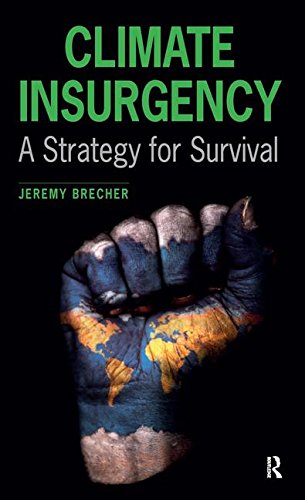
Climate Insurgency After Paris

By Jeremy Brecher - CounterPunch, January 11, 2016

In December of 2015 – the earth’s hottest year since recordkeeping began — 195 nations met in Paris to forge an agreement to combat global warming. The governments of the world acknowledged their individual and collective duty to protect the earth’s climate — and then willfully refused to perform that duty. What did they agree to, and how should the people they govern respond?

The 195 nations meeting in Paris unanimously agreed to the goal of keeping global warming “well below 2 degrees Celsius” and to pursue efforts “to limit the increase in temperatures to 1.5 degrees Celsius.” Despite that goal, the Paris agreement also permits the greenhouse gas (GHG) emissions that cause global warming to continue rising.

Under the Paris agreement, governments put forward any targets they want – known as Intended Nationally Determined Contributions (INDCs) – with “no legal requirement dictating how, or how much, countries should cut emissions.”[1] These voluntary commitments don’t come into effect until 2020 and generally end in 2025-2030.

Today there are 400 parts per million (ppm) of carbon in the atmosphere, far above the 350 ppm climate scientists regard as the safe upper limit. Even in the unlikely event that all nations fulfill their INDC pledges, carbon in the atmosphere is predicted to increase to 670 ppm by the end of this century.[2] The global temperature will rise an estimated 3.5 degrees Celsius (6.3 degrees Fahrenheit) above pre-industrial levels.[3] For comparison, a 1-degree Celsius increase has been enough to cause all the effects of climate change we have seen so far, from Arctic melting to desertification. In short, the agreement authorizes the continued and even increased destruction of the earth’s climate.

US negotiators were adamant that the agreement must not include any binding restrictions on emissions. Secretary of State John Kerry told fellow negotiators that he “wished that we could include specific dates and figures for emissions cuts and financial aid” to developing countries, but “this could trigger a review by the US Senate that could scuttle the entire agreement.”[4] When US lawyers discovered a phrase declaring that wealthier countries “shall” set economy-wide targets for cutting their GHG pollution, Kerry said, “We cannot do this and we will not do this. And either it changes or President Obama and the United States will not be able to support this agreement.” “Shall” was changed to “should” without so much as a vote.[5]

The breathtaking gap between the Paris agreement’s aspiration to hold global warming below 2 degrees Celsius and the agreement’s actual commitments is indicated by an analysis by Climate Interactive and MIT Sloan. The current US pledge to drop GHG emissions 26 percent below 2005 levels by 2025, along with the pledges of other countries, will lead to a global temperature increase of 3.5 degrees Celsius (6.3 degrees Fahrenheit) above pre-industrial levels. To reduce warming to 1.8 degrees Celsius (3.2 degrees Fahrenheit) will require the US to increase its INDC from 26 percent below 2005 levels to 45 percent by 2030, and for other countries to make comparable reductions.[6]

Under the Paris agreement countries will monitor their emissions and reconvene every five years starting in 2023 to report on the results and perhaps ratchet up their INDCs. This has been characterized as creating a “name-and-shame” system of global peer pressure, “in hopes that countries will not want to be seen as international laggards.”[7]

On the last day of the Paris summit, a panel of leading scientists evaluated what would be necessary to achieve its targets. Prof. Hans Schellnhuber of the Potsdam Institute for Climate Impact Research said that to reach the 2-degree target the world would have to get CO2 out of its system by 2070. To reach the 1.5-degree target it would have to eliminate CO2 emissions by 2050. Johan Rockstrom of the Stockholm Resilience Center said that for any chance of reaching 1.5 degrees, the richest nations need to reach zero fossil fuel use by 2030.[8]

One Million Climate Jobs: A Challenge for Canadians

By Jonathan Neale - One Million Climate Jobs, January 5, 2016

In Canada, an alliance of unions, with environment, youth, public interest, faith-based organizations and First Nations are working together through the Green Economy Network to put these principles to practice, by calling for “one million climate jobs” in Canada within the next five years.

The Canadian Labour Congress (CLC) has recently adopted its COP21 Statement, emphasizing that climate change is already affecting production and consumption patterns in many sectors of our economy.

The warnings by the United Nations’ Intergovernmental Panel on Climate Change (IPCC) that the current pace of emissions is already consuming the entire global carbon budget is a clear indication that market forces on their own are not in a position to provide the kind of transition that will prevent catastrophic climate change.

Governments must step up to the plate by working and providing leadership for the common good and public interest. With a new government in Ottawa, Canada is now in a position to commit ambitious, achievable, science-based targets to significantly reduce greenhouse gas emissions.

At the 2009 COP15 in Copenhagen, Canada pledged with other G8 countries to cut its carbon emissions by 80 percent by 2050. Such a target implies emission cuts by 2030 of no less than 38 percent of 2005 levels. Now, at COP21, we urge the federal government to recommit to at least this target.

As have Germany and Australia with their coal industries, there is a need to be proactive in regulating the petroleum industry in Canada and curbing expansion of the oil sands, which remains the fastest growing sector of the economy for greenhouse gas emissions, despite the falling oil prices.

This calls for significant industrial transformation toward a new low-to-zero carbon economy. A transformation that will eliminate or transform existing jobs, likely bringing about resistance to change, which could undermine a much needed social consensus in Canada for a way forward.

To address this resistance, a just transition strategy that is supported by workers, employers and governments is needed, with a focus on creating new jobs and incorporating training and education for displaced workers. The strategy must embody social support, re-employment and compensation measures, and be devised with the participation of workers and their representatives.

These measures must also go hand in hand with efforts to deal with unemployment overall, as rising CO2 levels and job losses are the products of the same economic model. A commitment to Decent Work, as understood by the International Labour Organization (ILO), can pave the way to an economic model that addresses social injustice, poverty and inequality at the same time. In 2013, the Canadian government, employers and unions agreed, along with those of other countries, to a set of guiding principles that can do just that. Now is the time to apply these principles for dealing with climate change in Canada.

In Canada, an alliance of unions, with environment, youth, public interest, faith-based organizations and First Nations are working together through the Green Economy Network to put these principles to practice, by calling for “one million climate jobs” in Canada within the next five years.[1] Similarly, the Blue Green Canada also brings together unions and environmental groups to tackle these issues.

Unify Fights Against Austerity and Climate Change

By Asbjørn Wahl - Social Europe, December 18, 2015

The Climate Summit in Paris has once again reminded us of how vulnerable we are on planet earth. However, humanity is faced with a number of deep and challenging crises: economic, social, political, over food – and, of course, over climate change, which is threatening the very existence of millions of people. These crises have many of the same root causes, going to the core of our economic system.

Strong vested interests are involved. It is thus an interest-based struggle we are facing. All over the world, people are organizing and fighting against the effects of the crises. Trade unions are heavily involved in many of these struggles, and so are many other movements – single-issue as well as broader social movements. Increasingly, our entire social model, the way we produce and consume, is under question. The way out of these crises requires a system change and this can only be achieved if we are able considerably to shift the balance of power in society. This leaves us with the challenge of unifying movements and continuing struggles – particularly to bring anti-austerity together with the struggle against climate change.

Agreement, But No Solution

At the recent Paris Summit (COP21), the first ever truly global agreement to fight the climate crisis was concluded. Governments have been negotiating for more than 20 years (more or less since the Rio Summit in 1992) in order to achieve that. During this period, however, greenhouse gas (GHG) emissions have not been cut. Quite the opposite. Emissions have increased immensely, by more than 60 per cent. Transport emissions have increased 120 per cent over the last 30 years, and they are still rising all over the world – even at a rate that outweighs cuts in other economic sectors.

The stated aim of the Paris agreement is ambitious. The target of keeping global warming below 2oC was strengthened, so that governments should now “pursue efforts” to limit the temperature increase to 1.5oC above pre-industrial levels. The weakness of the agreement is that there is a huge gap between this aim and the measures agreed upon to reach it. Based on the voluntary pledges (so-called Intended Nationally Determined Contributions – INDCs) from all countries on how much they are prepared to cut their emissions, we are so far on course for a temperature increase of 3-4oC. This means climate catastrophe.

EcoUnionist News #85

Compiled by x344543 - IWW Environmental Unionism Caucus, January 5, 2016

The following news items feature issues, discussions, campaigns, or information potentially relevant to green unionists:

Lead Stories:

Ongoing Mobilizations:

The Thin Green Line:

Bread and Roses:

An Injury to One is an Injury to All:

Floods, climate change and job cuts

By Martin Empson - One Million Climate Jobs, December 28, 2015

In 2015 Britain has seen repeated flooding causing large-scale damage. Tens of thousands of people have had to evacuate their homes, suffered days without power and seen their homes and businesses destroyed as storms repeatedly hit the country. In the latest bout of flooding, thousands of people in Manchester, Leeds and York have been hit, sometimes with the worst floods ever, as rivers broke banks.

Trade unions that represent workers in the emergency services have repeatedly warned of the impacts of austerity measures on their ability to deal with flooding and other severe weather.

Unison, for instance, which represents workers at the Environment Agency, reported how cuts would reduce its ability to prevent and respond to flooding and tidal surges. In 2012/13 the grant was £124 million less than in 2009/10.

Staff numbers at the Agency have been reduced by around 1000. The November 2015 autumn statement pledged that the Agency would have its funding for flood defences “preserved”, but the rest of its budget would decrease by 15%. The government claims that it is protecting front line services that respond to emergencies and help prevent flooding, but cutting behind the scenes staff and resources hit the ability of workers to deal with crises, and the ability to make long term plans for future, worsening, weather.

The Fire Brigades Union (FBU) has also highlighted the way that cuts will affect its ability to respond to emergencies such as flooding. In response to the most recent floods the FBU said that “threats posed by such large scale floods are beyond the capacity of local services to cope. The impact of massive cuts to funding of the country’s fire and rescue service is being felt by all firefighters, including those who are aiding flood rescue.”

Simon Hickman, Manchester FBU Brigade Organiser, whose members were on the front line dealing with floods in Salford said, “We’re stretched to the limit with the lack of resources due to the cuts, and we’ve just been told that £15.8 million is to be cut locally. It is bad enough this time but it will be far worse next time. We had 56 fire engines available, the majority were committed to incidents. Yet we are told we may be cut down to as few as 30 at night time, which will remove any resilience in the future”.

Even Coastguard services have been cut back.

Prime Minister David Cameron has expressed sympathy with victims, and celebrated the work of the emergency workers. But his government’s policies have made the situation far worse. Back in 2011, the then Tory-Liberal coalition government announced an 8 percent cut (£540 million) in spending on flood defences. Government policies that favour the fossil fuel industry, such as fracking, will only increase emissions leading to further climate change and more frequent floods.

The government is well aware of the increased risks of flooding because of climate change.  Almost a decade ago, in 2006, Nicolas Stern wrote an extensive report into the economic impacts of climate change for the then Labour government which warned that “Infrastructure damage from flooding and storms is expected to increase substantially” unless there were flood management policies that could avoid this. In purely economic terms, Stern saw the situation as getting far worse as global warming increased, warning that

“The costs of flooding in Europe are likely to increase, unless flood management is strengthened in line with the rising risk. In the UK, annual flood losses could increase from around 0.1% of GDP today to 0.2 – 0.4% of GDP once global temperature increases reach 3 to 4°C.”

These floods are not “unprecedented” they are the new norm. Climate change means that we are going to see more frequent and more extreme flooding. In order to protect lives, homes and businesses we need to reverse the cuts to emergency services and the Environmental Agency and increase funding.

We also need investment that can reduce the impact of climate change. Writing in The Guardian, environmental campaigner George Monbiot has shown that planting trees can help the soil absorb water. Rather than cuts, we should be creating jobs that can save lives, protect property and reduce the impact of climate change.

But we also need to drastically reduce emissions of greenhouse gases that cause climate change. This is why the Campaign against Climate Change, with seven national trade unions, and the National Union of Students are calling for One Million Climate Jobs. The creation of such jobs, through investment in renewable energy, insulation schemes, public transport and energy reduction could reduce emissions from the UK by 86% in twenty years. The trade union movement recognises that climate change is no longer an abstract discussion, but a reality. Dealing with it can help create jobs and improve society.

In 2014 David Cameron told flooded communities in the South-West that “money was no object” in helping them recover from that year’s floods. In 2016 we must hold him to that statement and demand the sort of investment that can prevent future disasters.

EcoUnionist News #84

Compiled by x344543 - IWW Environmental Unionism Caucus, December 29, 2015

The following news items feature issues, discussions, campaigns, or information potentially relevant to green unionists:

Lead Stories:

Ongoing Mobilizations:

COP21 and Paris:

The Thin Green Line:

Bread and Roses:

An Injury to One is an Injury to All:

Disaster Capitalism:

Carbon Bubble:

Just Transition:

Other News:

For more green news, please visit our news feeds section on ecology.iww.org; Twitter #IWWEUC; Hashtags: #greenunionism #greensyndicalism #IWW. Please send suggested news items to include in this series to euc [at] iww.org.

Bay Area protests Paris climate talks

By Jeff Mackler - Socialist Action, December 21, 2015

The Bay Area IWW sponsored this event, and IWW EUC members participated in its organizing:

Organized by a broad coalition of environmental, social justice, labor, antiwar, anti-racist, and faith-based groups across Northern California, some 3000 mobilized on Saturday, Nov. 21, to demand immediate action to stop and reverse global warming and associated climate-change-influenced catastrophes.

The mobilization was part of the worldwide effort to protest the Nov. 30–Dec. 12 UN COP21 Paris climate conference, where little or no substantial actions were expected to stop and reverse the climate crisis.

Major organizing efforts began here some five months ago, an important factor that made the Oakland march and rally the largest in the U.S. to date among the many planned in cities across the country both before and after the UN-sponsored Paris talks.

Some 200 groups endorsed this action, initiated and sponsored by the Northern Climate Climate Mobilization. Fifty to sixty dedicated activists, representing almost as many organizations, met bi-weekly for months and then weekly to broaden and build this essential “movement of movements” to demand immediate action to eliminate fossil fuel-based energy systems and rapidly replace them with 100 percent clean, safe, and sustainable alternatives to “Defend the Planet.”

In fact, “Defend the Planet” against corporate and government polluters soon became the eye-catching focus of coalition flyers and of the eight-foot advertisements that were posted at seven BART (Bay Area Rapid Transit) train stations, at a cost of $7000. There was little or no doubt among the coalition activists that the consequences of the corporate polluter profit-driven polices to increase fossil-fuel extraction, and the government’s associated actions to promote these policies, threaten life on earth.

The high-spirited and colorful march was led by some 100 Native American Idle No More frontline community activists from Sonoma County to San Jose. It contained new, diverse—but still only modest—representation from the critically necessary sectors of the country’s labor, youth, and oppressed nationalities. The multi-cultural outpouring, included several bands and singing groups, youth contingents, socialist contingents, LGBT groups, high school student organizations, and more.

Speakers at the rally included the main leaders of the San Francisco and Alameda country labor councils, an IBEW local president, and a key representative of the California Nurses Association. All these organized modest contingents of workers in the mile-long march from the Lake Merritt Amphitheater to Oakland’s Frank Ogawa/Oscar Grant Civic Center Plaza. Keynote speaker May Boeve, national executive director of 350.org, stressed the need for a united mass movement to challenge the governments worldwide whose UN climate proposals fall far short of the measures needed to stop and reverse the horrific consequences of global warming.

The adopted demands included opposition to oil wars, racism, the Trans Pacific Partnership (TPP) agreement, corporate and government-backed and implemented policies that foster increased, not decreased, fossil-fuel extraction as well demands for reparations to fund poor nations around the world to guarantee the introduction of sustainable energy systems, a just job transition for all workers at union wages, civil and democratic rights for all in a world where Black Lives Matter, for immigrant rights, and an end to environmental racism.

Following a month of democratic discussion and debate, these points of unity and demands were hammered out and adopted unanimously, an indication of the growing radicalization and sophistication of the climate-crisis movement. Indeed, the ideas presented by the local chapter of System Change Not Climate Change and various socialist groups found a hearty reception among virtually all the activist participants. See the full demands and points of unity at NorCalClimateMob.net.

A spirited and enthusiastic post-Nov. 21 evaluation meeting on Dec. 3 attributed the fact that this year’s march was not qualitatively different in size from last year’s Sept. 21 effort to the relative lack of national coordination.

It was noted that local climate actions initiated by national 350.org were organized mostly on a last-minute basis and on a number of different dates before and after the Paris talks. In contrast, last year’s Northern California mobilization significantly benefited from the “wind in our sails” flowing from the New York City mobilization of 400,000 organized by the People’s Climate March.

This year’s relatively diffuse choice of mobilization dates and organizing activity limited most U.S. actions to a few hundred participants at best. The post-COP 21 Dec. 12 national and international mobilizations promoted by 350.org and other world environmental organizations have been called to make the point that an ongoing movement is sorely need “through” Paris and afterward.

At the close of the UN conference, 350.org leaders are expected to set a national date for coordinated May 2015 spring regional mobilizations in some nine to 12 U.S. cities.

Meanwhile, the Nor Cal Climate Mob, as this new Oakland-based united front mass action coalition is popularly known, voted unanimously at its Dec. 3 evaluation meeting to continue its efforts through the spring actions.

The S.F. Bay Area branch of Socialist Action played an important role in helping to initiate the Nor Cal Climate Mob and build its September 2014 and November 2015 marches. Socialist Action’s tent was a popular rally attraction, with activists purchasing some $150 in Socialist Action newspapers and pamphlets. Forty-two participants, mostly youth, signed our mailing list for more information and to meet Socialist Action members.

Pages

The Fine Print I:

Disclaimer: The views expressed on this site are not the official position of the IWW (or even the IWW’s EUC) unless otherwise indicated and do not necessarily represent the views of anyone but the author’s, nor should it be assumed that any of these authors automatically support the IWW or endorse any of its positions.

Further: the inclusion of a link on our site (other than the link to the main IWW site) does not imply endorsement by or an alliance with the IWW. These sites have been chosen by our members due to their perceived relevance to the IWW EUC and are included here for informational purposes only. If you have any suggestions or comments on any of the links included (or not included) above, please contact us.

The Fine Print II:

Fair Use Notice: The material on this site is provided for educational and informational purposes. It may contain copyrighted material the use of which has not always been specifically authorized by the copyright owner. It is being made available in an effort to advance the understanding of scientific, environmental, economic, social justice and human rights issues etc.

It is believed that this constitutes a 'fair use' of any such copyrighted material as provided for in section 107 of the US Copyright Law. In accordance with Title 17 U.S.C. Section 107, the material on this site is distributed without profit to those who have an interest in using the included information for research and educational purposes. If you wish to use copyrighted material from this site for purposes of your own that go beyond 'fair use', you must obtain permission from the copyright owner. The information on this site does not constitute legal or technical advice.