By Ethan Bucker, US Organizer - Forest Ethics, January 24, 2014
Disclaimer: The views expressed here are not the official position of the IWW (or even the IWW’s EUC) and do not necessarily represent the views of anyone but the author’s

Just over the golden hills of Martinez, the descent into Pittsburg on California's Highway 4 opens a view of the Carquinez Strait. The strait is a narrow segment of the tidal estuary that accepts the rushing waters of the Sacramento and San Joaquin rivers as they empty into the San Francisco Bay. The vista paints a portrait of the transition to a clean energy economy: on the northern side of the strait, enormous turbines of the Shiloh Wind Power Plant revolve gracefully. Along the southern waterfront, an aging former PG&E power plant casts a shadow over massive, decaying fuel tanks next to Pittsburg’s newly revitalized downtown.
This is the stage of the Bay Area’s latest and biggest energy battle, between residents of Pittsburg and energy infrastructure company WesPac.
WesPac Energy wants to transform the PG&E site into a mega crude-by-rail facility, marine oil terminal, and refurbished tank farm. With plans to handle 242,000 barrels per day, the terminal would process one-fifth of all crude coming through California. The facility would deliver Bakken crude and tar sands to all five of the Bay Area’s refineries via new and expanded pipelines. In simple terms, WesPac is looking to turn Pittsburg into the crude hub of Northern California.
WesPac had been developing its proposal with the Pittsburg planning department for two years, but it wasn’t until a sunny Sunday in August 2013 that anyone really knew about it.
On this particular Sunday, longtime Pittsburg resident Lyana Monterrey happened upon a tiny notice in the Contra Costa Times for a public hearing on an environmental impact report. Alarmed at the tremendous risks and dangers posed by the project, Lyana knocked on her neighbor Kalli Graham’s door to tell her about the story she had read. Kalli and Lyana immediately started going door-to-door to alert their neighbors of WesPac’s plans. Neither of them had participated in community organizing before. They attended the city hearing the following day, met a few other concerned residents, and decided to take action.
“I just could not sit still. I could not do nothing about this,” Lyana recalled.
What started as a few neighbors raising their voices quickly grew into a tidal wave of community-led activism that’s swept the town of Pittsburg into the regional and national spotlight. 2013 has been tainted by a half dozen oil train derailments and explosions, including a deadly disaster in Lac Megantic, Quebec that leveled a small town and killed 47 people. So, the prospect of “bombs-on-wheels” (as one community resident put it) rolling through Pittsburg on the daily has set the community ablaze with fierce opposition to WesPac.
Two diverse community led groups--the Pittsburg Defense Council and the Pittsburg Ethics Council--have emerged within the last six months to lead the campaign against the WesPac project, alongside ForestEthics and other NGO allies. Together, we’ve gathered over 4,000 petition signatures, organized a riveting Toxic Tour of the city’s heavy industrial sites, and conducted a bucket brigade air monitoring project that reveals striking levels of pollution in the community. We’ve flooded downtown Pittsburg with lawn signs, mobilized a January 11 march and rally that brought out over 300 residents, and organized a rally that packed Tuesday’s City Council meeting. Community leaders are meeting with city officials, training and empowering volunteers, and generating dozens of media hits. We’re gearing up to come out in full force as the Pittsburg Planning Commission and City Council vote on the project in coming months.






 The term ‘ocean grabbing’ aims to cast new light on important processes and dynamics that are negatively affecting the people and communities whose way of life, cultural identity and livelihoods depend on their involvement in small-scale fishing and closely related activities. Small-scale fishers and fishing communities in both the Global South and the Global North are increasingly threatened and confronted by powerful forces that are dramatically reshaping existing access rights regimes and production models in fisheries. This process is leading not only to the dwindling of control by small-scale fishers over these resources, but also in many cases to their ecological destruction and very disappearance.
 On cloudy days, heavy smoke fills the air of Ponca City, Okla., with grey smog that camouflages itself into the sky. The ConocoPhillips oil refinery that makes its home there uses overcast days as a disguise to release more toxins into the air. These toxins are brimming with benzene — a chemical that, according to the Centers for Disease Control, can cause leukemia, anemia and even decrease the size of women’s ovaries. According to the Environmental Protection Agency, in 2008 the ConocoPhillips refinery released over 2,000 pounds of this chemical into the air in Ponca City.
 Take a deep breath. But if you live near a coal-burning power plant that dumps coal ash into a nearby landfill or lagoon, don’t inhale too deeply because you’re probably breathing fugitive dust made up of airborne coal ash filled with dangerous and toxic pollutants. Whether blown from an uncovered dump site or from the back of an open truck, toxic dust contaminates hundreds of fence line communities across the country. Acrid dust stings residents’ eyes and throats, and asthmatics, young and old, are forced to reach for inhalers. Breathing this toxic dust can be deadly, and yet no federal standards exist to protect affected communities.
 To the rhythms of drums and chants, concerned people took to the streets across 436 cities in 52 countries yesterday. The message was clear: smash Monsanto. With thousands marching from coast to coast, Canada to Argentina, and around the world, the day of protest has emerged as one of the largest global events—and it has only been around for two years. However, more than small hopes for a mandatory labeling of genetically modified products, smashing Monsanto entails a larger transformation of the modern relationship between people and food.
 This report tracks the rise of crude-by-rail in North America, detailing where crude trains are being loaded and unloaded, how many trains carrying crude oil are crossing the North American continent, and who is involved in this burgeoning trade.
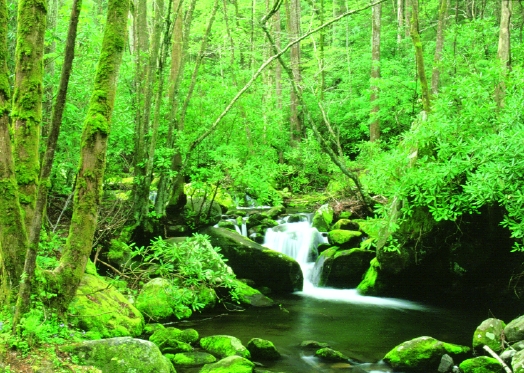 On Thursday, January 9 a dangerous toxin, 4-methylcyclohexane methanol, leaked from a busted tank and into the Elk River in West Virginia. It is believed that nearly 7,500 gallons of the toxin made its way from the 40,000-gallon tank into the river. It’s unclear how much actually entered the public water supply.
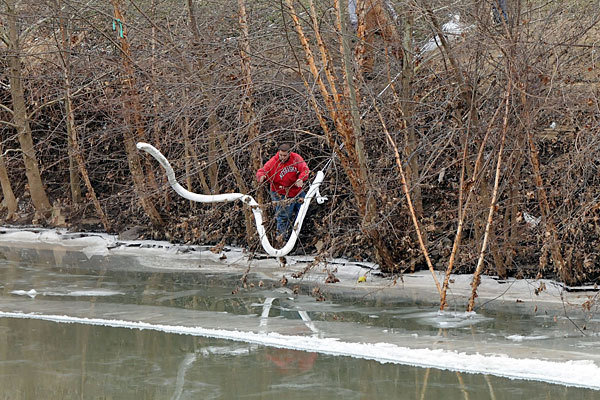 IMAGINE YOURSELF in the rugged countryside of the Appalachian Mountains, where you and your neighbors have lived with a history of poverty and lack of economic development–and you learn that the water piped into your home has been poisoned and can’t be used, even after it is boiled, until further notice.
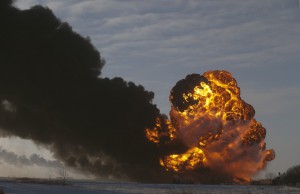 Twenty-one cars and 2 locomotives of a mile-long Burlington Northern Santa Fe (BNSF) Railway train derailed December 30, 2013, near Casselton, North Dakota, overturning oil tanker cars that exploded and burned for more than 24 hours (
 The message has gone out to corporations everywhere: Britain is open for fracking. In response, campaign groups now exist the length and breadth of Britain in opposition to the plans to industrialise the countryside with tens of thousands of drilling sites. They are taking legal action, lobbying their representatives and protesting and occupying sites at considerable risk of police brutality.
 This site is not the official webpage of the Industrial Workers of the World.