You are here

Jeremy Brecher

This Is What Insurgency Looks Like

By Jeremy Brecher - Labor Network for Sustainability, May 22, 2016

In a small church in the Albany, NY’s low-income, predominantly African-American South End, forty people were gathered for a community meeting. They were organizing a protest against trains carrying potentially explosive oil – dubbed by the residents “bomb trains” — that were running through their neighborhood. City Counselor Vivian Kornegay told the group that many municipalities had opposed the bomb trains and other dangerous fossil fuel infrastructure, but had little power to protect their residents; it was up to a “people’s movement” to do so. “What we want is for all of us to be free, healthy, and safe – and for our planet to be a better place to live.”

Maeve McBride, an organizer for 350.org, explained that the protest was part of a global campaign of direct action and civil disobedience aiming to keep 80% of all fossil fuels in the ground. Pastor Mark Johnson of the St. John’s Church of God in Christ said, “I heard at a meeting last night that we have a constitutional right to clean water and clean air.” Maeve McBride explained that the action was part of a “new wave” that was drawing on a “new paradigm” – “using civil disobedience to protect the public trust,” which included water, air, and the climate itself.

Organizers had met with officials from the police and sheriff’s offices and reported, “they abhor the trains – and are very supportive of us.” Then the group received direct action training. They read out loud the “action agreement” pledging nonviolent behavior and mutual support. Then they lined up to march and while police officers (played by the trainers) ordered them to move away, they scrambled onto an imaginary railroad track. Later that evening the steering committee for Albany Break Free planned outreach to supporting organizations, phone banks, canvassing, leafleting, and details of the action.

The Albany organizers had learned about the “new paradigm” when 350.org North American co-organizers of Break Free From Fossil Fuels had decided to use the “public trust” principle to frame US Break Free actions and formed a Break Free Public Trust Work Group to spread the idea. Some on the The Break Free Albany steering committee had participated in the working group’s webinar on using the public trust doctrine, and they decided to integrate the Public Trust Proclamation into their “topline message” and to hand out the Break Free Public Trust Proclamation to all participants. (The Proclamation appears at the end of this article.]

A week before the action the Albany Break Free steering committee defined their basic message. Potentially explosive crude oil “bomb trains” roll through Albany and surrounding communities, polluting the air and contributing to the climate crisis. Primarily low-income communities of color are put at risk. The urgent need to address climate change means that fossil fuels have to be left in the ground and a transition made to a “twenty-first century renewable energy economy.” They called for an end to all new fossil fuel infrastructure, including pipelines, power plants, compressor stations, and storage tanks. And they called for a just transition away from fossil fuel energy with training and jobs for affected workers, so “no worker is left behind.”

Climate, Jobs, and Justice: A plan for a just transition to a climate-safe economy

By Jeremy Brecher - Labor Network for Sustainability, May 12, 2016

Can we radically reduce the climate-destroying greenhouse gases (GHGs) we put into the atmosphere, yet also increase jobs for American workers, protect those whose jobs may be threatened by climate policies, and reduce America’s inequality and injustice? A series of reports from The Labor Network for Sustainability and Synapse Energy Economics shows we can.

The plans to create jobs and build a more just society by putting people to work protecting the climate are laid out in the LNS Climate, Jobs and Justice Project. They project an effective, workable program for a just transition to a climate-safe economy. They include a broad national jobs program and detailed studies of local, state, and regional plans that provide opportunities for organizing around and creating economic alternatives while developing examples that can inspire further changes at a national level.

The Clean Energy Future

The Climate, Jobs, and Justice project begins with a report titled “The Clean Energy Future: Protecting the Climate, Creating Jobs and Saving Money,” prepared for the Labor Network for Sustainability [1] (LNS) and 350.org, [2] with research conducted by a team led by economist Frank Ackerman of Synapse Energy Economics. [3] It shows that the United States can reduce GHG emissions 80 percent by 2050 — while adding half-a-million jobs annually and saving Americans billions of dollars on their electrical, heating, and transportation costs. While protecting the climate has often been portrayed as a threat to American workers’ jobs and the U.S. economy, this report shows that a clean energy future will produce more jobs than “business as usual” with fossil fuels and will save money to boot.

What Keeping Oil in the Ground Can Do for Economic Inequality

By Yessenia Funes - Yes! Magazine, March 15, 2016

Our lifestyle is inextricably linked to fossil fuels. We pay the industry to heat our homes and power our cars. Though driving might be optional where public transit is available, heat is not during harsh winters. We know about the effects on the climate of burning oil, gas, and coal for energy, but we don’t know what turning our backs on them will do to our economy. Some worry that closing our oil refineries and shutting down our mines would throw the market into a dangerous vortex. That doesn’t need to be the case. A successful energy transition could actually benefit the economy and reduce inequality.

The economy relies on a number of things, including spending, manufacturing, trade, and personal income. The availability of fossil fuels has largely driven these for 150 years. “[Oil] is the world’s first trillion-dollar industry in terms of annual dollar sales,” environmental author Jack Doyle wrote in 1994. In North Dakota, a major oil- and gas-producing state, an oil boom created the $53.7 billion gross domestic product the state sees today.

But booms often have downsides. When the journal Energy Economics compared six states that produced the vast majority of the West’s crude oil and natural gas, it saw per capita income decrease by as much as $7,000 in counties whose incomes relied most on such development. Also, the crime rates and percentage of adults without a college education increased in those counties. The study offers possible explanations, including an increasing reliance on nonlocal workers and changing wage structures.

The oil and gas industries are the largest industrial sources of volatile organic compound emissions—2.2 million tons a year. These chemicals cause smog, which can increase the risks of asthma and premature death. The industry also produces cancer-causing pollutants: benzene, ethylbenzene, and n-hexane, which are emitted during the refinement process.

Low-income communities of color disproportionately bear this health burden and are also least likely to have access to health care, including preventive medicine, checkups, and prescription drugs. The inequality of care only widens the income gap by adding more financial pressures to an already stressed group.

What about jobs? Extractive industries currently employ nearly 200,000 Americans and pay some employees as much as $42.90 an hour. These jobs are a valid concern. The U.S. unemployment rate is finally down to about 5 percent. Surely we don’t want all those people put out of work.

That won’t happen if we launch the renewable energy sector in sync. Economists at the University of Massachusetts Amherst’s Political Economy Research Institute (PERI) have studied this topic since the early 2000s. Their research shows how a transition to renewables can lead to a post-carbon world and a fairer economy.

A New Wave of Climate Insurgents Defines Itself as Law-Enforcers

By Jeremy Brecher - CounterPunch, March 2, 2016

One in six Americans say they would personally engage in nonviolent civil disobedience against corporate or government activities that make global warming worse. That’s about 40 million adults. The fate of the earth may depend on them — and others around the world — doing so.

Such actions are about to take a quantum leap both in numbers and in global coordination. From May 7-15, 350.org, Greenpeace and many other organizations — notably grassroots movement organizations from every continent — will hold a global week of action called Break Free From Fossil Fuels. They envision tens of thousands of people mobilizing worldwide to demand a rapid transition to renewable energy. Events will include nonviolent direct actions targeting extraction sites or infrastructure; pressure on political targets to shift policies around fossil fuel development; and support for clean energy alternatives. Mass actions in Australia, Brazil, Canada, Germany, Indonesia, Israel/Palestine, Nigeria, the Philippines, South Africa, Spain, Turkey, and the United States will target fossil fuel projects and support ambitious solutions. Before and during the week of action, additional, locally-initiated actions are expected in many other locations around the globe.

In the United States there will be actions in California, the Northwest, the Mountain West, the Midwest, Washington, D.C., and the Northeast. They will include support for a moratorium on the auction of public land for fossil fuel development; mass trespass at fracking sites; land and flotilla blockades of refineries; actions at the facilities of pipeline companies; and blockades of trains carrying fracked oil. In each case the partners include not only national and international environmental organizations but dozens of community, indigenous, climate justice, labor, religious, citizen action and other groups that have long been campaigning locally against these targets.

Making the Promises Real: Labor and the Paris Climate Agreement

By Jeremy Brecher - Labor Network for Sustainability, January 20, 2016

As nearly 200 nations gathered in Paris approved the UN Climate Change Agreement, the AFL-CIO issued a statement that broke new ground on climate. While the AFL-CIO opposed the Kyoto climate agreement and never supported the failed Copenhagen agreement, it “applauded the Paris climate change agreement as “a landmark achievement in international cooperation” and called on America “to make the promises real.”

Although it has frequently pointed out the harm that workers and communities might face from climate protection policies, the AFL-CIO has never proposed a “just transition” plan to protect them. Its Paris statement noted that “workers in certain sectors will bear the brunt of transitional job and income loss.” Recognizing that reality, it endorsed the Paris agreement’s recognition of “the imperatives of a just transition of the workforce and the creation of decent work and quality jobs.” It called for investment in the affected communities and “creating family-supporting jobs like those that will be lost.”

This statement lays the groundwork for organized labor to take a new approach to climate change. How can labor now move forward to implement that approach? What should labor’s post-Paris climate program be?

Climate Insurgency After Paris

By Jeremy Brecher - CounterPunch, January 11, 2016
In December of 2015 – the earth’s hottest year since recordkeeping began — 195 nations met in Paris to forge an agreement to combat global warming. The governments of the world acknowledged their individual and collective duty to protect the earth’s climate — and then willfully refused to perform that duty. What did they agree to, and how should the people they govern respond?

The 195 nations meeting in Paris unanimously agreed to the goal of keeping global warming “well below 2 degrees Celsius” and to pursue efforts “to limit the increase in temperatures to 1.5 degrees Celsius.” Despite that goal, the Paris agreement also permits the greenhouse gas (GHG) emissions that cause global warming to continue rising.

Under the Paris agreement, governments put forward any targets they want – known as Intended Nationally Determined Contributions (INDCs) – with “no legal requirement dictating how, or how much, countries should cut emissions.”[1] These voluntary commitments don’t come into effect until 2020 and generally end in 2025-2030.

Today there are 400 parts per million (ppm) of carbon in the atmosphere, far above the 350 ppm climate scientists regard as the safe upper limit. Even in the unlikely event that all nations fulfill their INDC pledges, carbon in the atmosphere is predicted to increase to 670 ppm by the end of this century.[2] The global temperature will rise an estimated 3.5 degrees Celsius (6.3 degrees Fahrenheit) above pre-industrial levels.[3] For comparison, a 1-degree Celsius increase has been enough to cause all the effects of climate change we have seen so far, from Arctic melting to desertification. In short, the agreement authorizes the continued and even increased destruction of the earth’s climate.

US negotiators were adamant that the agreement must not include any binding restrictions on emissions. Secretary of State John Kerry told fellow negotiators that he “wished that we could include specific dates and figures for emissions cuts and financial aid” to developing countries, but “this could trigger a review by the US Senate that could scuttle the entire agreement.”[4] When US lawyers discovered a phrase declaring that wealthier countries “shall” set economy-wide targets for cutting their GHG pollution, Kerry said, “We cannot do this and we will not do this. And either it changes or President Obama and the United States will not be able to support this agreement.” “Shall” was changed to “should” without so much as a vote.[5]

The breathtaking gap between the Paris agreement’s aspiration to hold global warming below 2 degrees Celsius and the agreement’s actual commitments is indicated by an analysis by Climate Interactive and MIT Sloan. The current US pledge to drop GHG emissions 26 percent below 2005 levels by 2025, along with the pledges of other countries, will lead to a global temperature increase of 3.5 degrees Celsius (6.3 degrees Fahrenheit) above pre-industrial levels. To reduce warming to 1.8 degrees Celsius (3.2 degrees Fahrenheit) will require the US to increase its INDC from 26 percent below 2005 levels to 45 percent by 2030, and for other countries to make comparable reductions.[6]

Under the Paris agreement countries will monitor their emissions and reconvene every five years starting in 2023 to report on the results and perhaps ratchet up their INDCs. This has been characterized as creating a “name-and-shame” system of global peer pressure, “in hopes that countries will not want to be seen as international laggards.”[7]

On the last day of the Paris summit, a panel of leading scientists evaluated what would be necessary to achieve its targets. Prof. Hans Schellnhuber of the Potsdam Institute for Climate Impact Research said that to reach the 2-degree target the world would have to get CO2 out of its system by 2070. To reach the 1.5-degree target it would have to eliminate CO2 emissions by 2050. Johan Rockstrom of the Stockholm Resilience Center said that for any chance of reaching 1.5 degrees, the richest nations need to reach zero fossil fuel use by 2030.[8]

A Superfund for Workers

By Jeremy Brecher - Dollars and Sense, November 2015

When the Dominion Corporation proposed, on April 1, 2013, to build a liquefied natural gas export facility at Cove Point, Md., right on the Chesapeake Bay,seven hundred people demonstrated against it and many were arrested in a series of civil disobedience actions. But an open letter endorsing the project maintained it would “create more than 3,000 construction jobs” most of which would go “to local union members.” The letter—on Dominion letterhead—was signed not only by business leaders, but also by twenty local and national trade union leaders.

Similarly, in the struggle over the Keystone XL pipeline, pipeline proponents were quick to seize on the “jobs issue” and tout support from building trades unions and eventually the AFL-CIO. In a press release titled “U.S. Chamber Calls Politically-Charged Decision to Deny Keystone a Job Killer,” the Chamber said President Obama’s denial of the Keystone permit was “sacrificing tens of thousands of good-paying American jobs in the short term, and many more than that in the long term.”

The media repeat the jobs vs. environment frame again and again: an NPR headline on Keystone was typical of many: “Pipeline Decision Pits Jobs Against Environment.” A similar dynamic has marked the “beyond coal” campaign, the fracking battle, and the struggle for EPA regulation of greenhouse gases under the Clean Air Act.

Is there a persuasive answer to the charge that climate protection policies are job-killers? A common environmentalist response has been that environmental protection produces far more jobs than it eliminates. EPA Administrator Lisa P. Jackson explained, “environmental protection creates jobs—1.7 million of them as of 2008.” It is true that, on balance, environmental policies usually create jobs; unfortunately, this is of little comfort to the small number of workers in fossil-fuel producing and using industries who are likely to lose their jobs as a result of climate protection policies, including coal miners, power-plant workers, and oil refinery workers. And such workers can rapidly become Fox News poster children for the threat posed to workers by climate protection.

Fortunately, a strategy has been emerging to protect workers and communities whose livelihoods may be threatened by climate protection policies.

Read the full article (PDF) here…

How the Labor and Environmentalist Movements Can Put Workers at the Center of Climate Justice

By Trish Kahle - In These Times, July 1, 2015

Disclaimer: The views expressed here are not the official position of the IWW (or even the IWW’s EUC) and do not necessarily represent the views of anyone but the author’s.

2015, only halfway over, has already been an extreme year for both labor and the climate: the Midwest and Texas are experiencing record rainfall while California is in a record-breaking drought, and 2015 is the hottest year on record so far (the standing record is from 2014), including a heatwave in India that left more than 2,300 people dead. The Obama administration continues to try and push through the Trans-Pacific Partnership on fast-track, with millions of workers livelihoods hanging in the global balance and attacks on unions like the United Steelworkers continue to threaten worker, community and environmental safety. Meanwhile, energy companies insist that drilling in the soon-to-be ice-free summertime arctic will create jobs—even as it may mean game over for the climate.

There has perhaps never been a more prescient moment to emphasize what a growing number of people already know: the fate of labor and the climate are linked. In his most recent piece for The Nation, Jeremy Brecher notes how well suited the traditions of the labor movement are to the fight for climate protection: "The labor movement's most essential value is solidarity ... that we will survive and prosper only if we look out for one another. Climate protection is the new solidarity." Brecher, a founder of the Labor Network for Sustainability and author of Climate Insurgency: A Strategy for Survival as well as the classic labor history Strike! is at the forefront of the struggle to break down the false dichotomy of "jobs versus environment" and to fight for a just transition that puts workers at the center of a vision of climate justice. 

How Climate Protection Has Become Today’s Labor Solidarity

By Jeremy Brecher - The Nation, May 6, 2015

Under banners proclaiming “Healthy Planet & Good Jobs,” thousands of trade unionists from 75 local and national unions, highly visible in their red, blue, green, and white union uniforms, joined the People’s Climate March in New York City last September—a quantum leap from labor’s previous participation in climate actions.At the labor rally before the march, AFSCME District Council 37 executive director Henry Garrido recalled that during Superstorm Sandy in 2012, “Our workers were at the forefront manning shelters, evacuating people, preparing hospital beds, and rescuing people every day.” But Sandy was just a warning shot. “Labor must stand for more than working conditions,” Garrido continued. “We must stand for more than contracts. We must stand for environmental justice—otherwise, we will become irrelevant.” The issue of climate change, he concluded, is “the biggest threat to our humanity.” We can no longer afford to put our heads in the sand: “Today is the day that the human race stood together and said, ‘Enough!’”

The march’s organizers are now working to launch a People’s Climate Movement. They are planning a series of major mobilizations leading up to the Paris climate summit this December. According to Phil Aroneanu of 350.org, activists have started meeting with unions to plan labor-focused events along the way. “It is incumbent on the climate movement to lay out plans that leave nobody behind in the transition to a climate-safe economy,” Aroneanu says.

Meanwhile, labor action on climate change has proliferated. In New York, according to Matt Ryan, executive director of ALIGN (New York’s Jobs With Justice affiliate), “There is a growing surge of labor unions engaging and activating their members and their members’ communities around a climate, jobs, and justice agenda. I see it at CWA, SEIU, the Teamsters, New York State Nurses Association, and many others.”

The rebellion to save planet Earth: Why civil disobedience could be our last, best hope

Jeremy Brecher interviewed by Ted Hamilton - Salon, September 7, 2014

Disclaimer: The views expressed here are not the official position of the IWW (or even the IWW’s EUC) and do not necessarily represent the views of anyone but the author’s.

Traditional methods for fighting global warming have proven fruitless. It's time for the people to take a stand

The politics of climate change are shifting. After decades of halfhearted government efforts to stop global warming, and the failure of the “Big Green” NGOs to do much of anything about it, new voices — and new strategies — have taken the lead in the war against fossil fuels.

Jeremy Brecher, a freelance writer, historian, organizer and radio host based in Connecticut, has documented the environmental movement’s turn toward direct action and grass-roots activism. A scholar of American workers’ movements and author of the acclaimed labor history “Strike!,” Brecher argues that it’s time for green activists to address the social and economic impacts of climate change and for unions to start taking global warming seriously.

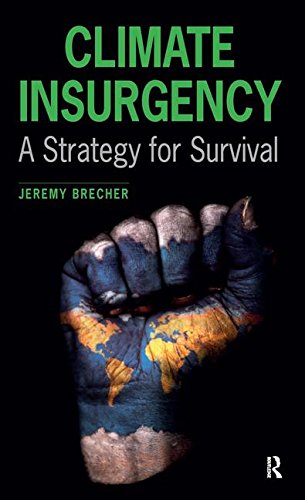
His latest book, “Climate Insurgency: A Strategy Against Doom,” which will be released early next year by Paradigm Publishers, examines the structural causes of our climate conundrum and calls for a “global nonviolent constitutional insurgency” to force environmental action from below. Brecher spoke to Salon about his vision for dealing with global warming, the changing face of environmental activism, and why he thinks the People’s Climate March in New York on Sep. 21 is so important.

This interview has been edited for length and clarity.

Pages

The Fine Print I:

Disclaimer: The views expressed on this site are not the official position of the IWW (or even the IWW’s EUC) unless otherwise indicated and do not necessarily represent the views of anyone but the author’s, nor should it be assumed that any of these authors automatically support the IWW or endorse any of its positions.

Further: the inclusion of a link on our site (other than the link to the main IWW site) does not imply endorsement by or an alliance with the IWW. These sites have been chosen by our members due to their perceived relevance to the IWW EUC and are included here for informational purposes only. If you have any suggestions or comments on any of the links included (or not included) above, please contact us.

The Fine Print II:

Fair Use Notice: The material on this site is provided for educational and informational purposes. It may contain copyrighted material the use of which has not always been specifically authorized by the copyright owner. It is being made available in an effort to advance the understanding of scientific, environmental, economic, social justice and human rights issues etc.

It is believed that this constitutes a 'fair use' of any such copyrighted material as provided for in section 107 of the US Copyright Law. In accordance with Title 17 U.S.C. Section 107, the material on this site is distributed without profit to those who have an interest in using the included information for research and educational purposes. If you wish to use copyrighted material from this site for purposes of your own that go beyond 'fair use', you must obtain permission from the copyright owner. The information on this site does not constitute legal or technical advice.