

You are here

climate justice

A climate insurgency: building a Trump-free, fossil-free future

By Jeremy Brecher - The Ecologist, April 28, 2017

As the thousands of foot-weary protesters leave the April 29 Peoples Climate March in Washington, DC - and its scores of sister marches around the country - one question will no doubt be foremost on their minds:

How can a march, or indeed any other action they take, force a reversal in the world's hurtle to climate doom?

After all, a single march, no matter how large, is not going to force President Trump and his administration of fossil-fuel company executives and climate-change deniers to reverse course.

They have already cancelled the Environmental Protection Agency's Clean Power Plan, authorized drilling and mining on public lands, and gutted regulations that protect local people and environments against the extraction of fossil fuels.

He has cleared the way for the Keystone XL and Dakota Access pipelines. His allies in Congress are whetting their knives to gut the Clean Air, Clean Water and Environmental Policy Acts. The fossil fuel industry is lining up for permits to build new infrastructure that will accelerate global warming and threaten local environments to boot.

Railroad Workers and Our Allies Must Unite in Support of AMTRAK

By Ron Kaminkow - Teamsters for a Democratic Union, April 25, 2017

On March 16th, President Trump released a blueprint budget that proposes to slash funding for the Department of Transportation by $2.4 billion, including funding for all Amtrak “long distance” trains, along with funding for dozens of transit expansion projects nationwide. In recent months, Trump has voiced support for massive investment in the nation’s infra-structure. Yet ironically, his first proposed budget not only fails to deliver, it guts funding for existing infrastructure.

The blueprint budget proposes the elimination of most Amtrak routes across the country. If we are to save the national passenger rail system, railroad workers and their unions must unite with passenger advocacy groups, environmental organizations, and communities across the country. The vast majority of Americans want more - not less - passenger trains. In this fight, just like in others, railroad workers have lots of potential allies.

All railroaders – freight, as well as transit and passenger – should be alarmed and concerned by this proposal. Should Amtrak be defunded and dismembered, it is near certain that nothing would replace it. Privately run passenger trains fail to turn a profit – the reason that the rail carriers abandoned such service in the 1960's. And it is highly unlikely that private vendors – even if there were any – who wished to enter such a market would even be allowed by most – if not all – carriers access to their railroads. Amtrak is barely tolerated by the host railroads as it is, and then only because the act which created the entity in 1970 mandates that it be entitled to operate passenger trains on the nation’s railroads.

Thankfully, the President’s blueprint budget is not the last word on the question. We have the potential to save Amtrak – and transit funding too – over the course of the coming weeks and months, as Congress fashions what will be ultimately be the final budget. We have been down this road before of course, when George Bush was President. We will need to mobilize now like we did then. Because if Amtrak is defunded, thousands of fellow rails will lose their jobs, and as a result, we will all potentially suffer as the income for Railroad Retirement is dramatically diminished.

Ironically, as it turns out, Amtrak is one of the most efficient passenger railroads in the world, covering 94% of its operating costs at the fare box! Adjusted revenue of $2.15 billion was the most ever for a fiscal year (2016). Amtrak set an all-time ridership record despite record low gasoline prices inducing travelers to drive rather than seek public transportation. Demand for trains is out there! Considering that all forms of transportation – including airline, inland waterway, as well as automobile, bus and anything else that goes down the highway – are heavily subsidized by the states and federal government, far more than Amtrak, we are getting a great deal with the limited subsidy that Amtrak receives to keep the trains running. And in some cases – especially in rural areas – the train is the only form of public transportation available!

And trains are the safest form of transportation known to humanity. Railroad transport utilizes less land and space to transport an equivalent number of passengers in any other mode. And trains emit less pollutants than other forms, and can make use of alternative and renewable energy. As the nation’s highways and airports become ever more congested, we should be expanding passenger train options, not reducing them! As fossil fuel shipments decline, and demand for public transportation continues to grow, passenger trains could fill the void and excess track capacity in certain lanes. And in select mid-range corridors of 400 miles or less; e.g. Chicago to St. Louis, Chicago to Twin Cities; Bay Area to L.A., Houston to Dallas; Jacksonville to Miami; L.A. to Las Vegas, there is great potential to develop and expand multi-train departures on faster and more reliable schedules.

But to save Amtrak and expand the use of passenger rail – thereby increasing union rail employment, and ensuring the future of Railroad Retirement – will take a gallant effort. Rail unions cannot do this themselves, passenger advocacy groups cannot, neither can environmental organizations nor municipalities, all of whom are supporters of passenger rail. Therefore, we need a “Grand Alliance” of all of these forces to win the day. While all of us may have a specific agenda and focus, we have far more in common with one another than we have differences, there is far more that unites us than divides us. It is high time that our labor unions reach out, network, and build the necessary alliances with these forces, not just for a one-time lobbying effort for a specific narrow goal, as important as it may be. Rather, we need to build a strategic long-term alliance – despite our differences - with these forces, where we come to see one another as natural coalition partners for the long run.

Governments around the world are investing heavily in passenger rail. They understand that it is the safest, most convenient, environmentally sensitive, and often fastest way to get around. We can do it here too. But it will take the political will power and the formation of a lasting progressive coalition to bring it about. What better time than now to get started!

Jobs for Climate and Justice: A Worker Alternative to the Trump Agenda

By Staff - Labor Network for Sustainability, April 24, 2017

We are in a critical political moment. The impacts of climatechange are increasingly severe, taking a toll on our health, environment and our economies. In the midst of this growing crisis, the United States now has a President and Congressional leadership that simultaneously attack climateclimate science and aim to comprehensively roll back climate protection measures and the rights of workers to organize.

Jobs for Climate and Justice exposes and challenges the Trump agenda and proposes the kind of economic program we must fight for. It also offers examples of the great organizing efforts around the country – led by working people – that provide the foundation for the a transition to a just and climate-safe economy. It is organized based on 4 elements:

  1. Create good jobs fixing the climate
  2. Protect threatened workers and communities
  3. Remedy inequality and injustice
  4. Lay the basis for a New Economy

The full working paper can be found [Here]

The tragedy of American science

By Cliff Connor - Socialist Action, April 17, 2017

The Earth Day 2017 March for Science signals resistance to Donald Trump’s sharp infusion of irrationality into the national discourse. Official support for climate-change denial and other anti-science agendas has suddenly become much more explicit. At the same time, many protestors recognize a continuity linking Trump’s bizarre bluster with a pre-existing condition sometimes referred to as the “Republican war on science.”
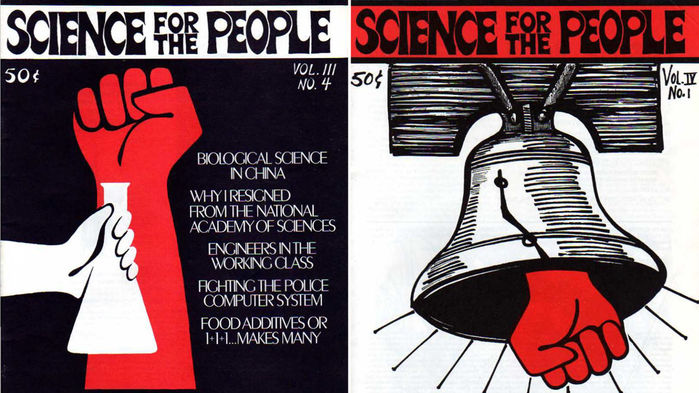
But the problems at the root of the tragedy of contemporary American science—its corporatization and militarization—are not ones for which either the Democratic or Republican parties can offer solutions.

Describing science as tragedy would have seemed peculiar to most people as recently as the first half of the 20th century. The reputation of science was then golden. The expectation that modern science could and soon would solve all of humanity’s problems was almost universal.

That benign image received a double jolt during the Second World War. First came the horrors of Nazi racial science and its accompanying technology of human extermination. That was followed by the advent of the nuclear age in the instant incineration of a hundred and thirty thousand inhabitants of two Japanese cities. J. Robert Oppenheimer, one of the atomic bomb’s creators, invoked the name of Shiva, the Hindu god of destruction, to signal the emergence of science’s ominous dark side.

Which Way for Science?

By Editorial Team - Science for the People, April 18, 2017

On April 22, 2017, the March for Science will pull several thousands of people into the streets to stand up for science and resist funding cuts proposed by the current US administration. Our organization, Science for the People, sees this development as a mostly positive step in the right direction. The scale of the political and economic crises facing people across the world is enormous and will require mass movements to resist and organize for change. However, we believe there is a need to advance radical solutions to face these crises. As such we have been interested in how the March for Science has developed since its inception around January 25, 2017. Our members have been taking measured approaches to engaging with the March for Science–nationally and locally–with the overall goal of putting forward a politics capable of both taking seriously the multitude of contradictions that define scientific enterprise and accounting for the people affected by and disaffected with the pursuit, uses, and abuses of science.

For radicals and revolutionaries, unearthing and addressing the burning questions of the latent social movement for science is an urgent and primary task:

  • What’s happening to U.S. Science?
  • Who will March for Science? Who will not?
  • What is Science for the People?

Union Leaders meet Trump: "almost giddy." Nauseating

By Sean O'Torain - Facts For Working People, April 10, 2017

The authors of this Blog have continually focused on the refusal of the trade union leaders to fight the bosses and the offensive of the bosses capitalist system against working people and the environment. We believe we are correct to do so. The US trade union leaders control organizations with a membership of up to 14 million and with huge full time resources, a massive infrastructure and hundreds of millions of dollars. Their potential power is confirmed by the fact that people like Obama, and now Trump stroke these union leaders to make sure they remain on their side. Just have a look at how far these union leaders are prepared to go to boot lick the bosses and their political stooges.

The New York Times Sunday April 9th had an article entitled: "Can Trump Win Over Big Labor?" The article showed he would not have a hard job if we are talking about the union leaders as opposed to the rank and file. Just three days after his inauguration - he was wasting no time, again this shows the potential of the trade union movement that he thought he had to move fast - yes just three days after his inauguration Trump invited the leaders of the building trades unions to the White House. The New York Times described what was going on as Trump "courting" these leaders. Well this courting worked, the romance is so far going well. The New York Times describes the mood of these union leaders after the meeting as "almost giddy" (it is nauseating) and went on to point to the news release from the laborers' union which was headed: "It is finally beginning to feel like a new day for America's working class." Yes it is a new day alright. The whip will be laid with even greater ferocity across the back of the US working class.

Then there is McGarvey the head of the North American Building Trades Unions and supporter of the Keystone Pipeline and other such destructive projects; he said: "So far so good - our concern is the economic trajectory of our members." In other words screw everything else, the workers who are not their members, the planet, women's rights, the fight against racism, sexism, police brutality, the wars and occupations abroad, health care, education, screw them all it is just the "economic trajectory" of his members. Oh how these bureaucrats like using big words. It makes them sound learn ed and, they hope, cover up their cowardice and refusal to fight for their members. And if this betrayal of the working class as a whole, this betrayal of the fight to save the planet and against war were not enough, the economic trajectory of his members has already been going down for years. McGarvey went on: "We're creating a building trades majority, Democratic and Republican whether state or national. We never want to be in a position where losing an election changes the economic trajectory of our membership." So he wants an alliance of the Trumps, the Clintons, incredible. On top of that  this moron refuses to see that the "economic trajectory" let us speak plainly, the living standards of his members and the US working class has been going down for decades. A new fighting leadership has to be built in the rank and file of the unions and the workplaces. This old boot licking pro capitalist leadership has to be removed.

Green Jobs and Intergenerational Justice: Trump’s Climate Order Undermines Both

By Dana Drugmand - Common Dreams, March 30, 2017

With the stroke of a pen, President Trump has written off both the biggest economic development opportunity of the twenty-first century, and the security of today’s young people, future generations and the other species inhabiting this planet. Or so it seems.

The White House’s “Energy Independence Executive Order” is clearly a blow to the progress made under the Obama Administration to fight climate change and transition from fossil fuels to a clean energy economy. The new Order aims to rescind the Clean Power Plan, lift a moratorium on coal mining on federal land and roll back regulations on methane emissions from oil and gas fields. It comes on the heels of Trump’s official approval of the controversial Keystone XL pipeline. These actions are supposedly meant to boost jobs, but the only thing they actually boost is the already enormous share of fossil fuel profits.

A review of the numbers indicates that this is indeed not about jobs. Keystone XL, for example, would result in only 35 long-term jobs post-construction, according to State Department analysis. By contrast, the wind power industry employed 88,000 Americans at the start of 2016, and wind power technician is now the fastest growing profession in the nation. In electric power generation, solar provides more jobs than coal, oil and natural gas combined. According to an Environmental Defense Fund report, both solar and wind jobs are growing at a rate 12 times faster than the rest of the U.S. economy. In almost every state, there are now more jobs in the clean energy sector than in fossil fuels. For a president that claims to be so intent on creating jobs, ignoring renewables and energy efficiency in favor of fossil fuel exploitation is simply irrational.

It is also completely irresponsible and immoral. Intergenerational equity tends to be overlooked in the climate change conversation, yet it is an important dimension of the issue. Decision-makers have spent decades expanding the fossil fuel economy and running up a huge carbon debt – and their children and grandchildren will be forced to foot the bill. According to a 2016 report by Demos and NextGen Climate, failing to make steep cuts in emissions will cost the Millennial generation nearly $8.8 trillion in lost lifetime income. Beyond this financial implication, exacerbating climate change threatens the very survival of future generations and most other life on Earth. According to famed climate scientist Dr. James Hansen, the climate crisis implies “young people and future generations inheriting a situation in which grave consequences are assured,” and it “requires urgent change to our energy and carbon pathway to avoid dangerous consequences for young people and other life on Earth.” But instead of changing course, the Trump Administration’s fossil fuel frenzy in effect mortgages the future of my generation and those to follow.

Of course this all-out assault on clean air, clean water, and a stable climate will not go unchallenged. Citizens and activists are already gearing up to fight back in the streets and in the courts. One lawsuit in particular pits the federal government and fossil fuel industry against a group of youth plaintiffs, with a trial expected later this year that observers are billing as “the trial of the century.” And following in the spirit and scope of the Women’s March, tens of thousands of people will gather in Washington DC and other cities on April 29th to take part in the People’s Climate March.

State and local governments are also taking action to move forward on addressing the climate crisis. Maryland lawmakers just passed a bill to ban fracking, which the state’s Republican governor is slated to sign. A handful of states in the northeast and on the West Coast currently have pending legislation to implement a fee on carbon pollution. Hawaii has a mandate for 100 percent clean energy electricity by 2045. Municipalities all across the country are taking steps to slash carbon and transition quickly to entirely renewable energy. These and other initiatives become ever more important in this alarming age of science skepticism and “alternative facts.”

What this all comes down to is a power struggle between the ruling elite class of billionaires and the greater populace. Ultimately the authority to govern is derived from the people. We can and must use our collective people power to counter the greed of the fossil fuel industry and the big money polluting our politics. Most importantly, we must continue to fight and refuse to give up.

Trump’s Energy Plan: A “Brighter Future” for American Workers?

By staff - Labor Network for Sustainability, March 28, 2017

Full PDF of the White Paper can be found HERE

The day he was inaugurated, President Donald Trump issued his “America First Energy Plan.”[1] It presented policies it said would “stimulate our economy, ensure our security, and protect our health” and thereby provide “a brighter future.” Trump has promised that his energy policy will create “many millions of high-paying jobs.”[2]

What do American workers need in an energy policy? Does President Trump’s energy plan provide it? Or does it threaten our future? Is it credible or deceptive? Does it put us on the road to good jobs in an affordable, reliable energy future? Or does it threaten to reverse a massive shift to a more secure, climate-safe, fossil-free energy system — a clean energy revolution that will benefit American workers, and that is already under way?

Some in organized labor have been attracted by President Trump’s energy plan, even echoing the claim that it will provide “a brighter future.” But one thing you learn when you negotiate a contract for a union is to take a hard look at proposals you are offered— however attractive they may appear, it is best to unwrap the package and see what’s really in it before you agree. Labor should conduct similar “due diligence” for Trump’s America First Energy Plan. Was it designed to meet the needs of American workers, or of the global oil, gas, and coal companies whose executives have been appointed to so many top positions in the Trump administration? Will it encourage or hold up the energy revolution that is making renewable energy and energy efficiency the way of the future?

Climate Activists Pledge Huge Response to Trump’s Executive Order

By Dani Heffernan - Common Dreams, March 28, 2017

Climate activists are joining with labor, social justice, faith, and other organizations to plan a massive march in Washington, D.C. this April 29th that will offer up resistance to Trump’s new executive orders and put forward the vision of a clean energy economy that works for all.

The “Peoples Climate March” aims to bring upwards of 100,000 people to Washington, D.C. and turn out tens of thousands more across the country to push back on Trump’s agenda and stand up for climate, jobs and justice.

350.org is one of the organizations on the steering committee for the mobilization and is working on turning out members to D.C. and actions across the country.

350.org Executive Director May Boeve said:

“The best way to fight against these executive orders is to take to the streets. Even as Trump dismantles environmental protections to shore up the fossil fuel industry, support for action to stop global warming is at an all-time high. Now it’s up to communities to bring our vision of a healthy climate and a just transition to renewable energy to life. From the upcoming congressional recess through the Peoples Climate March and beyond, we’ll be putting pressure on lawmakers to defend the climate and building power to stop the fossil fuel industry for good.”

The wide-ranging coalition behind the Peoples Climate March includes major labor unions and environmental, climate justice, faith, youth, social justice, peace groups, and more (the “Peoples” in the title is a direct reference to the role of Indigenous peoples in helping lead the effort). In 2014, the same coalition brought over 400,000 people to the streets of New York City to call for climate action ahead of the Paris Climate Summit.

Contrary to Spin, Trump Slashing Energy Jobs With New Executive Order

By Nika Knight - Common Dreams, March 28, 2017

As the Trump administration brags that Tuesday's executive order to dismantle Obama-era climate regulations will create coal industry jobs, new employment data from the Department of Energy (DoE) demonstrates how misguided that claim is.

Clean energy employs many more Americans than the fossil fuel industry, and economic forecasts show that the trend will continue, according to a Sierra Club analysis published Monday of the DoE's 2017 U.S. Energy and Employment Report (pdf) released earlier this year.

"Clean energy jobs, including those from solar, wind, energy efficiency, smart grid technology, and battery storage, vastly outnumber all fossil fuel jobs nationwide from the coal, oil and gas sectors. That includes jobs in power generation, mining, and other forms of fossil fuel extraction," the Sierra Club observed.

Nationwide, "clean energy jobs outnumber all fossil fuel jobs by over 2.5 to 1; and they outnumber all jobs in coal and gas by 5 to 1," the group wrote.

"Right now, clean energy jobs already overwhelm dirty fuels in nearly every state across America, and that growth is only going to continue as clean energy keeps getting more affordable and accessible by the day," said Sierra Club executive director Michael Brune.

The New York Times also examined the ramifications of President Donald Trump's pending order, which would dismantle former President Barack Obama's Clean Power Plan, and echoed the Sierra Club's findings.

Indeed, the newspaper notes that while more coal plants could remain open as a result of the order, increasing mechanization means that coal miners may still see job loss:

[C]oal miners also should not assume their jobs will return if Trump's regulations take effect.

The new order would mean that older coal plants that had been marked for closings would probably stay open, said Robert W. Godby, an energy economist at the University of Wyoming. That would extend the market demand for coal for up to a decade.

But even so, "the mines that are staying open are using more mechanization," he said. "They’re not hiring people."

"So even if we saw an increase in coal production, we could see a decrease in coal jobs," he said.

"The problem with coal jobs has not been CO2 regulations, so this will probably not bring back coal jobs," Godby added. "The problem has been that there has not been market demand for coal."

Coal industry executive Robert Murray, of Murray Energy, apparently agrees. Murray told the Guardian that in a meeting with Trump, the coal boss told the president to temper his expectations.

"He can't bring [coal jobs] back," Murray said.

Mary Anne Hitt, director of the Sierra Club's Beyond Coal campaign, added to the Guardian: "Friends of the coal industry now populate the highest perches of our agencies and they will do their best to unwind clean air and water regulations and we will fight them every step of the way. But even if all their wishes come true, I don't think there will be a big boost to the coal industry."

The Times further cast doubt on Environmental Protection Agency (EPA) head Scott Pruitt's claim that the order would support U.S. energy independence. "We don't import coal," Robert Stavins, an energy economist at Harvard University, told the newspaper. "So in terms of the Clean Power Plan, this has nothing to do with so-called energy independence whatsoever."

"These facts make it clear that Donald Trump is attacking clean energy jobs purely in order to boost the profits of fossil fuel billionaires," charged the Sierra Club's Brune.

"If we truly want to grow our economy, reduce air and water pollution, protect public health and create huge numbers of news jobs for American workers," Brune added, "we must seize the opportunity that is right in front of our eyes: invest more in clean energy including solar, wind, storage and energy efficiency."

Pages

The Fine Print I:

Disclaimer: The views expressed on this site are not the official position of the IWW (or even the IWW’s EUC) unless otherwise indicated and do not necessarily represent the views of anyone but the author’s, nor should it be assumed that any of these authors automatically support the IWW or endorse any of its positions.

Further: the inclusion of a link on our site (other than the link to the main IWW site) does not imply endorsement by or an alliance with the IWW. These sites have been chosen by our members due to their perceived relevance to the IWW EUC and are included here for informational purposes only. If you have any suggestions or comments on any of the links included (or not included) above, please contact us.

The Fine Print II:

Fair Use Notice: The material on this site is provided for educational and informational purposes. It may contain copyrighted material the use of which has not always been specifically authorized by the copyright owner. It is being made available in an effort to advance the understanding of scientific, environmental, economic, social justice and human rights issues etc.

It is believed that this constitutes a 'fair use' of any such copyrighted material as provided for in section 107 of the US Copyright Law. In accordance with Title 17 U.S.C. Section 107, the material on this site is distributed without profit to those who have an interest in using the included information for research and educational purposes. If you wish to use copyrighted material from this site for purposes of your own that go beyond 'fair use', you must obtain permission from the copyright owner. The information on this site does not constitute legal or technical advice.
