

You are here

green syndicalism

Another World is Possible, but How Can We Get There?

By Ablokeimet - Melbourne Anarchist Communist Group, August 10, 2015

Disclaimer: The views expressed here are not the official position of the IWW (or even the IWW’s EUC) and do not necessarily represent the views of anyone but the author’s.

This is the text of a presentation given by a MACG member during a debate on the class struggle approach to Anarchism held at the Melbourne Anarchist Bookfair on Saturday 8 August 2015. It was delivered almost verbatim.
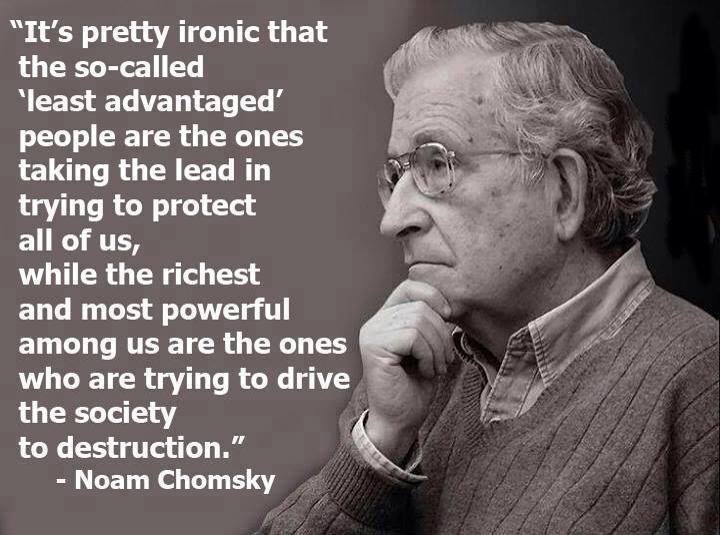
Thanks. I’m going to take it for granted that we want an Anarchist society – one where capitalism and the State have been abolished, where all forms of social oppression are eradicated and the human race lives sustainably and in harmony with the Earth. What we’re debating here is how to get there – the path from present day capitalism to an Anarchist society.

The traditional Anarchist view of the route to an Anarchist society is through a workers’ revolution, which occurs as the culmination of a progressively intensifying phase of class struggle. This is the position I support. I think workers’ revolution is both possible and necessary, for reasons I will go on to elaborate.

First of all, though, I’d like to clear up the concept of class, since it is often a source of great confusion. The working class is composed of those with nothing to sell except their labour. You don’t have to work in a factory to be working class, or even to have a job at all. You don’t have to be a white, heterosexual male, either.

Now, I’m going to read out a list of categories of people. See if you’re in any of them:

  • Your main source of income is interest, rent and/or dividends;
  • You own a business and work inside it for your main income, regardless of whether you employ anybody else. It doesn’t count if the so-called “business” is the supply of your own labour to a single employer that supervises your actions as it would an employee and is only doing it to avoid taxation and/or industrial relations laws;
  • You are a manager in the public or private sector with the right to hire and fire;
  • You are a copper, a prison warder, a military officer or member of the security services (e.g. ASIO);
  • You are a Member of Parliament or a local government Councillor, or a judge, magistrate or person with similar powers (e.g. member of the Administrative Appeals Tribunal).
  • You are employed by a trade union, political party or NGO as an organiser or office bearer.
  • You are reasonably confident that, in the next five or ten years, you will be in one of the above categories. It doesn’t count if you’re just hoping or if you’ll need a bit of luck for it to come off;
  • You stand to inherit, whether from a spouse, parent or otherwise, millions of dollars over and above a house to live in.

If you’re in one of those categories, can you put your hand up? You don’t have to say which one it is, because there are some it may be embarrassing to admit to being a member of. OK. Everyone who didn’t put their hand up is a member of the working class. You have an objective interest in getting rid of capitalism, over and above any ethical commitment you may have. Those of you who did put your hand up, you can still join the struggle as an ally, provided you have the ethical commitment to do so. You’re just not in the same position to have an impact.

So, what’s important about the working class? As we’ve just shown, it comprises the vast majority of society. You can’t change society without having at least a majority of the working class on your side and, if you want a revolution, the vast majority. Second, it is the experience of co-operation in the capitalist workplace that provides the experience that is necessary to co-operate in the class struggle.

Noam Chomsky: The Kind of Anarchism I Believe in, and What's Wrong with Libertarians

Noam Chomsky interviewed by Michael S. Wilson - Infoshop News, August 1, 2015

Disclaimer: The views expressed here are not the official position of the IWW (or even the IWW’s EUC) and do not necessarily represent the views of anyone but the author’s. The following is the adapted text of an interview that first appeared in Modern Success magazine.

So many things have been written about, and discussed by, Professor Chomsky, it was a challenge to think of anything new to ask him: like the grandparent you can’t think of what to get for Christmas because they already have everything.

So I chose to be a bit selfish and ask him what I’ve always wanted to ask him. As an out-spoken, actual, live-and-breathing anarchist, I wanted to know how he could align himself with such a controversial and marginal position.

Michael S. Wilson: You are, among many other things, a self-described anarchist — an anarcho-syndicalist, specifically. Most people think of anarchists as disenfranchised punks throwing rocks at store windows, or masked men tossing ball-shaped bombs at fat industrialists. Is this an accurate view? What is anarchy to you?

Noam Chomsky: Well, anarchism is, in my view, basically a kind of tendency in human thought which shows up in different forms in different circumstances, and has some leading characteristics. Primarily it is a tendency that is suspicious and skeptical of domination, authority, and hierarchy. It seeks structures of hierarchy and domination in human life over the whole range, extending from, say, patriarchal families to, say, imperial systems, and it asks whether those systems are justified. It assumes that the burden of proof for anyone in a position of power and authority lies on them. Their authority is not self-justifying. They have to give a reason for it, a justification. And if they can’t justify that authority and power and control, which is the usual case, then the authority ought to be dismantled and replaced by something more free and just. And, as I understand it, anarchy is just that tendency. It takes different forms at different times.

Anarcho-syndicalism is a particular variety of anarchism which was concerned primarily, though not solely, but primarily with control over work, over the work place, over production. It took for granted that working people ought to control their own work, its conditions, [that] they ought to control the enterprises in which they work, along with communities, so they should be associated with one another in free associations, and … democracy of that kind should be the foundational elements of a more general free society. And then, you know, ideas are worked out about how exactly that should manifest itself, but I think that is the core of anarcho-syndicalist thinking. I mean it’s not at all the general image that you described — people running around the streets, you know, breaking store windows — but [anarcho-syndicalism] is a conception of a very organized society, but organized from below by direct participation at every level, with as little control and domination as is feasible, maybe none.

Railroad Workers United's Jen Wallis and Greenpeace's Kim Marks on We Do The Work radio

By Jen Wallis and Kim Marks - We Do the Work Radio, July 28, 2015

Disclaimer: The views expressed here are not the official position of the IWW (or even the IWW’s EUC) and do not necessarily represent the views of anyone but the author’s.

Numsa National Executive Committee (NEC) statement

By Karl Cloete - NUMSA, July 23, 2015

Disclaimer: The views expressed here are not the official position of the IWW (or even the IWW’s EUC) and do not necessarily represent the views of anyone but the author’s.

The National Union of Metalworkers of South Africa (Numsa) held its ordinary and scheduled National Executive Committee (NEC) meeting, from Tuesday 21 July to Thursday 23 July, at Vincent Mabuyakhulu Conference Centre, Newtown, Johannesburg.

The NEC was attended by the National Office Bearers, elected NEC members from our nine Regions, as well as representatives from our sub-structures, namely our Youth Forum; Gender and National Education Committees.

The NEC received a comprehensive analysis of the current political and organisational challenges confronting the union.  We spent considered time hearing different perspectives, openly debating and collectively agreeing on solutions which will best serve our members.

EcoUnionist News #57

Compiled by x344543 - IWW Environmental Unionism Caucus, July 23, 2015

Disclaimer: The views expressed here are not the official position of the IWW (or even the IWW’s EUC) and do not necessarily represent the views of anyone but the author’s.

The following news items feature issues, discussions, campaigns, or information potentially relevant to green unionists:

Lead Stories:

Bread and Roses:

An Injury to One is an Injury to All:

Carbon Bubble:

Just Transition:

Other News:

For more green news, please visit our news feeds section on ecology.iww.org; Twitter #IWWEUC; Hashtags: #greenunionism #greensyndicalism #IWW

“Conscious Capitalism” Icon Whole Foods Exploits Prison Labor

By Ben Norton - CounterPunch, July 17, 2015

Disclaimer: The views expressed here are not the official position of the IWW (or even the IWW’s EUC) and do not necessarily represent the views of anyone but the author’s.

Whole Foods CEO John Mackey, whose net worth exceeds $100 million, is a fervent proselytizer on behalf of “conscious capitalism.” A self-described libertarian, Mackey believes the solution to all of the world’s problems is letting corporations run amok, without regulation. He believes this so fervently, in fact, he wrote an entire book extolling the magnanimous virtue of the free market.

At the same time, while preaching the supposedly beneficent gospel of the “conscious capitalism,” Mackey’s company Whole Foods, which has a $13 billion and growing annual revenue, sells overpriced fish, milk, and gourmet cheeses cultivated by inmates in US prisons.

The renowned “green capitalist” organic supermarket chain pays what are effectively indentured servants in the Colorado prison system a mere $1.50 per hour to farm organic tilapia.

Colorado prisons already grow 1.2 million pounds of tilapia a year, and government officials and their corporate companions are chomping at the bit to expand production.

That’s not all. Whole Foods also buys artisinal cheeses and milk cultivated by prisoners. The prison corporation Colorado Correctional Industries has created what Fortune describes as “a burgeoning $65 million business that employs 2,000 convicts at 17 facilities.”

The base pay of these prison workers is 60¢ per day. Whole Foods purchases cheeses from these prisons, which literally pay prison laborers mere pennies an hour, and subsequently marks up the price drastically.

This is by no means the only questionable practice of Whole Foods—a corporation that presents itself as the leader in a new generation of Benevolent Big Business. In June, it was revealed that the company had systematically overcharged customers in a variety of locations for at least half of a decade.

The double standards are striking. One would think exploiting prisoners—individuals incarcerated by the state—would contradict putative libertarian values of voluntarism, voluntary association, and non-coercion. Yet critics would argue right-wing libertarians have never been ones to demonstrate moral consistency.

In fact, Mackey also firmly opposes basic libertarian values vis-à-vis workers’ rights and labor organizing. He forbids Whole Foods employees from unionizing, comparing workers’ democratic control over their own workplaces and lives to herpes. A union “doesn’t kill you, but it’s unpleasant and inconvenient, and it stops a lot of people from becoming your lover,” the Whole Foods CEO declared.

What could we accomplish in Greece?

By the Blogger - Life Long Wobbly, July 5, 2015

Disclaimer: The views expressed here are not the official position of the IWW (or even the IWW’s EUC) and do not necessarily represent the views of anyone but the author’s.

This post is a departure from my usual style of allowing thoughts to mellow for weeks or months. I’m writing this after the results of the #Greferendum are in, showing a massive victory for the No vote which the far left was pushing, against the opposition parties and all of the European “institutions.” I’m writing it before Monday morning, when just about anything could happen. It’s an experiment with hastier writing, which after all is sometimes called for. It seems like the world has been accelerating recently, so it’s a worthwhile mode to dust off.
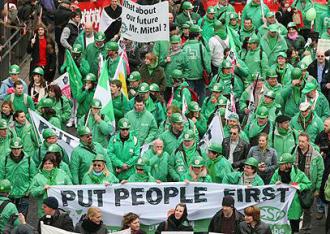
I won’t try right now to make any grand predictions about what I think might happen in Greece tomorrow morning, or this week. Nontina Vgontzas has already covered all of the imaginable scenarios resulting from a No vote better than I could have.

For example, apparently the opposition parties are already calling for the Syriza finance minister to resign, which seems pretty bold in the context, but certainly fits the “Government of National Salvation” scenario that Nontina had outlined:

Of course, the Europeans probably would prefer a less confrontational route if they can get one. In a third possible scenario, then, No wins and the creditors resume negotiations — but on the condition that Syriza invites other political parties to join the governing coalition. A government of national salvation, without the drama of elections.

They seem to be attempting this already. According to the Guardian:

Monday’s meeting of Greek party political leaders may be dominated by a call for finance minister Yanis Varoufakis to be removed from the country’s negotiating team.

The head of the centrist Potami party, Stavros Theodorakis, has signalled he will ask for the academic-cum-politician’s immediate withdrawal from the team – citing irreconcilable differences with Greece’s creditors.

The situation is still very fluid in Greece. It has been for awhile, and probably will be for some time to come, but there is fluidity, and there is fluidity. The potential scope of activity for workers in Greece is determined both by their own initiative, confidence, and coherence as a class, as well as by the initiative and activity of the Greek far-left, of Syriza, of the European “institutions” and of the capitalist class as a global whole – just as these last four also interact on each other, and are acted on by the working class. Of course, workers outside of Greece also play a factor – the recent strike wave in Germany has tightened the possibilities for the “institutions”, and could inspire industrial action in other countries. Any increase or decrease in class activity in Germany will have its repercussions in Greece and the rest of Europe.

How the Labor and Environmentalist Movements Can Put Workers at the Center of Climate Justice

By Trish Kahle - In These Times, July 1, 2015

Disclaimer: The views expressed here are not the official position of the IWW (or even the IWW’s EUC) and do not necessarily represent the views of anyone but the author’s.

2015, only halfway over, has already been an extreme year for both labor and the climate: the Midwest and Texas are experiencing record rainfall while California is in a record-breaking drought, and 2015 is the hottest year on record so far (the standing record is from 2014), including a heatwave in India that left more than 2,300 people dead. The Obama administration continues to try and push through the Trans-Pacific Partnership on fast-track, with millions of workers livelihoods hanging in the global balance and attacks on unions like the United Steelworkers continue to threaten worker, community and environmental safety. Meanwhile, energy companies insist that drilling in the soon-to-be ice-free summertime arctic will create jobs—even as it may mean game over for the climate.

There has perhaps never been a more prescient moment to emphasize what a growing number of people already know: the fate of labor and the climate are linked. In his most recent piece for The Nation, Jeremy Brecher notes how well suited the traditions of the labor movement are to the fight for climate protection: "The labor movement's most essential value is solidarity ... that we will survive and prosper only if we look out for one another. Climate protection is the new solidarity." Brecher, a founder of the Labor Network for Sustainability and author of Climate Insurgency: A Strategy for Survival as well as the classic labor history Strike! is at the forefront of the struggle to break down the false dichotomy of "jobs versus environment" and to fight for a just transition that puts workers at the center of a vision of climate justice. 

Canadian Neocolonialism in Colombia: Oil, Mining and the Military

By Asad Ismi - Canadian Centre for Policy Alternatives Monitor, July 2015

Disclaimer: The views expressed here are not the official position of the IWW (or even the IWW’s EUC) and do not necessarily represent the views of anyone but the author’s.

In May, the board of Pacific Rubiales, a Canadian firm and the biggest private oil producer in Colombia, announced its support for a takeover bid by the Mexican conglomerate Alfa and U.S.-based Harbour Energy. Pacific Rubiales operates Colombia’s biggest oil field, in the province of Meta, and during the past seven years the company has become synonymous with a doubling of oil exports, from half a million to a million barrels a day. Oil came to account for half of Colombia’s exports and 20% of official revenue, making Pacific Rubiales the most valuable company on the Colombian stock market.

However, by January, the sharp drop in oil prices, and the firm’s trouble developing new oil fields, had cut share prices by 90% from their 2011 high. It was unclear whether Pacific Rubiales shareholders would accept the takeover offer when the Monitor when to print, but Alfa chairman Armando Garza Sada was optimistic: “We maintain our positive view regarding Pacific Rubiales’ excellent track record and on the strength of their people. Thus, by incorporating ALFA and Harbour Energy as new equity holders, we foresee Pacific Rubiales successfully developing investment projects in Colombia.”

The emphasis in the above statement is added, because outside the business pages of daily newspapers, there is nothing excellent about the company’s track record. Pacific Rubiales is just as synonymous with human rights and labour rights violations as with oil export success, and if new production is to occur, there’s slim evidence it will benefit anyone outside the corporate boardroom. Still, the problem in Colombia is much bigger than one company. And the case of Pacific Rubiales, regardless of whether it remains a Canadian firm, holds important lessons on the evolution of Canadian neocolonialism going back 20 years.

Against Deep Green Resistance

By Michelle Renée Matisons and Alexander Reid Ross - Institute for Anarchist Studies, August 9, 2015

The Radical Turn?

For a book that advertises itself as a “shift in strategy and tactics,” Deep Green Resistance (DGR) has an overwhelmingly dispiriting tone, and is riddled with contradictions.[1] While DGR provocatively addresses many pressing social and ecological issues, its opportunistic, loose-cannon theoretical approach and highly controversial tactics leaves it emulating right-wing militia rhetoric, with the accompanying hierarchical vanguardism, personality cultism, and reactionary moralism. By providing a negative example, DGR does us the service of compounding issues into one book. Take it as a warning. As we grasp for solutions to multiple and compounding social and ecological crises, quick fixes, dogmatism, and power grabbing may grow as temptations. By reviewing DGR, we are also defending necessary minimal criteria for movements today: inclusivity, democracy, honesty, and (dare we suggest) even humility in the face of the complex problems we collectively face. None of these criteria can be found in DGR, and its own shortcomings are a telling lesson for us all.

It is instructive that the group based on DGR has become geared almost exclusively to outreach, not unlike a book club. At certain times, they claim to forbid their members from participating in illegal activity after having attempted a short-lived attempt to generate a grassroots, direct action network. At other times, DGR members claim to be involved in nonviolent civil disobedience. The ambiguity of their attempt at organization stems from the muddled ideas of two of the book’s authors, Derrick Jensen and Lierre Keith, who forced out the main organizer, Premadasi Amada, as well as their other co-author, Aric McBay, over the question of inclusive gender policies.[2]

DGR’s organizational body (distinct from the book, but modeled after it) leads us to agree that they have been rightly accused by former members of acting like a cult rather than as part of a larger movement. They seem much more interested in lionizing their leadership than in taking direct action.[3]

DGR’s approach is purely ideological; they intend not to form their own groups or cells to carry out direct action, but to teach the need for direct action to the supposedly ignorant masses. Such an attitude of approaching from above, rather than joining in solidarity, is degrading to peoples’ ability to self-organize. We must equally lead and be led by engaging in struggle, not standing outside of it. Our ultimate conclusion is that DGR’s goal of “civilization’s” destruction through “underground” attacks against infrastructure manifests both an ideological and strategic misdirection, foreclosing the potential for participatory democracy and direct action as it veers into intellectual dishonesty and irreconcilable political contradictions.

Pages

The Fine Print I:

Disclaimer: The views expressed on this site are not the official position of the IWW (or even the IWW’s EUC) unless otherwise indicated and do not necessarily represent the views of anyone but the author’s, nor should it be assumed that any of these authors automatically support the IWW or endorse any of its positions.

Further: the inclusion of a link on our site (other than the link to the main IWW site) does not imply endorsement by or an alliance with the IWW. These sites have been chosen by our members due to their perceived relevance to the IWW EUC and are included here for informational purposes only. If you have any suggestions or comments on any of the links included (or not included) above, please contact us.

The Fine Print II:

Fair Use Notice: The material on this site is provided for educational and informational purposes. It may contain copyrighted material the use of which has not always been specifically authorized by the copyright owner. It is being made available in an effort to advance the understanding of scientific, environmental, economic, social justice and human rights issues etc.

It is believed that this constitutes a 'fair use' of any such copyrighted material as provided for in section 107 of the US Copyright Law. In accordance with Title 17 U.S.C. Section 107, the material on this site is distributed without profit to those who have an interest in using the included information for research and educational purposes. If you wish to use copyrighted material from this site for purposes of your own that go beyond 'fair use', you must obtain permission from the copyright owner. The information on this site does not constitute legal or technical advice.
