

You are here

renewable energy

California’s progressive policies yield better job growth and wage growth than Republican comparators

By Elizabeth Perry - Work and Climate Change Report, January 15, 2018

A November 2017 report from the Labor Center at University of California Berkeley  examined the “California Policy Model” –  defined as a collection of 51 pieces of legislation and policy implementations enacted in California between 2011 and 2016 – and found that with progressive policies such as minimum wage increases, increased access to health insurance, reduction of carbon emissions and higher taxes on the wealthy, the state showed  superior economic  performance  in comparison to Republican-controlled states and to a simulated version of California without such policies.  According to  “California is Working: The Effects of California’s Public Policy on Jobs and the Economy since 2011,  the suite of progressive policies resulted in superior total employment growth , superior private sector employment growth, and higher wage growth for low-wage workers from 2014 to 2016. All the while, keeping the state on track to meet its 2020 GHG emissions targets.  The  environmental policies included in the analysis were: starting in 2006, AB 32, which committed the state to lowering its greenhouse gas emissions to 1990 levels by 2020;  regulations under AB 32 in 2012 and 2013, which introduced the state cap and trade program;  SB 350 in 2015 and 2016,  committing the state to greater use of renewable energy and further improvements in energy efficiency ; and SB 32, which raised the emissions reduction goal to 40 percent below 1990 levels by 2030.  The report warns that  enforcement of labour standards and a lack of affordable housing remain as challenges facing the state, and also admits to possible weakness  regarding the second of its two methods of analysis, the synthetic control statistical method.
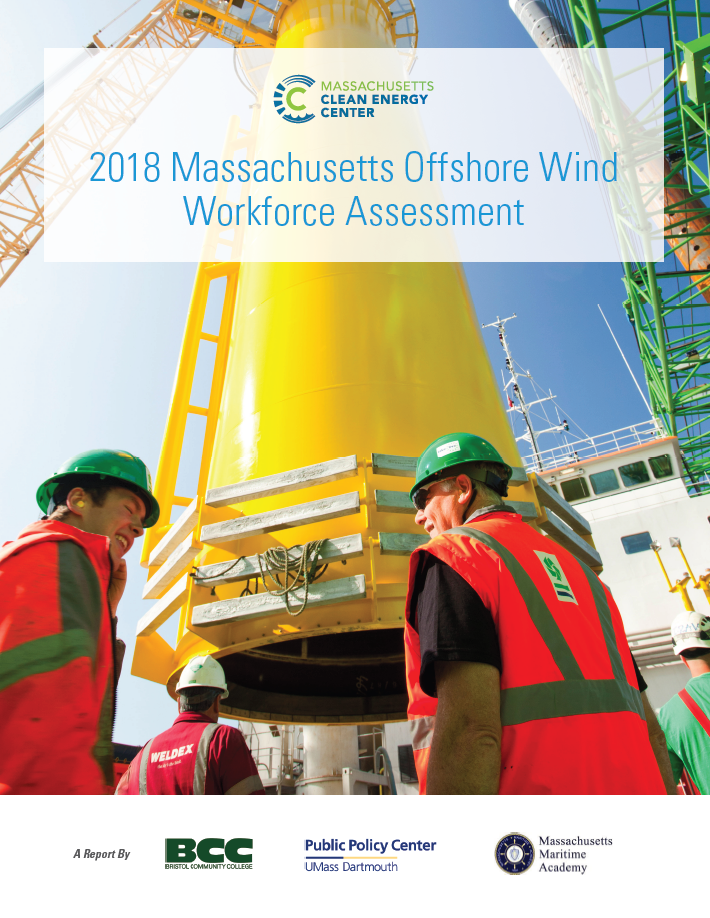
2018 Massachusetts Offshore Wind Workforce Assessment

By Paul Vigeant, et. al. - Massachusetts Clean Energy Center, January 2019

The 2018 Massachusetts Offshore Wind Workforce Assessment provides a comprehensive analysis of the workforce needs and economic development impacts associated with the deployment of 1600 megawatts of offshore wind in Massachusetts. The report describes the jobs associated with planning, constructing and servicing offshore wind projects and provides information on the education, skills and health and safety credentials required for each job. Importantly, the report highlights the opportunities for Massachusetts residents to work in this emerging industry, and identifies recommendations and key strategies to better position the Commonwealth, offshore wind industry, educational institutions, non-profits, and labor to develop and serve a burgeoning offshore wind workforce.

Read the Report (PDF).

A Vision for a Sustainable Battery Value Chain in 2030: Unlocking the Full Potential to Power Sustainable Development and Climate Change Mitigation

By staff - World Economic Forum, 2019

The need for urgent and more intensive actions against climate change is broadly recognized. In support of this agenda, this report presents a simple yet profound vision: a circular, responsible and just battery value chain is one of the major near- term drivers to realize the 2°C Paris Agreement goal in the transport and power sectors, setting course towards achieving the 1.5°C goal if complemented with other technologies and collaborative efforts.

With the right conditions in place, batteries are a systemic enabler of a major shift to bring transportation and power to greenhouse gas neutrality by coupling both sectors for the first time in history and transforming renewable energy from an alternative source to a reliable base. According to this report, batteries could enable 30% of the required reductions in carbon emissions in the transport and power sectors, provide access to electricity to 600 million people who currently have no access, and create 10 million safe and sustainable jobs around the world.

This report provides a quantified foundation for a vision about how batteries can contribute to sustainable development and climate change mitigation over the coming decade. The analysis underscores that this opportunity can only be achieved sustainably through a systemic approach across social, environmental and economic dimensions. It outlines key conditions and presents recommendations to realize this potential.

Read the report (Link).

A New Circular Vision for Electronics - Time for a Global Reboot

By staff - Platform for Accelerating the Circular Economy (PACE) and E-waste Coalition, January 2019

The global consumption of smart phones and other electronic devices is increasing, and bringing benefits to many people in areas as wide- ranging as health, education, finance and commerce. But there is a downside: the world is now seeing a growing tsunami of e-waste.

A new report launched by the United Nations E-waste Coalition indicates that the global economy generates approximately 50 million tonnes of e-waste every year. This is a huge amount, representing the mass of all the commercial aircraft ever produced.

Unfortunately, less than 20% of this is waste formally recycled. This results in global health and environmental risks, as well as the unnecessary loss of scarce and valuable natural materials.

But businesses, policy makers, and the public can turn this global challenge around. And the rewards will be significant. Indeed, the proper management of e-waste yields not just one, but multiple gains for development.

The new report calls for a systematic collaboration with major brands, small and medium-sized enterprises (SMEs), academia, trade unions, civil society and associations in a deliberative process to reorient the system and reduce the waste of resources each year with a value greater than the GDP of most countries.

Read the report (PDF).

Responsible Minerals Sourcing for Renewable Energy

By Elsa Dominish, Sven Teske, and Nick Florin - Institute for Sustainable Futures, 2019

The transition to a 100% renewable energy system is urgently needed to meet the goals of the Paris Climate Agreement and increase the chance of keeping global temperature rise below 1.5 degrees. Renewable energy technologies are now the most cost competitive technologies for new installations – and recent investment in new renewable energy infrastructure globally has been double that of new energy investment in fossil fuels and nuclear.

Renewable energy technologies, electric vehicles and battery storage require high volumes of environmentally sensitive materials. The supply chains for these materials and technologies need to be appropriately managed, to avoid creating new adverse social and environmental impacts along the supply chain.

This report presents the findings of an assessment of the projected mineral demand for fourteen metals used in renewable energy and storage technologies, the potential to reduce demand through efficiency and recycling, and the associated supply risks and impacts. Solar photovoltaic (PV) and wind power have been chosen for this assessment because these two technologies make up the majority of new global renewable electricity installations. Batteries have been assessed because of their importance for use in electric vehicles (EVs) and energy storage systems.

This research aims to identify the main ‘hotspots’ or areas of concern in the supply chain, including technologies, metals and locations, where opportunities to reduce demand and influence responsible sourcing initiatives will be most needed.

Read the report (PDF).

Realizing a Just and Equitable Transition Away From Fossil Fuels

By Georgia Piggot, Michael Boyland, Adrian Down, and Andreea Raluca Torre - Stockholm Environment Institute, January 2019

Meeting agreed climate goals requires a rapid decarbonization of the global energy system, which in turn necessitates a reduction in fossil fuel production. While limiting fossil fuel use will likely bring a multitude of societal benefits — related to reduced climate risks, sustainable economic growth, air quality and human health — it is important to recognize that not everyone will benefit equally from a transition to a low-carbon economy. In particular, those who rely on fossil fuel production for their livelihood, or who were anticipating using fossil-fuelled energy to meet development needs, may carry a disproportionate share of the burdens of an energy transition.

The need for a “just transition” to a low-carbon economy — namely, a transition that minimizes disruption for workers and communities reliant on unsustainable industries and energy sources — is gaining traction in climate policy and political discourse. A call for “a just transition of the workforce” was included in the preamble to the Paris Agreement, and the United Nations Framework Convention on Climate Change (UNFCCC) secretariat has prepared a technical paper on transition planning.10 In addition, several national and regional governments have recently announced new transition planning processes, including Canada, Germany, Spain, Scotland, New Zealand, and the European Union.

A central concern of just transition efforts is to ensure that low-carbon transitions address social and economic inequality. The UNFCCC calls for a transition that “contribute(s) to the goals of decent work for all, social inclusion and the eradication of poverty.” Likewise, the European Commission aims to “boost the clean energy transition by bringing more focus on social fairness.” And the Scottish Government is seeking a transition that “promotes inclusive growth, cohesion and equality.”

Key messages:

  • Governments are introducing new “just transitions” policies to help workers and communities move away from fossil fuels.
  • Most policies assume that justice goals will be achieved by helping those dependent on coal, oil and gas move into new roles; however, there is little critical reflection on what justice means in the context of an energy transition away from fossil fuels.
  • There are a number of gaps in current just transition policies when viewed through a justice lens. For example, no policies contain measures to improve the lives of people currently marginalized in the energy system.
  • Creating just and equitable transition policies requires collecting data on the current distribution of the harms and benefits of the energy system, and mapping out how this will change as fossil fuels become a less-prominent part of the energy mix.
  • By taking justice considerations into account, transition policies are more likely to limit social and political resistance, win a broad consensus, and achieve effective implementation.

Read the text (PDF).

Climate Stability, Worker Stability: are they compatible?

By Dr. Louise Comeau, JD, PhD and Devin Luke - Adapting Canadian Work and Workplaces to Respond to Climate Change, December 3, 2018

It appears we face a low- carbon transition dilemma. On the one hand, climate change solutions, like greenhouse gas regulation and carbon pricing, raise concerns about potential job displacement for workers in traditional energy sectors like oil and gas production and fossil-fuel generated electricity. Hence the calls for just transition. Our research, however, suggests that this blame may be at least partially misplaced. Energy workforce changes are currently affected by broader societal changes relating to fuel-cost differentials (i.e., natural gas cheaper than coal), automation, and the societal transition to non-unionized, unstable and lower-paying work. Greenhouse gas regulations and carbon pricing are certainly not the only driver of workforce change, and likely not, at least currently, not the primary driver.

Should proponents of renewable energy, energy efficiency and the low-carbon transition address these broader societal trends? If so, how? Is the solution to focus on collective responses such as energy cooperatives, public sector ownership of renewable energy supply, utility-scale and managed energy efficiency programs, rather than market- based, privatized solutions? These questions are worth answering. Our goal with this study was to better understand the training needs associated with renewable energy and energy efficiency job projections. There appears, however, to be a greater need to better integrate climate change and low-carbon economy discussions into a broader discourse on the nature of work.

Read the report (PDF).

New Report: Protect the Climate, Save Money, and Create Jobs

By Joe Uehlein - Labor Network for Sustainability, October 14, 2015

Disclaimer: The views expressed here are not the official position of the IWW (or even the IWW’s EUC) and do not necessarily represent the views of anyone but the author’s.

Today labor and environmental organizations released a new report, The Clean Energy Future: Protecting the Climate, Creating Jobs and Saving Money, showing that the United States can reduce greenhouse gas [GHG] emissions 80 percent by 2050 — while adding half-a-million jobs and saving Americans billions of dollars on their electrical, heating, and transportation costs.

Joe Uehlein of the Labor Network for Sustainability says, “This report is good news for American workers. Protecting the climate has often been portrayed as a threat to American workers’ jobs and the U.S. economy. But this report shows that a clean energy future will produce more jobs than “business as usual” with fossil fuels.”

May Boeve of 350.org says, “This report presents a practical, realistic way for the United States to address the climate crisis and proves that we don’t have to choose between jobs and the environment.”

The Clean Energy Future: Protecting the Climate, Creating Jobs and Saving Money refutes the claim that meeting the IPCC targets will cause economic devastation. Indeed, not only can these targets can be met, but meeting them will create more jobs and save money. This report, prepared by the Labor Network for Sustainability and 350.org, with research conducted by a team led by economist Frank Ackerman of Synapse Energy Economics, lays out an aggressive strategy for energy efficiency and renewable energy that will:

Transform the electric system, cutting coal-fired power in half by 2030 and eliminating it by 2050; building no new nuclear plants; and reducing the use of natural gas far below business-as-usual levels.

  • Reduce greenhouse gas emissions 85 percent below 1990 levels by 2050, in the sectors analyzed (which account for three-quarters of US GHG emissions).
  • Save money – the cost of electricity, heating, and transportation under this plan is $78 billion less than current projections from now through 2050.
  • Create new jobs – more than 500,000 per year over business as usual projections through 2050.

This program will help bring together environmental and labor advocates around their common interest in putting Americans to work saving the earth’s climate. Climate protection has caused significant friction between labor unions and environmentalists around whether to create jobs or address climate change. The report demonstrates that this is a false choice. For unions and other jobs advocates, climate protection is also a great jobs program. We can create many more jobs by protecting the environment than by expanding the fossil fuel infrastructure.

Read the full report here: PDF

Renewable energy: planning a just transition

By Sandeep Pai and Savannah Carr-Wilson - The Ecologist, November 28, 2018

As the transition to renewables speeds up, governments will have to seriously think about what will happen to people working in the fossil fuel industry.

When governments start planning for national renewable energy transitions, it is important that they are clear about new job creation (in renewables or any other sector) and how to rehabilitate fossil fuel workers and connected communities.

Forward planning 

Ken Smith of Unifor explained the need for governments to have a just transition plan. “Suppose there is a man living by the river in a fire zone. He has children and belongings. He doesn’t want to lose things when fire comes. What should he do?

"He should build the bridge before fire comes. That’s what is required. Similarly, countries have to plan a transition. Give training, and deploy fossil fuel workers in other industries. Create jobs before the transition.” 

Sandeep asked Ken whether he thinks oil sands workers need a transition plan. He replied, “Yes, absolutely. There are all kinds of things that can be done. There is lots for all of us in Canada. The future doesn’t have to be so gloomy. But we have to plan a transition for workers.

"I was unemployed so I had to move here. But I moved away from my family. Now Fort McMurray is my home and people here are my family members.

"It’s like a temporary community. However, it can’t just work on oil. We need to diversify, get training and develop industries like wind, solar and hydro. This will prevent a collapse.”

Climate Action in a Climate of Job Insecurity

By Hazel Graham and Stephen Graham - The Ecologist, November 19, 2018

The seriousness of our environmental plight comes more clearly into view with each passing news cycle. The Canadian glaciers are melting faster than we forecast. Humanity has wiped out 60 percent of animal populations since 1970.

Only 12 years remain to act if we are to keep the global average temperature rise below 1.5C as required – yet global action on climate change consistently falls far short of what is needed. The ecological rifts opening up are legion.

From climate change to biodiversity loss, nitrogen cycle disruption to ocean acidification, the realisation that we are at – or will soon be reaching – points of no return has dominated headlines in recent months.

Pages

The Fine Print I:

Disclaimer: The views expressed on this site are not the official position of the IWW (or even the IWW’s EUC) unless otherwise indicated and do not necessarily represent the views of anyone but the author’s, nor should it be assumed that any of these authors automatically support the IWW or endorse any of its positions.

Further: the inclusion of a link on our site (other than the link to the main IWW site) does not imply endorsement by or an alliance with the IWW. These sites have been chosen by our members due to their perceived relevance to the IWW EUC and are included here for informational purposes only. If you have any suggestions or comments on any of the links included (or not included) above, please contact us.

The Fine Print II:

Fair Use Notice: The material on this site is provided for educational and informational purposes. It may contain copyrighted material the use of which has not always been specifically authorized by the copyright owner. It is being made available in an effort to advance the understanding of scientific, environmental, economic, social justice and human rights issues etc.

It is believed that this constitutes a 'fair use' of any such copyrighted material as provided for in section 107 of the US Copyright Law. In accordance with Title 17 U.S.C. Section 107, the material on this site is distributed without profit to those who have an interest in using the included information for research and educational purposes. If you wish to use copyrighted material from this site for purposes of your own that go beyond 'fair use', you must obtain permission from the copyright owner. The information on this site does not constitute legal or technical advice.
