You are here

green syndicalism

Worker Solidarity with Camp Makwa and the Movement for Environmental Justice

By the Twin Cities GDC - It's Going Down, December 14, 2017

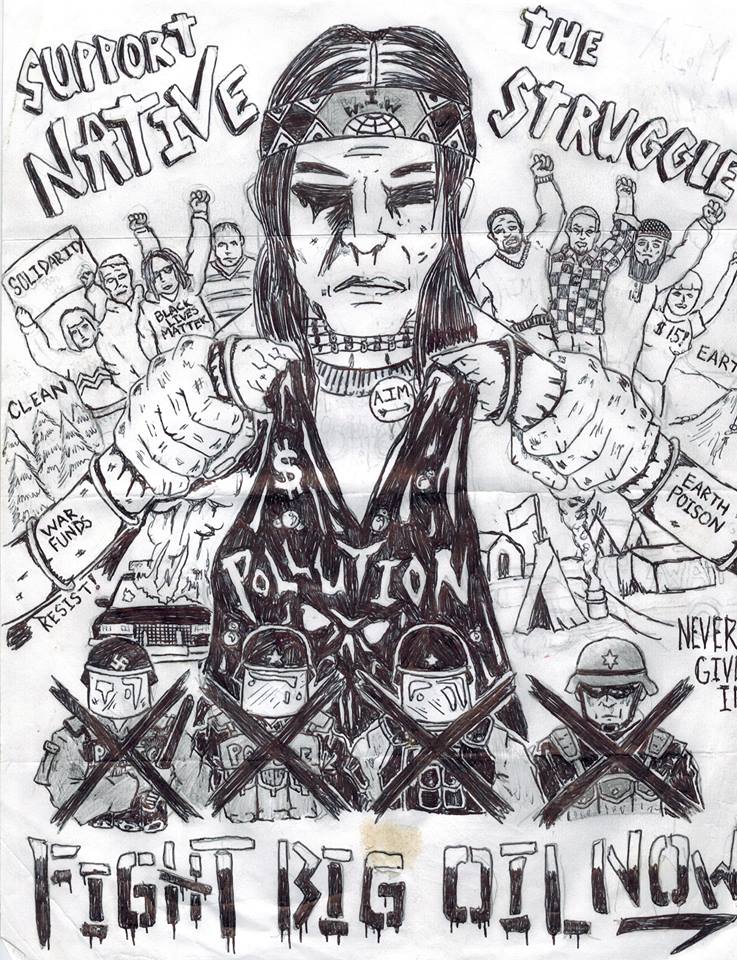
On Tuesday, December 5, 2017, the Twin Cities IWW unanimously passed a resolution reaffirming the IWW’s opposition to the construction of the Dakota Access Pipeline and the Keystone XL Pipeline as well as officially declaring its opposition to the construction of the Enbridge Line 3 Pipeline. The Twin Cities IWW pledged material support to water protectors, rejecting Enbridge’s arguments that the pipeline is necessary for jobs and prosperity for working class people, and put forward a vision of a “Just Transition” to a sustainable economy.

The resolution pledged two donations of $100 each to the legal defense fund and the supply fund of Camp Makwa, a resistance camp using direct action to protect the land and water that Anishinaabe people and other working class Minnesotans depend on. The resolution further endorsed the Black Snake Killaz Circuit, a series of fundraising concerts for Camp Makwa running across the Twin Cities and other towns in Minnesota and Wisconsin throughout the winter.

No Jobs on a Dead Planet

In the resolution, the Twin Cities IWW rejected the attempts by Enbridge and certain unions to paint the pipeline as good for workers. Instead, the resolution focuses on the harm that the oil industry does to its workers, surrounding communities, and the environment.

Enbridge’s existing Line 3 is the cause of the largest inland oil spill in US history, spilling 1.7 million gallons of oil into the Prairie River in 1991. In 2007, tragedy struck in Minnesota again with a pinhole leak explosion in Clearbrook, killing two workers, sparking a large fire, and spilling 15,000 gallons. This spill burned for three days, contaminating the air in the surrounding community. In 2010, Enbridge’s Line 6B pipeline also spilled, releasing around a million gallons of oil into Talmadge Creek and the Kalamazoo River and causing 30,000-50,000 houses to evacuate—and leaving twice as many without clean drinking water. In the aftermath of these spills, union workers have spoken out against Enbridge for failing to clean up their mess which has resulted in birth defects, illness, cancer, and death of both humans and animals in the area of the disaster.

In addition to these specific acts of negligence, the resolution noted the way in which the oil industry exposes working class communities and especially communities of color and indigenous people to the worst risks. These communities are often ignored and their well-being violated during the permitting process for pipelines and other infrastructure projects. For example, pipeline routes often avoid wealthier or majority-white towns and are directed rather through poorer areas, especially near indigenous land. This was the case with the Dakota Access Pipeline, and the same pattern can be seen with Line 3.

The resolution further emphasizes the reality of climate change, an accelerating trend that is already disrupting and destroying lives, economies, ecologies, and communities around the world. As the resolution notes, “there are no jobs on a dead planet.”

Faced with environmental dangers on a local and global scale, and unable to stop the lobbying power of well-connected companies, marginalized communities of workers are left with few choices except direct action. Water protectors face violence from the state and private security to defend the land and the people who live on it from the harm done by the oil industry.

Banner Drop Against Columbus Murals at University of Notre Dame

By the collective - Rising Tide Michiana, December 8, 2017

“South Bend, Indiana”—Studying for their final exams, University of Notre Dame students in the library on Friday morning looked up and saw a banner unfurled from the second-floor balcony. The banner proclaimed,

This is Potawatomi land! F*ck the KKKolumbus murals!

The message comes as students have been organizing against murals displayed by the entrance of the university’s main administrative building. According to a pamphlet issued by Notre Dame, the nineteenth-century murals “create a heroic impression” of Christopher Columbus, despite the conqueror’s record of mass enslavement and murder. Moreover the paintings portray indigenous people in ways that Native American students say are stereotypical and insulting.

Students are collecting signatures for a petition titled “Dear Father Jenkins, The Murals Must Go.” Signed by more than 600 people, the petition argues, “The Native persons are depicted as stereotypes, their destruction is gilded over, and their slavery is celebrated. The murals commemorate and laud the beginning of the centuries-long systematic removal of Native American persons and culture from the United States.”

Twin Cities IWW Resolution in Solidarity with Camp Makwa and the movement for environmental justice

Adopted Unanimously by the Twin Cities IWW General Membership Branch - December 5, 2017
Whereas: On March 3rd 1991 the Line 3 pipeline caused the largest inland oil spill in US history, rupturing in Grand Rapids, Minnesota spilling 1.7 million gallons of oil into the Prairie River; and

Whereas: In July 2010, Enbridge also spilled about a million gallons of Dilbit Oil in the Kalamazoo River when the Line 6B pipeline burst and flowed into the Talmadge Creek and then the Kalamazoo before the the spill was contained. On 29 July 2010, the Calhoun County Health Department asked 30 to 50 thousand households to evacuate, and twice as many were advised not to drink their water. Union workers cleaning up the Kalamazoo Spill have spoken against Enbridge for insufficiently cleaning up the spill which has resulted in birth defects, illness, cancer and death of both humans and animals in the area of the disaster; and

Whereas: In 2007, 2 Enbridge workers were killed in Clearbrook, Minnesota when a pinhole leak explosion sparked a huge fire and spilled 15,000 gallons of oil. Enbridge let the spill burn for three days poisoning the air of the surrounding community; and

Whereas: The Oil Industry and many other unsustainable industries sacrifice the health and safety of the working class and poor communities, especially many indigenous and communities of color. These communities are subject to environmental racism and classism and often ignored and violated during the permitting process of such projects; and

Whereas: These communities often are forced to defend themselves with direct action which puts them at greater risk of violence and incarceration from the state and private security; and

Whereas: The construction of these pipelines will contribute to the acceleration of already dangerous levels of currently existing greenhouse gas emissions which are contributing to the already dangerous effects of climate change, which could lead to a dead planet with no jobs; and

Whereas: Camp Makwa was established in August of 2017 to resist the pipeline using direct action to protect the water and natural resources such as the wild rice lakes, fishing and hunting, and farming that the Anishinaabe Tribe and working class in the area depend on. They have taken several direct actions to shut down construction of the Line 3 pipeline in Superior, Wisconsin and will resist the possible expansion in the spring. They are currently still camping during the harsh Minnesota winter.

Whereas: Neither the Line 3 Pipeline Dakota Access Pipeline, or the Keystone XL Pipeline will provide anywhere near the number of permanent union jobs the promoters of these projects promise they will, and

Whereas: More permanent union jobs can be created at union wages by decommissioning oil pipelines and upgrading water pipeline infrastructure, such as in Flint, Michigan. LIUNA and many labor unions currently have jobs working in the renewable energy sector such as solar, wind, and hydroelectric and could organize for a rapid transition of energy production and manufacturing to be safe for the workers, the surrounding communities and the environment. Though these renewable energy jobs are currently, typically non-union, trade unions if so determined, could easily develop a successful green energy organizing program, using solidarity unionism, that would revitalize the currently struggling labor movement. Far more jobs currently exist in the growing renewable energy sector than in the declining fossil fuel sector. Also these pipeline projects will not deliver the promised "energy security" or "energy independence" promised by their promoters, including the Building Trades and AFL-CIO Union officials among them and;

Whereas: Many unions, including the IWW, ILWU, ATU, APWU, LIUNA-City Employees Local 236, CWA, UE, SEIU, NNU, Pride at Work, A. Phillip Randolph Institute, the Asian Pacific American Labor Alliance, the Coalition of Black Trade Unionists, the Coalition of Labor Union Women, the Labor Council for Latin American Advancement, Labor for Standing Rock, and many members of other Labor organizations have already publicly stated opposition to the Dakota Access Pipeline and or the Keystone XL Pipeline; and

Whereas: President Donald Trump's executive orders that dismantle environmental regulation and ostensibly "clear a path" for the completion of the aforementioned pipelines are contradictory in nature and are designed primarily to divide workers and environmentalists over the false dichotomy of "jobs versus the environment"; and

Be Resolved that: The Twin Cities IWW reaffirms the IWW’s opposition to the construction of the Dakota Access Pipeline and the Keystone XL Pipeline as well as officially declares its opposition to the construction of the Line 3 Pipeline; and

Be it Also Resolved that: The Twin Cities IWW donates $100 each to both Camp Makwa’s legal and supply fund (Legal | CAMP SUPPLIES FUND) and urges our Union’s members, the Labor Movement, and working class to pass resolutions like this one, donate, join, and organize in solidarity with Camp Makwa, the resistance to Line 3, and the movement for environmental justice, locally and abroad.

Be it also Resolved that: The Twin Cities IWW endorses Black Snake Killaz Circuit, a collection of benefit shows created by organizers, artists, and eco-activists who are standing in solidarity with indigenous water protectors and their accomplices fighting Line 3 to defend Anishinaabe land and water from the extractive industry; and

Be it Further Resolved that: The Twin Cities IWW calls on rank and file members of the Building Trades, Teamsters, and other unions who have declared support for these pipelines and other unsustainable projects to implement Green Bans and take direct action by striking and or slowing down in solidarity with the communities resisting Line 3, additional pipelines, and other projects that are exploitive of the working class and the plant we inhabit.

Be it Additionally Resolved that: The Twin Cities IWW calls on the working class, unions, and the unsustainable companies that employee them, such as Enbridge, as well as their financial supporters to develop and rapidly implement a "Just Transition" plan for workers in unsustainable industries, such as pipeline and oil industry workers, to be trained in and given union jobs in the green energy sector. ; and

Be it Finally Resolved that: The Twin Cities IWW reaffirms our belief and commitment to revolutionary industrial unionism, environmental justice, and community self-defense with our goal to “organize as a class, take possession of the means of production, abolish the wage system, and live in harmony with the Earth.”

Why Redneck Revolt Says Deal With Racism First, Then Economics

By Zenobia Jeffries - Yes! Magazine, November 29, 2017

Moved by the need for control, for an unchallenged top tier, the power elite in American history has thrived by placating the vulnerable and creating for them a false sense of identification—denying real class differences where possible.
—Nancy Isenberg, White Trash: The 400-Year Untold History of Class in America

There is no shortage of media commentary discrediting “identity politics,” particularly the focus on Black, Latinx, LGBTQ, and immigrant communities calling for justice and equity. Economics is our real problem, a counter argument goes, not race, sex, gender, citizenship. But as author Nancy Isenberg points out in White Trash, “identity has always been a part of politics.”

Laws have been written to oppress and exploit particular identities—Native Americans, Black Americans, Asians, homosexuals, transgender, and women—in a successful effort to maintain a system of White supremacy. Yet, members of these communities have worked for the rights and equality of everyone. In turn, White allies have joined in these anti-racism fights.

The Redneck Revolt is one such organization. The self-described anti-capitalist, anti-racist, anti-fascist group challenges working-class White people to stand against White supremacy.

I recently talked to Brett, one of the members who heads up the network’s Southeast Michigan Chapter. (Because of hostilities toward the organization, Redneck Revolt members use only their first names publicly.) There are about 40 chapters nationwide. He explained why the group focuses on anti-racism rather than economics even though it seeks out white working-class and poor people in economically struggling rural areas.

Olympia Stand Blockade Raided on the Twelfth Day

By Libertarian Socialist Caucus (LSC) of the Olympia Stand Blockade - It's Going Down, November 28, 2017

On the morning of Wednesday November 29th, 2017, at approximately 5:30 AM, a joint force of SWAT officers, Olympia police, the Washington State Patrol, Thurston County sheriffs, and Union Pacific police broke up the Olympia Stand blockade on occupied indigenous land of the Medicine Creek Treaty nations, specifically the Nisqually and Squaxin Island Tribes.

We were made aware of the impending raid the day before by an anonymous tip off from within the city, allowing us enough time to evacuate everyone safely from the camp before police arrival without injury or arrests. Nonetheless, the police raid was accompanied by officers in full riot gear and an MRAP (an armored military vehicle used by the U.S. military). Police officers marched through the abandoned camp, supposedly looking for more protesters, tearing down the tents, tarps and temporary structures that were built and maintained throughout the twelve days that the blockade stood. Police with the sheriff’s office were also seen destroying and removing valuables from a nearby homeless encampment that had nothing to do with the blockade. Throughout the morning, people suspected of participating in the blockade were followed and harassed by police and a local non-profit was surveilled.

This raid came on the very same morning that the Olympia Stand Indigenous Caucus was scheduled to meet with the Olympia City Council and the Port of Olympia. The police raid of last year’s Olympia Stand Blockade likewise took place the morning the Indigenous Caucus was scheduled to meet with a representative from Union Pacific Railroad. These are just two more examples of the countless betrayals that indigenous people in North America have faced in the last centuries.

Market Economy: Deep Roots Of Dysfunction

By Jane Roelofs - Global Justice Center, December 2, 2017

There is nothing new in the disaster anticipated from NAFTA. The market  economy hasn’t “broken down,” or suddenly reached environmental limits. Its inherent faults are simply more clearly manifest in an age of mass communication and heightened consciousness. Here I will focus on the conflict between the market—the backbone of capitalism—and Green values.

Many people, even some socialists, believe that both trade and  commodification are beneficial. These processes, essential to the creation of a market economy, are considered progressive because they offer both more choice and a larger amount of stuff. While these effects cannot be disputed,  their hidden costs in human and environmental terms must be taken into account. In contrast to conventional economics, Green economics does not measure progress in terms of expanded production and consumption. A further supposed benefit of markets, saving of labor and increased leisure, is highly questionable. Even consumption becomes “work”: e.g., driving to a shopping mall to purchase an exercise bicycle to compensate for a sedentary lifestyle.

International markets intensify the dysfunctions, although these effects may occur whenever there is trade. We are less aware of the conditions abroad, and we feel little responsibility for the labor and environmental policies (or lack of them) of other countries. However, the practices of the developed countries, and UN agencies controlled by them (e.g., the World Bank) are often directly responsible for production conditions in other countries. An obvious example is the foreign-trained “death squad” which  targets labor organizers in Third World countries. Even without outside prodding, countries anxious for export growth will intensify exploitation of workers and destruction of the environment. The Quayle-headed “Council on Competitiveness” was an instance of this operating in a “developed” nation.

International trade, and the consequent competition for markets and raw materials, has historically been the occasion for militarism and war. This remains true today, and now includes covert actions and counter-insurgency warfare.

Time to Pull the Plugs

By Andreas Malm - ROARMag, December 2017

Our best hope now is an immediate return to the flow. CO2 emissions have to be brought close to zero: some sources of energy that do not produce any emissions bathe the Earth in an untapped glow. The sun strikes the planet with more energy in a single hour than humans consume in a year. Put differently, the rate at which the Earth intercepts sunlight is nearly 10,000 times greater than the entire energy flux humans currently muster — a purely theoretical potential, of course, but even if unsuitable locations are excluded, there remains a flow of solar energy a thousand times larger than the annual consumption of the stock of fossil fuels.

The flow of wind alone can also power the world. It has nothing like the overwhelming capacity of direct solar radiation, but estimates of the technically available supply range from one to twenty-four times total current energy demand. Other renewable sources — geothermal, tidal, wave, water — can make significant contributions, but fall short of the promises of solar and wind. If running water constituted the main stream of the flow before the fossil economy, light and air may do so after it.

On the 800th Anniversary of the Charter of the Forest

By Peter Linebaugh - CounterPunch, November 20, 2017

A Keynote Address, Delivered in the State Rooms at the House of Commons, 7 November 2017.
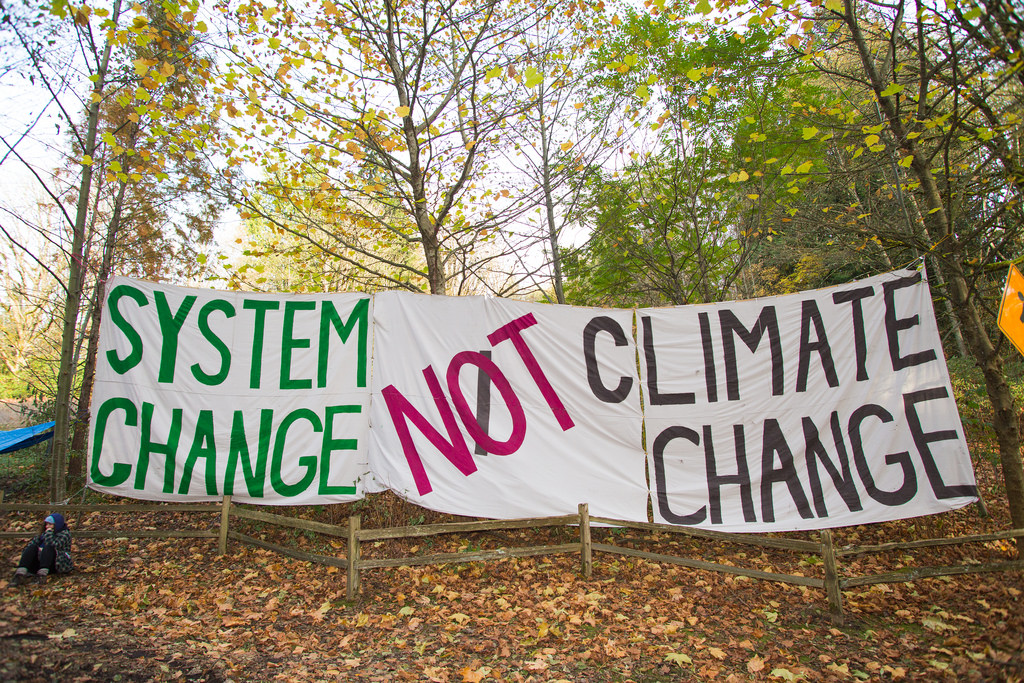
Two winds have propelled me here to you, to this House of Commons.

One wind, a hurricane and diabalo, brought flood and fire threatening the destruction of petrochemial civilization, call it capitalism. Homelessness or prison accompany the wind from, Detroit, Michigan, to Houston, Texas, from Puerto Rico in the Caribbean to northern California at the Pacific edge.

A second gentler, softer wind, a zephyr, has renewed my spirit from the Lacandón jungle in Chiapas where the Zapatistas have vowed to protect the forest and reclaim the land, or from the Great Plains of the American continent where pipe lines of oil and gas endanger the pollution of land and the rivers.  Encampments of indigenous people and their allies by prayer and by protest have become, in their words, “water protectors.”

Then, day before yesterday on Guy Fawkes Day, with some merry companio

An old oak tree in Sherwood Forest gave Robin Hood a safe house.  He told Little John that he and his merry companions (here I quote the 14th century Geste of Robin Hood) shall not rob the “husbonde that tylleth with his plough” or the “gode yeman that walketh by grene wode shawe.”ns of the indigenous people of these islands, I visited Sherwood Forest and Laxton parish in Nottinghamshire.

Laxton with its common and open fields, you know, is the oldest surviving system of agriculture based on the commons, similar to the ejido, or commons, of Mexican villages.  One of its commoners, Stuart Rose by name, took us ‘round.  By curious historical coincidence Laxton lent its name to the town of Lexington in Massachusetts where in 1775 the “shot was fired that was heard around the world.”

This was day before yesterday and since then revolutionary thoughts perforce have come to mind as I have journied at last to you here in this House.  Actually, your House provided me, a stranger, with a kind of home, because it was in its public gallery that my mother and father visited regularly in the years between 1947 and 1953 to listen to you.  Through the blinding pea soup fogs and in the pinching system of food rationing they were nourished by crystal clear words, both soft and gentle – that zephyr again – of Aneurin Bevan on behalf of housing and health care for all.  I was old enough to feel their passions and to identify with the protagonist of these words, the common people, because, as I was informed by my upper class school chums, as an American I, too, was “common.”

So, propelled by these winds of disaster and memories of defense I have become one of the scholarly vectors of a planetary discussion of the commons that began before 6 November 1217 when the Charter of the Forest was sealed and has continued ever since.  We do that work again for commons of housing and health care for all as we commemorate the Charter of the Forest, the little companion to the bigger, Magna Carta.

“It will be noticed how the word ‘common’ and its derivatives … appear and re-appear like a theme throughout the centuries,” wrote Edgell Rickword in The Handbook of Freedom, a book found in the kit of the boys going off to war in 1939.  “It was for the once vast common lands that the peasants took up arms; it was as the ‘true commons’ that they spoke of themselves when they assembled, and it was the aspiration of men not corrupted by petty proprietorship ‘that all things should be common.’”

William Blake said that “the whole duty of man is art and all things common.”

¿Quién le puso una bomba a Judi Bari? / Who Bombed Judi Bari? (Spanish Subtitles)

By Darryl Cherney - YouTube, November 27, 2017

Premiering on youtube and winner of 6 awards, this feature documentary filled with music, humor, and inspiration is a blueprint for activism in these more than urgent times. The Martin Luther King of the Redwoods, Judi Bari was an Earth First!er, AFL-CIO and IWW labor organizer, radical feminist, world class orator, author of Timber Wars, fiddler and songwriter, fundraiser, mother of two girls and a force of nature. See why she was car bombed and arrested by the FBI and Oakland Police for the deed done against her. Then learn how to save the forests, forge alliances and beat the feds. Foreign subtitles coming soon. Produced by her organizing partner and fellow car-bomb victim and litigant, Darryl Cherney. Directed and edited by Mary Liz Thomson. You can learn more and purchase DVD's, t-shirts and bumper stickers here: http://whobombedjudibari.com/ You can "like" us on Facebook at https://www.facebook.com/Who-Bombed-J...

Climate Summit’s Solution to Global Warming: More Talking

By Pete Dolack - CounterPunch, November 24, 2017

The world’s governments got together in Germany over the past two weeks to discuss global warming, and as a result, they, well, talked. And issued some nice press releases.

Discussing an existential threat to the environment, and all who are dependent on it, certainly is better than not discussing it. Agreeing to do something about it is also good, as is reiterating that something will be done.

None of the above, however, should be confused with implementing, and mandating, measures that would reverse global warming and begin to deal concretely with the wrenching changes necessary to avoid flooded cities, a climate going out of control, mass species die-offs and the other rather serious problems that have only begun to manifest themselves in an already warming world.

The 23rd Conference of the Parties to the United Nations Framework Convention on Climate Change (UNFCCC), or COP23, wrapped up on November 17 in Bonn. Fiji was actually the presiding country, but the conference was held in Bonn because Fiji was not seen as able to accommodate the 25,000 people expected to attend. The formal hosting by Fiji, as a small Pacific island country, was symbolic of a wish to highlight the problems of low-lying countries, but that this was merely symbolic was perhaps most fitting of all.

These conferences have been held yearly since the UNFCCC was adopted in 1992 at the Rio Earth Summit. Two years ago, at COP21 in Paris, the world’s governments negotiated the Paris Accord, committing to specific targets for reducing greenhouse-gas emissions. Although capping global warming at 2 degrees Celsius (as measured from the 19th century as the Industrial Revolution took off around the world) has been considered the outer limit of “safe” warming, a goal of halting global warming at 1.5 degrees was adopted at Paris. The catch here is that the goals adopted are far from the strength necessary to achieve the 2-degree goals, much less 1.5 degrees.

Before we explore that contradiction, let’s take a brief look at the self-congratulatory statements issued at the Bonn conference’s conclusion.

Pages

The Fine Print I:

Disclaimer: The views expressed on this site are not the official position of the IWW (or even the IWW’s EUC) unless otherwise indicated and do not necessarily represent the views of anyone but the author’s, nor should it be assumed that any of these authors automatically support the IWW or endorse any of its positions.

Further: the inclusion of a link on our site (other than the link to the main IWW site) does not imply endorsement by or an alliance with the IWW. These sites have been chosen by our members due to their perceived relevance to the IWW EUC and are included here for informational purposes only. If you have any suggestions or comments on any of the links included (or not included) above, please contact us.

The Fine Print II:

Fair Use Notice: The material on this site is provided for educational and informational purposes. It may contain copyrighted material the use of which has not always been specifically authorized by the copyright owner. It is being made available in an effort to advance the understanding of scientific, environmental, economic, social justice and human rights issues etc.

It is believed that this constitutes a 'fair use' of any such copyrighted material as provided for in section 107 of the US Copyright Law. In accordance with Title 17 U.S.C. Section 107, the material on this site is distributed without profit to those who have an interest in using the included information for research and educational purposes. If you wish to use copyrighted material from this site for purposes of your own that go beyond 'fair use', you must obtain permission from the copyright owner. The information on this site does not constitute legal or technical advice.

