You are here

green unionism

Railroad Workers United statement on The Wreck of #AMTRAK188

By Ron Kaminkow - Railroad Workers United, May 19, 2015

Disclaimer: The views expressed here are not the official position of the IWW (or even the IWW’s EUC) and do not necessarily represent the views of anyone but the author’s.

It has been a week now since Amtrak Train #188 derailed at speed east of Philadelphia, PA. The last week has witnessed endless speculation as the official investigation into the cause of the derailment continues apace. Those of us in the rail industry anxiously await the findings. Meantime, regardless of what the NTSB, the FBI and other agencies discover and conclude about the tragic wreck, there are a number of facts that are worth considering.

1. It is roundly agreed by railroad executives, union officials and industry insiders that had Positive Train Control (PTC) been in place and in effect on this section of track, the wreck would most likely not have been possible. PTC would have resulted in a train brake application in order to slow the train, recognizing that its speed was excessive and therefore unable to negotiate the tight curve ahead. PTC has been mandated by Congress, but its complete implementation has been delayed on the Northeast Corridor and elsewhere for a myriad of reasons. In Amtrak’s case, one of these reasons is a lack of adequate funding from Congress.

2. Amtrak has been underfunded for decades and forced to scrape by, cutting corners and deferring maintenance, even under the microscope by a budget cutting Congress more concerned with ideological purity and political expediency than with safety and security. On the busy Northeast Corridor where the recent wreck took place, Amtrak faces a backlog of drastically needed repairs to bridges and tunnels, obsolete rail interlockings, and trains that rely at times on 1930s-era components. Repairs for the Northeast Corridor are estimated at 4.3 billion over the next 45 years, while federal funding is expected to dwindle to $872 million.

3. As a result of this constant pressure to reduce costs, on March 23rd, 2015, just six weeks prior to the wreck, Amtrak had unilaterally implemented a new scheduling arrangement for Corridor (NEC) train and engine crews over the vehement objections of its operating craft unions. the Brotherhood of Locomotive Engineers (BLET) and the United Transportation Union (UTU, now known as SMART-TD). The new schedule arrangements. designed to save the company $3 million by reducing scheduled layovers -- were condemned by both unions as a disaster in the making. Amtrak overturned a tried and true couplet system (trains paired out and back) for working crews in the NEC that had been in effect, with little modification, for decades. Prior to March 23, couplets adhered to the 90-minute layover minimum and took into account other factors including difficulty of the train in question, duration of trip, number and location of stops, timeliness etc. Now, not only has the 90-minute layover been scrapped, but crews have no guarantee of any break whatsoever!  In addition, the new arrangement allows for a different on-duty time each day of the work week, and these start times are no longer restricted to within a few hours of one another -- they can be any time of the day!

4. Simple technology has existed for nearly a century now that can aid and assist in preventing accidents such as this one. As with the wreck at Spuyten-Duyvil, NY on the Metro North railroad on December 1st, 2013, a simple transponder could have easily been located west of the curve that would have prevented the train from entering it at such an excess speed (in fact, such a transponder is in place on the approach to the curve in the westbound direction). This being one the tightest and most restricted curves on the corridor, it seems an appropriate location for such a life-saving device. Note: Since the above referenced MN wreck of, such a transponder has in fact been placed on the section of track leading to the 30 mph curve where that train derailed.

5. Amtrak Train #188. operated by lone engineer Brandon Bostian, entered the permanent speed restriction at the curve, rated for 55, at over 100 mph. Whether it was fatigue, the result of a projectile that hit the train, inattentiveness on the part of the engineer, or other factors at play, it is expected that the investigation will eventually pinpoint the cause. Nevertheless, there is the possibility that we may never know. But we know this: had there been a second crew member in the cab of the locomotive that day, it is very likely that such a second qualified crew member would have taken action to prevent the tragedy that. for whatever reason. the engineer at the controls was not able to avert.

In the past half dozen years or so we have witnessed a series of tragic train wrecks, all of which have resulted in countless injuries and loss of life. Four wrecks. Chatsworth, CA (9/12/08); Lac Megantic, Quebec (7/6/13); Spuyten-Duyvil, NY (12/1/13); and now Frankfurt Junction, PA (5/12/15) have all been attributed to some form of “operator error”. (It is worthy of mention a factor that all four of these incidents had in common; i.e. the employee in question was working alone in the cab of the locomotive or was the lone crew member). While operator error may in fact be the case, simply pointing the finger at the worker does little or nothing to assist in understanding why the error was made in the first place; nor does it help us to prevent similar such wrecks in the future. Since workers are human beings and as such, are prone to make mistakes (regardless of how many rules are written up, what discipline may be threatened or how many observation cameras may be installed), we must implement safety features that take this reality into account and thereby prevent tragedies of this nature.

A neoliberal train wreck?

By Guy Miller - Socialist Worker, May 20, 2015

Disclaimer: The views expressed here are not the official position of the IWW (or even the IWW’s EUC) and do not necessarily represent the views of anyone but the author’s.

The media coverage of the deadly Amtrak train derailment in Philadelphia, which killed eight people and injured more than 200, focused on the engineer, but there is a long history of cutbacks and cost-cutting that set the stage for this catastrophe. Guy Miller, a railroad worker for 38 years with Chicago Northwestern and Union Pacific and a retired member of United Transportation Union Local 577, looks at where the blame for this tragedy really lies.

EVERY INDUSTRIAL accident is different in its details, but depressingly similar in the cover-up.

Before the dust settles and the debris is cleared away, the company spokesperson is busy framing the story and assigning blame. The media are quick to join the feeding frenzy--and the responsibility always stops at the employee farthest down the food chain. On the railroads, that employee is often the engineer.

On Amtrak run 188 on May 12, that engineer was named Brandon Bostian. Brandon's public trial began almost immediately. Philadelphia Mayor Michael Nutter didn't have--or seem to care about--any evidence, but he knew where to point the finger: "Clearly, he was reckless and irresponsible in his actions. I don't know what was going on with him. I don't know what was going on in the cab. But there's really no excuse."

At this point, the engineer's safety record is usually trotted out. In the operating department, "safety violations" litter the records of even the most conscientious employees. Improper footwear, stepping on a rail, failure to ring the bell over one of the hundreds of grade crossings--all of these mean violations placed in a personnel file. Citations are easy to come by. Like a hound dog picks up fleas, conductors and engineers pick up safety violations.

The problem with Brandon Bostian is that his record was spotless. So something else had to be dragged into the equation. That something proved to be Brandon's sexual orientation, which conservative radio host Sandy Rios and later other right-wing media incredibly declared was a "factor" in the crash.

While most people now know that Brandon was a supporter of marriage equality, few know he was a safety fanatic. In addition to the normal routine, he had his own procedures. "At work, I run through a five-item checklist after I check my engine, and before I touch anything," he wrote on Facebook. "Then a 10-item checklist before I move the train an inch."

On the day of the accident, because of over-scheduling and a delayed inbound train, Bostian had only 30 minutes between runs. When it's to their advantage, trainmasters and other company officials put constant pressure on workers to short-circuit safety inspections and "get out of Dodge." May 12 may well have been such a day.

Clearly, brother Bostian was a model employee. Just before hitting the curve at Frankford Junction, he was complying with the rulebook and ringing the engine bell through the 30th Street Station. This isn't the behavior of a reckless and irresponsible engineer. This isn't the action of someone about to accelerate from the posted speed to 106 miles per hour less than a minute later.

Whatever happened to Bostian--after suffering a concussion in the crash, he has said that he remembers little about what took place in the minutes before the derailment--we must look elsewhere to place the blame for this tragic accident.

- - - - - - - - - - - - - - - -

IN 2008, Congress instructed the nation's railroads to install Positive Train Control (PTC) by 2015. Positive Train Control is a sophisticated system for monitoring and controlling train speed, separation and collision avoidance.

From the start, the carriers dragged their feet. Rather than spend money on making it happen, they invested in a small army of lobbyists to make sure the mandate would take as long as possible to implement. The list of lobbyists is a Who's Who of Washington insiders, including former Democratic Rep. William Lipinski and Linda Daschle, wife of highly connected former Democratic Senate Majority Leader Tom Daschle.

Heedless of safety concerns and unmoved by the Metro-North accident of 2013 that killed four people in the Bronx--another accident that PTC could have prevented--these lobbyists have succeeded in buying time. Under legislation passed by the Senate Finance Committee and now pending before Congress, the deadline for implementing Positive Train Control would be extended five years until 2020.

Within hours of the crash on May 12, the Republican-controlled House Appropriations Committee approved a bill that slashed Amtrak's budget for the next fiscal year by $251 million, to $1.1 billion.

Short of PTC, there are other, older forms of train control dating back to the 1960s. In my 38 years on the railroad, I worked with two of them: Automatic Train Control (ATC) and Automatic Train Stop (ATS). Either of these systems would have prevented the derailment of Amtrak 188.

ATC was already in use on the southbound track, just on the other side of the same deadly curve that train number 188 hit at twice the speed limit. If the system had been positioned in advance of the accident site, the train would have stopped automatically if the engineer didn't respond immediately to a warning bell.

The railroad knew just how dangerous this curve was. The Frankford wreck--which is legendary among East Coast railroaders--occurred on that same curve 72 years before. On Labor Day weekend in 1943, the inbound Congressional Limited derailed at the exact same spot, resulting in the death of 79 people. So why wasn't the ATC system in place?

As recently as the late 1980s, every commuter train in the Chicago Metra system had a second person in the engine cab. Although still known as a "fireman," this second employee was in reality a second engineer. Having just one person in the cab leaves no room for unforeseen events that can have disastrous consequences. What happens if the engineer has a heart attack, a seizure, an aneurysm--or, yes, simply falls asleep?

In March 1987, during the effort to eliminate the fireman's position in the cab, Metra spokesperson Christopher Knapton told the Chicago Tribune, "One-person crews have shown no decline in safety." I doubt if the eight dead passengers in Philadelphia would second Knapton's opinion; at any rate, it's too late to ask them.

Museum Workers’ Union Condemns Oil Sponsorship of British Cultural Institutions

By Kyla Mandel - DeSmog UK, May 20, 2015

Disclaimer: The views expressed here are not the official position of the IWW (or even the IWW’s EUC) and do not necessarily represent the views of anyone but the author’s.

Big Oil’s sponsorship of British museums and galleries must come to an end, argues the Public and Commercial Services Union (PCS) Culture Sector.

Delegates to the PCS annual conference in Brighton yesterday voted overwhelmingly to support a new union campaign calling for an end to oil sponsorship of the arts.

The union represents 5,000 workers in UK cultural institutions that have accepted money from BP or Shell, including Tate, the British Museum and National Gallery, the National Portrait Gallery, the Science Museum and the Natural History Museum.

Clara Paillard, president of the PCS Culture Sector, said: “We have taken an important step in calling for museums to move away from dirty sponsorship by oil and arms trade corporations.  

We believe these sponsorship deals and privatisation are two sides of the same coin: a capitalist model for arts and culture which we reject. Access to culture is a human right, and we will defend it.”

Growing Campaign

Over the past three years the campaign to end oil sponsorship in the arts has grown rapidly. Pressure from campaign groups, such as BP or not BP? and Liberate Tate, has led to the Southbank Centre ending Shell’s sponsorship of its ‘Classic International’ series.

And, most recently, an information tribunal ruling last December forced Tate to publish the sum of money BP paid as a sponsor between 1990 and 2006, along with details of internal decision-making on the controversial relationship.

Danny Chivers, an ‘actorvist’ from BP or not BP? speaking at the PCS conference, said: “Fossil fuel companies belong in the past, and their sullied logos have no place inside forward-looking publicly-funded museums and galleries.

We are committed to working towards a thriving culture sector, where staff have fair pay and conditions and are free to work for the benefit of the public rather than being forced to meet the interests of polluting companies and profiteering privatisers.”

The beginning of next year will see Tate, the British Museum, the National Portrait Gallery and the Royal Opera House decide whether or not to renew their five-year sponsorship deals with BP.

A Houston Wobbly’s Reflection on the USW Strike

By Adelita - Unity and Struggle, May 11, 2015

Disclaimer: The views expressed here are not the official position of the IWW (or even the IWW’s EUC) and do not necessarily represent the views of anyone but the author’s.

Unions’ power is in decay and lately have been resorting to more creative methods in order to remain relevant. We’ve seen the Democrats putting their money behind the Service Employees International Union’s (SEIU) Fight For $15 in Houston at the same time attempting to “turn Texas blue.” But this dependency of unions like SEIU and the United Steel Workers (USW) on the Democratic Party means they are severely limited in what they are willing to do in the realm of tactics. This along with union density being sharply in decline, as well as union power being undermined by Right-to-Work spreading to states like Indiana, Michigan, and Wisconsin, means the unions are not up for waging anything close to a class struggle. Instead unions like the USW maintain their position as representing only certain interests and timidly bargaining around them.
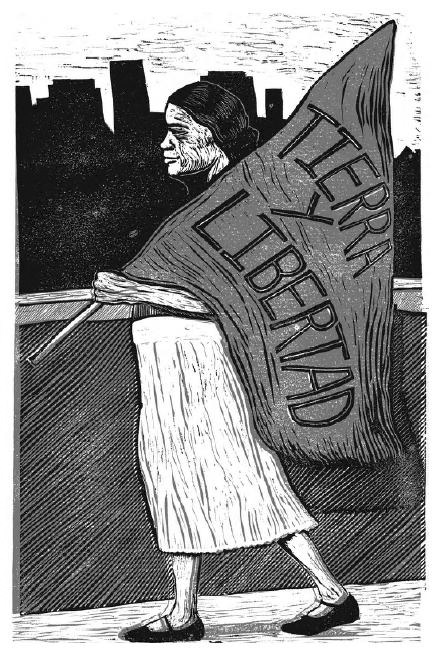
Texas, like other Right-to-Work states, has a working class that is almost entirely disconnected with their own fighting traditions. There is no real culture of workers resistance, union or not, nor is there any historical memory of fighting strikes. However, recently in Houston we have seen a few significant developments unfolding in labor starting with the immigrant rights movement and detention center hunger and labor strikes, the Maximus Coffee strike and lockout at the end of 2013, the ongoing Fight For $15 “movement” and its semi-annual spectacles, and the most recent and equally significant, the USW refinery strikes. These developments are very exciting for Houston not simply because of the lack of historical memory of struggle to draw from, but also due to the high density of industry in Houston which is unlike most of the country.  This makes Houston a critical choke point for US capital and thus pivotal for workers struggle nationally.

Houston’s remarkably large industrial sector provides a lot of semi-skilled labor opportunities and has been instrumental in Houston’s ability to float the crisis better than most of the country. This and the extremely low levels of reproduction of the class, especially of black and immigrant people who make up the unskilled, low-wage, and casualized sectors of the economy. This leaves refinery work to be primarily composed of white and US-born Latino workers.

When the USW strike started it was the first strike the refineries and their workers saw in 30 years. Yet the USW was unable to carry out a successful strike nationally or locally. This is due to union decline mentioned above, but also because one-third of the oil industry is unorganized (many of which are contract workers). Also, the relationship between the USW and the Obama administration impacted the overall strategy of the strike. Only 5,000 workers were pulled out, a mere ten percent of all union workers, while local union leaders claimed this was part of their strategy. Overall this affected only about 20% of production which is pretty insignificant and we realized quickly that most workers had little to no information about the strike or negotiations. Locally the USW’s timidness looked like a handful of workers carrying signs at each gate while being unable to block scabs from crossing, or from even standing or parking on company property. The international didn’t even use their massive treasury to support their striking members.  It was clear that the USW was not in a position to be able to wage a political struggle against oil because they are beholden to the ruling party.

Support Farm Workers in NW Washington – Boycott Sakuma Berries

By Whatcom-Skagit GMB, IWW - Portland IWW, May 6, 2015

Disclaimer: The views expressed here are not the official position of the IWW (or even the IWW’s EUC) and do not necessarily represent the views of anyone but the author’s.

Fellow Workers,

The Whatcom-Skagit general membership branch of the Industrial Workers of the World is urging everyone to join us in a boycott campaign in support of farm workers of the Familias Unidias por la Justicia (FUJ) union in NW Washington.

For decades now, the farm workers at Sakuma Brothers berry farm in Skagit County have endured inadequate housing, systematic wage theft, and racist abuse from supervisors, among many other problems. In the summer of 2013, the farm workers at Sakuma Brothers Farms went on strike and formed a union, Familias Unidas por la Justicia, of over 450 indigenous Triqui and Mixteco berry pickers. After a series of strikes there was a written agreement between Sakuma and FUJ. However, Sakuma reneged on their word to the workers. After Sakuma broke promises they made during a negotiation session, the farm workers of Familias Unidas por la Justicia voted to endorse a public boycott of Sakuma, Driscoll’s berries and Haagen-Dazs ice cream (both are major buyers/packers of Sakuma berries) until the labor dispute is resolved and the workers have a contract recognizing their union.

The workers want a fair wage, health insurance, and respect on the job. In court, Familias Unidas has been recognized as a union with the right to organize and represent workers collectively. They have won landmark victories, including a settlement in which workers were collectively paid $500,000 in back wages and two rulings preventing Sakuma from changing their housing and hiring policies illegitimately. On the farm itself they have won several gains, such as the ability to take lunch breaks. However, these gains on the farm are now slipping as they have in the past. On February 3rd a farm workers tribunal took place in Olympia and members of FUJ spoke to state legislators about wage theft and working conditions at Sakuma Brothers Farm. The tribunal is an independent hearing by community judges that examines and provides judgments relative to human rights, labor rights, and civil rights abuses and the rights of peoples. The Farmworker Tribunal seeks to document and expose violations of state laws, civil rights, labor rights and human rights in Washington State’s Agricultural Industries. On March 17th in Toppenish the Washington State Supreme Court heard oral arguments in a case (Demetrio et al. v. Sakuma Brothers Farms). This case will decide whether farm workers who are paid piece rate should also be compensated for rest breaks, as are wage workers in Washington State. The decision in this case will impact all Washington farm workers.

The farm workers at Sakuma are fighting against injustice on behalf of farm workers everywhere. We are reaching out to IWW branches to actively support these workers. Some ways that your group can support the farm workers is by promoting the boycott, picket stores that carry Driscoll’s, Haagen-Dazs and Sakuma Berry products, and supporting other groups’ boycott activities in your communities. The struggle of Families Unidas por la Justicia for dignity and justice in their workplace continues and it falls on everyone’s shoulders to support the people whose labor sustains us.

Solidarity,
Whatcom-Skagit GMB, IWW
Contact Info:
Email: iwwbellingham@gmail.com
Facebook: Whatcom-Skagit IWW

Boston school bus drivers vote in fired union leaders

By Brenda Ryan - Workers World, May 4, 2015

Disclaimer: The views expressed here are not the official position of the IWW (or even the IWW’s EUC) and do not necessarily represent the views of anyone but the author’s.

In a stunning victory, the militant, fighting rank and file of the Boston school bus drivers’ union, United Steelworkers Local 8751, voted in the full slate of Team Solidarity candidates, led by four illegally fired leaders, on the union’s Executive Board.

The April 30 election was the largest voter turnout in the history of the local and resulted in an unprecedented landslide vote by more than 3 to 1 for the Team Solidarity ticket. The membership sent a clear message to Veolia/Transdev, the union-busting school bus management company, as well as to Boston Public Schools and Mayor Marty Walsh, that they will fight and win a just contract and the rehiring of their leaders. They will also unite with the communities they serve to struggle for Equal Quality Education.

The new executive board-elect of the 850-strong union, whose members are largely Haitian, Cape Verdean and African-American, includes President Andre Francois, long-time chief steward; Vice President Stevan Kirschbaum, a founder of the local; Treasurer Georgia Scott, veteran of the 1965 Civil Rights battle on Pettus Bridge in Selma, Ala.; Financial Secretary Steven Gillis, the outgoing vice president and benefits administrator; Recording Secretary Claude “Tou Tou” St. Germain, a Fanmi Lavalas activist; Grievance Committee members Garry Murchison, a three-term past president, Frantz Mendes, two-term president, and Richard Laine; Trustees Frantz “Fan Fan” Cadet, Fred Floreal and Judy Long; Guide Chantal Suffrant Casimir; Guards Adriano Barbosa and Ludnay Pierre; and Accident Review Committee members Jerome Samir Stanley, Kathy Moore and Robert Salley. Murchison led the local’s last five-week strike in 1991, which ended with a 48-hour occupation of the mayor’s office.

Veolia illegally fired Francois, Gillis, Kirschbaum and Murchison in November 2013, following a company-ordered, police department-enforced lockout on Oct. 8, 2013, which occurred after the local requested an emergency meeting. The lockout occurred in the midst of a three-month fight with the new company over wage theft, its refusal to honor the drivers’ long-standing contract and Veolia’s illegal demand — because it’s in violation of the contract — made the day before, that even 40-year veteran drivers must file new hire applications.

A small clique of business-minded, company-inspired opponents, including the current president — who bowed out during the election campaign — tried to turn the membership against Team Solidarity’s fighting slate. They bombarded members with the message: “Don’t vote for the people who were fired. They won’t do you any good.”

The climax of year-long bargaining over a new concessionary contract was the company’s divisive campaign that included pushing a “final” proposal with no amnesty for the fired leaders and using false “retro-pay” payroll documents produced by management. But the members voted for the new board based on their personal experience with Team Solidarity’s leaders, who have filed hundreds of their grievances, administered and defended their benefits, and fiercely fought for them and the union’s survival during the nearly two years since Veolia and the mayor’s office began their union-busting assault.

Union Member Risks Arrest at Arc Logistics, Opposes TPP and Fossil Fuel Exports

By Wes Kempfer - Portland Rising Tide, May 7, 2015

Disclaimer: The views expressed here are not the official position of the IWW (or even the IWW’s EUC) and do not necessarily represent the views of anyone but the author’s.

Tim Norgren of Stevenson, WA, and Laborers International Union of North America member is locked to a barrel at Arc Logistics Partners’ Portland Terminal to draw a clear connection between fossil fuel exports and trade agreements like the TPP, and to call for action to put a stop to both.

Tim is supported by the climate justice group Portland Rising Tide. The crowd is gathered at Arc Logistics to support Tim and draw the connections between existing & proposed fossil fuel infrastructure and the Trans-Pacific Partnership, a secretive trade deal being pushed by many politicians including Democrats Senator Wyden, Representative Blumenauer, Representative Bonamici, and President Obama.

Many environmental and labor groups oppose the Trans-Pacific Partnership (TPP) on the grounds that it is written and promoted by the fossil fuel industry and American Legislative Exchange Council, gives multinational corporations more rights than communities here in the US, sends jobs overseas, and jeopardizes worker and environmental protections around the Pacific Rim.

The AFL-CIO opposes the TPP and is holding a rally today at 4:30pm at the Sentinel Hotel to tell President Obama, who is in Portland to speak on trade agreements, to stand up for workers and the environment. “I’m locked down today in part because climate change is an issue of survival inextricably linked to so-called ‘free trade’ globalization efforts like the TPP.

While many of us strongly appreciate President Obama’s willingness to bring the climate crisis into the national debate, he has been unwilling to connect major fossil fuel exports to the TPP or veto the Keystone XL pipeline,” said Tim Norgren.

With proposals by major Alberta Tar Sands investor Pembina Pipeline Corporation for a propane (derived from fracked gas in Alberta, Canada) export terminal in Portland, the Jordan Cove Natural Gas terminal proposed in Coos Bay, a proposed natural gas terminal in Warrenton, as well as already-operating Arc Logistics and Port Westward oil-by-rail terminals, Oregonians are concerned that the Trans Pacific Partnership will promote more export terminals, send domestic energy overseas to fuel jobs in countries with lower workers’ rights standards, and hasten climate change.

At a time when scientists tell us we need to leave most fossil fuels *in the ground* to prevent disastrous climate change and runaway global warming, this is completely unacceptable. Tim hopes this action will send a message to union leaders and politicians alike that everyday workers want sustainable jobs.

“I’m also taking this action to let my union, the Laborers International Union of North America, know that it has rank and file members who are willing to stand up not only for prevailing wage contracts, but for the survival and rights of all workers, rather than support those who would see minimum wage remain at poverty levels while jobs are freely outsourced to foreign factories with subsistence wages and no safety or emissions standards whatsoever. All they offer us in return is a chance to build infrastructure for an economy based on environmentally destructive resource extraction, and that’s just not sustainable.”

How Climate Protection Has Become Today’s Labor Solidarity

By Jeremy Brecher - The Nation, May 6, 2015

Under banners proclaiming “Healthy Planet & Good Jobs,” thousands of trade unionists from 75 local and national unions, highly visible in their red, blue, green, and white union uniforms, joined the People’s Climate March in New York City last September—a quantum leap from labor’s previous participation in climate actions.At the labor rally before the march, AFSCME District Council 37 executive director Henry Garrido recalled that during Superstorm Sandy in 2012, “Our workers were at the forefront manning shelters, evacuating people, preparing hospital beds, and rescuing people every day.” But Sandy was just a warning shot. “Labor must stand for more than working conditions,” Garrido continued. “We must stand for more than contracts. We must stand for environmental justice—otherwise, we will become irrelevant.” The issue of climate change, he concluded, is “the biggest threat to our humanity.” We can no longer afford to put our heads in the sand: “Today is the day that the human race stood together and said, ‘Enough!’”

The march’s organizers are now working to launch a People’s Climate Movement. They are planning a series of major mobilizations leading up to the Paris climate summit this December. According to Phil Aroneanu of 350.org, activists have started meeting with unions to plan labor-focused events along the way. “It is incumbent on the climate movement to lay out plans that leave nobody behind in the transition to a climate-safe economy,” Aroneanu says.

Meanwhile, labor action on climate change has proliferated. In New York, according to Matt Ryan, executive director of ALIGN (New York’s Jobs With Justice affiliate), “There is a growing surge of labor unions engaging and activating their members and their members’ communities around a climate, jobs, and justice agenda. I see it at CWA, SEIU, the Teamsters, New York State Nurses Association, and many others.”

Challenging the Industrial Narrative: Railroad workers are increasingly rejecting the old “jobs versus environment” story

By Trish Kahle - Jacobin, April 25, 2015; image by Jon Flanders

Disclaimer: The views expressed here are not the official position of the IWW (or even the IWW’s EUC) and do not necessarily represent the views of anyone but the author’s.

On July 6, 2013, the air brakes failed on an unmanned, seventy-four-car train carrying Bakken crude oil, sending the train cascading into the Quebec town of Lac-Mégantic, where it derailed and exploded. Forty-seven people were killed, and nearly half of the downtown was destroyed in the initial blast. In total, twenty-six thousand gallons of oil spilled into the nearby Chaudière River, and soil around the town was toxic to depths of several feet.

The catastrophe in Lac-Mégantic proved to be only the first in a series of high-profile explosions. Last year, there were thirty-eight derailments across the United States and Canada that caused blasts or tank ruptures. With scenes of toxic black smoke billowing above the nation’s grasslands and residents fleeing in terror, the vehicles at the center of the lethal phenomenon were given a new name: “bomb trains.

Yet rarely did the workers conducting and maintaining the North American rail system enter the conversation. Railroad Workers United (RWU) — a solidarity organization for railroaders across the industry’s dozen or so unions — saw an opportunity to fight for safer working conditions and build alliances with a public that fears further derailments, deaths, and ecological devastation.

One early result of that effort came last month, when the RWU brought railroad workers, environmentalists, and other labor and community activists together for two conferences — one in Richmond, California, the other in Olympia, Washington — to discuss the intersection of labor and environmental justice issues.

The conferences, as organizers readily noted, weren’t necessarily breaking new ground. They drew inspiration from earlier labor-environmental coalitions, which have a rich if overlooked history, particularly in heavy industry.

But even with the guidance the past can provide, workers and environmentalists must live in the present, where a ravaged labor movement has struggled even to win defensive battles and the environmental movement debates its strategy and future. Forging solidarity across traditional divides will be crucial in revivifying the labor movement and fighting climate change.

To that end, I recently interviewed three conference participants — RWU General Secretary Ron Kaminkow; Sierra Club community organizer Ratha Lai; and Ross Grooters, an Iowa-based locomotive engineer, environmentalist, and RWU member — about the state of the labor-environmental alliance, the working conditions on the nation’s railroads, and their vision for the future. The interviews have been edited for length and clarity.

Let’s Not Forget Our Brothers on the W&LE - Fighting for All of Us!

J. P. Wright - Railroad Workers United, April 23, 2015

Disclaimer: The views expressed here are not the official position of the IWW (or even the IWW’s EUC) and do not necessarily represent the views of anyone but the author’s.

While the fight against the BNSF attempt at engineer only operations was big time news amongst rail workers, our brothers at the Wheeling and Lake Erie (W&LE) remain on the front lines of this critical battle, soldiering on in relative obscurity.

For several years the W&LE has been aggressively pushing engineer-only trains, and the conductors and engineers said “no thanks”. On September 13, 2013, the carrier began to run engineer-only with a manager behind the throttle, no less. In response, the BLET represented members of BOTH crafts – conductors and engineers - went on strike September 20, 2013. The strike shut down the regional carrier’s operations in Ohio and Pennsylvania before the 100+ union members were ordered back to work by a temporary restraining order.

Since that time, the W&LE remains intransigent on the engineer-only issue. The workers there remain defiant, but they have now gone seven years without a raise. Simply put, the W&LE is attempting to economically bludgeon our brothers and sisters into submission. They are no doubt feeling the pain; who wouldn’t? This is an outrage!!!

If the W&LE has their way, the major Class 1 railroads will get a much needed boost in their attempts to run engineer-only. So the stakes for all of us rail workers is a no-brainer. By logical extension, the general public has a vested interest in safe railroading operations. As some state legislatures and corporations are trying to housebreak our unions at best and bust them at worst, this is one of several battlefronts that the entire working class has a stake in. They deserve and need the solidarity and support from all of us -- rails, other workers, and the general public.

At the BLET convention last October, a rank & file delegate proposed the following resolution from the floor. It carried with unanimous support (minus one “No” vote). RWU encourages all railroaders of all unions - BLET or otherwise - to push adoption of similar resolutions in your respective locals. Then forward them on to RWU. We will send them on to the Local #292 leadership to let them know they are not alone, and that we all have their backs.

Pages

The Fine Print I:

Disclaimer: The views expressed on this site are not the official position of the IWW (or even the IWW’s EUC) unless otherwise indicated and do not necessarily represent the views of anyone but the author’s, nor should it be assumed that any of these authors automatically support the IWW or endorse any of its positions.

Further: the inclusion of a link on our site (other than the link to the main IWW site) does not imply endorsement by or an alliance with the IWW. These sites have been chosen by our members due to their perceived relevance to the IWW EUC and are included here for informational purposes only. If you have any suggestions or comments on any of the links included (or not included) above, please contact us.

The Fine Print II:

Fair Use Notice: The material on this site is provided for educational and informational purposes. It may contain copyrighted material the use of which has not always been specifically authorized by the copyright owner. It is being made available in an effort to advance the understanding of scientific, environmental, economic, social justice and human rights issues etc.

It is believed that this constitutes a 'fair use' of any such copyrighted material as provided for in section 107 of the US Copyright Law. In accordance with Title 17 U.S.C. Section 107, the material on this site is distributed without profit to those who have an interest in using the included information for research and educational purposes. If you wish to use copyrighted material from this site for purposes of your own that go beyond 'fair use', you must obtain permission from the copyright owner. The information on this site does not constitute legal or technical advice.

