

You are here

green unionism

Your Next Bike Share Ride May Be Powered By Union Labor

By Amien Essef - In These Times, November 11, 2014

Disclaimer: The views expressed here are not the official position of the IWW (or even the IWW’s EUC) and do not necessarily represent the views of anyone but the author’s.

Only a decade ago, bike share programs were considered European. But just as the concept takes off in urban areas around the US, the workers who make it possible are unionizing.

After New York City workers organized the first ever bike share union in the US in September, three other cities—Washington, D.C., Boston, and most recently Chicago—have made significant progress on their own bike share worker organizing campaigns. A majority of workers in all three cities signed union authorization cards this fall; D.C. workers are negotiating a union election date while Boston and Chicago workers will vote whether or not to unionize within the next month.

The roughly 280 bike share workers in these four cities—who, despite the bike share services’ varying names, all work under the same owner, Alta Bicycle Share, which was recently bought by the real estate company REQX—may all soon be represented by the Transport Workers Union. TWU represents workers in more traditional public transit sectors like bus drivers and airline workers, but Local 100 now aims to lead a national campaign to organize rentable city bicycles like Citi Bike in New York and Divvy in Chicago.

“If it’s on wheels,” says TWU Local 100 director of education Nicholas Bedell, “we want to organize it.”

But the union didn’t actually launch the national campaign. According to workers, the headlines generated by a successful union drive in New York, where Local 100 is based, prompted workers in D.C., Boston and Chicago to contact TWU on their own accord.

Wrong Again!

By That Green Union Guy - IWW Environmental Unionism Caucus, November 6, 2014

Disclaimer: The views expressed here are not the official position of the IWW (or even the IWW’s EUC) and do not necessarily represent the views of anyone but the author’s.

Our regular readers know that we tend to be quite critical of the business unions and the big green NGOs for their continued slavish alliance with capitalism, and knowing this, they should not be shocked that--once again--the increasingly ineffectual and coopted Blue Green Alliance is in our sights.
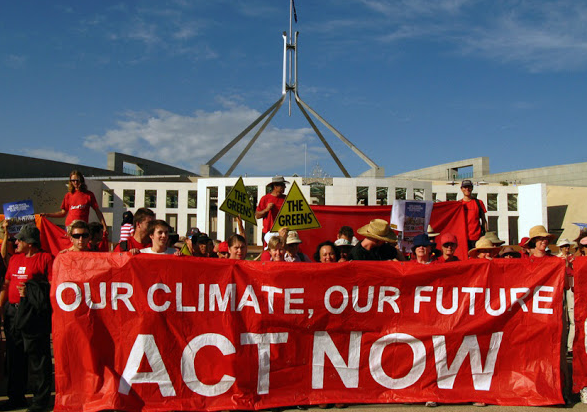
In case you didn't know, the Blue Green Alliance is a coalition of business unions and environmental organizations that ostensibly advocates for building bridges between the labor movement and the environmental movement, with a specific focus towards "green jobs" and "sustainable development". Each year, the alliance issues a "Right Stuff Award" to "business, government, environmental, labor, and community leaders who promote a sustainable economy and environment". This year, they say, their awards will honor "leaders for their work on building a 21st century energy infrastructure."

Based on their choice of Obama's Secretary of Energy, Ernest Moniz, one has to be wondering if the Blue Green Alliance knows what century they're in, or perhaps whether or not the Alliance has an oddball definition of what 21st century infrastructure is, exactly. You see, the last time I checked, Ernest Moniz has deep ties to the fossil fuel, fracking and nuclear industries. He has served on advisory boards for oil giant BP and General Electric, and was a trustee of the King Abdullah Petroleum Studies and Research Center, a Saudi Aramco-backed nonprofit organization. In 2011, Moniz was the chief author of an influential study for MIT on the future of natural gas. According to a new report by the Public Accountability Initiative, Moniz failed to disclose that he had taken a lucrative position at a pro-drilling firm called ICF International just days before a key natural gas "fracking" study was released.

This doesn't sound very green to me. If anything, it's more like a greenwash. Unfortunately, this is par for the course for the so-called Blue Green Alliance.

IPCC Warning Spurs Union Calls For Energy Democracy

By Sean Sweeney - Trade Unions for Energy Democracy, November 7, 2014

Disclaimer: The views expressed here are not the official position of the IWW (or even the IWW’s EUC) and do not necessarily represent the views of anyone but the author’s.

On November 2, 2014, the Intergovernmental Panel on Climate Change (IPCC) released its Synthesis Report, the final in the “Fifth Assessment Report” process. It builds on three reports released by the IPCC since early 2013.

The IPCC is a senior UN panel made up of thousands of climate scientists and this report marks its fifth ‘assessment’ since 1990 of the state of the climate and the present and future impacts of global warming.

The Synthesis Report reiterates what the IPCC has been telling us for a decade or more: “Climate change is being registered around the world and warming of the climate system is unequivocal. Since the 1950s many of the observed changes are unprecedented over decades to millennia.” The period from 1983 to 2012 was likely the warmest 30-year period of the last 1,400 years in the Northern Hemisphere. Atmospheric concentrations of carbon dioxide, methane and nitrous oxide are “unprecedented in at least the last 800,000 years”.

The report may be the same as previous IPCC reports in terms of the main messages and conclusions, but one thing is different. The 20 years of political inaction around climate, with its sad mixture of back-slapping and back stabbing by negotiators at scores of summits and meetings, has now created a situation where only bold and transformative interventions offer any hope of controlling runaway global warming. Even relatively conservative commentators and analysts now accept this to be true. Among the most important of these interventions involves expanding and deepening social ownership and democratic control of the world’s energy systems—energy democracy. This is needed in order to facilitate an energy transition from fossil-based power to renewable energy, a transition of sufficient speed and scale to be able to seriously address the climate crisis.

Among those embracing energy democracy are a growing number of unions working in partnership with allies in different social movements. Not all unions are convinced that energy democracy is either desirable or possible—especially given the political and economic power of the oil, coal and gas companies. And those unions either supporting the idea or at least open to it are engaging in serious discussions regarding what energy democracy would look like and how it could, alongside addressing pollution and emissions, also seriously address energy poverty, create jobs and advance equality. But everyone involved in the trade union debates on climate change accepts that ‘business as usual’ is simply not an option and the energy system has to be transformed within two or three decades. The IPCC’s report has again sounded the alarm about climate change, but we cannot evacuate the building because we have nowhere else to go.

Oregon Canvassers Workers Push for Unionization at Union-Funded Workplace

By Shane Burley - In These Times, November 4, 2014

Disclaimer: The views expressed here are not the official position of the IWW (or even the IWW’s EUC) and do not necessarily represent the views of anyone but the author’s.

Seven workers and union activists head toward the office on September 17, just before the morning shift begins, debating how to enter. Should they all parade in together? What if lower management is out front smoking before the shift begins? Should they go in early, or wait until the day’s canvassers are already inside?

They agree to head in together in a show of solidarity, a few minutes before the bell rings. As the workers file in the front door, their union representatives in tow, management declares that outside people are not allowed to enter during business hours.

“Don’t worry, we won’t be long,” says Jonathan Steiner, a rep for the United Campaign Workers, a project of the Industrial Workers of the World Workers. The workers and their union representatives enter and declare there is announcement to be made: They have joined a union and are inviting other workers to join them.

They work at Fieldworks, a get-out-the-vote shop that, with thirty to forty canvassers at a time, is one of the largest political canvassing businesses in Portland, Oregon, and the nation as a whole. They are the latest in a slew of Portland campaign workers to organize with UCW in recent months, from canvassers for marijuana legalization to fundraisers for organizations like the Planned Parenthood Action Fund and The Nature Conservancy.

The complaints of canvassers at Fieldworks sound familiar: A lack of transparency when it comes to decisions about canvassing locations and the organizations they are funded by minimal say in workplace decisions. reports of wage-theft and labor law non-compliance and a lack of a living wage.

Workers have come out publicly as a minority union, meaning that the union is holding membership of less than half of the workplace and are not currently attempting an election through the National Labor Relations Board. Like with other recent UCW canvassing shops, the high turnover rate and temporary nature of the work means that conventional union elections may not be viable. Instead, they chose to come out publicly and begin putting pressure on management with the hope that new recruits would see the power that this organization has in their workplace and would join the fight.

But the minority union stands out in one important respect: Their workplace is funded by unions.

IWW Workers Take on Whole Foods in SF

By Marc Norton - 48 Hills, November 7, 2014

Disclaimer: The views expressed here are not the official position of the IWW (or even the IWW’s EUC) and do not necessarily represent the views of anyone but the author’s.

Three days ago, Bay Area voters raised minimum wages in San Francisco and Oakland. There were also successful campaigns to raise minimum wages in Alaska, Arkansas, Illinois, Nebraska and South Dakota.

Yesterday, workers at the San Francisco Whole Foods Market at 4th and Harrison Streets took the fight for fair wages to another level.  Early this afternoon, a delegation of workers presented management with a demand for a $5-an-hour across-the-board wage increase for all employees.  Workers at the store currently earn from $11 to $19.25 an hour.

At the call of an air horn, a contingent of workers in the store stopped work and gathered at the café bar near the store’s entrance. Other Whole Foods workers, who were not on duty but who had infiltrated the store, joined them, along with a number of supporters. They then summoned the store manager.  As workers and supporters gathered around, and customers looked on somewhat bewildered, long-time Whole Foods worker Nick announced to the assembled crowd, “We are the Industrial Workers of the World.”

Nick and two other Whole Foods workers, both women, presented their demands for better wages and better treatment: “We are ready to earn enough at this job so that we can quit the other two.” Ryan Rosprim, the store manager, listened patiently, but did not respond.

The workers ended the gathering with a demand for an answer by November 14, when their next paycheck is due. At that, on-the-clock workers returned to their jobs, while the other workers and their supporters exited the store, chanting “Si, Se Puede!”

Outside, workers and supporters conducted a brief rally and picket.

“We are workers at Whole Foods Market building a movement for power and a voice on the job,” reads a petition that had been circulated at the store, signed by more than 50 workers. “This is our movement, we are capable of victory, and we are worth it.”

In addition to demanding the $5 wage increase, the petition raises issues about paid time off, hours and scheduling, safety and health, and a retirement plan.

A leaflet distributed to customers during Thursday’s job action said that a “2014 study by the National Low Income Housing Coalition found that a worker in San Francisco must earn $29.83 an hour just to rent a one bedroom apartment in the City.  Even with a $15 an hour minimum wage on its way [in San Francisco], that is half of what a worker must earn…  It is simply NOT ENOUGH.”

After the rally, the crowd broke into the perennial chant, “We’ll be back!”

Oil on the Tracks: Pacific Northwest Rises for Rail Safety

By Nartha Baskin - Truthout, November 6, 2014

Disclaimer: The views expressed here are not the official position of the IWW (or even the IWW’s EUC) and do not necessarily represent the views of anyone but the author’s.

If there were ever any question about how the public feels about "moving time bombs," or oil trains carrying volatile crude through the state's coastal estuaries, aquifers, population centers and tribal lands, the answers began at the crack of dawn and ricocheted into the night. At a five-hour-plus hearing, the public weighed in on a draft report on oil train safety and spill response issued by the Washington State Department of Ecology.

Raging Grannies, chained together in rocking chairs, started the day by blocking the entrance to Ecology offices. The Department of Ecology, said the Grannies, was closed for a workshop on "How to Say No to Oil." By evening, the stand-off was over, but the public hearing had just begun. Longshoreman, railroad workers, and first responders expressed concerns about safety, crew capacity, and training. Tribes spoke of threats to drinking water and fishing rights. Millennials and boomers demanded fossil fuels stay in the ground. Mayors and county commissioners, including some who had passed resolutions against any oil trains moving through their communities, demanded clean energy alternatives.

Whole Foods Workers Demand Higher Wages and Union: Delegation Delivers Petitions to Whole Foods Management as Supporters Rally Outside SOMA Whole Foods

By Tim Maher - Wfmunite.com, November 6, 2014

SAN FRANCISCO, CA - This afternoon a delegation of 20 cashiers, stockers, and cooks at Whole Foods Market initiated a temporary work stoppage to deliver a petition to Whole Foods management demanding a $5 an hour wage increase for all employees and no retaliation against workers for organizing a union. After the delegation presented the petition to management, workers and supporters held a rally outside the store, located at 4th and Harrison Streets in San Francisco's South-of-Market district.
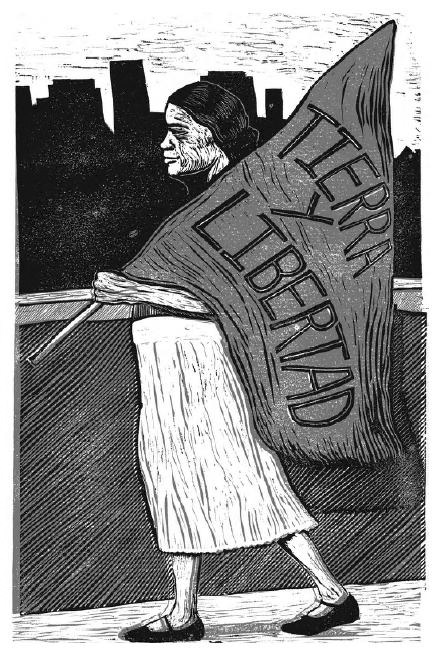
A worker must earn $29.83 an hour to afford a market-rate one-bedroom apartment in San Francisco, according to a 2014 report from the National Low Income Housing Coalition. Workers at the store currently earn from $11.25 to $19.25 per hour. The new minimum wage ordinance just approved by San Francisco voters will raise the City's minimum to $12.25 an hour next year, less than half of what is needed to rent an apartment.

Over 50 workers from the 4th Street store signed the petition. In addition to demanding the $5 per hour wage increase, the petition raises issues about paid time off, hours and scheduling, safety and health, and a retirement plan.

Whole Foods workers have demanded a response from Whole Foods by November 14, when their next paychecks are due. If management fails to respond, workers will begin taking job actions.

Whole Foods is a multinational chain with over 400 stores in the US, Canada and Great Britain, with $13 billion in annual sales, and 80,000 employees.

Prices are high, which is why Whole Foods is colloquially known as Whole Paycheck.

Beneath Whole Foods' glossy image of social responsibility, "working conditions at Whole Foods reflect the low industry standards that dominate all food and retail industries," according to the workers' website wfmunite.com. Despite the company's claims to the contrary, "low wages, constant understaffing, [and] inconsistent schedules" are rampant company-wide. Just recently CEO John Mackey announced that the company would be phasing out full-time positions for new hires. Meanwhile, workers say the company has forced them to shoulder more and more of the costs of their limited health benefits.

Whole Foods currently has over 100 stores in development. Case Garver, a buyer in the Prepared Foods department, has seen enough of the doublespeak.

"It seems like every 6 months they open up a brand new store," he stated, "while at the same time my manager turns around and says the company doesn't have enough money to give us 40 hours a week. We're tired of doing more with less."

Azalia Martinez, a cashier at the store, relates that in addition to working full time for Whole Foods, going to school and fulfilling family obligations, she must take additional side jobs to make ends meet. "It's extremely hard," she says.

Despite the hardships, workers at the store know that they can win better wages by standing together. "History proves that workers have the power to make change when we come together to fight for our interests. We are re-igniting a workers' movement where we have power: on the job. [...] This is our movement, we are capable of victory, and we are worth it."

The Industrial Workers of the World (IWW) is a worker-led labor union uniting diverse members from several industries throughout the world.

Founded over a century ago, the IWW raises the quality of life for workers today while laying the foundation for a society without classes.

Burkina Faso: Masses Rise Up Against Neo-Colonial Rule: Thousands hold signs and wear t-shirts honoring the revolutionary legacy of Thomas Sankara

By Abayomi Azikiwe - Global Research, November 4, 2014

Disclaimer: The views expressed here are not the official position of the IWW (or even the IWW’s EUC) and do not necessarily represent the views of anyone but the author’s.

Hundreds of thousands of people in Burkina Faso have forced the longtime imperialist-backed leader, President Blaise Compaore, to resign amid mass demonstrations and rebellions in several cities across the West African country. Compaore took power in a French-supported coup on Oct. 15, 1987 against revolutionary Pan-Africanist and socialist leader Capt. Thomas Sankara. 

Several political parties and movements that are seeking to reclaim the legacy of Sankara were very much in evidence during the unrest that reached a critical point on Oct. 30 when thousands stormed the parliament building and setting it alight. The legislative body was set to vote on a motion to extend the 27-year rule of Compaore, who although coming out of the military, ran for office repeatedly as a civilian candidate.

Compaore sought to reassert his authority by refusing to formally resign from the presidency until the evening of Oct. 31. Gen. Honore Traore announced after the rebellion on Oct. 30 that he was assuming power and dissolving parliament.

Immediately people within the various opposition parties began to object to the leadership of Traore. The following day Nov.1, yet another military leader emerged claiming to be in charge.

This time it was Lt. Col. Isaac Zida, the deputy commander of the elite presidential guard. Media reports emanating from Burkina Faso said that the military had endorsed the leadership of Zida.

After meeting with foreign diplomats on Nov. 3, Zida said that the military would hand over power to a civilian transitional authority which is acceptable to the people of the country. If the military leader does not move swiftly in this regard, there could be more violent unrest.

Hospitals in Australia riddled with asbestos and pose serious health risk, union officials say

By Matt Peacock - ABC News, November 3, 2014

Disclaimer: The views expressed here are not the official position of the IWW (or even the IWW’s EUC) and do not necessarily represent the views of anyone but the author’s.

Unions and lawyers are warning that hospitals across the country are riddled with asbestos.

Tanya Segelov represented late asbestos campaigner Bernie Banton and is still acting for sufferers of dust diseases.

"Hospitals throughout Australia were full of asbestos and many remain full of asbestos," Ms Segelov told the ABC's 7.30 program.

"All of the steam pipes are wrapped in asbestos, in the ceiling cavities there is asbestos sprayed.

"There are asbestos fire doors, it is in the boiler houses, it is in the laundry.

"Wherever there was heat, wherever there is steam, there was asbestos."

Annabel Crouch worked as a speech therapist at Sydney's Royal North Shore Hospital for three decades.

Her doctor recently told her she has the fatal and incurable asbestos cancer mesothelioma.

It is believed she contracted it from asbestos-lined service tunnels under the hospital.

"We went up and down the tunnel 10 times a day," Ms Crouch said.

"And there would always be people working on it, the pipes, there'd be plumbers doing things.

"No-one thought there would be asbestos or any danger.

"I mean, you do expect your work place is a fairly safe environment, so it's a bit of a shock when you find out that a hospital is full of asbestos.

"But of course in the last while I have learnt that many buildings are full of asbestos."

ITUC Submission to COP20 in Lima says ‘democratic control of energy is needed.’

ITUC contribution for COP 20 - Trade Unions for Energy Democracy, November 2, 2014

Disclaimer: The views expressed here are not the official position of the IWW (or even the IWW’s EUC) and do not necessarily represent the views of anyone but the author’s.

The international community shares today more scientific evidence than it needs to inform decision making on climate change. The impacts on peoples’ lives, livelihoods and prosperity if we fail to act now will be calamitous. Yet the opportunities for social progress and decent work behind an ambitious climate protection agenda are such that it would be irrational to let go this unique time in history where we can still solve the problem.

The international labour movement has supported the UNFCCC convinced that it is the place for delivering a fair, ambitious and binding global Agreement on climate change. But time is running out. Solutions must be found at all levels: from community based diversification to sectoral transformations, from macroeconomic planning at the national level to an international deal that sets a global goal for inspiring massive action.

The global crisis of climate change comes in parallel with another global crisis, the crisis of inequality. Never in history has humanity has created so much wealth and concentrated it in such a small number of hands –according to recent data the 66 wealthiest people in the Planet have the same amount of wealth than the poorest 3.5 billion!

Tackling these two challenges together requires bold measures, and most important, ensuring efforts towards the improvement of one goal are coherent with addressing the other. Climate measures must contribute to protecting the weakest in society; equality measures must put the need for moving towards a sustainable future at its heart.

Trade unions are convinced that only a massive demand from citizens will be able to correct the current unambitious path in which leaders have set their comfort zones. That said, it is our duty as workers’ representatives to expect leadership and vision from the very people we elect.

Pages

The Fine Print I:

Disclaimer: The views expressed on this site are not the official position of the IWW (or even the IWW’s EUC) unless otherwise indicated and do not necessarily represent the views of anyone but the author’s, nor should it be assumed that any of these authors automatically support the IWW or endorse any of its positions.

Further: the inclusion of a link on our site (other than the link to the main IWW site) does not imply endorsement by or an alliance with the IWW. These sites have been chosen by our members due to their perceived relevance to the IWW EUC and are included here for informational purposes only. If you have any suggestions or comments on any of the links included (or not included) above, please contact us.

The Fine Print II:

Fair Use Notice: The material on this site is provided for educational and informational purposes. It may contain copyrighted material the use of which has not always been specifically authorized by the copyright owner. It is being made available in an effort to advance the understanding of scientific, environmental, economic, social justice and human rights issues etc.

It is believed that this constitutes a 'fair use' of any such copyrighted material as provided for in section 107 of the US Copyright Law. In accordance with Title 17 U.S.C. Section 107, the material on this site is distributed without profit to those who have an interest in using the included information for research and educational purposes. If you wish to use copyrighted material from this site for purposes of your own that go beyond 'fair use', you must obtain permission from the copyright owner. The information on this site does not constitute legal or technical advice.
