Adopted Unanimously by the Twin Cities IWW General Membership Branch - December 5, 2017
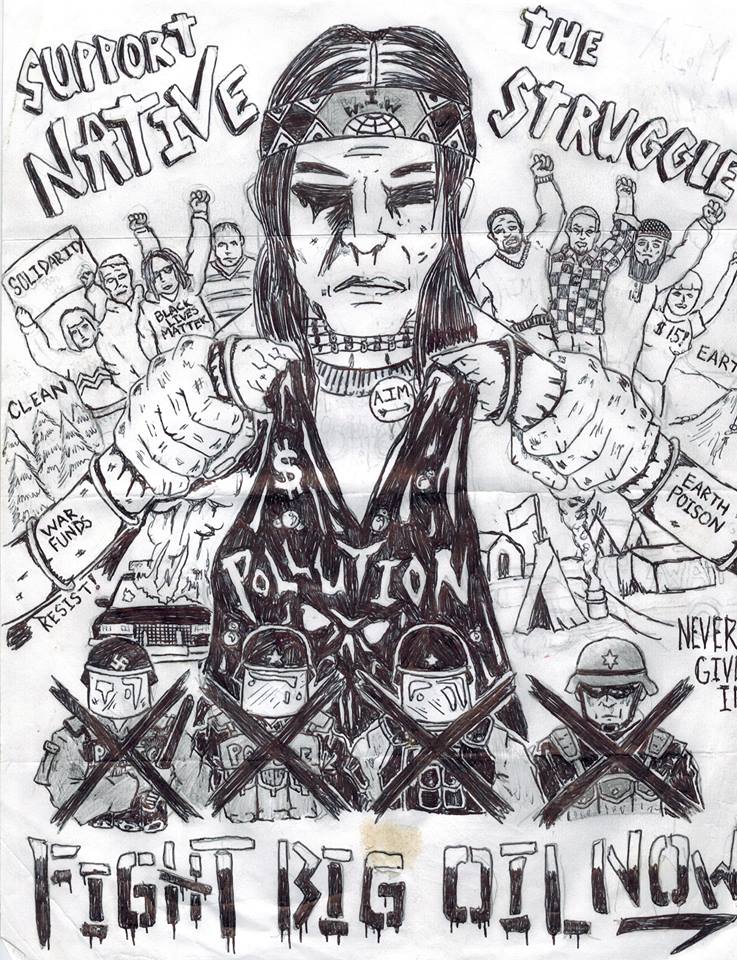 Whereas: On March 3rd 1991 the Line 3 pipeline caused the largest inland oil spill in US history, rupturing in Grand Rapids, Minnesota spilling 1.7 million gallons of oil into the Prairie River; and
Whereas: In July 2010, Enbridge also spilled about a million gallons of Dilbit Oil in the Kalamazoo River when the Line 6B pipeline burst and flowed into the Talmadge Creek and then the Kalamazoo before the the spill was contained. On 29 July 2010, the Calhoun County Health Department asked 30 to 50 thousand households to evacuate, and twice as many were advised not to drink their water. Union workers cleaning up the Kalamazoo Spill have spoken against Enbridge for insufficiently cleaning up the spill which has resulted in birth defects, illness, cancer and death of both humans and animals in the area of the disaster; and
Whereas: In 2007, 2 Enbridge workers were killed in Clearbrook, Minnesota when a pinhole leak explosion sparked a huge fire and spilled 15,000 gallons of oil. Enbridge let the spill burn for three days poisoning the air of the surrounding community; and
Whereas: The Oil Industry and many other unsustainable industries sacrifice the health and safety of the working class and poor communities, especially many indigenous and communities of color. These communities are subject to environmental racism and classism and often ignored and violated during the permitting process of such projects; and
Whereas: These communities often are forced to defend themselves with direct action which puts them at greater risk of violence and incarceration from the state and private security; and
Whereas: The construction of these pipelines will contribute to the acceleration of already dangerous levels of currently existing greenhouse gas emissions which are contributing to the already dangerous effects of climate change, which could lead to a dead planet with no jobs; and
Whereas: Camp Makwa was established in August of 2017 to resist the pipeline using direct action to protect the water and natural resources such as the wild rice lakes, fishing and hunting, and farming that the Anishinaabe Tribe and working class in the area depend on. They have taken several direct actions to shut down construction of the Line 3 pipeline in Superior, Wisconsin and will resist the possible expansion in the spring. They are currently still camping during the harsh Minnesota winter.
Whereas: Neither the Line 3 Pipeline Dakota Access Pipeline, or the Keystone XL Pipeline will provide anywhere near the number of permanent union jobs the promoters of these projects promise they will, and
Whereas: More permanent union jobs can be created at union wages by decommissioning oil pipelines and upgrading water pipeline infrastructure, such as in Flint, Michigan. LIUNA and many labor unions currently have jobs working in the renewable energy sector such as solar, wind, and hydroelectric and could organize for a rapid transition of energy production and manufacturing to be safe for the workers, the surrounding communities and the environment. Though these renewable energy jobs are currently, typically non-union, trade unions if so determined, could easily develop a successful green energy organizing program, using solidarity unionism, that would revitalize the currently struggling labor movement. Far more jobs currently exist in the growing renewable energy sector than in the declining fossil fuel sector. Also these pipeline projects will not deliver the promised "energy security" or "energy independence" promised by their promoters, including the Building Trades and AFL-CIO Union officials among them and;
Whereas: Many unions, including the IWW, ILWU, ATU, APWU, LIUNA-City Employees Local 236, CWA, UE, SEIU, NNU, Pride at Work, A. Phillip Randolph Institute, the Asian Pacific American Labor Alliance, the Coalition of Black Trade Unionists, the Coalition of Labor Union Women, the Labor Council for Latin American Advancement, Labor for Standing Rock, and many members of other Labor organizations have already publicly stated opposition to the Dakota Access Pipeline and or the Keystone XL Pipeline; and
Whereas: President Donald Trump's executive orders that dismantle environmental regulation and ostensibly "clear a path" for the completion of the aforementioned pipelines are contradictory in nature and are designed primarily to divide workers and environmentalists over the false dichotomy of "jobs versus the environment"; and
Be Resolved that: The Twin Cities IWW reaffirms the IWW’s opposition to the construction of the Dakota Access Pipeline and the Keystone XL Pipeline as well as officially declares its opposition to the construction of the Line 3 Pipeline; and
Be it Also Resolved that: The Twin Cities IWW donates $100 each to both Camp Makwa’s legal and supply fund (Legal | CAMP SUPPLIES FUND) and urges our Union’s members, the Labor Movement, and working class to pass resolutions like this one, donate, join, and organize in solidarity with Camp Makwa, the resistance to Line 3, and the movement for environmental justice, locally and abroad.
Be it also Resolved that: The Twin Cities IWW endorses Black Snake Killaz Circuit, a collection of benefit shows created by organizers, artists, and eco-activists who are standing in solidarity with indigenous water protectors and their accomplices fighting Line 3 to defend Anishinaabe land and water from the extractive industry; and
Be it Further Resolved that: The Twin Cities IWW calls on rank and file members of the Building Trades, Teamsters, and other unions who have declared support for these pipelines and other unsustainable projects to implement Green Bans and take direct action by striking and or slowing down in solidarity with the communities resisting Line 3, additional pipelines, and other projects that are exploitive of the working class and the plant we inhabit.
Be it Additionally Resolved that: The Twin Cities IWW calls on the working class, unions, and the unsustainable companies that employee them, such as Enbridge, as well as their financial supporters to develop and rapidly implement a "Just Transition" plan for workers in unsustainable industries, such as pipeline and oil industry workers, to be trained in and given union jobs in the green energy sector. ; and
Be it Finally Resolved that: The Twin Cities IWW reaffirms our belief and commitment to revolutionary industrial unionism, environmental justice, and community self-defense with our goal to “organize as a class, take possession of the means of production, abolish the wage system, and live in harmony with the Earth.”






 Protests against the Dakota Access Pipeline in North Dakota are continuing, according to
 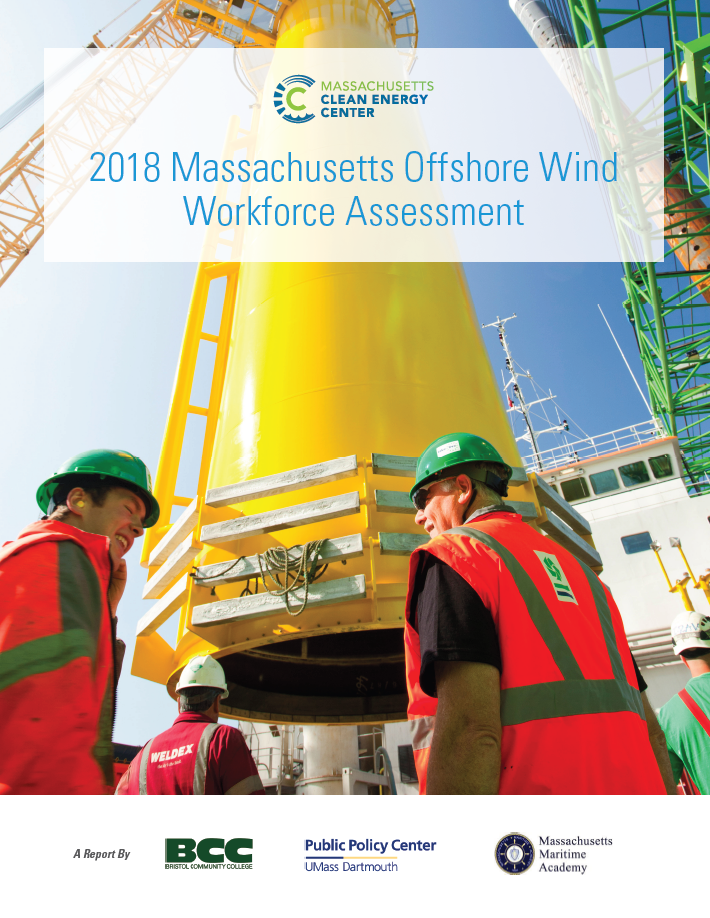 The 2018 Massachusetts Offshore Wind Workforce Assessment provides a comprehensive analysis of the workforce needs and economic development impacts associated with the deployment of 1600 megawatts of offshore wind in Massachusetts. The report describes the jobs associated with planning, constructing and servicing offshore wind projects and provides information on the education, skills and health and safety credentials required for each job. Importantly, the report highlights the opportunities for Massachusetts residents to work in this emerging industry, and identifies recommendations and key strategies to better position the Commonwealth, offshore wind industry, educational institutions, non-profits, and labor to develop and serve a burgeoning offshore wind workforce.
 This article is part of a collaboration between YES! Magazine and
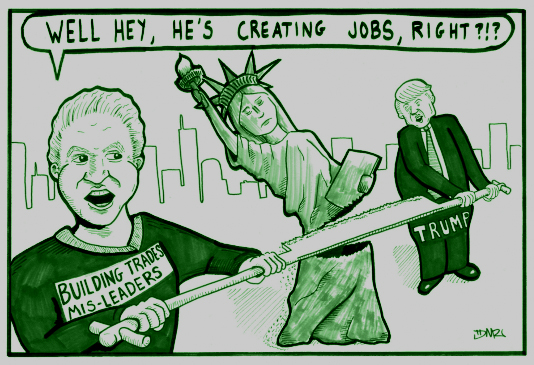 The Trump presidency presents organized labor with a dilemma.
 Much of the argument advanced in support of expanding Canada’s fossil fuel production centres on job creation and economic benefits. Politicians, pundits and corporate spokespeople who support fossil fuel infrastructure projects—such as new oil and gas pipelines—often evoke this rhetoric when they appear in the media.
 From the introduction:A win for our economy, consumers, and the climate? It may sound like an elusive unicorn, but energy efficiency checks all of the above. While underreported, measures to help homes, small businesses, and industry save on energy are a win-win for Canada—good for the climate and Canadian competitiveness. The federal government’s Pan-Canadian Framework on Clean Growth and Climate Change has introduced a number of such measures as a way to cut carbon pollution and help Canada meet its Paris Agreement targets. These include improved building codes and energy labelling for buildings, so people can better understand the energy performance of their homes and businesses. But what does a more efficient future mean for Canadians? Clean Energy Canada and Efficiency Canada hired Dunsky Energy Consulting to model the net economic impacts of energy efficiency measures in the pan-Canadian framework. They also modelled what the impacts would be if we went a step further, implementing the most ambitious efficiency goals found in jurisdictions across North America.
 On Tuesday, December 5, 2017, the Twin Cities IWW unanimously passed a resolution reaffirming the IWW’s opposition to the construction of the Dakota Access Pipeline and the Keystone XL Pipeline as well as officially declaring its opposition to the construction of the Enbridge Line 3 Pipeline. The Twin Cities IWW pledged material support to water protectors, rejecting Enbridge’s arguments that the pipeline is necessary for jobs and prosperity for working class people, and put forward a vision of a “Just Transition” to a sustainable economy.
 This site is not the official webpage of the Industrial Workers of the World.