By staff - European Trade Union Institute, June 14, 2022
IndustriAll policy brief on the energy crisis
In a policy brief, IndustriAll union analyses the causes and effects of the recent energy price increases with a thorough criticism of the response measures being taken at the EU level. The policy brief notes that the observed rise in energy prices in the EU in 2021 was mainly driven by price developments in EU and international commodity markets, while the gas price on wholesale markets has reached unprecedented levels. It also adds that the impact of the commodity price increase on electricity goes beyond the share of the related commodities in the power generation due to the applied price-setting mechanism. This means that an electricity mix made of a majority of decarbonised sources, but requiring fossil-based sources to ensure part of its supply, is also exposed to the price increase of fossil-based electricity. Europe`s structural dependence on energy imports has even increased in the last decades, as in 2019, 61% of its gross energy consumption relied on imported energy products. IndustriAll also points to the investment challenge the EU is facing: beyond the electricity grid investment needs, reaching the EU 2030 emission reduction target would require €438 bn of additional annual investment, equivalent to 2.7-3% of GDP, while current investment commitments are massively falling short of this. The paper also claims that, not least due to market liberalisation, the EU has a fragmented energy supply chain where final consumers bear risk. An overview is provided about the response measures member states have undertaken to alleviate the effect of the price increases on consumers, from the temporary reduction of energy-related taxes and levies to handouts and `energy cheques`. The EU has recently published a toolbox to tackle energy prices. This document lists the initiatives that Member States can implement within the framework of the EU Energy and Single Market rules. Compensation measures and direct support for poor end-users, safeguards against disconnections, tax reductions, reform of the renewable support schemes, and the provision of state aid to companies and industries are among the most important recommendations to Member States.
IndustriAll argues that while reaching climate neutrality must remain the EU’s main objective, the current geopolitical situation and its impact on energy supplies and costs demand the mobilisation of all available means to secure affordable energy for all in the coming months.
IndustriAll Just Transition Manifesto
IndustriAll Europe launched a Just Transition Manifesto as the measures of the Fit for 55 package that implement European Green Deal objectives are taking their final shape. The union stresses that 25 million industrial workers in Europe potentially face restructuring and job losses due to the green transformation - exacerbated by the COVID-19 crisis, digitalisation, trade and market developments and a volatile geopolitical situation.
The manifesto is calling to policymakers Europe to ensure a transition to a green economy that is fair and just to ALL workers, and that does not destroy but preserves and creates good quality jobs. It speaks out for a transition that is anticipated, managed and negotiated with workers for every aspect that concerns them. For achieving this, the union demands a comprehensive Just Transition framework that provides guarantees for adequate resources, is based on effective policy planning, promotes and strengthen workers’ rights, and involves trade unions through intense social dialogue.
The main demands of the manifesto are:
- An industrial policy fit for ambitious climate goals and good quality jobs.
- Adequate resources to fund the transition.
- Stronger collective bargaining and social dialogue to negotiate the transitions.
- A toolbox of workers’ rights and companies’ duties to anticipate and shape the change.
- Tackling new skills needs and a right to quality training and life-long learning for every worker to support the Just Transition.






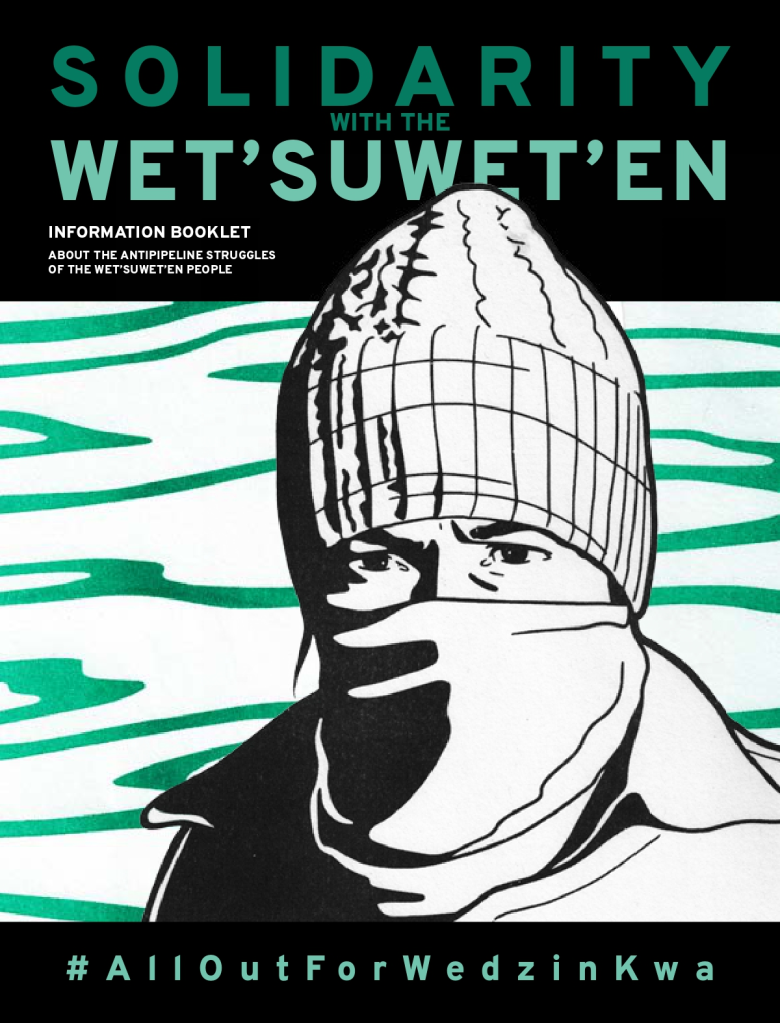 If you’ve followed the news in the past years, you’ll remember the massive wave of train blockade in 2020. This movement was initiated in solidarity with the Wet’suwet’en people’s fight against Costal Gas link pipeline in so-called British-Columbia.
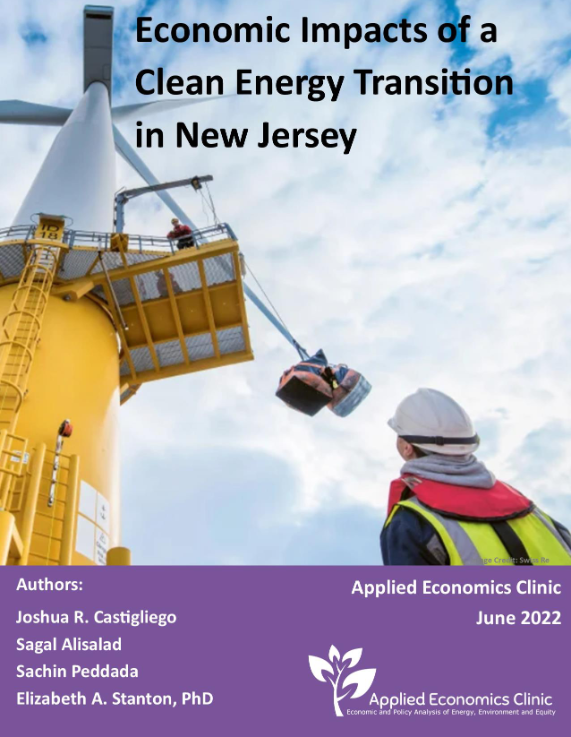 Researcher Joshua Castigliego, Assistant Researchers Sagal Alisalad and Sachin Peddada, and Senior Economist Liz Stanton, PhD prepared a report on the economic impacts associated with a clean energy transition in New Jersey that aims to achieve the State’s climate and energy goals in the coming decades. AEC staff find that adding in-state renewables and storage, and electrifying transportation and buildings creates additional job opportunities, while also bolstering the state’s economy. From 2025 to 2050, AEC estimates that New Jersey’s clean energy transition will result in almost 300,000 more “job-years” (an average of about 11,000 jobs per year) than would be created without it. AEC also identifies a variety of additional benefits of a clean energy transition, including several benefits that are conditional on the design and implementation of the transition.
 Senior Researcher Bryndis Woods, PhD, Researcher Joshua Castigliego, Assistant Researchers Elisabeth Seliga and Sachin Peddada, Researcher Tanya Stasio, PhD, and Senior Economist Liz Stanton, PhD prepared a report that assesses New Jersey’s current clean energy workforce, identifies barriers to green jobs that impede access to—and equitable representation within—the clean energy sector, and provides recommendations regarding how the State of New Jersey can shape policy and regulations to enhance the equity, diversity and inclusion of its clean energy jobs. AEC staff find that there are important barriers to green jobs that reinforce existing inequities in New Jersey’s clean energy workforce, including: educational/experience barriers, logistical barriers, equitable access barriers, and institutional barriers. Achieving a future of clean energy jobs in New Jersey that is diverse, equitable and inclusive will require overcoming barriers to green jobs with intentional efforts targeted at marginalized and underrepresented groups, such as racial/ethnic minorities, women, low-income households, and people with limited English proficiency.
 This site is not the official webpage of the Industrial Workers of the World.