You are here

energy transition

One day longer. One day stronger. One year later

By Kim Kelly - The Real News, April 13, 2022

It was supposed to be a terrible day. Thousands of United Mine Workers of America (UMWA) members and supporters were scheduled to convene in Tuscaloosa County, Alabama, on the morning of April 6, 2022, to commemorate the one-year anniversary of the beginning of the Warrior Met Coal strike. But, much like the coal bosses themselves, the forecast was not cooperating. The weather report, in typical fickle Alabama fashion, had been fluctuating between rain, more rain, and certain waterlogged doom; the union had bought ponchos in bulk to prepare. As UMWA International President Cecil E. Roberts said before the rally, “A little bad weather isn’t going to slow us down.”

By the time I arrived at Tannehill State Park that morning, I was fully prepared to spend my day stuck in the mud impersonating a drowned rat. I was not surprised to see that the day’s schedule had been moved up in a bid to outrun the rain. The original start time was slated for 11AM, but the rally was already in full swing by 10:30AM. Like all UMWA rallies, this one opened with a prayer, and I’m sure I wasn’t the only person in the crowd hoping (or praying) that the universe would see fit to send us some good luck after all.

Buses were still arriving as speakers took the stage; according to an emailed UMWA press release, at least 1,200 UMWA members and retirees had bused in from Illinois, Pennsylvania, Ohio, Kentucky, and West Virginia, and they were joined by union members from across the South. It was a family reunion, with a greater purpose—when the call for solidarity went out, folks listened. They came to pay their respects by the hundreds, traveling across rivers and valleys and up from hills and hollers to be there alongside their afflicted siblings.

Illinois prioritizes equitable access to green jobs on its path to 100% clean energy

By Laura Aka - Working Nation, April 8, 2022

WorkingNation’s Green Jobs Now series is looking at green jobs opportunities and the skills needed to get those jobs across the country with a series of state-by-state reports. Next: Illinois.

“We can’t outrun or hide from climate change. There is no time to lose. Illinois is taking action in the fight to stop and even reverse the damage that’s been done to our climate.” With those words, Gov. JB Pritzker signed the state’s ambitious Climate and Equitable Jobs Act (CEJA) last fall.

CEJA aims to get the state to 100% clean energy by 2050. Not only does it address climate change, it also includes significant workforce development components, including an emphasis on building a more diverse workforce with equitable access to the skills needed to get green jobs.

“Illinois is a force for good, for an environmental future we can be proud of. With economic growth and jobs woven into its fabric, this new law is the most significant step Illinois has taken in a generation toward a reliable, renewable, affordable, and clean energy future in a generation,” the governor added.

“It used to be called the Rust Belt. [Illinois] is moving on an industrial scale from the past to the future by way of a green transition,” says Paula DiPerna, a consultant to WorkingNation on the green economy and a special advisor to CDP, a nonprofit that works with its members to manage their environmental impacts.

“The science of climate change has now become almost universally disseminated,” notes DiPerna who says green jobs are more noticeable. “Once you start thinking about it, you suddenly see it everywhere.”

Switching off: Shock, denial, stress, anger. Workers are struggling to comprehend the early closure of Australia’s largest coal-fired power station and the plan for what comes next

By Mayeta Clark - ABC (Australia), April 2, 2022

On a mild March day in a brown bike shed at Eraring, the biggest coal-fired power station in Australia, 19 men in high-vis work gear crouch on a low bench around the shed walls. It’s lunch time. The men are contractors and they are looking up at their union leader, Cory Wright, for certainty.

Employed by labour hire companies, they are among the most vulnerable workers caught up in the Lake Macquarie power station’s impending closure. Many have worked at Eraring for years, some decades. But they are only entitled to a fraction of the redundancy payout that their colleagues directly hired by the station’s owner, Origin Energy, will get.

When Cory asks the workers if they want to share some thoughts, some say they don’t believe Eraring Power Station will really shut down. A bald man at the back is first to speak. “I can’t actually see them closing as yet,” he says. “That’s my thoughts personally.” Another man sitting two seats along agrees. “I don’t know. I just can’t — we can’t see it closing, not by ’25 anyway,” he says referring to the new closure date of 2025 — seven years earlier than expected.

Union officials say this denial is a form of shock that they’ve heard often since the recent announcement of Eraring’s closure. Each time they hear it, they remind the workers to take the closure date seriously.

Newcastle organiser Tim Jackson jumps in. “If we just go on the face value that it may not occur, we’re just walking down a grey path of an unknown,” he says. “So if it’s 2025, it is what it is.”

Solving the Climate Crisis with Nuclear Energy Won’t Work

By Robert Pollin - Dollars & Sense, March/April 2022

Russia’s invasion of Ukraine is—as of this writing, in late March—an ongoing calamity. As of now, it is impossible to predict how it might end, and what all its costs will be. We do know, as of now, that many thousands of people are dead, and millions of lives are being wrecked.

In addition to these most brutal consequences, the war must force us to rethink many issues that—with no exaggeration—reach to the core of how we can envision future prospects for life on earth. I will consider only one such question now. That is: What role should nuclear energy play in advancing a workable global climate stabilization project?

In the initial phase of its invasion on February 24, the Russian military seized control of the Chernobyl nuclear power plant, which is located about 60 miles north of Kyiv in Ukraine. In 1986, when Ukraine was still part of the Soviet Union, Chernobyl was the site of the most severe nuclear power plant accident in history. An explosion blew the lid off one of the plant’s four operating nuclear reactors. This released radioactive materials into the atmosphere that spread throughout the region. Despite this disaster, the other three reactors at Chernobyl continued operating until 2000.

The other three reactors did cease operating in 2000. And the site still houses more than 20,000 spent fuel rods. These rods must be constantly cooled, with the cooling system operating on electricity. If the system’s electrical power source were to malfunction, the spent fuel rods could become exposed to the air and catch fire. This would release radioactive materials into the atmosphere. Once released, the radioactive materials could again spread throughout the region and beyond, as they did in 1986. This is a low-probability but by no means a zero-probability scenario.

On March 3, the Russian miliary also took control of the Zaporizhzhia nuclear plant, the largest in Europe. According to a March 4 report on NPR, “Russian forces repeatedly fired heavy weapons in the direction of the plant’s massive reactor buildings, which housed dangerous nuclear fuel.” All military actions at or near the plant create further danger of the plant’s operations becoming compromised. As with Chernobyl, this could then lead to radioactive materials being released into the atmosphere.

Nuclear disasters at both Chernobyl and Zaporizhzhia are therefore active threats right now. In addition, the war is compromising the security systems that operate to protect both sites. The fact that both sites have become combat zones means that they are more vulnerable to attacks from non-state actors, including terrorist organizations of any variety. The aim of such organizations in breaching security at Chernobyl or Zaporizhzhya would almost certainly include gaining access to materials that would enable them to produce homemade nuclear weapons. At the least, they would be positioned to threaten the release of radioactive materials.

ILWU Supports CalPERS Divestment from Fossil Fuels

Resolution Urging Support of SB 1173 (Gonzalez) Fossil Fuel Divestment Act
Adopted by the ILWU NCDC – March 26, 2022

WHEREAS, climate change, through rising sea levels, drought, heat waves, and increased wildfires is already negatively affecting human wellbeing, ecosystems and biodiversity; and 

WHEREAS, climate change is an issue of environmental justice, disproportionately impacting Indigenous communities, communities of color, and low income communities due to historical oppression, inequity of power, and lack of access to resources for prevention and relief; and

WHEREAS, the World Economic Forum recognizes the climate crisis as “a child-rights crisis” and says “the adverse weather events caused by a warming planet affect children first and worst”; and

WHEREAS, an analysis from the Harvard T.H. Chan School of Public Health indicates that the effects of heat, wildfires, storms, floods, and droughts can negatively affect both the physical and mental health of children. The negative effects on children’s physical health from the burning of fossil fuels and climate change include impacts on allergies, asthma, brain development, low birth weight, and preterm birth; and

WHEREAS, the American Academy of Pediatrics recognizes that the physical and mental impacts of climate change “not only directly threaten the lives and safety of children, they put them at risk of mental health problems—and can also cause lasting effects when they destroy their communities and their schools”; and

WHEREAS, a review of the psychological effects of climate change on children finds that “effects of climate change place children at risk of mental health consequences including PTSD, depression, anxiety, phobias, sleep disorders, attachment disorders, and substance abuse. These in turn can lead to problems with emotion regulation, cognition, learning, behavior, language development, and academic performance”; and 

WHEREAS, independent studies by financial consulting firms Blackrock and Meketa found divestment reduces risk, and improves, not weakens, investment returns; and

WHEREAS, a Corporate Knights study found if CalPERS and CalSTRS had divested in 2010 they would have gained $11.9 and $5.5 billion respectively by 2019; and 

WHEREAS, the International Panel on Climate Change concluded in 2018 that we have 12 years to make dramatic cuts in the use of fossil fuels (coal, oil, gas and tar sands) if we are to keep warming to 1.5o C and avoid more catastrophic change; and

WHEREAS, the fossil fuel industry is the single most powerful obstacle to addressing climate change, using their immense lobbying power in Washington D.C. and Sacramento to block climate legislation; and 

WHEREAS, fossil fuel companies' own scientists knew their products were causing climate change, but the companies kept it secret; and 

WHEREAS, to effectively address climate change, most fossil fuel reserves must remain in the ground, never to be used. This makes fossil fuel stocks a risky investment; and

WHEREAS, divestment in specific segments or business operations by CalPERS and CalSTRS is already standard practice and is specifically allowed by the California Constitution; and

WHEREAS, divestment means selling directly held or commingled assets including fossil fuel public equities and corporate bonds; and

WHEREAS, the California Climate Jobs Plan provides a comprehensive roadmap for decarbonization and just transition from a fossil fuel based economy; and

WHEREAS, The ILWU Northern California District Council has endorsed the California Climate Jobs Plan (in February 2022);

THEREFORE LET IT BE RESOLVED, that the ILWU NCDC strongly supports SB 1173 (Gonzalez) the fossil fuel divestment act. And upon passage, a copy of this resolution will be sent to Senator Lena Gonzalez’s office requesting that the ILWU NCDC be listed as an official supporter of the bill.

An alternative energy strategy to stimulate rapid transition

By Andrew Simms and Freddie Daley - Rapid Transit Alliance, March 21, 2022

All around the world, governments’ energy policies are at a crossroads. In order to insulate themselves from dependence on Russian oil and gas, tackle rising living costs and enact sanctions against Vladimir Putin, governments are collectively clamouring to diversify their energy supplies.

This will be easy for some nations, but more challenging for others. In the UK, Russian gas made up less than 4% of the total British gas supply in 2021, while in Germany just over 30% of primary energy input, across coal, oil and gas, comes from Russia. The varying degrees of dependence present both challenges and opportunities for the low carbon transition. 

The UK government is expected imminently to publish its Energy Strategy that will set out how it intends to reduce the nation’s reliance on energy imports and speed up the transition to net zero. It will be a test case for an economy still heavily hooked on fossil fuel use but with huge untapped renewable energy potential and an economic ‘levelling-up’ agenda for its regions that could benefit greatly from investment in low carbon transition.

California Climate Jobs Plan Continues to Gain Union Endorsements

By That Green Union Guy - IWW Environmental Union Caucus - March 11, 2022

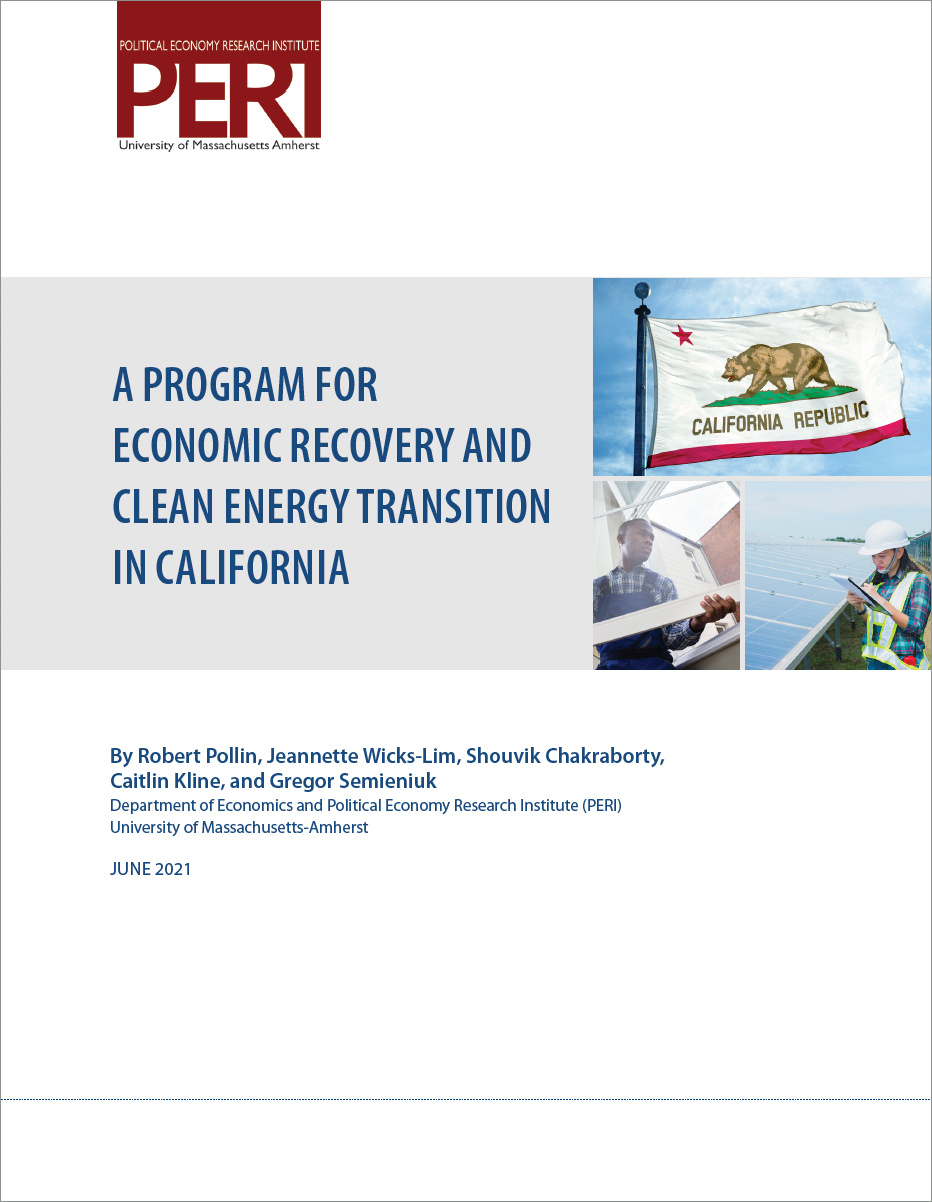
The California Climate Jobs Plan, popularly known as "the Pollin Report"--which has been described as a "sholvel ready just transition/Green New Deal" plan--and was immediately endorsed by nineteen California based labor unions, including three United Staeelworkers Union locals which primarily represent refinery workers upon its unveiling has since gained the support of many additional unions. The following unions (so far) have since endorsed the plan (knowing that while the plan isn't perfect, it's at least a step in a positive direction):

November 2021:

  • Inland Boatmen's Union (IBU), SF Bay Region (an affiliate of the ILWU)
  • Railroad Workers United
  • IWW San Francisco Bay Area General Membership Branch

February 2022:

  • International Lonshore and Warehouse Union (ILWU) Northern California District Council (NCDC)

The council is composed of delegates from the following ILWU Locals:

  • ILWU Local 6 (Bay Area Warehouse)
  • ILWU Local 10 (Bay Area Longshore)
  • ILWU Local 34 (Bay Area Shipping Clerks)
  • ILWU Local 75 (Bay Area Dock Security Guards)
  • ILWU Local 91 (Bay Area “Walking Bosses”)
  • ILWU Local 14 (Eureka; combined)
  • ILWU Local 18 (Sacramento; ditto)
  • ILWU Local 54 (Stockton)
  • Bay Area IBU (already endorsed individually)
  • and the pensioners from all of the above.

However, the NCDC's endorsement does not automatically mean that each of its constituent locals have individually endorsed the plan.

The more unions that endorse and take an active role in motivating the proposal either by lobbying at the California state level, engaging in public actions to promote the goals of the plan, or even engaging in workplace actions (whereaver relevant and practiceble), the greater chances the plan has of being realized.

(That said, it should be noted that this is not an IWW organizing project, although IWW members have been active in securing additional union endorsements).

A sample resolution (a copy of the text adopted by the SF Bay Area IBU) is available here.

Download the plan - here.

Challenges and perspectives of a just transition in Europe

Putin’s Carbon Bomb

By Ted Franklin - System Change not Climate Change, March 8, 2022

At a time when the entire world needs to focus on radical climate policy changes, he has thrust us into a war that might be as existentially dire as the climate crisis.

On day three of the Russian invasion of Ukraine a worldwide group of scientists from the Intergovernmental Panel on Climate Change (“IPCC”) gathered on Zoom to put the final stamp of approval on the UN body’s latest devastating report on the world’s feeble progress on climate.

A dark gloom hung over the proceedings as war threatened to derail global action on climate for years to come. Then Svitlana Krakovska, a Kyiv-based Ukrainian climatologist leading her country’s delegation to the virtual meeting, breached the IPCC’s longstanding commitment to apolitical discourse with a trenchant observation.

“Human-induced climate change and the war on Ukraine have the same roots — fossil fuels and our dependence on them,” she reportedly told her colleagues during a break from the air-raid sirens blaring intermittently in the Ukrainian capital. “The money that is funding this aggression comes from the same [place] as climate change does: fossil fuels. If we didn’t depend on fossil fuels, [Russia] would not have money to make this aggression.”

After Krakovska spoke, scientists and climate diplomats from the 195 IPCC nations listened in amazement as Oleg Anisimov, the head of the Russian delegation, apologized “on behalf of all Russians who were not able to prevent this conflict.”

Statement on UN IPCC Climate Report

By staff - Climate Justice Alliance, March 1, 2022

Climate Justice Alliance Calls on White House, Congress, UN to Center Frontline Wisdom/Solutions & Reject False Techno Fixes Accelerating Climate Change

We must keep fossil fuels in the ground; If we take anything away from Part 2 of the UN’s Intergovernmental Panel on Climate Change (IPCC) Assessment, that should be it. Like so many times before, once again we find ourselves calling on the White House and Congress, and all world leaders to act boldly and courageously to reduce and eliminate greenhouse gas emissions at their source.

As Climate Justice Alliance (CJA) Co-Executive Director, Ozawa Bineshi Albert pointed out after participating in the most recent UN Climate Change Conference (COP26), “we must act with an urgency that is not happening now and we need community leaders experiencing harm to lead with solutions.”

Hans-Otto Pörtner, Co-Chair of the working group that issued the report explains, “The scientific evidence is unequivocal: climate change is a threat to human wellbeing and the health of the planet… Any further delay in concerted global action will miss a brief and rapidly closing window to secure a liveable future.

However, we cannot rely on unproven fossil fuel industry backed, techno-fixes and market schemes that are really just band-aid approaches to solving the climate crisis: practices that do not guarantee a reduction or elimination of emissions at their source, such as geoengineering approaches like carbon capture and storage, solar radiation management, carbon removal and the like. We must safeguard Earth and all her creatures for generations to come. That means stopping the harm that continues to pollute her for future generations. We must center frontline solutions that are grounded in a Just Transition as we move away from the dig, burn, and dump economy to local, community-controlled renewable and regenerative models that reduce emissions while building community wealth and justice at every turn. 

Together with 1,140 organizations and as a part of the Build Back Fossil Free Coalition in a letter issued last week, we called on President Biden to use his Executive powers to immediately 1) ban all new oil and gas contracts on federal areas, 2) stop approving fossil fuel projects, and 3) declare a climate emergency under the National Emergencies Act that will unlock special powers to fast track renewable projects that will benefit us all.

Additionally, as this report rightly points out, the United States must pay its fair share as the major culprit of climate change and heed the traditional knowledge of Indigenous peoples as we craft real solutions and reject false ones that will only serve to accelerate climate chaos in Black, Brown, Indigenous, Asian, and other low-income and vulnerable communities. We must invest in mitigation and adaptation resources for all frontline communities, in the Global South, and all other nations immediately. 

At the same time that the United Nations was preparing to craft this damning report on the fossil fuel industry, the largest delegation of badged participants at the COP26 were fossil fuel lobbyists. Only a few from vulnerable and most impacted communities were allowed in. This is unacceptable – the UN must end rules that restrict and keep out those most impacted by climate change from fully participating in future climate change conferences. Finally, we call on the UN to end its long practice of bowing to pressure from fossil corporations and member nations aligned with them, and reject false solutions that enable polluters to continue business as usual while doing nothing to stop emissions at their source.

This most recent IPCC Assessment focuses on impacts, vulnerability, and adaptation. An upcoming section in April will focus on ways to reduce emissions, and the final part will present lessons to member states during the next Climate Change Conference (COP27) to be held in Egypt. If the nations of the world truly want to solve the climate crisis they will heed the calls of those most impacted and look to them to lead rather than those who created the crisis in the first place; here in the United States that looks like addressing this issue as the emergency that it already is.

Pages

The Fine Print I:

Disclaimer: The views expressed on this site are not the official position of the IWW (or even the IWW’s EUC) unless otherwise indicated and do not necessarily represent the views of anyone but the author’s, nor should it be assumed that any of these authors automatically support the IWW or endorse any of its positions.

Further: the inclusion of a link on our site (other than the link to the main IWW site) does not imply endorsement by or an alliance with the IWW. These sites have been chosen by our members due to their perceived relevance to the IWW EUC and are included here for informational purposes only. If you have any suggestions or comments on any of the links included (or not included) above, please contact us.

The Fine Print II:

Fair Use Notice: The material on this site is provided for educational and informational purposes. It may contain copyrighted material the use of which has not always been specifically authorized by the copyright owner. It is being made available in an effort to advance the understanding of scientific, environmental, economic, social justice and human rights issues etc.

It is believed that this constitutes a 'fair use' of any such copyrighted material as provided for in section 107 of the US Copyright Law. In accordance with Title 17 U.S.C. Section 107, the material on this site is distributed without profit to those who have an interest in using the included information for research and educational purposes. If you wish to use copyrighted material from this site for purposes of your own that go beyond 'fair use', you must obtain permission from the copyright owner. The information on this site does not constitute legal or technical advice.