You are here

green unionism

A Just Transition for Fossil Fuels Workers is Possible

Robert Pollin interviewed by Sharmini Peries - The Real News Network, October 24, 2016

New Report from Fair World Project Evaluates Certification Programs that Seek to Ensure Transparency and Integrity of Working Conditions for Farmworkers

By Api Podder - MySocialGoodNews, October 25, 2016

Leading Advocacy Group Evaluates Impact and Effectiveness of Seven Certification Programs in the Interest of Farmworker Justice

Press Release – PORTLAND, ORFair World Project, a project of the Organic Consumers Association, the nation’s largest network of green and ethical consumers, has released a new report titled, Justice in the Fields: A report on the Role of Farmworker Justice Certification and an Evaluation of the Effectiveness of Seven Labels. The new report evaluates seven certification programs that consumer brands use to provide a level of transparency to consumers on the social impact of their supply chain on workers. The findings in the report are based on the criteria farms must meet, how these standards are enforced and what role farmworkers and their representatives play in both program development and on-farm enforcement.

To read the Justice in the Fields report, go to: http://fairworldproject.org/campaigns/farmworker-justice/

The report details the realities of agricultural work globally: it’s difficult, dangerous, and can be poorly compensated. Farmworkers are often excluded from laws that protect other workers and even when they are included, the laws are often not well enforced. Labor unions can provide the function of negotiating better pay and conditions on behalf of workers they represent, but in reality union membership on farms is low, in part because of anti-union organizing. The report illuminates how, in recent years, certification programs have stepped in to fill the void and ensure justice and fair treatment for farmworkers on farms.

“It is tempting to see certification as a silver bullet,” says Kerstin Lindgren, Campaign Director of Fair World Project, “but any certification is only as good as its standards and enforcement mechanisms. Ultimately, any good program empowers farmworkers and works together with existing regulations and unions to strengthen their voice.”

Of the seven certification labels evaluated in the report, Fair World Project strongly recommends two of them: Agricultural Justice Project’s Food Justice Certified and Coalition of Immokalee Workers’ Fair Food Program. Two others are recommended with qualifications: Equitable Food Initiative’s Responsible Grown, Farmworker Assured, and Fairtrade International’s Fairtrade Certified.

“At their best, certification labels can raise the bar for worker justice on farms and lead consumers to purchase products that empower farmworkers,” said Dana Geffner, Executive Director of Fair World Project. “But conscious consumerism is just a small part of what’s needed—we hope that this report can inform and inspire people to engage in activism on behalf of all the people who grow our food, whether they work on a certified farm or not,” continues Geffner.

The Lucas plan and the politics of technology

By David King - People and Nature, October 26, 2016

Forty years ago workers at Lucas Aerospace created a detailed plan to transition out of the arms industry and into green, sustainable products and technologies, writes David King. it never happened, yet the Lucas Plan provides a blueprint for similar initiatives today to build a deep-rooted, broad-based movement for social, economic and ecological progress.

This year is the fortieth anniversary of The Lucas Plan, the pioneering effort by workers at the Lucas Aerospace arms company to propose alternative socially useful applications of the company’s technology and workers’ skills, whilst retaining jobs. It was an inspiring model of industrial democracy and has played an important role in showing that traditional trade union concerns about jobs losses arising from closures in harmful industries such as arms, nuclear power, etc., can be met. The Plan was hugely influential in the 1980s peace movement, during the crisis at the end of the Cold War.

But although younger generations of leftists, environmentalists and peace activists may never have heard of it, the ideas of the Lucas Aerospace workers are crucially relevant for the challenges we face today, including climate change, militarism and automation/artificial intelligence. A conference in Birmingham in November will both celebrate the achievements of the Lucas workers and, we hope, reinvigorate movements for socially just solutions to those crises.

To our working-class brothers and sisters across the world Invitation to the International Joint Action in November in Tokyo and Seoul

By Doro-Chiba/KCTU - Transport Workers Solidarity Committee, October 23, 2016

Neoliberalism has led to a rapid increase in irregular workers and indirect employment all over the world, as well as the strengthening of monopoly, the deepening of wealth polarization, more and more privatization, and the oppression of the labor union movement.

Moreover, the intensified competition among capitalist powers has brought about the impending crisis of conflict and war, especially in Northeast Asia.

Workers of the world! We, the Korean Confederation of Trade Unions Seoul Regional Council and three unions in Japan (Doro-Chiba, Kan-Nama and Minato-Godo), have decided to organize a Workers’ International Solidarity Action in November against the merciless capitalists’ oppression of the labor movement and the growing crisis of imperialist war in Northeast Asia and the Middle East.

Neoliberalism, which is controlled by the “1%” monopoly capitalists, totally deprives workers of their freedom. While the number of irregular workers and indirectly employed workers increases, public services (transportation, education, medical care, municipality, etc.) are shrinking, being privatized, and transformed into mere tools for profiteering.

Above all, the capitalists’ greed has forced the world into economic depression and the collapse of the world economy, and is drawing the world into the disaster of impending imperialist war (a world war and nuclear war).

In face of the first crisis ever to seriously threaten the survival of mankind, the international solidarity of workers is the only way to defend the world.

We workers of the world must stand together in a united struggle under the banner of international solidarity.

In 1995, South Korean workers established the Korean Confederation of Trade Unions (KCTU) to unite workers and stand in the vanguard of their struggles, overcoming the harsh repression of state power and capital that had existed on labor movements for a long period of time. Since then, KCTU has been relentlessly fighting and continuously moving forward.

The workers of KCTU keep fighting without fear even to die in their struggle. They go on strikes regardless of the risks of being fired or arrested. In fact, our comrade Han Sang-gyun, President of KCTU, recently received an unprecedented sentence of 5 years’ imprisonment and now strives behind bars. Despite such a brutal rule of the present regime that speaks only for big capital and the far right wing, the workers never waver in their efforts and continue fighting on militantly.

This coming September, workers in South Korea are preparing to wage another robust general strike led by the public sector union. Also, 200,000 workers from all over the country will gather together in a massive protest at the People’s All-out Rally in Seoul. There the working class people will vigorously launch the decisive battle to fight back against the oppressive rule of the government and capitalism. This will pave the way for further general strikes and then link up with the struggle of the presidential election in 2017. All these militant struggles will create a new turning point toward the fundamental transformation of South Korean society.

Doro-Chiba has been carrying on the struggle against the division and privatization of Japan National Railway. It was the greatest attack on the labor movement in the Japanese postwar period. But Doro-Chiba’s 30-year consistent struggle has eventually succeeded in forcing even the reactionary Supreme Court to admit that the JR and the state power itself had committed unfair labor practices. Doro-Chiba thus achieved a historic breakthrough and started a fresh fight against JR East Company for the withdrawal and reinstatement of fired 1,047 railway workers.

The Shinzo Abe government shamelessly concealed the risk of radiation from the Fukushima nuclear accident, and is forcing the evacuees to move back into their hometowns where radiation levels remain dangerously high. In order to proceed with the so-called “Reconstruction of Fukushima,” Abe is desperately trying to reopen the railway line in Fukushima. Doro-Mito, a fraternal union of Doro-Chiba, has been at the forefront of the struggle to fight against the operation of contaminated trains and radiation-exposed work through repeated strikes.

In 2010, Kan-Nama waged a general strike in the ready-made mixed concrete industry for 139 days, which violently shook the monopoly in the construction industry and the domination of big cement manufacturers. The workers of Kan-Nama made a great effort to establish a labor union in every workplace and are today still striving hard to organize hundreds of thousands of workers.

Minato-Godo organizes the workers of small- and medium-sized enterprises in its community. Minato-Godo has been working hard to take back workers’ right to organize, and has succeeded in creating a strongly fortified community that can fight together against common enemies.

Now the Abe administration has launched a full-scale attack on workers. Intent on tearing up the pacifist clause of the Constitution and rushing head-on into war, Abe moves forward with further revising labor laws that force all workers into a state of unstable employment in the name of “Working-Style Reform.” We are determined to stand up against the ruthless attacks of the Abe government. We hold a National Workers’ Rally on November 6th and join our forces in an all-out effort to fight back.

The danger of nuclear war in Northeast Asia is imminent. The international solidarity between Korean and Japanese workers forged since the November Rally in 2003 is now more important than ever before. We believe it is vital to expand this into a worldwide workers’ solidarity movement. Therefore, we will link the Workers Rally in Tokyo on November 6th with the Workers’ Rally/People’s All-out Rally in Seoul on November 12th and November 13th, and ask you all to join these rallies in both countries. The capitalist assault on the working class transcends borders and has common features all around the world. Our enemy is one and the same. The working class of the world must be united to overcome every attempt to divide us. Join us in Japan and South Korea in a union of workers across races, nationalities, and borders! Let us launch a movement for fundamentally transforming society that has plunged into economic depression, large-scale unemployment, poverty, and war!

People Vs Big Oil, Part I: Washington Victory Over Shell Oil Trains Signals A Turning Tide

By Matt Stannard - Occupy.Com, October 17, 2016

A Bad Month for the Earth-Burners

From Standing Rock Reservation to the Florida Everglades, 2016 has been an unprecedented year in people’s resistance to the fossil fuel economy. October especially has been a banner month: Mass convergence around the indigenous-led Dakota Access Pipeline protests, activists in three states audaciously (and illegally) shutting down three pipeline valve systems, and groups in the state of Washington forcing Shell to abandon a dangerous oil train unloading facility it had proposed in Anacortes in the northwest corner of the state. The earth-burners have had a difficult month.

I asked Rebecca Ponzio, Oil Campaign Director at the Washington Environmental Council, what it took to accomplish that last goal: How does a group of citizens stop one of the most powerful, frequently vile and ruthless companies from doing something as routine as unloading rail-transported crude oil?

“We sued,” she answered, and through the lawsuit, WEC, Earthjustice, and other groups “won the ability for a more thorough and comprehensive environmental review.” That Environmental Impact Statement in turn concluded: “The proposed project would result in an increased probability of rail accidents that could result in a release of oil to the environment and a subsequent fire or explosion... [that] could have unavoidable significant impacts.”

The EIS wasn’t bullshitting about that. Oil train transport is disastrous, and companies lie about their safety records. Shockingly, trains racing at unsafe speeds with volatile, difficult-to-contain oil is incredibly dangerous. Accident risk is extremely high. Magnitude of impact of such an accident is also extremely high.

“This review process created the space to really evaluate the impacts of the project and to engage the public on how this project would impact them – from Spokane, the Columbia River Gorge, through Vancouver and the entire Puget Sound," Ponzio said. And upon the release of the draft EIS, Shell pulled the project. “Once the public had the chance to engage and evaluate this project for themselves, the level of risk became clear and the opposition only grew in a way that couldn’t be ignored."

Puget Sound refinery officials claimed the decision was purely market-driven, but the subtext was clear: Activists had forced a scientific review, and the review cast the project in the worst possible light. Fighting back worked this time.

The Standing Rock Split

By Trish Kahle - Jacobin, October 19, 2016

The leadership of the AFL-CIO seems determined to meet the indigenous rebellion at Standing Rock with the most parochial view of trade unionism it can muster.

After Sean McGarvey, president of the building trades, sent a letter declaring those protesting the Dakota Access Pipeline “environmental extremists” and “professional agitators,” AFL-CIO president Richard Trumka quickly followed up with a statement defending the pipeline and lashing out at protesters for “hold[ing] union members’ livelihoods and their families’ financial security hostage to endless delay.” Trying to block each new pipeline, he concluded, was neither an “effective” way to set climate policy nor fair to the workers caught in the middle.

In doing so, Trumka and his ilk have advanced a jobs-versus-planet trope that, however common, is a manufactured falsehood. Accepting his and the building trades’ argument that pipeline construction “provides quality jobs to tens of thousands of skilled workers” prevents us from asking key questions not just about climate change, but about the wellbeing of those skilled workers: how long will these workers be employed? How safe will their workplaces be? What kinds of communities will they live in? And how will their work impact their long-term health?

Construction work is, by its very nature, temporary. On this basis, LiUNA president Terry O’Sullivan has stridently criticized people who have questioned the sustainability of pipeline construction as an employment source. “In our business we go from one temporary job to another temporary job,” O’Sullivan explained last year at an American Petroleum Institute event, “and we string enough temporary jobs together and build proud structures as we do it to create a career.”

But oil pipeline work is its own kind of temporary. Even if we wanted to dredge up every drop of oil from the earth, even if we wanted to build every pipeline possible — and we can’t do either one — an unsustainable industry can’t produce sustainable, lasting careers. And in the meantime, each new method of extraction and transportation introduces new forms of accidents and new fatal risks. Heeding O’Sullivan’s call for unabated pipeline construction would mean continuing to sacrifice workers’ lives on the altar of the fossil-fuel industry.

You wouldn’t know it from O’Sullivan’s histrionic statements, but the volatile compounds workers dig up and ship are far more dangerous than any anti-pipeline protest. Workers in the building trades are nearly three times more likely to die on the job than the average American worker — and that figure is on the rise. In 2014, 874 construction workers were killed on the job — a 5.6 percent increase over the previous year, and the highest number since 2008. Extractive industries are even more lethal: workers in that sector die nearly five times more often than other workers.

Water Protector Activists telling the story of the Pipeline Access Protest in Iowa!

Geelong refinery workers just scored a huge win for safety

By Rosie Jones - Green Left Weekly, October 12, 2016

The Geelong refinery dispute may not hold the record for the longest campaign for workers’ rights, but the dispute over safety nevertheless won due to a concerted campaign.

On October 5, almost 300 workers voted to walk out of the refinery, owned by Viva Energy Australia, over safety concerns. They began a 24-hour picket, covering four access gates to the refinery. The initial walk out was facilitated by the Australian Workers Union (AWU) and the Australian Manufacturing Workers Union (AMWU).

The next afternoon, a notice was put up on all four gates, literally nailed to the trees along refinery road, saying the AWU and the AMWU had received an injunction order from the Supreme Court to refrain from any further participation in the action — not just on the site but anywhere. In response, concerned community members set up a small camp at the main gate to support the workers.

Berry Pickers’ Win Could Result in Better Conditions for Many Farmworkers

By Elizabeth Grossman - CivilEats, October 10, 2016

For over three years, the workers at Sakuma Brothers farms in Burlington, Washington have been calling for a boycott. The farm supplies strawberries, raspberries, blueberries, and more to Driscoll’s, the largest berry distributor in the world, and over the years, the workers have complained of inconsistent, piecemeal wages (that dipped below minimum wage), poor housing conditions, and the absence of paid break time.

Now, the workers have reached an important milestone: In September, they voted to be represented by Familias Unidas por la Justicia (FUJ), the first farmworker union led by workers who are indigenous to Central America. And they’ve called off the boycott for now. “This win ushers in a new era for farmworker justice internationally,” said FUJ in a statement.

Washington is the number one state in red raspberry production, number two in blueberry production, and number five in strawberries in the nation. Skagit County, where Sakuma Brothers is located, is Washington’s top strawberry producer. That crop is worth about $20 million annually. What happens in those berry fields is big business; the U.S. ranks number one in world blueberry production and number three for raspberries. Undoubtedly, labor relations in this industry can have a worldwide impact.

As FUJ spokesperson Maru Mora Villalpando told Civil Eats, “What workers wanted from day one, was to establish a process where they can negotiate directly with the management.” Now that’s what they’ll have. She also believes the group can set an example for other farms throughout the state.

“For these indigenous farmworkers, many of whom don’t speak Spanish or English, fighting for four years for the right to have a union—and winning that right—is tremendous,” said Food First executive director Eric Holt-Giménez.

Climate Emergency: Global Insurgency

By Jeremy Brecher - Common Dreams, October 14, 2016

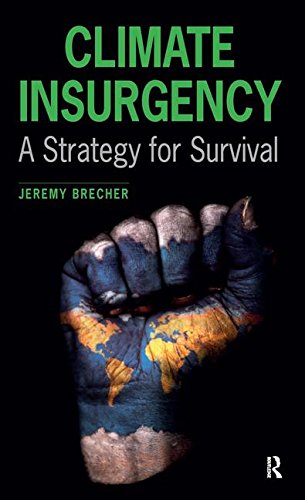
Note: The new, updated 2016 edition of Jeremy Brecher’s Climate Insurgency: A Strategy for Survival, from which the following is drawn, can be now be downloaded for free at the author's website here.)

The Lilliputian defenders of the earth’s climate have been winning some unlikely battles lately. The Standing Rock Sioux, supported by nearly two hundred Native American tribes and a lot of other people around the globe, have put a halt, at least for now, to completion of the Dakota Access Pipeline, a project that threatens their sacred burial sites and the water supply for 17 million people—not to mention the world’s climate. Before that a seven-year struggle terminated the Keystone XL pipeline. Other fossil fuel extraction, transport, and burning facilities have been halted by actions around the world.

But as Bill McKibben has said, "Fighting one pipeline at a time, the industry will eventually prevail."[1] Is there a plausible strategy for escalating today’s campaigns against fossil fuel infrastructure to create an effective challenge to the escalating climate threat? How can we get the power we need to counter climate catastrophe? My book Climate Insurgency: A Strategy for Survival (download) grapples with that question and proposes a possible strategy: a global nonviolent constitutional insurgency. Now that strategy is being tried – and may even be overcoming some of the obstacles that have foiled climate protection heretofore.

Pages

The Fine Print I:

Disclaimer: The views expressed on this site are not the official position of the IWW (or even the IWW’s EUC) unless otherwise indicated and do not necessarily represent the views of anyone but the author’s, nor should it be assumed that any of these authors automatically support the IWW or endorse any of its positions.

Further: the inclusion of a link on our site (other than the link to the main IWW site) does not imply endorsement by or an alliance with the IWW. These sites have been chosen by our members due to their perceived relevance to the IWW EUC and are included here for informational purposes only. If you have any suggestions or comments on any of the links included (or not included) above, please contact us.

The Fine Print II:

Fair Use Notice: The material on this site is provided for educational and informational purposes. It may contain copyrighted material the use of which has not always been specifically authorized by the copyright owner. It is being made available in an effort to advance the understanding of scientific, environmental, economic, social justice and human rights issues etc.

It is believed that this constitutes a 'fair use' of any such copyrighted material as provided for in section 107 of the US Copyright Law. In accordance with Title 17 U.S.C. Section 107, the material on this site is distributed without profit to those who have an interest in using the included information for research and educational purposes. If you wish to use copyrighted material from this site for purposes of your own that go beyond 'fair use', you must obtain permission from the copyright owner. The information on this site does not constitute legal or technical advice.