You are here

green unionism

IWW Canvassers Strike Over Unpaid Wages

By Shane Burley - Labor Notes, June 2014

A crew of nine marijuana legalization canvassers walked off their jobs and into the Portland office of the Industrial Workers of the World June 5, looking to form a union.

The workers at the Oregon Campaign for the Restoration and Regulation of Hemp had been refused paychecks they were owed. This was on top of several past bounced paychecks. After their checks did not arrive on the late schedule and management would not even discuss it, they walked out.

With IWW support, the canvassers have formed the United Campaign Workers. In a joint statement they pointed to a “culture of secrecy and information repression that make incidents like this an ongoing problem.”

Before they will return to work, they want a written agreement from management offering them the $15-an-hour pay rate and correct overtime they were promised when they were hired.

After a first march on the boss, they started a call-in campaign, asking supporters and union partners to phone the campaign headquarters and express support. Meanwhile, the campaign has hired other canvassers to replace them.

A second demonstration June 13 brought dozens of supporters from the Portland IWW, Portland Solidarity Network, Jobs with Justice, and Rose City Resistance, who marched up the street and into the campaign office. A worker spokesperson tried to present the demands to canvass director Kyle Purdy—who screamed and swore at the protesters, claiming he represented a “real grassroots” campaign.

Green Unionism: The Way Ahead

By Bill Mee - SPB Searchlight, May 31, 2014

Disclaimer: The views expressed here are not the official position of the IWW (or even the IWW’s EUC) and do not necessarily represent the views of anyone but the author’s.

As unfettered capitalism with all its’ unsustainable methodologies of unlimited growth and consumption drives the planet ever closer to environmental catastrophe is there anything that can be done to reverse the damage and put economic activity on a long term sustainable basis?
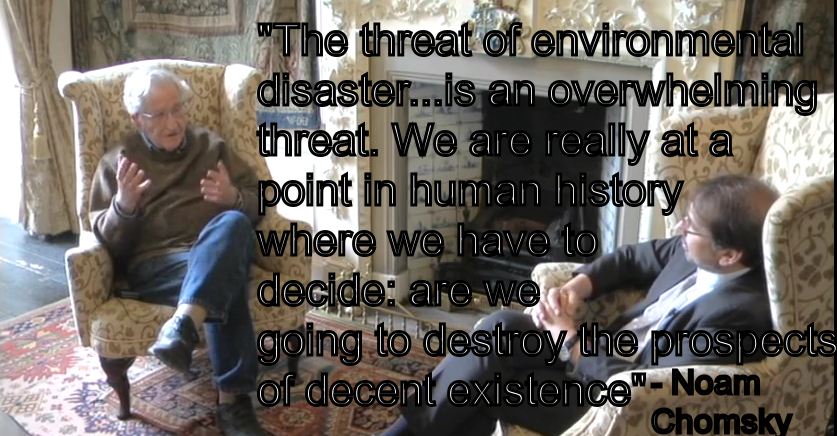
The answer may just be yes. Most people will be familiar with activist groups such as Trade Unions and environmental groups such as Greenpeace and Friends of the Earth and they would at first glance seem to be poles apart on what they are trying to achieve.

The answer then must lie in the making of common cause. This is now possible. The need for working class organizing across trade or guild lines potentially pitting worker against worker in both the national and international context is, in the early 21st century, an anachronism. Workplace organizing and the environmental agenda are inextricably linked. For the planet to stand any chance of sustaining human life, especially human life with all the technical advances it has made, sustainability in the long term is now a matter of urgency.

Step up then a little known union that has addressed these issues. This union is called the Industrial Workers of the World or International Workers of the World if you prefer.

A United Front Against Climate Catastrophe

By Burkely Hermann - Z Blogs, June 13, 2014

Disclaimer: The views expressed here are not the official position of the IWW (or even the IWW’s EUC) and do not necessarily represent the views of anyone but the author’s.

Aggressive militarism continues to emanate from the office of the presidency and the US government itself. With drone strikes in foreign countries, an “empire of drone bases” in Africa as the Washington Post once called it, and a continuing war in Afghanistan, you would think that there would be mass protests on the streets against these injustices. Instead, there have been noble and honorable protests against drones, the war in Afghanistan, Bush era war criminals, and so on, but they have been too limited. At the same time, protests calling for the coming climate catastrophe to be adequately addressed have been growing among indigenous people and concerned citizens in both the Global North and the Global South. This is despite a laser focus of the big environmental organizations, Gang Green, on stopping Keystone XL but not a focus on many other issues. This article outlines why the peace movement[1] and the environmental movement within the United States should join together as a united front against corporate power and global neoliberal capitalism.

Rank-and-File Environmentalism

By Trish Kahle - Jacobin, June 11, 2014

Disclaimer: The views expressed here are not the official position of the IWW (or even the IWW’s EUC) and do not necessarily represent the views of anyone but the author’s.

The “jobs versus environment” debate is often seen as a fundamental division between labor and environmentalists, most recently emerging in the fight over the Keystone XL pipeline. Despite dire warnings from scientists about its potentially disastrous environmental impact, the pipeline was endorsed by the AFL-CIO, which justified its decision by citing “job creation.” Estimates range from 5,000-9,000 temporary positions — a drop in the bucket compared to the more than 794,000 unemployed construction workers in the US — and a mere 35 permanent jobs.

Is there any kind of environmental degradation, environmental activists might wonder, unions won’t endorse to secure a small handful of construction jobs?

Jeremy Brecher is right to point in a recent piece to the need for the labor and environmental movements to “evolve toward a common program and a common vision.” To do so, we’ll need to break down the false “jobs versus environment” dichotomy created by capital to obscure the fact that the exploitation of workers and the degradation of the environment go hand in hand.

Noting the common source of workers’ exploitation and ecological degradation is important because it also points us to a solution. Workers are the ones who can halt the assault on the planet.

Capital Blight - Aristocracy Forever

By x344543 - June 12, 2014

Disclaimer: The views expressed here are not the official position of the IWW (or even the IWW’s EUC) and do not necessarily represent the views of anyone but the author’s.

When the union leaders' payoffs by the bosses has begun,
There will be no labor trouble anywhere beneath the sun,
For the AFL trade unions and the management are one,
The union keeps us down.

Chorus
Aristocracy forever,

--lyrics excerpted from Aristocracy Forever, by Judi Bari

It happens far too often. Big corporate industrial polluters rape and pillage the Earth, whether by tar sands mining, fracking, mountaintop coal mining, offshore oil drilling, clearcut logging, and more. What's more, much of what they extract they export elsewhere, choosing to remove even the economic benefits of local production from the affected community. These corporations claim to be "good neighbors", but they suck up all the wealth (in the form of profits), and they outsource the costs to the community. And the workers who actually do the labor to produce all of this wealth? Not only are they not paid the full value of their labor, they're often the first to bear the brunt of the toxic pollution and chemical poisoning these companies create in their wake.

It's no wonder that time and time again we witness communities organizing and mobilizing opposition to this state of affairs, often assisted by environmental organizations of various types. What's curious, however, is how often the unions (if the workers in these facilities are fortunate enough to have union representation) defend the companies and even promote the companies' messages--even though it's ultimately not in the workers' interest to do so.

Casey Jones in #LacMegantic

Video and Song by J.P. Wright - Railroad Workers United, June 6, 2014

Disclaimer: The views expressed here are not the official position of the IWW (or even the IWW’s EUC) and do not necessarily represent the views of anyone but the author’s. J.P. Wright is a member of the IWW and Railroad Workers United.

Krugman: In The Real War On Coal, The Mining Industry Won And Workers Lost

By Joe Romm - Think Progress, June 9, 2014

Disclaimer: The views expressed here are not the official position of the IWW (or even the IWW’s EUC) and do not necessarily represent the views of anyone but the author’s.

Paul Krugman has another column in the New York Times explaining that slashing carbon pollution has a small economic impact while “the consequences will be terrible if we don’t take quick action.”

For those raising concerns about the impact on coal miners, he offered this chart in his blog of total mining jobs from Historical Statistics of the United States (HSUS) and the FRED database:

As he explains, “strip mines and machinery in general have allowed us to produce more coal with very few miners”:

The real war on coal, or at least on coal workers, took place a generation ago, waged not by liberal environmentalists but by the coal industry itself. And coal workers lost.

Strangely, we never hear about Reagan’s war on coal (as I’ve said). Or George H. W. Bush’s war on coal.

Of course, if conservatives truly cared about coal miners they wouldn’t work so hard to block coal dust reforms — an action that United Mine Workers President Cecil Roberts said in 2012 “amounts to nothing more than a potential death sentence for thousands of American miners.”

Pretending to care about workers and jobs while really promoting the agenda of the 1 percent — industry and pollutocrats — is a classic rhetorical strategy conservatives use to maintain support for their job- and climate-destroying agenda from the 99% who are in fact hurt by their policies.

Workers and Environmentalists of the World, Unite!

By Stefania Barca - RoarMag.org, June 3, 2014

Disclaimer: The views expressed here are not the official position of the IWW (or even the IWW’s EUC) and do not necessarily represent the views of anyone but the author’s.

The conflict between labor and the environment is a neoliberal construct. What we need is a broad coalition that can fundamentally transform production.

Nowadays it sounds so familiar, almost natural: the mutually exclusive demands and apparently opposing agendas of labor and the environmentalist movement. But in fact, this artificial division is nothing more than a crucial neoliberal strategy to divide two of the most powerful social movements of the industrial era, whose alliance could be a dangerous liaison with the capacity to call into question the very essence of the capitalist “treadmill of production.” It is thus essential that labor and environmental/public health organizations gain a historical perspective on their current state of conflict and become aware of the revolutionary potential of a common political project.

One place where this fact has become much clearer in recent years is the Italian city of Taranto, Apulia, where a number of citizens’ organizations and “committees” emerged in response to one of the most serious occupational, environmental and public health crises of the last decade. These organizations and committees have now begun mobilizing different resources and forms of action — from cyber-activism and film-making to street demonstrations and campaigning — to fight against the occupational blackmail of a local employer. At the last May Day celebrations, they managed to gather more than 100,000 people for a self-organized, crowd-sourced mass concert, held in open competition with the one traditionally organized in Rome by the trade unions confederation and RAI, the national public television.

Turnips, Hammers and the Square - Why Workplace Occupations Have Faded

By Andrew Flood - Anarchist Writers, May 7, 2014

Disclaimer: The views expressed here are not the official position of the IWW (or even the IWW’s EUC) and do not necessarily represent the views of anyone but the author’s.

What if we build it and they don’t come? That was the experience of the left during the crisis - decades had been spent building organisations and a model of how crisis would create revolution but when the crisis arrived the left discovered that the masses weren’t convinced. The expected pattern of crisis leading to small strikes and protests, then to mass strikes and riot and then perhaps to general strike and revolution didn’t flow as expected. Under that theory the radical left would at first be marginal but then as conditions drove class militancy to new heights the workers disappointed by reformist politicians and unions leaders would move quickly to swell its ranks.

In 2008 and 2009 that was the expectation of the revolutionary left organisations across Europe and North America. But that cycle of growth never materialised. In 2011 revolts did break out, but not in the manner expected and so the left could only spectate and criticise. Beyond that the period of struggle from 2008-2014 suggests that there is less strength in building struggles around broad ‘bread & butter’ issues that we imagined and a suggestion that diversity proved more useful in sustaining progressive struggle.

A call for unions in BC to defend the province’s and the world’s ecosystem

Statement of the Vancouver Ecosocialist Group, May 28, 2014

Disclaimer: The views expressed here are not the official position of the IWW (or even the IWW’s EUC) and do not necessarily represent the views of anyone but the author’s.

Last month, four leaders of the main construction unions in British Columbia issued a statement in support of the Northern Gateway tar sands pipeline. The statement is signed by the Teamsters, Plumbers, Operating Engineers and Labourers’ unions. The text is enclosed below.

Now the same four leaders have come out in support of Kinder Morgan’s proposed Trans Mountain tar sands pipeline.

These two statements are an occasion to remind ourselves of why we should oppose the climate-wrecking agenda of the fossil fuel industry and its government backers. We believe there is a better way forward for unions and for society.

Climate science is telling us that society must move rapidly to reduce its greenhouse gas emissions. That means lessening and eventually eliminating most extraction and burning of fossil fuels. We must end the reckless and excessive production and consumption of ‘things’ that only serves to fill the pockets of large corporations. We believe the unions in BC as well as the political party they support, the NDP, should be developing audacious policies for the alternative economy that is needed. But instead, the opposite is happening:

  • Many BC unions are supporting a key part of the fossil fuel industry agenda—increased fracking of natural gas in the northeast of the province and the creation of an entirely new industry, LNG, on the northwest coast. First Nations in the northeast say that fracking is destroying their air and water as well as the fish and wildlife they have depended upon for millennia. A new report of the prestigious Council of Canadian Academies is another reminder of the dangerous environmental consequences of fracking. We should heed these voices.
  • Another industry—export of thermal coal (mined in the U.S.)—is surging ahead. Instead of more coal, we need more action on transition to a renewable energy economy. Unions have a vital role to play in assuring that new jobs for coal miners and new economies for their communities are created.
  • A third part of the industry agenda is increased transport through communities of highly dangerous trains carrying crude oil, tar sands bitumen and refined fossil fuel products.
  • And finally, there are the two proposed pipelines to carry Alberta tar sands bitumen to the BC coast. Awareness and concern over Kinder Morgan’s Trans Mountain line is growing, as evidenced by the big rally that took place in Burnaby on April 12, organized by Burnaby Residents Opposed to Kinder Morgan (BROKE). In northern BC, meanwhile, residents of the province might have hoped that Enbridge’s Northern Gateway pipeline will be consigned to the dustbin, once and for all, following the April 12 plebiscite vote in Kitimat against it. The project is already facing the ‘Wall of Opposition’ that First Nations peoples and other residents in northern BC have created. But Enbridge is pressing ahead, and it has the federal government in its back pocket, so we are obliged to continue to organize against it. On May 10, thousands of people rallied in Vancouver and across British Columbia to say ‘no’ to tar sands pipelines.

Trade union and NDP leaders should pay heed to the opposition to Northern Gateway by First Nations, by the citizens of Kitimat (who voted by 58 per cent against the project on April 12) and by growing numbers of citizens in the Lower Mainland and along the pipeline routes.

Pages

The Fine Print I:

Disclaimer: The views expressed on this site are not the official position of the IWW (or even the IWW’s EUC) unless otherwise indicated and do not necessarily represent the views of anyone but the author’s, nor should it be assumed that any of these authors automatically support the IWW or endorse any of its positions.

Further: the inclusion of a link on our site (other than the link to the main IWW site) does not imply endorsement by or an alliance with the IWW. These sites have been chosen by our members due to their perceived relevance to the IWW EUC and are included here for informational purposes only. If you have any suggestions or comments on any of the links included (or not included) above, please contact us.

The Fine Print II:

Fair Use Notice: The material on this site is provided for educational and informational purposes. It may contain copyrighted material the use of which has not always been specifically authorized by the copyright owner. It is being made available in an effort to advance the understanding of scientific, environmental, economic, social justice and human rights issues etc.

It is believed that this constitutes a 'fair use' of any such copyrighted material as provided for in section 107 of the US Copyright Law. In accordance with Title 17 U.S.C. Section 107, the material on this site is distributed without profit to those who have an interest in using the included information for research and educational purposes. If you wish to use copyrighted material from this site for purposes of your own that go beyond 'fair use', you must obtain permission from the copyright owner. The information on this site does not constitute legal or technical advice.