You are here

renewable energy

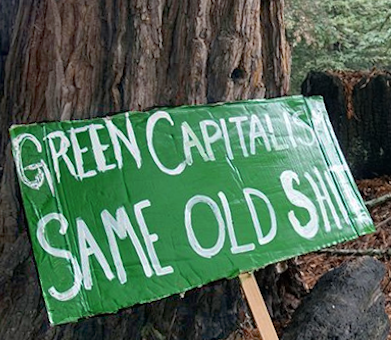
Green Economy, Green Capitalism? The Case Against The Case for Climate Capitalism

By Nick Grover - The Bullet, May 14, 2021

Even now, with a ten-year timeframe left for action, it’s rare for the climate crisis to be treated as the emergency it is. So, credit where due to Tom Rand. In his The Case for Climate Capitalism: Economic Solutions for a Planet in Crisis (Toronto: ECW Press, 2020), Rand calls for a rapid transition away from fossil fuels and toward renewables; he blames the political and business elite for the mess and says they will have to pay the price as markets turn against oil and assets are stranded; he even advocates for expansion of public transit. Where the book gets less refreshing is Rand’s tone toward the people who have been saying these things all along: his secondary enemy, leftists fusing demands for climate action with calls for economic justice.

Rand’s Case for Climate Capitalism aims to preserve and “co-opt” the forces of capitalism to usher in a transition toward green tech. His case is presented as simple pragmatism: the emergency we face affords us no time to discuss economic reforms; we must unite and do what works instead of holding out for a perfect system. His concern is that left ideas like the Green New Deal and Leap Manifesto – which wed strong climate action with job guarantees, labour protections, taxing the rich, and expanding social programs – alienate conservatives and the business class when we need them in our coalition to save the planet.

Congress Should Enact a Federal Renewable Electricity Standard and Reject Gas and False Solutions

By various - (690 Organizations), May 13, 2021

Dear Majority Leader Schumer, Speaker Pelosi, Chairman Manchin, and Chairman Pallone,

On behalf of our millions of members and activists nationwide, we, the undersigned 697 organizations—including climate, environmental and energy justice, democracy, faith, Indigenous, and racial justice groups—urge you to pass a Renewable Electricity Standard (RES) in the infrastructure package and reject gas and other false climate solutions to address the climate emergency.

As Congress prepares to pass a historic infrastructure package and President Biden has globally pledged to slash carbon emissions by 50% below 2005 levels by 2030, we should look to the 28 states, Washington, D.C., and Puerto Rico that have passed Renewable Electricity Standards (also known as renewable portfolio standards), as opposed to only seven states with Clean Electricity Standards (CES). The bold leadership demonstrated in RES-leading states like Hawaii, Vermont, and Washington, D.C. provide a roadmap to building a new renewable energy future. Funding this transition must start with shifting all fossil fuel subsidies to mass renewable energy deployment.

Renewable energy sources are sources that naturally replenish and are most often defined as solar, wind, and geothermal power. In contrast, so-called “clean” energy standards generally encompass these renewable sources but also include other technologies, like gas with or without carbon capture and sequestration, biomass, and nuclear, which are significant sources of pollution and carry a host of health and safety risks. In order to avoid perpetuating the deep racial, social, and ecological injustices of our current fossil-fueled energy system, Congress should ensure that any federal energy standard does not include these dirty energy sources.

Specifically, we write to express our concern that recent Clean Electricity Standard (CES) legislation, including the CLEAN Future Act (H.R. 1512), embed these injustices because they include gas and false solutions. The inclusion of gas and carbon capture and storage as qualifying energies in any CES undermines efforts to end the fossil fuel era and halt the devastating pollution disproportionately experienced by Black, Brown, Indigenous, and other communities of color in this country. Even a partial credit for fossil fuel resources that attempts to factor in lifecycle emissions runs the risk of subsidizing environmental harm for years to come. Allowing dirty energy to be bundled with clean energy under a federal energy standard would prolong the existence of sacrifice zones around dirty energy investments and delay the transition to a system of 100 percent truly clean, renewable energy.

Green Energy, Green Mining, Green New Deal?

Mineral constraints for transition overstated by IEA

By Kingsmill Bond - Carbon Trackers, May 10, 2021

The IEA’s latest piece on minerals critical to the energy transition gives a rather pessimistic spin to what was some very positive data. Looked at from a wider perspective, the note provides another useful source of analytical support for the energy transition.

The IEA looked into the amount of minerals needed to fuel the energy transition, and pretty quickly worked out ‘there is no shortage of resources’. The world has plenty of lithium, nickel, rare earth metals and so on. This is what the United States Geological Survey (USGS) has been saying for a while, and fits with the work done by the Energy Transitions Commission on mineral availability.

The IEA notes for example that we have 170 times as much lithium reserves as annual demand and that our lithium reserves have increased by 42% over the last eight years as higher prices and the prospect of rising demand have drawn out new investment. Under the IEA’s 1.5 degrees scenario, we will need about twice the amount of critical minerals by 2040 (six times as much for the clean energy industry, but that is only part of global demand), and the IEA put forward a series of sensible suggestions (increase recycling, invest in new supply and so on) to ensure that we get it.

However, their take then turns gloomier as we are warned about how hard this is going to be. Impressive charts show that the average electric vehicle uses 210kg of critical minerals compared to only 35kg for an ICE car and that a MW of solar generation capacity needs 6.5 tonnes of critical minerals compared to a coal plant which needs only 3 tonnes. We are then encouraged to think about all the ESG issues and environmental issues associated with the surge in mineral usage and to worry about supplier concentration, water usage, pollution and depletion.

Stand back a moment however, and you can see immediately that the IEA are very selective in their presentation of the data. They look only at the stocks (the assets you need to build the generator or car) not the flows (the energy you need to run them). But the flows of energy are 2-3 orders of magnitude larger than the stocks, and this means that many of their conclusions are more useful for fossil fuel advocates than for policymakers.

Covid-19 causes decline in solar, clean energy jobs in the U.S.

By Elizabeth Perry - Work and Climate Change Report, May 10, 2021

The 11th annual National Solar Jobs Census was released by the U.S. Solar Energy Industries Association on May 6, reporting that 231,474 people worked across all sectors of the industry in 2020 – a 6.7% decrease from 2019. The decrease in jobs is attributed to the impacts of Covid-19, as well as an increase in labour productivity – up 19% in the residential sector, 2% in the non-residential sector and 32% in the utility-scale sector. Thus, despite employing fewer workers, the solar industry installed record levels of solar capacity in 2020, with 73% of installations in “ Utility-scale installations”.

According to the 2020 Solar Jobs Census, 10.3% of solar workers in the U.S. are unionized, above the national average and compared to 12.7% of all construction trades. The report offers details about demographic, geographic, and labour market data – for example, showing an improvement in diversity in the workforce. Since 2015, it reports a 39% increase for women, 92% increase for Hispanic or Latino workers, 18% increase for Asian American and Pacific Islander workers, and a 73% increase for Black or African American workers. Wages for benchmark solar occupations are provided, showing levels similar to, and often higher than, wages for similar occupations in other industries.

The 2020 Solar Jobs Census defines a solar worker as anyone who spends more than 50% of their working time in solar-related activities. It is a joint publication of the Solar Energy Industries Association, the Solar Foundation, the Interstate Renewable Energy Council and BW Research Partnership. It uses publicly available data from the 2021 U.S. Energy and Employment Report (USEER), produced by BW Research Partnership, the Energy Futures Initiative (EFI), and the National Association of State Energy Officials (NASEO). Solar is included in their reports, which cover the broader energy industry (The U.S. 2020 Energy & Employment Report and the supplementary report, Wages Benefits and Change) .

The reported decrease in solar jobs is also consistent with the message in Clean Jobs America 2021 , published by E2 Consultants in April. That report found a decrease in total clean energy jobs from 3.36 million in 2019 to 3 million at the end of 2020, although despite the decline, the report states: “clean energy remains the biggest job creator across America’s energy sector, employing nearly three times as many workers as work in fossil fuel extraction and generation.” The report includes renewable energy, energy efficiency, and electric vehicle manufacturing in their coverage.

Calls for sustainable and responsible mining for the clean energy transition

By Elizabeth Perry - Work and Climate Change Report, May 6, 2021

An important Special Report by the International Energy Association was released in May: The Role of Critical Minerals in Clean Energy Transitions. Reflecting a mainstream view of the importance of the raw materials for clean technologies such as electric vehicles and energy storage, the IEA provides “ a wealth of detail on mineral demand prospects under different technology and policy assumptions” , and discusses the various countries which offer supply – including Canada. The main discussion is of policies regarding supply chains, especially concerning responsible and sustainable mining, concluding with six key recommendations, including co-ordination of the many international frameworks and initiatives in the area. The report briefly recognizes the Mining Association of Canada’s Towards Sustainable Mining (TSM) protocols as internationally significant, and as one of the first to require on-site verification of its standards. The Towards Sustainable Mining (TSM) initiative was established in 2004, requiring member companies to “demonstrate leadership by reporting and independently verifying their performance in key environmental and social areas such as aboriginal and community engagement, biodiversity conservation, climate change, tailings management.”

On May 5, the Mining Association of Canada updated one of its TSM protocols with the release a new Climate Change Protocol, a major update to its 2013 Energy Use and GHG Emissions Management Protocol. It is designed “to minimize the mining sector’s carbon footprint, while enhancing climate change disclosure and strengthening the sector’s ability to adapt to climate change.” The Protocol is accompanied by a new Guide on Climate Change Adaptation for the Mining Sector, intended for mine owners in Canada, but with global application. The Guide includes case studies of such mines as the Glencore Nickel mine in Sudbury, the notorious Giant Mine in the Northwest Territories, and the Suncor Millennium tailings pond remediation at its oil sands mine in Alberta. The membership of MAC is a who’s who of Canadian mining and oil sands companies / – including well-known companies such as ArcelorMittal, Barrick Gold, Glencore, Kinross, Rio Tinto, Suncor, and Syncrude. Other documentation, including other Frameworks and progress reports, are compiled at a dedicated Climate Change Initiatives and Innovations in the Mining Industry website.

The demand for lithium, cobalt, nickel, and the other rare earth minerals needed for technological innovation has been embraced, not only by the mining industry, but in policy discussions – recently, by Clean Energy Canada in its March 2021 report, The Next Frontier. The federal ministry of Natural Resources Canada is also supportive, maintaining a Green Mining Innovation Initiative through CanmetMINING , and the government joined the U.S.-led Energy Resource Governance Initiative (ERGI) in 2019 to promote “secure and resilient supply chains for critical energy minerals.”

Alternative points of view have been pointing out the dangers inherent in the new “gold rush” mentality, since at least 2016 when Amnesty International released its 2016 expose of the use of child labour in the cobalt mines of the Democratic Republic of Congo. Most recently, in February 2021, Amnesty released Powering Change: Principles for Businesses and Governments in the Battery Value Chain, which sets out specific principles that governments and businesses should follow to avoid human rights abuses and environmental harm. Other examples: MiningWatch Canada has posted their April 2021 webinar Green Energy, Green Mining, Green New Deal?, which states: “The mining sector is working hard to take advantage of the climate crisis, painting mining as “green” because it supplies materials needed to support the “green” energy transition. But unless demand for both energy and materials are curtailed, environmental destruction and social conflicts will also continue to grow.” MiningWatch Canada published Turning Down the Heat: Can We Mine Our Way Out of the Climate Crisis? in 2020, reporting on a 2019 international conference which focused on the experience of frontline communities. Internationally, the Business & Human Rights Resource Centre maintains a Transition Minerals tracker, with ongoing data and reports concerning human and labour rights in the mining of “transition minerals”, and also compiles links to recent reports and articles. Two recent reports in 2021: Recharge Responsibly: The Environmental and Social Footprint of Mining Cobalt, Lithium, and Nickel for Electric Vehicle Batteries (March 2021, Earthworks) and A Material Transition: Exploring supply and demand solutions for renewable energy minerals from the U.K. organization War on Want.

Beyond Coal: Why South Africa Should Reform and Rebuild Its Public Utility

By Dominic Brown - New Labor Forum, May 2021

Despite 2020’s record fall in carbon dioxide emissions—largely due to extensive and repeated “lockdowns” of cities, plus dramatic decreases in air travel and the use of motor vehicles[1]—the world is far from making the changes necessary to avert climate catastrophe. The fact that the shutdowns over periods of last year had a marginal effect in the fight against climate catastrophe at best illustrates the enormity of the task that lies ahead. According to a 2019 report from the World Meteorological Organization, “time is fast running out,”[2] while Fatih Birol, head of the International Energy Agency (IEA), observes “The pandemic and its aftermath can suppress emissions, but low economic growth is not a low emissions strategy. Only an acceleration in structural changes to the way the world produces and consumes energy can break the emissions trend for good.”[3]

In addition to ravaging health systems, the Covid-19 pandemic has exacerbated food and housing insecurity, deepened unemployment, and put a spotlight on existing inequalities. In South Africa, growing awareness of these problems has brought renewed hope in the possibility of a response to the pandemic crisis that could aim for a “just transition” to a low-carbon economy. Like other countries, South Africa is in desperate need of an energy transition. The South African economy remains disproportionately energy intensive[4] (although it is becoming less so), per capita emissions remain high,[5] and the country is the fourteenth largest contributor to global carbon emissions.[6] This energy and emissions profile reflects the historical and continuing dominance of the country’s “minerals-energy complex” (“MEC”)[7] which is supported by cheap electricity generated mostly from low-quality coal, while higher quality coal is exported.

Beyond its detrimental ecological impacts, South Africa’s MEC is deeply intertwined with the legacy of cheap Black labor in the mines and the formation of racialized capitalism. This structure of South Africa’s economy underpins the country’s massive inequality, serious health impacts for many thousands of people in mining affected communities, and the country’s disproportionate contribution to global emissions. This is why the shift to renewable energy (RE) in South Africa must include measures to ensure a just transition that leaves no worker or community behind while working to reverse the legacy of mass unemployment and deep socioeconomic inequalities.

The Political Economy of South Africa’s Energy Crisis

Since coming to power in 1994, South Africa’s government has promised “electricity for all” as a critical component in undoing the gross disparities of apartheid. This commitment has produced a dramatic rise in grid connections, such that more than 80 percent of households were connected to the grid by 2015, up from only 30 percent in 1994. Harder to shift have been the persistent levels of poverty and inequality. South Africa’s “Gini coefficient”— a global measure of inequality—today places the country as the world’s second most unequal, after neighboring Lesotho. With current unemployment at over 40 percent, many households cannot afford electricity, even when they are connected to the grid. The introduction of a provision for free basic electricity in 2004 was a step in the right direction, but at just 50 kWh per month for poor households that is insufficient to meet even basic requirements.

Since coming to power in 1994, South Africa’s government has promised “electricity for all” as a critical component in undoing the gross disparities of Apartheid.

Making matters worse, South Africa’s stateowned power utility, Eskom—which generates over 90 percent of energy consumed in the country—is in deep crisis. Eskom’s crisis has multiple dimensions and various causes, both internal and external, including (1) the 1980s era commercialization of Eskom; (2) postapartheid commitments to provide electricity to the majority of the country previously excluded, under the full cost recovery (FCR) model where the excluded majority are unable to afford rising electricity prices; (3) underinvestment in the utility’s infrastructure, particularly in building new capacity to meet increased demand; (4) conversion of the utility in 2002 to a public corporation, forcing it to pay taxes as well as dividends for the first time since its establishment almost a century earlier; (5) Eskom’s rising debt, dominated by foreign currency borrowed against the weak rand (R); (6) expensive coal contracts with windfall profits, signed in the name of promoting Black ownership in the coal industry; and (7) dramatic increases in the price of low-quality coal, upon which Eskom depends to generate electricity.[8]

In Broad Daylight: Uyghur Forced Labour and Global Solar Supply Chains

By Laura T Murphy and Nyrola Elima - Sheffield Hallam University, May 2021

The People’s Republic of China (PRC) has placed millions of indigenous Uyghur and Kazakh citizens from the Xinjiang Uyghur Autonomous Region (XUAR or Uyghur Region) into what the government calls “surplus labour” (富余劳动力) and “labour transfer” (劳动力转移)programmes. An official PRC government report published in November 2020 documents the “placement” of 2.6 million minoritised citizens in jobs in farms and factories within the Uyghur Region and across the country through these state-sponsored “surplus labour” and “labour transfer” initiatives. The government claims that these programmes are in accordance with PRC law and that workers are engaged voluntarily, in a concerted government-supported effort to alleviate poverty. However, significant evidence – largely drawn from government and corporate sources – reveals that labour transfers are deployed in the Uyghur Region within an environment of unprecedented coercion, undergirded by the constant threat of re-education and internment. Many indigenous workers are unable to refuse or walk away from these jobs, and thus the programmes are tantamount to forcible transfer of populations and enslavement.

It is critical that we examine the particular goods that are being produced as a result of this forced labour regime. This paper focuses on just one of those industries – the solar energy industry – and reveals the ways forced labour in the Uyghur Region can pervade an entire supply chain and reach deep into international markets. We concluded that the solar industry is particularly vulnerable to forced labour in the Uyghur Region because:

  • 95% of solar modules rely on one primary material – solar-grade polysilicon.
  • Polysilicon manufacturers in the Uyghur Region account for approximately 45% of the world’s solar-grade polysilicon supply.
  • All polysilicon manufacturers in the Uyghur Region have reported their participation in labour transfer programmes and/or are supplied by raw materials companies that have.
  • In 2020, China produced an additional 30% of the world’s polysilicon on top of that produced in the Uyghur Region, a significant proportion of which may be affected by forced labour in the Uyghur Region as well.

In the course of this research, we identified:

  • 11 companies engaged in labour transfers
  • 4 additional companies located within industrial parks that have accepted labour transfers
  • 90 Chinese and international companies whose supply chains are affected

This report seeks to increase the knowledge base upon which the solar industry determines its exposures to forced labour in the Uyghur Region. We investigated the entire solar module supply chain from quartz to panel to better understand the extent to which forced labour in the Uyghur region affects international value chains. The examples of engagement in these programs are meant to provide stakeholders with the evidence base upon which to judge risk of exposure to forced labour in the solar supply chain.

Read the Report (PDF).

Ireland’s Energy System: The Historical Case for Hope in Climate Action

By Sinéad Mercier - New Labor Forum, May 17, 2021

For thirty years, governments have been promising climate action. They seem incapable of undertaking the necessary major shifts in their energy systems required by the 2015 Paris Agreement. They also seem incapable of delivering on climate targets in a manner that both “leaves no one behind” and “reaches the furthest behind first,” as required by the 2030 Agenda for Sustainable Development, also agreed in 2015. In Ireland, we fall continually to the bottom of the rankings in climate action, with the current Fine Gael, Fianna Fáil, and Green Party coalition government failing to achieve a mere 16 percent target of renewable energy by 2020.[1]

There are lessons to be learned from the past. One hundred years ago, the two civil war parties—Fine Gael (then Cumann na nGaedheal) and Fianna Fáil—were united in their commitment to a state-owned energy system with an objective of universal access, public good, and public value. Irish state electricity generation started out in 1929 as being from almost 100 percent renewable sources.[2] The historical development of Ireland’s own energy system can be a model for a successful, fast paced national delivery program for a just transition and energy democracy. Ireland has previously made sweeping changes to the energy system, in a time of far greater difficulty, fewer resources, and almost intractable political fragility. The example is the establishment of the country’s—and the world’s—first state-owned national energy company, the Electricity Supply Board (ESB), and its roll-out of universal access to affordable electricity through the Rural Electrification Scheme (RES).

Administering Dreams

The Ireland of the 1920s presented unlikely circumstances for ambitious national projects of any kind. After three years of guerrilla warfare against the British Crown forces, a form of independence had been achieved by 1922. The young Irish Free State government of freedom fighters and idealists was to set out on its own with little source of economic development beyond the sale of cattle to Britain and with much of its populace in extreme poverty. In 1921, the Anglo-Irish Treaty was signed, giving independence to twenty six counties and leaving the six counties in the north east of Ireland under British rule. The signing of the Treaty caused a split in the founding Sinn Féin party between those opposing and supporting the Treaty. This sparked a bitter civil war from June 1922 to May 1923 that has marked Irish politics for a century. The pro-Treaty element formed Cumann na nGaedheal, today the centerright (Christian Democrat) party Fine Gael. A group of republicans led by Éamon de Valera broke away from Sinn Féin in 1926 and formed Fianna Fáil,[3] in protest at the Oath of Allegiance to the British Crown, which all members of Dáil Éireann (the Irish Parliament) were obliged to take. The Cumann na nGaedheal party was in office from 1922 to 1932. Laissez-faire economic and commercial orthodoxies of the 1920s, inherited from the British administration, and a reinstated civil service were largely the global order of the day.

One hundred years ago, the two civil war parties . . . were united in their commitment to a state-owned energy system with an objective of universal access, public good, and public value.

However, the young state took on a number of major interventions in the economy. Most notable were the Land Commission and the creation of Ireland’s state energy company, the ESB, and its primary power source, the Ardnacrusha Hydroelectric Power Station on the Shannon River—also known as the “Shannon Scheme.”[4] To deliver Ardnacrusha’s energy to the public, in 1927 the government established its first Irish state company, the ESB, through the Electricity (Supply) Act, 1927. This was to be the first national electricity service in the world, with full responsibility for the generation, transmission, distribution, and marketing o electricity.[5] From its beginnings, the aim of the ESB was not-for-profit, universal, and affordable access to electricity; “strong on technical expertise, with set targets and with the muscle, dynamism and freedom to achieve these targets.”[6] Attempts had been made to attract foreign investors, particularly from the United States, but “most of the big corporations objected to the government’s stipulation that unprofitable rural lines might have to be built without any guaranteed government subsidy.”[7] The Irish electricity industry had been in existence for forty years, yet the vast majority of the population had been left in darkness and drudgery. As a result of these failings, the fledgling Department of Industry and Commerce concluded that confining the ESB to mere distribution of the energy from the Shannon Scheme was likely to place the whole enterprise in “immediate jeopardy.”[8] The government therefore nationalized what was a piecemeal mess of three hundred expensive, “badly run,” inefficient private and local authority undertakings.[9]

Reducing new mining for electric vehicle battery metals: responsible sourcing through demand reduction strategies and recycling

By Elsa Dominish, Nick Florin, and Rachael Wakefield-Rann - Earthworks, April 27, 2021

This research investigates the current status and future potential of strategies to reduce demand for new mining, particularly for lithium-ion battery metals for electric vehicles. This study is focused on four metals which are important to lithium-ion batteries: cobalt, lithium, nickel and copper.

In order to meet the goals of the Paris Climate agreement and prevent the worst effects of catastrophic climate change, it will be essential for economies to swiftly transition to renewable energy and transport systems. At present, the technologies required to produce, store and utilize renewable energy require a significant amount of materials that are found predominantly in environmentally sensitive and often economically marginalized regions of the world. As demand for these materials increase, the pressures on these regions are likely to be amplified. For renewable energy to be socially and ecologically sustainable, industry and government should develop and support responsible management strategies that reduce the adverse impacts along the material and technology supply chains.

There are a range of strategies to minimize the need for new mining for lithium-ion batteries for electric vehicles, including extending product life through improved design and refurbishment for reuse, and recovering metals through recycling at end of life. For example, we found that recycling has the potential to reduce primary demand compared to total demand in 2040, by approximately 25% for lithium, 35% for cobalt and nickel and 55% for copper, based on projected demand. This creates an opportunity to significantly reduce the demand for new mining. However, in the context of growing demand for electric vehicles, it will also be important that other demand reduction strategies with lower overall material and energy costs are pursued in tandem with recycling, including policy to dis-incentivize private car ownership and make forms of active and public transport more accessible. While the potential for these strategies to reduce demand is currently not well understood; this report provides insights into the relative merits, viability, and implications of these demand reduction strategies, and offers recommendations for key areas of policy action.

Read the text (Link).

Pages

The Fine Print I:

Disclaimer: The views expressed on this site are not the official position of the IWW (or even the IWW’s EUC) unless otherwise indicated and do not necessarily represent the views of anyone but the author’s, nor should it be assumed that any of these authors automatically support the IWW or endorse any of its positions.

Further: the inclusion of a link on our site (other than the link to the main IWW site) does not imply endorsement by or an alliance with the IWW. These sites have been chosen by our members due to their perceived relevance to the IWW EUC and are included here for informational purposes only. If you have any suggestions or comments on any of the links included (or not included) above, please contact us.

The Fine Print II:

Fair Use Notice: The material on this site is provided for educational and informational purposes. It may contain copyrighted material the use of which has not always been specifically authorized by the copyright owner. It is being made available in an effort to advance the understanding of scientific, environmental, economic, social justice and human rights issues etc.

It is believed that this constitutes a 'fair use' of any such copyrighted material as provided for in section 107 of the US Copyright Law. In accordance with Title 17 U.S.C. Section 107, the material on this site is distributed without profit to those who have an interest in using the included information for research and educational purposes. If you wish to use copyrighted material from this site for purposes of your own that go beyond 'fair use', you must obtain permission from the copyright owner. The information on this site does not constitute legal or technical advice.