For a Transnational Fall of Struggle: Strike the Climate Crisis!

By TSS PLATFORM - Transnational Strike, September 5, 2022

Six months have passed since Putin’s invasion of Ukraine. However, the war’s social effects haven’t stopped at the Ukrainian border and are now affecting millions of people throughout Europe and beyond. In recent days, the price of gas skyrocketed to new record heights, granting huge profits to the fossil fuel majors, and condemning millions to a reality of growing poverty, inflation, and unemployment. Governments’ attempts to secure energy supplies for the winter (such as the European Save Gas for a Safe Winter plan) ensure those market sectors that cannot work without gas, while dumping these choices’ costs on people’s consumption and individual responsibility and sacrifices. This is part of the Third world war scenario we all live in and struggle against. In fact, as energy and ‘green’ policies are now deeply embedded into the war, the struggles against their material effects of impoverishment are part of our transnational politics of peace. In the last few days, the #DontPayUK campaign has been confronting both governments and the big companies that want to discharge the price of their profits and power on people’s shoulders. Committing to strike on energy bills, thousands of people are already refusing the deadly choice between “eating” or “heating,” between racking up debts or facing fuel poverty and freezing winter. We are confronted with the necessity to articulate our transnational politics of peace inside this growing international competition by fighting in the conflict between those who pay the price of the war and those who profit from it.

The third world war and specifically the energy crisis have led to a return to fossil fuels, postponing the conversion from coal to alternative energy sources. However, even before the war, we saw the European green transition neither as a way to solve the climate crisis, nor to deliver a better environment, but as an attempt to open new opportunities for capital accumulation through the exploitation, reproduction, and widening of differences and hierarchies within the European space and beyond. Now the war unmasks the European transition policies’ actual scope. Promoting new Partnership Agreements with its member states, the European Commission is fostering its “just” – digital and green – transition to face the upcoming freezing winter struggling to coordinate industrial and energy policies for years to come at the European level. This is not the climate justice that was powerfully reclaimed by the global environmental movement in the last years. As States are engaged in a run to grab as many resources as possible, gas, nuclear, and coal sectors will keep exploiting the work of thousands of people in some places, while in other countries the closure of coal-powered plants in the name of the green transition results in the loss of many jobs. In Bulgaria, such a national decision recently found the response of hundreds of workers striking not to be caught in the middle between the government’s green policies and the bosses’ profits. Their struggle is a practical contestation of the green transition in wartimes, which is part of our attempt to turn the green transition into a transnational terrain of struggle.

As workers, activists, migrants, women, and men, we refuse to suffer either the consequences of climate change, the consequences of Putin’s war, or the unsustainable costs of the capitalist green transition. Strikes and movements such as those in Bulgaria and the UK are making clear the need to foster transnational political connections that aim to overcome the artificially fabricated distinction between workers’ and climate activists’ interests. On September 23 a new climate strike is announced, which aims to reactivate the global movement for climate justice by radically opposing the logics of profit and exploitation, and the overall relations of domination, which affects our ecological, social and political environment. The meeting in Sofia organized by the TSS Platform and LevFem on 8th-11th September will be the occasion to tackle and develop these issues. Transforming the green transition into a terrain of struggle is an essential part of our effort to escape the blackmail of the climate, social, and war catastrophe that reproduces violence, exploitation, and environmental degradation. The climate, energy, and social crises won’t wait until winter comes: they are already hitting, and we need to turn this fall into a season of collective struggles.

Book Review: Eat Like a Fish; My Adventures as a Fisherman Turned Restorative Ocean Farmer

By x344543 - IWW Environmental Union Caucus, August 11, 2022

Eat Like a Fish: My Adventures as a Fisherman Turned Restorative Ocean Farmer (2019: Knopf Publishing), is a personal, autobiographical account by Bren Smith, a one time, working class fisherman and native of Newfoundland turned pioneer of regenerative ocean agriculture.

In his early adult and working life, Smith experienced all the horrors of capitalist fishing industry, including its deeply detrimental effects on workers, the environment, and consumers. After much trial and error, mostly error, and after many wrong turns in life, he learned methods of regenerative ocean farming.

Regenerative ocean farming involves growing seaweed & kelp in poly cultures vertically in small cubic volumes of water. It also can include shellfish and other aquatic species which clean toxins out of the ocean, diversify and increase biomass, and restore once dead zones. If done on a massive scale, they can be a major (if overlooked) solution to climate change which produces food, creates livelihoods, and restores the ocean environment.

London IWW Statement of Solidarity with UK Rail Workers

By branch - London IWW, August 1, 2022

The London Branch of the IWW stands with the rail workers in their ongoing dispute. They are fighting not just for themselves, but for us all: as well as their livelihoods, the safety standards of the British rail network are under threat. The government-backed rail operators are attempting to reduce staffing levels on platforms, trains, and tracks in order to drive down wages, which they see simply as an overhead cost. Further, they intend to rehire many workers on zero-hours agency contracts in order to circumnavigate labour rights such as paid leave for holiday, sickness, and parenthood as well as allowing them to dismiss workers without notice or redundancy pay.

The transport industry is one of the few remaining industries in Britain with high union membership. This attempt to break it up by dividing the workforce is a direct attempt to weaken the unions, and the labour movement as a whole.

On top of it all, comes a slap in the face: during this period of exaggerated cost of living, and while the shareholders take home millions in profit, they are offering the workers that they aren’t trying to sack a real-terms pay cut.

However, the workers are standing strong: in the face of an endless torrent of vitriol from the British government and press, they are taking every opportunity to expose the inequalities and injustice that they face. Members of our branch have been proud to stand shoulder-to-shoulder in solidarity with these workers on the picket lines, and we will continue to offer our support until the dispute is won. As long as we continue to stand together, we can tip the balance in the favour of workers around the world.

Mutual aid is the currency of solidarity; direct support for the striking worker is crucial to their success. As such, the IWW London branch are setting a budget to allow members to donate food and drinks to workers on the picket lines, and we encourage any members or supporters with the means to make a donation to the strike funds.

The momentum of the union movement is growing once again in Britain after half a century of targeted assault. Public support is on the rise, and workers in unions across the country are balloting to take action and stand up for their rights and their dignity. The doubling-down on anti-union rhetoric by the government and press is evidence that they are aware of the power that a unionised workforce wields, and that they are threatened by it.

The IWW welcomes any and all workers both in and out of employment and of any nation, race, gender, or creed. Together we stand for a fairer world.

Solidarity forever.

What If Rail Workers Struck? A Talk with RWU

Defend The Land: End Toxic Gold Mining

By staff - Ireland IWW, July 22, 2022

The Industrial Workers of the World (IWW) has condemned the recent issuing of gold and diamond licences to international prospecting companies by the North of Ireland, Department for Economy. It is estimated that a number of exploration licences have been granted to several companies seeking to prospect in counties Fermanagh and Tyrone.

News came as the Industrial Workers of the World Ireland Branch held its Annual General Conference. Representatives of the IWW Ireland Branch, which brought forward a motion of solidarity to its members, reiterated it's 'opposition to any toxic gold mining in the Sperrins' mountain range stating; 'This motion extends its continued solidarity with the communities in resistance in the Sperrin Mountains in Co. Tyrone, and the continued opposition to Toxic Gold Mining in the region by Canadian multinational Dalradian Gold. In turn the union will continue to campaign and highlight the impact of toxic gold mining.'

An IWW spokesperson said that "The motion was overshadowed by media reports of a number companies (Flintridge Resources, Karelian Diamond Resources and Mount Castle) recently granted prospecting licences. This will undoubtedly see increased prospecting in other counties Fermanagh and Tyrone, an act that the vast majority of local communities would overwhelmingly object to.

"The membership of our union past a motion of our continued support with local communities fighting toxic gold mining in the Sperrins and our opposition to the environmental destruction of our land and that of our communities."

Commenting on the issuing of further prospecting licences by the Department of the Economy, a spokesperson responded stating "We have no doubt the those in power believe that it's open season for welcoming big businesses when it comes to mining in the North West. It's clear that for some, the priorities of profit comes first over the lives of workers and working class communities as well as the destruction of our environment.

"For those who still support or gain financially from those multinational companies profiting from toxic gold mining, yet still turn a blind eye to the impact it will have on all our lives, what more can be said. With the information now gathered and widely available on the devastation toxic mining will cause, our union calls for all mining licences to be immediately withdrawn. Nothing more than the immediate end to toxic mining will be acceptable to our union and that of the local communities who continue to resist and defend the land or environment."

Workplace Heat: Guidance for Language School Workers

By Ryan - TEFL Workers Union, July 14, 2022

Heatwaves are becoming increasingly common in the UK. Language schools are rarely purpose-built and, sadly, few employers are willing to spend the money to do anything beyond basic repairs. We’ve all experienced leaky roofs, drafty and/or stuffy staff rooms, and windows painted shut. With temperatures set to regularly hit the mid-30s, it’s important workers know their rights when it comes to workplace temperatures.

What’s the law?

UK law does not set an upper limit for the temperature in the workplace. Instead, health and safety legislation requires that workplace temperatures be “reasonable”. The World Health Organisation recommends a limit of 24C for indoor workplaces.

Workplace temperature is covered under an employer’s general duty of care towards their staff. Employers are required to ensure workplaces are safe for all those within them.

What should my employer do?

All employers are required to undertake a risk assessment once a risk – such as high heat – has been identified.

Risk assessments must be undertaken by a competent person and employees should be consulted in any assessment. The results of the assessment should be available to staff.

With any workplace risk, employers should implement the “hierarchy of controls” to manage the risk.

A Major Strike May be Coming and I Promise You No One is Ready for it if it Does!

By Xaxnar - Daily Kos, July 14, 2022

Breaking July 15, 2022 — The Strike has been put on hold by presidential order — see the UPDATE story here.

The news about people who work for a living has featured some recent breakthrough stories, where previously immune companies have seen their workers organize and form unions. But what about an industry that remains one where unions have a long history and are still active? 

Very few people pay attention the way we should to railroads in America. That may be about to change, and not in a good way.

Sure, news about expanding Amtrak seems like a good thing, and there are plenty of High-Speed Rail (HSR) proposals — usually accompanied by reports on how expensive they are and how long they will take to build — if they can get past the NIMBY folks, the highway and airline lobbies, and the fossil fuel interests.

People freak out about bomb trains (understandable), and derailments — but how many people pay attention otherwise to the condition of our rail corridors, how much the industry is investing in itself, how much of the national economy depends on rail service, and the conditions for the people who work for the railroads?

Or the public good for that matter?

Prof. Ahmed White on the Industrial Workers of the World

On Inflation and Working Class Struggle

By anonymous - angryworkers.org, June 17, 2022

On Saturday 18th of June, (there was) a national TUC demo in London, and as part of the build up, we were invited to sit on a panel hosted by the People’s Assembly called ‘Wages Up, Bills Down, Tories Out’. We were joined by six other panelists from the RMT, Bristol Co-operative Alliance and the Tribune, Bristol Trades Council and the NEU, the TUC and PCS, the Green and Labour Councillors for Ashley Ward, and the Secretary for Unite South West, who chaired the meeting.
Below is the transcript of the input from one AngryWorkers comrade about the current crisis, followed by a report from a comrade on the meeting in general.

I work as a housekeeper at Southmead hospital and I am a GMB rep there. I previously worked for several years in warehouses and food factories. I can see every day how people who earn around the minimum wage are struggling more.

I think we’re in a crisis in more ways than one. It’s a cost of living crisis, yes. It’s also coinciding with a long-running crisis of working class organisation and militancy (e.g. the fact that NHS workers can’t even enforce an actual pay rise, despite all the public support and the fact that we slogged our guts out in the pandemic, says a lot). And it’s also a crisis of the system where there aren’t any obvious answers.

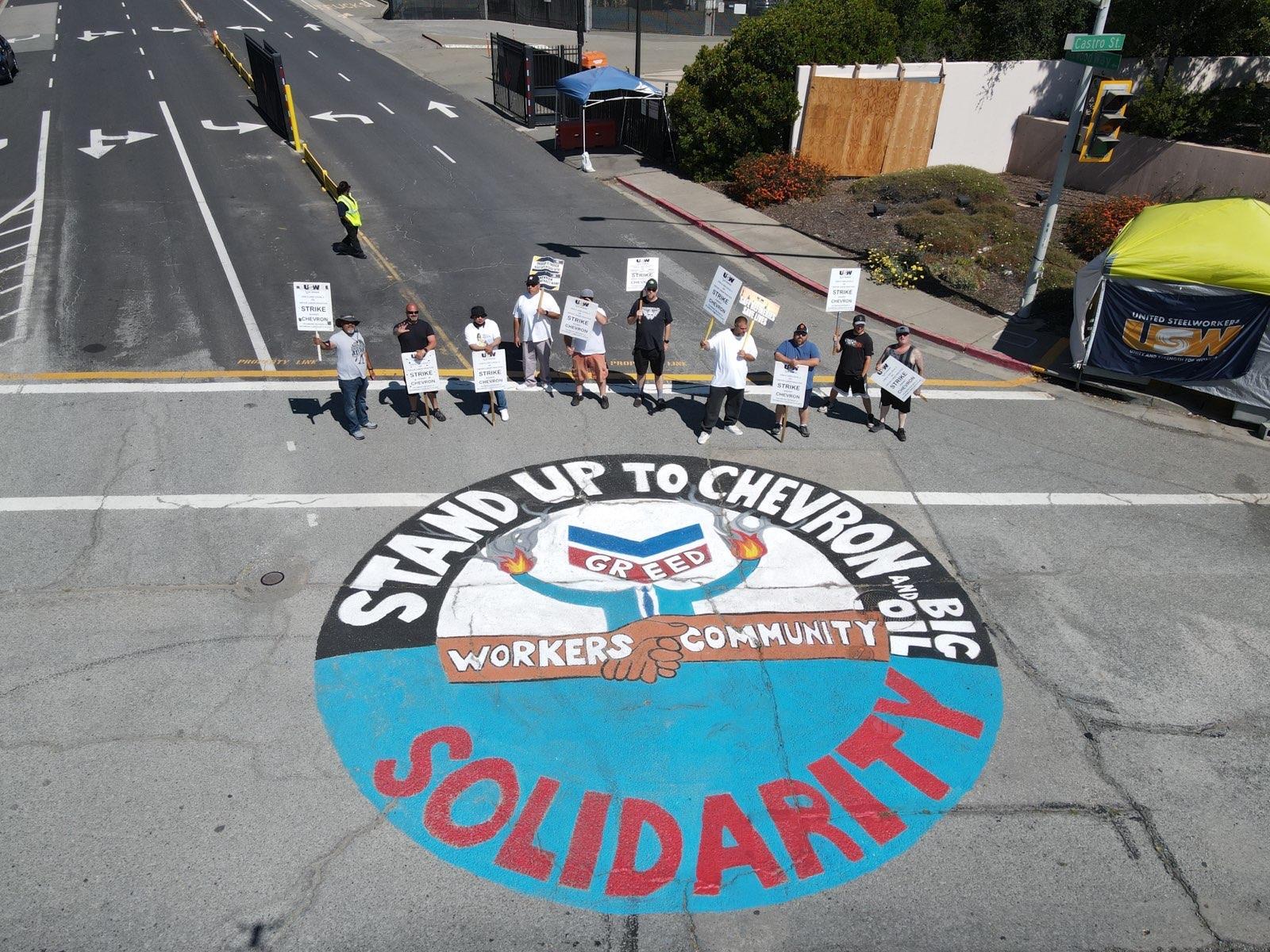
Are Refinery Workers Climate Enemies? - Part 2

By That Green Union Guy - IWW Environmental Union Caucus, May 25, 2022

For context and background, see part one, here. Unlike the first installment, this second response has ommitted the comments that preciptated it, for the sake of clarity, as well as the fact that the author tried to echo the rebutted points in the response. It should be noted that only one individual has expressed outright opposition to showing solidarity with striking refinery workers. It's a foregone conclusion that the overwhelming majority of the IWW does not share this one individual's view.

First of all, let me be clear: my position is that humanity must collectively phase out burning fossil fuels for energy, transportation, and locomotion as rapidly as possible.

That said, nobody seriously believes we can collectively cease burning fossil fuels in a single day, so the likelihood is that the burning of them will continue for some time (I aim to make that as little time as possible).

Regardless of how long it takes, no oil refinery is going to simply shut down just because large masses of people, even 3.5% of the population demand it. It’s not even technically possible, let alone economically or politically possible. Most of the Environmental Justice and Climate Justice organizations (other than a few ultra-sectarian extremists) get this, and they’ve crafted their demands accordingly.

While there’s a degree of variation among the various organizing, most of them call for the following:

  1. No new extraction of new fossil fuel sources;
  2. Rapid phase out of existing fossil fuel sources;
  3. Managed decline of the existing fossil fuel supply chain;
  4. Just transition for any and all affected workers in the entire fossil fuel supply chain;
  5. Repurposing of equipment for non fossil fuel burning purposes;
  6. Bioremediation of damaged ecosystems across the extraction supply chain;
  7. Reparations for the affected communities and tribes.

Supporting refinery workers involved in a strike is not in any way contradictory to the above demands.

Pages

The Fine Print I:

Disclaimer: The views expressed on this site are not the official position of the IWW (or even the IWW’s EUC) unless otherwise indicated and do not necessarily represent the views of anyone but the author’s, nor should it be assumed that any of these authors automatically support the IWW or endorse any of its positions.

Further: the inclusion of a link on our site (other than the link to the main IWW site) does not imply endorsement by or an alliance with the IWW. These sites have been chosen by our members due to their perceived relevance to the IWW EUC and are included here for informational purposes only. If you have any suggestions or comments on any of the links included (or not included) above, please contact us.

The Fine Print II:

Fair Use Notice: The material on this site is provided for educational and informational purposes. It may contain copyrighted material the use of which has not always been specifically authorized by the copyright owner. It is being made available in an effort to advance the understanding of scientific, environmental, economic, social justice and human rights issues etc.

It is believed that this constitutes a 'fair use' of any such copyrighted material as provided for in section 107 of the US Copyright Law. In accordance with Title 17 U.S.C. Section 107, the material on this site is distributed without profit to those who have an interest in using the included information for research and educational purposes. If you wish to use copyrighted material from this site for purposes of your own that go beyond 'fair use', you must obtain permission from the copyright owner. The information on this site does not constitute legal or technical advice.

