You are here

green unionism

If You Really Want to Help Appalachia

By Nick Mullins - The Thoughtful Coal Miner, December 30, 2016

I’ve been writing this blog for 6 years now, working to hammer home many points. The most important have included the coal industry’s means of winning the hearts and minds of our mountain communities, and how people in the environmental camps have ignored the industry’s acculturation of Appalachian values.

Since leaving the coal industry, I’ve tried to get folks to understand that we Appalachians, coal miner’s especially, do not respond to traditional environmentalist messaging. At minimum, those who agree with the environmental concerns are not going to push their throats further into the coal industry’s blade. More often, they will join in the socialized ridicule of those who are being othered, i.e. the environmentalists. What is needed is for people to understand the issues and the way we have been manipulated and controlled, then apply it to their own communication strategy.

As a 9th generation Appalachian and the 5th generation of my family to have worked in the mines, I can say with confidence that no outside organization will ever be successful in turning the tide in Appalachia. We have been fighting the coal industry for 150 years and fighting poverty for the last 50+. Millions of dollars have been funneled in through organizations like the Appalachian Regional Commission, and yet we are still fighting the same battles.

So if you really want to help Appalachia, you’ll help us help ourselves.

The first step is to tear down the coal industry’s facade of benevolence, and remind people of the industry’s history in our region. Many people already distrust the industry, but will fight for it in the face of an outside threat. Coal mining is part of our identity, and the coal industry has spun the “War on Coal” to be a threat to that identity. The result, as Dr. Shannon Bell has stated in her book Fighting King Coal, is the cultural hegemony of our region.

So what do we do to fix it since there’s no silver bullet?

It will take a lot, there’s no doubt about it, but the best place to to start is with educating the public. In a technological world where audio/visual has become the primary means of conveying a message, we must embrace it. This is why I focused a bit on film and broadcast journalism during my recent studies at Berea College. Just as I was re-entering the world from four years of college, some wonderful folks had already done a lot of work before me and the documentary film Blood on the Mountain was in the process of being released.

I believe the film has become the best means to help tear down the industry’s previously mentioned facade of benevolence towards Appalachia. It shows the true history of coal and how they have maintained control of us, even in contemporary times, dividing our communities, destroying the unions, and raping our lands.

In many ways, the film embodies the very mission I have dedicated this blog—and my life—to achieving . When I was asked by the filmmakers to be interviewed for the film, and later to help get it out to as many people as possible,  I saw it as a perfect opportunity to bring real tangible change to my mountain home.

The next phase of the film is coming, but we need the funding to accomplish it. We want to take this film into as many union halls, churches, homes, and community centers as possible FOR FREE . We want to turn it into a tool that can be used not only in Appalachia, but in any area where people face the same issues we face with corporate corruption.

The coal industry has ruled our lives under false illusions and economic control. We can break free, but people, both in Appalachia and outside of Appalachia, must better understand the mechanisms of control through which industries operate, and understand how we can empower entire Appalachian communities to fight against them. I wish I could say that the past 15 years of activism in the region have accomplished this in some small way, but the region’s continued support of men like Mitch McConnell—and now Jim Justice and Donald Trump—is pretty strong evidence to the contrary.

It pains me to think of the amount of time and money that has been invested in so many organization’s “grassroots” campaigns, only to see these kinds of outcomes. We are overdue for this new strategy.

We have launched a Kickstarter to fund Blood on the Mountain’s public outreach campaign. Our goal is $25,000 and it is all or nothing, meaning, unless we raise the full amount, we don’t get anything. We are going to use the funds we received to create a curricula and educational materials to complement the film, and we will use the remaining funds to get the film into Appalachian communities—FOR FREE.

Based on the size of your donation, you can receive DVD copies of the documentary, digital access to it, other documentaries such as The Appalachians and Coal Country,  and many other wonderful rewards. So please, give what you can give and advocate to help us raise money for this outreach. Given the divisiveness of our recent election, we need this film to bring people together, now, more than ever.

So please, please share this post and the Kickstarter link far and wide. Donate/purchase a copy of the film and more.

US railroads demand concessions from 145,000 workers

By Jeff Lusanne - World Socialist Web Site, December 31, 2016

Major US freight railroads terminated long drawn-out contract negotiations with rail unions last month and invoked provisions for federal mediation. The railroads leading the contract talks are demanding that workers pay more for health care, accept minimal raises and agree to new concessions on working conditions.

The contract negotiation covers 145,000 employees in 11 unions, the largest of which are the United Transportation Union (UTU/SMART), Brotherhood of Locomotive Engineers and Trainmen (BLET), and Brotherhood of Maintenance of Way Employees (BMWED). Representatives from most of the largest US railroads—Union Pacific, Burlington Northern Santa Fe, Norfolk Southern, Kansas City Southern, and CSX—form the National Carrier’s Conference Committee (NCCC), which carries out the negotiations. Additional railroads and employees are covered or influenced by the contract, which sets the standard for the industry.

Negotiations began two years ago and agreements expired on December 31, 2015, but rail workers continue to labor under the previous contract. The railroads appear to be biding their time until the Trump administration takes office, a factor they apparently see working to their advantage.

Typical of railroad management’s attitude is a December 15 statement that declares, “Now is not the time for excessive demands. Railroad employees are among the most highly compensated in the nation.” That leads to a link describing compensation that is full of misleading data. That wages surpassed the inflation rate in the last 10 years is presented as an outrage. The wages that the railroad bosses decry often come from working far more than 40 hours a week, in potentially extreme circumstances.

Most egregious, perhaps, is the bulleted statement claiming that workers enjoy “11 national holidays and three weeks of vacation each year.” Railroads operate on nearly every major national holiday, and have strict “absenteeism” policies that penalize what they consider excessive time off. Notoriously, there is no schedule for operating employees, and they often work 12-hour shifts, longer if travel time is included, and are frequently away from home. A common challenge faced by many railroad workers is being forced to miss family events, holidays, and even funerals.

Presently, employees pay at least $229 a month for health coverage, but the railroads are insisting that this is “below average” and must rise. The BMWED notes that it offered “savings” in health care that do not cost any railway worker or the railroads any money, raising the question of whether the unions are proposing lower-quality health plans for workers. Nevertheless, the railroads rejected that proposal.

The railroads have welcomed the intervention of the National Mediation Board, a federal agency that coordinates labor-management relations. Its three members consist of two Democrats and one Republican, and membership will likely change with the new administration.

The Railway Labor Act of 1926 was designed to prevent any possibility of a railroad strike. Whenever the mediation board declares an impasse in the negotiations—which could take months or even years—a 30-day cooling off period begins, during which negotiations continue. After that period, railroads could lock out employees, or unions could call a strike, unless the president authorizes a Presidential Emergency Board. The unions, tied to the Democratic Party, entirely accept this framework, so that even as negotiations have progressed, railroads have been able to impose cuts without opposition.

For their part, the major railroad unions are concerned that the huge concessions demanded by railroads could spark a rebellion by workers. Dennis Pierce, the national president of the BLET, writes that “the level of concessions that were demanded on our health and welfare benefits [are] way beyond anything rail unions have seen in decades” and that the low wage increases would not even cover increased health care costs.

The rail unions have overseen decades of concessions and a dramatic drop in railroad employment (from 1.5 million in 1947 to less than 250,000 today.) The two crewmembers in the cab of a freight train are split between two unions, the BLET and the UTU/SMART, which have a history of working with the railroads to gain an edge by offering concessions.

In 1994, the BLET asked engineers to cross the UTU (conductors) picket line at Soo Line railroad. Some 98 percent of the engineers refused to do so.

Still a new trade unionism in the making?

By David Ridley - Post 16 Educator, 2017

On 26th November 2016, a conference was held to celebrate The Lucas Plan, ‘a pioneering effort by workers at the arms company Lucas Aerospace to retain jobs by proposing alternative, socially useful applications of the company’s technology and their own skills. It remains one of the most radical and forward thinking attempts ever made by workers to take the steering wheel and directly drive the direction of change’.

The day began with a screening of Steve Sprung’s documentary The Plan, a work in progress which tells the story through interviews and archival footage of the Lucas Plan. Already the film cleverly and and emotionally conveys both the social and historical context within which the Lucas Plan was created, and its ongoing importance for today’s situation.

The 52-page summary of the Lucas Plan report show Harold Wilson, Labour Prime Minister from 1964 to 1970, ‘lubricated’ the ‘white heat of technological change’ in heavy industries, leading to the ‘burning up’ of thousands of jobs and to structural unemployment. In his plenary speech, Phil Asquith, a key member of the Lucas Aerospace Combine, described how the trade union movement at the time failed to offer effective resistance to the two major threats of structural unemployment and globalisation.

The Combine Committees were a direct response to the corporate mergers and rationalisations of the 1970s. These mergers and rationalisations were making it easier to overcome existing forms of workplace organisation, which were at that point still based on geographical and craft divisions. Mick Coomey recounted the situation at that time as one in which different unions all negotiated at different times, often undermining each other, all operating with their own immovable, often undemocratic, structures.

The Combine was an attempt to overcome these divisions by appealing to the common interest of workers within Lucas Aerospace. They ‘set up a series of advisory services’ including advice on pensions provisions and safety in the use of new equipment. The Combine also produced its own ‘four page illustrated newspaper’ which was distributed bimonthly to 13,000 manual and staff workers.

But the most significant achievement of the Combine was the creation of the Corporate Plan. Formulated after a meeting with the late Tony Benn, who suggested its creation, the ‘object of the Corporate Plan [was] twofold. Firstly to protect our members’ right to work by prioritising a range of alternative products on which they could become engaged in the event of further cutbacks in the aerospace industry. Secondly to ensure that among the alternative products proposed are a number which would be socially useful to the community at large’.

From Banks and Tanks: A Strategic Framework for a Just Transition

By MG Collective - Movement Generation Justice and Ecology Project, January 2017

Just Transition is a framework for a fair shift to an economy that is eco-logically sustainable, equitable and just for all its members. After centuries of global plunder, the profit-driven, growth-dependent, industrial economy is severely under-mining the life support systems of the planet. An economy based on extracting from a finite system faster than the capacity of the system to regenerate will eventually come to an end—either through collapse or through our intentional re-organization. Transition is inevitable. Justice is not.

Just Transition strategies were first forged by labor unions and environmental justice groups who saw the need to phase out the industries that were harming workers, community health and the planet, while also providing just pathways for workers into new livelihoods. This original concept of Just Transition was rooted in building alliances between workers in polluting industries and fence-line and frontline communities. Building on that history, Just Transition to us represents a set of aligned strategies to transition whole communities toward thriving economies that provide dignified, productive and ecologically sustainable livelihoods that are governed directly by workers and communities.

A Just Transition requires us to build a visionary economy for life in a way that is very different than the economy we are in now. Constructing a visionary economy for life calls for strategies that

democratize, decentralize and diversify economic activity while we damper down consumption, and (re)distribute resources and power. Just Transition initiatives shift the economy from dirty energy to energy democracy, from funding highways to expanding public transit, from incinerators and landfills to zero waste, from industrial food systems to food sovereignty, from gentrification to community land rights, and from rampant destructive development to ecosystem restoration. Core to a Just Transition is deep democracy in which workers and communities have control over the decisions that affect their daily lives.

Read the report (English PDF) | (Spanish PDF).

The Teacher-Friendly Guide to Climate Change

Edited by Ingrid H. H. Zabel, Don Duggan-Haas, and Robert M. Ross - Paleontological Research Institution, 2017

The subject of climate change has become so socially and politically polarizing that it may be awkward to bring it up in polite conversation if one is not already sure of where others stand on the issue. But climate change is happening, and it’s essential for all to have an accurate understanding of the findings and implications of climate science: climate change is one of the most critical issues of the 21st century. Indeed, in the context of school curricula, it is difficult to imagine a subject that is not in some way affected by climate change or the processes of mitigating or adapting to it, so there are potentially myriad connections of this subject to just about everything that goes on in the classroom.

Despite this importance, even the basic science of climate change has until recently appeared much less in K-12 education than might be expected. Its presence is now accelerating, however, facilitated in part by its integration into the Next Generation Science Standards, and there are many existing books on climate change and some excellent online resources for teachers to help with integration of climate change into curricula. Yet there exist few user-friendly books on climate change, written for teachers, that include both the basics of climate change science and perspectives on teaching communities of learners across the polarized spectrum. That is a need we seek to help fill with this volume.

This book was written for teachers who could benefit from a “teacher-friendly” resource on climate change.

Read the text (PDF).

Standing fast at Standing Rock

By Lois Danks - Freedom Socialist, December 2016

Indian-led encampments on Standing Rock Sioux territory are digging in for the North Dakota winter. They are determined to stop the Dakota Access Pipeline. And they are not alone, as thousands upon thousands join their bold struggle to save planet resources and peoples.

Already they have won a temporary victory from the government to halt the digging, but Dakota Access is moving equipment to tunnel under the Missouri River at Lake Oahe. And the Norway-based bank DNB has sold its pipeline assets and may terminate loans.

The construction, which was fast-tracked without a full environmental review and without the knowledge and consent of the Standing Rock Sioux, is planned to carry half a million barrels of oil every day. A spill would poison the water supply and farmlands of the Standing Rock Indian reservation and of 17 million people downriver.

Since April the largest Standing Rock camp (Oceti Sakowin or the Seven Council Fires) has welcomed hundreds of tribes and dozens of delegations including the Two Spirit (LGBTQ) delegation and Labor for Standing Rock. At times the camp swells to over 7,000 people dedicated to halting the pipeline construction.

Black Awakening, Class Rebellion

Keeanga-Yamahtta Taylor interviewed by George Ciccariello-Maher - ROAR Mag, December 2016

Keeanga-Yamahtta Taylor has written the most important book of 2016. Published by Haymarket, From #BlackLivesMatter to Black Liberation has struck a chord nationwide, garnering major awards but more importantly sparking necessary debates. Like all militant texts, it walks the fine line between Marx’s “ruthless critique of everything existing” — in this case, not only the white supremacist power structure, but also the abject failure of Black elites and the Obama “illusion” — and the revolutionary optimism coalescing in the streets from Ferguson to Baltimore and beyond. By showing us how we got here, to a society in which “colorblind” rhetoric provides cover for not only racist continuity but also the dispossession of the poor as a whole, Taylor’s book is a compass for charting a different course altogether. George Ciccariello-Maher interviews her for ROAR Magazine.

The Election: Of Hate, Grief, and a New Story

By Charles Eisenstein - Charles Eisenstein, November 10, 2016

Normal is coming unhinged. For the last eight years it has been possible for most people (at least in the relatively privileged classes) to believe that society is sound, that the system, though creaky, basically works, and that the progressive deterioration of everything from ecology to economy is a temporary deviation from the evolutionary imperative of progress.
A Clinton Presidency would have offered four more years of that pretense. A woman President following a black President would have meant to many that things are getting better. It would have obscured the reality of continued neoliberal economics, imperial wars, and resource extraction behind a veil of faux-progressive feminism. Now that we have, in the words of my friend Kelly Brogan, rejected a wolf in sheep’s clothing in favor of a wolf in wolf’s clothing, that illusion will be impossible to maintain.

The wolf, Donald Trump (and I’m not sure he’d be offended by that moniker) will not provide the usual sugarcoating on the poison pills the policy elites have foisted on us for the last forty years. The prison-industrial complex, the endless wars, the surveillance state, the pipelines, the nuclear weapons expansion were easier for liberals to swallow when they came with a dose, albeit grudging, of LGBTQ rights under an African-American President.

I am willing to suspend my judgement of Trump and (very skeptically) hold the possibility that he will disrupt the elite policy consensus of free trade and military confrontation – major themes of his campaign. One might always hope for miracles. However, because he apparently lacks any robust political ideology of his own, it is more likely that he will fill his cabinet with neocon war hawks, Wall Street insiders, and corporate reavers, trampling the wellbeing of the working class whites who elected him while providing them their own sugar-coating of social conservatism.

The social and environmental horrors likely to be committed under President Trump are likely to incite massive civil disobedience and possibly disorder. For Clinton supporters, many of whom were halfhearted to begin with, the Trump administration could mark the end of their loyalty to our present institutions of government. For Trump supporters, the initial celebration will collide with gritty reality when Trump proves as unable or unwilling as his predecessors to challenge the entrenched systems that continually degrade their lives: global finance capital, the deep state, and their programming ideologies. Add to this the likelihood of a major economic crisis, and the public’s frayed loyalty to the existing system could snap.

We are entering a time of great uncertainty. Institutions so enduring as to seem identical to reality itself may lose their legitimacy and dissolve. It may seem that the world is falling apart. For many, that process started on election night, when Trump’s victory provoked incredulity, shock, even vertigo. “I can’t believe this is happening!”

At such moments, it is a normal response to find someone to blame, as if identifying fault could restore the lost normality, and to lash out in anger. Hate and blame are convenient ways of making meaning out of a bewildering situation. Anyone who disputes the blame narrative may receive more hostility than the opponents themselves, as in wartime when pacifists are more reviled than the enemy.

Racism and misogyny are devastatingly real in this country, but to blame bigotry and sexism for voters’ repudiation of the Establishment is to deny the validity of their deep sense of betrayal and alienation. The vast majority of Trump voters were expressing extreme dissatisfaction with the system in the way most readily available to them. (See here, here, here, here) Millions of Obama voters voted for Trump (six states who went for Obama twice switched to Trump). Did they suddenly become racists in the last four years? The blame-the-racists (the fools, the yokels…) narrative generates a clear demarcation between good (us) and evil (them), but it does violence to the truth. It also obscures an important root of racism – anger displaced away from an oppressive system and its elites and onto other victims of that system. Finally, it employs the same dehumanization of the other that is the essence of racism and the precondition for war. Such is the cost of preserving a dying story. That is one reason why paroxysms of violence so often accompany a culture-defining story’s demise.

The dissolution of the old order that is now officially in progress is going to intensify. That presents a tremendous opportunity and danger, because when normal falls apart the ensuing vacuum draws in formerly unthinkable ideas from the margins. Unthinkable ideas range from rounding up the Muslims in concentration camps, to dismantling the military-industrial complex and closing down overseas military bases. They range from nationwide stop-and-frisk to replacing criminal punishment with restorative justice. Anything becomes possible with the collapse of dominant institutions. When the animating force behind these new ideas is hate or fear, all manner of fascistic and totalitarian nightmares can ensue, whether enacted by existing powers or those that arise in revolution against them.

Without the Union…

By Nick Mullins - The Thoughtful Coal Miner, December 20, 2016

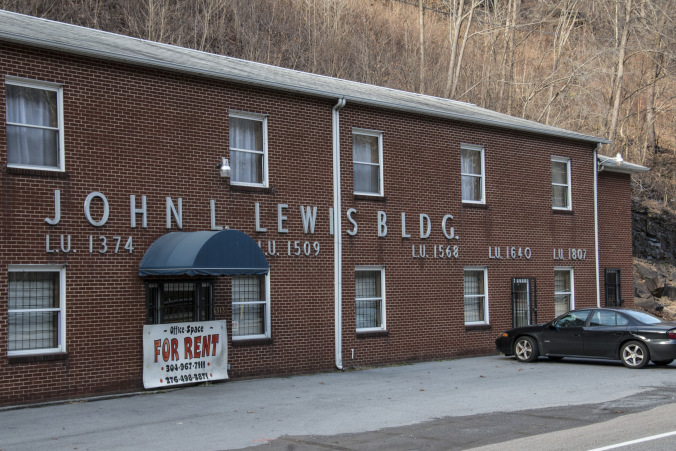
By the time I started my coal mining “career” in 2007, the union was all but gone in southwestern Virginia, eastern Kentucky, and southern West Virginia. I had been raised union and knew the benefits that came with it, but in its absence, I ended up joining thousands of other young men naive enough to believe we didn’t need a union. It  didn’t take long to realize how much control the coal companies had regained over all of our lives.

At one time, it seemed as though there were more union miners than non-union in central Appalachia. Throughout the mid-1970s and 80s, dozens of large union mining complexes (mines with attached coal preparation facilities and rail service) were operating in the region. These complexes employed thousands of men, and many women.

As I understood it, life was good for those who worked at the complexes. Miners made a union wage, had union benefits including guaranteed days off, voluntary overtime, excellent retirement and healthcare benefits, and worker’s rights that enhanced the safety culture at the mine. The sheer size of the complexes also gave the miner’s many amenities not found at smaller truck mines, including large “clean” and “dirty” locker rooms with heated floors, showering facilities, and even paved parking lots. But they weren’t to last. The seams that supported larger facilities were rapidly depleted as more mechanized forms of mining, such as long wall systems, were being implemented.

And then the coal markets busted.

CalPERS, CalSTRS, UC Invested in Dakota Access Pipeline Despite Pledges of Sustainability

By Darwin Bond-Graham - East Bay Express, December20, 2016

Last Monday, two-dozen activists chanted, sang, and drummed outside Wells Fargo' San Francisco headquarters to demand the bank stop financing the Dakota Access Pipeline. Wells Fargo has drawn criticism for its central role in raising funds for the pipeline's construction. But banks aren't the only Bay Area institutions that stand to profit if the pipeline is completed.

The University of California and the state's two largest public pension systems, CalPERS and CalSTRS, are also invested in Energy Transfer Partners and the oil company Sunoco, which recently merged with ETP in a deal worth $20 billion. ETP and Sunoco are the companies building the Dakota pipeline.

According to the UC's most recent annual report for its employee-retirement system, it has $3.1 million invested in Energy Transfer Partners bonds.

CalPERS, the state's giant public-employee retirement system, has invested $57 million in Energy Transfer Partners. The retirement system also owns Sunoco bonds worth $1.8 million.

And the California State Teachers Retirement System, or CalSTRS, owns $34 million in Energy Transfer Partners bonds and another $12.8 million in Sunoco bonds.

"By buying these corporate bonds they're betting on the success of the pipeline," said Janet Cox of Fossil Free California, a group that advocates divesting from fossil fuels.

Teachers, students, and public employees have rallied for years to divest retirement funds and endowments from oil, gas, and coal. Results have been slow and mixed.

Pages

The Fine Print I:

Disclaimer: The views expressed on this site are not the official position of the IWW (or even the IWW’s EUC) unless otherwise indicated and do not necessarily represent the views of anyone but the author’s, nor should it be assumed that any of these authors automatically support the IWW or endorse any of its positions.

Further: the inclusion of a link on our site (other than the link to the main IWW site) does not imply endorsement by or an alliance with the IWW. These sites have been chosen by our members due to their perceived relevance to the IWW EUC and are included here for informational purposes only. If you have any suggestions or comments on any of the links included (or not included) above, please contact us.

The Fine Print II:

Fair Use Notice: The material on this site is provided for educational and informational purposes. It may contain copyrighted material the use of which has not always been specifically authorized by the copyright owner. It is being made available in an effort to advance the understanding of scientific, environmental, economic, social justice and human rights issues etc.

It is believed that this constitutes a 'fair use' of any such copyrighted material as provided for in section 107 of the US Copyright Law. In accordance with Title 17 U.S.C. Section 107, the material on this site is distributed without profit to those who have an interest in using the included information for research and educational purposes. If you wish to use copyrighted material from this site for purposes of your own that go beyond 'fair use', you must obtain permission from the copyright owner. The information on this site does not constitute legal or technical advice.

