You are here

decarbonization

Canada’s Climate Emergency Unit seeks to light a spark across Canada

By Elizabeth Perry - Work and Climate Change Report, May 17, 2021

A report released at the end of April examines the performance and the links between Canada’s oil companies

The Climate Emergency Unit is a newly-launched initiative of the David Suzuki Institute, with the Sierra Club B.C. and the Rapid Decarbonization Group of Quebec as Strategic Partners. The Unit is led by Seth Klein and inspired by his 2020 book, A Good War: Mobilizing Canada for the Climate Emergency, which argues that climate mobilization requires an effort similar to what previous generations expended against the existential threat of fascism during the Second World War. (This is an approach shared with the U.S. group The Climate Mobilization, and others). The stated goal of the CEU is “to work with all levels of government and civil society organizations – federal, provincial, local and Indigenous governments, businesses, trade unions, public institutions and agencies, and industrial/sectoral associations” – to network, educate and advocate for the mobilization ideas in A Good War, to decarbonize and electrify Canadian society and the economy, while enhancing social justice and equity. 

In an article in Policy Options in November 2020, Klein summarizes the four hallmarks of a government committed to an urgent, emergency response:

  • It spends what it takes to win;
  • It creates new economic institutions to get the job done;
  • It shifts from voluntary and incentive-based policies to mandatory measures;
  • It tells the truth about the severity of the crisis and communicates a sense of urgency about the measures necessary to combat it.

Seth Klein was the founding Director of the Canadian Centre for Policy Alternatives in British Columbia, and continues to publish in the CCPA Policy Note , as well as in the Climate Emergency Unit blog, and as a columnist for The National Observer – for example, with “Feds need to treat climate crisis like a national emergency” on April 30.

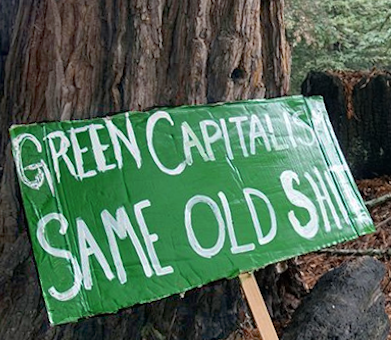
Green Economy, Green Capitalism? The Case Against The Case for Climate Capitalism

By Nick Grover - The Bullet, May 14, 2021

Even now, with a ten-year timeframe left for action, it’s rare for the climate crisis to be treated as the emergency it is. So, credit where due to Tom Rand. In his The Case for Climate Capitalism: Economic Solutions for a Planet in Crisis (Toronto: ECW Press, 2020), Rand calls for a rapid transition away from fossil fuels and toward renewables; he blames the political and business elite for the mess and says they will have to pay the price as markets turn against oil and assets are stranded; he even advocates for expansion of public transit. Where the book gets less refreshing is Rand’s tone toward the people who have been saying these things all along: his secondary enemy, leftists fusing demands for climate action with calls for economic justice.

Rand’s Case for Climate Capitalism aims to preserve and “co-opt” the forces of capitalism to usher in a transition toward green tech. His case is presented as simple pragmatism: the emergency we face affords us no time to discuss economic reforms; we must unite and do what works instead of holding out for a perfect system. His concern is that left ideas like the Green New Deal and Leap Manifesto – which wed strong climate action with job guarantees, labour protections, taxing the rich, and expanding social programs – alienate conservatives and the business class when we need them in our coalition to save the planet.

Congress Should Enact a Federal Renewable Electricity Standard and Reject Gas and False Solutions

By various - (690 Organizations), May 13, 2021

Dear Majority Leader Schumer, Speaker Pelosi, Chairman Manchin, and Chairman Pallone,

On behalf of our millions of members and activists nationwide, we, the undersigned 697 organizations—including climate, environmental and energy justice, democracy, faith, Indigenous, and racial justice groups—urge you to pass a Renewable Electricity Standard (RES) in the infrastructure package and reject gas and other false climate solutions to address the climate emergency.

As Congress prepares to pass a historic infrastructure package and President Biden has globally pledged to slash carbon emissions by 50% below 2005 levels by 2030, we should look to the 28 states, Washington, D.C., and Puerto Rico that have passed Renewable Electricity Standards (also known as renewable portfolio standards), as opposed to only seven states with Clean Electricity Standards (CES). The bold leadership demonstrated in RES-leading states like Hawaii, Vermont, and Washington, D.C. provide a roadmap to building a new renewable energy future. Funding this transition must start with shifting all fossil fuel subsidies to mass renewable energy deployment.

Renewable energy sources are sources that naturally replenish and are most often defined as solar, wind, and geothermal power. In contrast, so-called “clean” energy standards generally encompass these renewable sources but also include other technologies, like gas with or without carbon capture and sequestration, biomass, and nuclear, which are significant sources of pollution and carry a host of health and safety risks. In order to avoid perpetuating the deep racial, social, and ecological injustices of our current fossil-fueled energy system, Congress should ensure that any federal energy standard does not include these dirty energy sources.

Specifically, we write to express our concern that recent Clean Electricity Standard (CES) legislation, including the CLEAN Future Act (H.R. 1512), embed these injustices because they include gas and false solutions. The inclusion of gas and carbon capture and storage as qualifying energies in any CES undermines efforts to end the fossil fuel era and halt the devastating pollution disproportionately experienced by Black, Brown, Indigenous, and other communities of color in this country. Even a partial credit for fossil fuel resources that attempts to factor in lifecycle emissions runs the risk of subsidizing environmental harm for years to come. Allowing dirty energy to be bundled with clean energy under a federal energy standard would prolong the existence of sacrifice zones around dirty energy investments and delay the transition to a system of 100 percent truly clean, renewable energy.

Utility Workers Union and UCS estimate costs to transition U.S. coal miners and power plant workers in joint report

By Elizabeth Perry - Work and Climate Change Report, May 12, 2021

Hard on the heels of the April statement by the United Mine Workers Union, Preserving Coal Country: Keeping America’s coal miners, families and communities whole in an era of global energy transition, the Utility Workers Union of America (UWUA) jointly released a report with the Union of Concerned Scientists on May 4: Supporting the Nation’s Coal Workers and Communities in a Changing Energy Landscape. This report is described as “a call to action for thoughtful and intentional planning and comprehensive support for coal-dependent workers and communities across the nation.” The report estimates that in 2019, there were 52,804 workers in coal mining and 37,071 people employed at coal-fired power plants – and that eventually all will lose their jobs as coal gives way to cleaner energy sources. Like the United Mine Workers, the report acknowledges that the energy shift is already underway, and “rather than offer false hope for reinvigorated coal markets, we must acknowledge that thoughtful and intentional planning and comprehensive support are critical to honoring the workers and communities that have sacrificed so much to build this country.”

Specifically, the report calls for a minimum level of support for workers of five years of wage replacement, health coverage, continued employer contributions to retirement funds or pension plans, and tuition and job placement assistance. The cost estimates of such supports are pegged at $33 billion over 25 years and $83 billion over 15 years —and do not factor in additional costs such as health benefits for workers suffering black lung disease, or mine clean-up costs. The report states: “we must ensure that coal companies and utilities are held liable for the costs to the greatest extent possible before saddling taxpayers with the bill.” Neither do the cost estimates include the recognized needs for community supports such as programs to diversify the economies, or support to ensure that essential services such as fire, police and education are supported, despite the diminished tax base. 

The report points to the precedents set by Canada’s Task Force on Just Transition for Canadian Coal Power Workers and Communities ( 2018), the German Commission on Growth, Structural Change and Employment (2019), as well as the New Mexico Energy Transition Act 2019 and the Colorado Just Transition Action Plan in 2020. The 12-page report, Supporting the Nation’s Coal Workers and Communities in a Changing Energy Landscape was accompanied by a Technical Report, and summarized in a UCS Blog which highlights the situation in Illinois, Michigan, and Minnesota. A 2018 report from UCS Soot to Solar also examined Illinois.

Green Energy, Green Mining, Green New Deal?

Mineral constraints for transition overstated by IEA

By Kingsmill Bond - Carbon Trackers, May 10, 2021

The IEA’s latest piece on minerals critical to the energy transition gives a rather pessimistic spin to what was some very positive data. Looked at from a wider perspective, the note provides another useful source of analytical support for the energy transition.

The IEA looked into the amount of minerals needed to fuel the energy transition, and pretty quickly worked out ‘there is no shortage of resources’. The world has plenty of lithium, nickel, rare earth metals and so on. This is what the United States Geological Survey (USGS) has been saying for a while, and fits with the work done by the Energy Transitions Commission on mineral availability.

The IEA notes for example that we have 170 times as much lithium reserves as annual demand and that our lithium reserves have increased by 42% over the last eight years as higher prices and the prospect of rising demand have drawn out new investment. Under the IEA’s 1.5 degrees scenario, we will need about twice the amount of critical minerals by 2040 (six times as much for the clean energy industry, but that is only part of global demand), and the IEA put forward a series of sensible suggestions (increase recycling, invest in new supply and so on) to ensure that we get it.

However, their take then turns gloomier as we are warned about how hard this is going to be. Impressive charts show that the average electric vehicle uses 210kg of critical minerals compared to only 35kg for an ICE car and that a MW of solar generation capacity needs 6.5 tonnes of critical minerals compared to a coal plant which needs only 3 tonnes. We are then encouraged to think about all the ESG issues and environmental issues associated with the surge in mineral usage and to worry about supplier concentration, water usage, pollution and depletion.

Stand back a moment however, and you can see immediately that the IEA are very selective in their presentation of the data. They look only at the stocks (the assets you need to build the generator or car) not the flows (the energy you need to run them). But the flows of energy are 2-3 orders of magnitude larger than the stocks, and this means that many of their conclusions are more useful for fossil fuel advocates than for policymakers.

Environmental groups and Unifor agree: 60% emissions reduction goal is Canada’s Fair Share

By Elizabeth Perry - Work and Climate Change Report, May 5, 2021

Towards Canada’s Fair Share is a new report endorsed by seven of Canada’s leading environmental advocacy groups. It was released just before Prime Minister Trudeau’s announcement at the international Climate Summit on April 22-23 that Canada will increase its emissions reduction target to 40 – 45% of 2005 levels by 2030. Although this is an improvement on the target mentioned in Canada’s April 19th federal budget (36% below 2005 levels, it fails to match U.S. President Biden’s announcement of a 50% target, and is far below the more ambitious target proposed in Towards Canada’s Fair Share – a 60% emissions reduction by 2030. The report was based on modelling by EnviroEconomics and Navius, and endorsed by Climate Action Network Canada, Conservation Council of New Brunswick, Ecology Action Centre, Environmental Defence, Equiterre, Stand, and West Coast Environmental Law.

A recent CBC report, “Union representing energy workers backs stronger emissions cuts — as long as there’s a transition plan” ( April 27), states that Unifor agrees with the Fair Share target of 60% by 2030 – “provided the right framework is in place to help its 12,000 members move out of the oil and gas sector.” The CBC quotes Unifor representative Joie Warnock: “Our members in the energy sector have a lot to say about the path to decarbonization. The pathway to a lower carbon economy goes directly through their livelihoods, through their lives, through their communities,…..We’re very concerned that the government hasn’t done the work to plan for a just transition.” The union accepts that an energy transition is underway, and is working to “get in front of it” – and not only for its members in the oil fields, but also for members in the auto industry, facing the transformation to electric vehicles.

Supporting the Nation’s Coal Workers and Communities in a Changing Energy Landscape

By Staff - Utility Workers of America (UWUA) and Union of Concerned Scientists, May 4, 2021

The shift to a low-carbon economy has proceeded largely without thoughtful plans or preparation for the workers and communities that have sustained the US economy for more than a century. The economic upheaval resulting from the dramatic job losses in the coal industry over the last decade has uprooted families, deepened economic anxiety, and left community leaders scrambling to keep schools open and social services in place. And the trend is set to continue: many more coal workers and communities are facing the same fate without intentional policies to address these changes.

As part of this shift, the nation must support coal workers in finding new career paths and help coal communities recover from the economic losses stemming from coal’s decline (see box). This will require long-term individual supports and benefits, long-term investments in community infrastructure, empowering local leadership to drive place-based solutions, and ensuring that the legacy of coal mines and coal-fired power plants is fully remediated. These elements are critical to a fair, just, and equitable move to low-carbon energy; are urgently needed; and must be sustained over time.

Ultimately, broader changes to our energy systems will impact a larger swath of fossil fuel–dependent workers and communities as we drive toward decarbonizing the economy by 2050. This policy brief focuses on coal-dependent workers because they have faced economic disruption over the past decade and are imminently threatened by the shift to lowcarbon energy in the near term.

But fortunately, there are solutions. New analysis by the Union of Concerned Scientists and the Utility Workers Union of America finds both that it is possible to support coal workers in the transition and that these comprehensive policies are affordable. Indeed, relative to the federal response to the Great Recession in 2008–2009 and the COVID-19 pandemic of 2020–2021, as well as the scale of investments needed to decarbonize our economy by 2050, investing in the nation’s coal workers comes with a relatively small price tag. Approximately 89,875 coal workers were employed in the United States in 2019. The cost of providing a comprehensive set of supports to the portion of these workers who will face job losses before reaching retirement age represents a tiny fraction of the estimated $2.5 trillion in additional capital investments in all energy sectors by 2030 that would be needed to reach net-zero emissions by 2050 (Larson et al. 2020). We estimate that the cost of these supports will range from $33 billion over 25 years to $83 billion over 15 years.

Read the text (Link).

New Analysis Estimates an Equitable Energy Economy will Require $33 Billion to $83 Billion Investment in Workers

By staff - Utility Workers Union of America, May 4, 2021

As the Biden administration considers federal resources for coal workers and their communities, the Utility Workers Union of America (UWUA) and the Union of Concerned Scientists (UCS) urge a set of comprehensive supports estimated to cost between $33 billion over 25 years to $83 billion over 15 years. The analysis, Supporting the Nation’s Coal Workers and Communities in a Changing Energy Landscape, underscores that a fair and equitable shift to a low-carbon economy requires intentional, robust, and sustained investments in coal workers, their families, and their communities.

Coal-fired electricity is down to 20 percent today from about half of the nation’s electricity generation a decade ago. With more closures on the horizon, a sustained and comprehensive set of supports is needed to ensure individuals who have powered America for generations can stay in their communities, prepare for new careers with family-sustaining wages, and can retire with dignity.

“For decades, the coal industry has simply locked its doors and forgotten the individuals and communities who rely on the coal industry and who exist in almost every state across the country,” said UWUA President James Slevin. “Approaching these closures with the right set of economic supports offers a better alternative to the chaos and devastation we’re seeing today.”

Recognizing coal and mining facilities often directly employ hundreds of individuals and many more indirectly across several counties, the economic and social infrastructure of a region undergoes lasting changes when facilities close.

“The economic upheaval resulting from the dramatic job losses in the coal industry over the last decade has uprooted families, deepened economic anxiety, and left community leaders scrambling to keep schools open and social services in place,” said report co-author Jeremy Richardson, a UCS senior energy analyst who comes from a family of coal miners. “But solutions are readily available with forward-looking and visionary action by policymakers.”

Rutgers Divests!

By staff - Labor Network for Sustainability, May 2021

Members of Rutgers American Association of University Professors – American Federation of Teachers (AAUP-AFT) are joining with student allies in celebrating a vote to divest from fossil fuels by the Rutgers Board of Governors and Board of Trustees.

The decision, set in motion last year by a formal request from a broad student coalition, backed by Rutgers unions, will commit the university to cutting financial connections to any company or investment fund whose primary business is in oil, coal, or natural gas, from exploration and extraction to pipelines and transportation.

Divestment is the culmination of years of efforts by students, faculty, and staff to get Rutgers to take concrete action toward the goal of climate justice, said David Hughes, past president and current treasurer of Rutgers AAUP-AFT, the union representing full-time faculty and graduate workers. “This is seven-and-a-half years in the making,” Hughes said, “and it will give greater strength to the divestment movement at exactly the moment when the new Biden administration is beginning to take up climate change.”

American Federation of Teachers President Randi Weingarten also highlighted the years of organizing. “The university community at Rutgers has shown that when people come together around an issue like climate sustainability, change is possible,” Weingarten said. “Hopefully the work Rutgers is doing on fossil fuel divestment will set a standard for other institutions. For our universities to truly become institutions of climate mitigation and resiliency, we must also invest in solarizing buildings and other measures that generate clean energy.”

Pages

The Fine Print I:

Disclaimer: The views expressed on this site are not the official position of the IWW (or even the IWW’s EUC) unless otherwise indicated and do not necessarily represent the views of anyone but the author’s, nor should it be assumed that any of these authors automatically support the IWW or endorse any of its positions.

Further: the inclusion of a link on our site (other than the link to the main IWW site) does not imply endorsement by or an alliance with the IWW. These sites have been chosen by our members due to their perceived relevance to the IWW EUC and are included here for informational purposes only. If you have any suggestions or comments on any of the links included (or not included) above, please contact us.

The Fine Print II:

Fair Use Notice: The material on this site is provided for educational and informational purposes. It may contain copyrighted material the use of which has not always been specifically authorized by the copyright owner. It is being made available in an effort to advance the understanding of scientific, environmental, economic, social justice and human rights issues etc.

It is believed that this constitutes a 'fair use' of any such copyrighted material as provided for in section 107 of the US Copyright Law. In accordance with Title 17 U.S.C. Section 107, the material on this site is distributed without profit to those who have an interest in using the included information for research and educational purposes. If you wish to use copyrighted material from this site for purposes of your own that go beyond 'fair use', you must obtain permission from the copyright owner. The information on this site does not constitute legal or technical advice.