You are here

just transition

Clean energy: The challenge of achieving a ‘just transition’ for workers

By Sophie Yeo - Carbon Brief, January 4, 2017

Tackling climate change is good for the economy, good for business and good for people. This is the narrative often pushed out by campaigners, researchers and governments around the world.

But while measures to curb emissions and reduce the impacts of rising temperatures will be good for the many, the few who work in industries affected by climate policies risk losing their livelihoods as the economy leans increasingly upon renewable energy.

Around the world, there is a growing movement demanding a “just transition” for the workforce, so that workers are not left in the cold as fossil fuels become consigned to the past.

Peabody and the Navajo tribe

Arizona’s Navajo tribe is one example of a community already fighting for a just transition. This Native American group signed a lease in 1964 allowing Peabody Energy, America’s largest coal company, to mine for coal on reservation lands. Now, 50 years later, many are battling against the impacts of this deal.

When they signed the lease, the company agreed to “employ Navajo Indians when available in all positions for which…they are qualified”. Since then, Peabody has been a major employer of tribe members — 90% of the 430-person workforce of its Kayenta mine are native people.

Yet, while Peabody has provided jobs and money, poverty rates on the Navajo Nation Reservation are more than twice as high as the Arizona state average, and benefits have come at the expense of the local environment.

The Navajo tribe has seen their water sources dwindle as Peabody has used the reservation’s aquifer to turn coal into slurry and pump it down a pipeline. Coal plants surrounding the reservation have polluted the air, clouding the view of the nearby Grand Canyon and other national parks. It is also a source of CO2, the primary contributor of human-caused climate change.

Members of the Navajo tribe, alongside the Hopi tribe that also lives in the area, are calling for a “just transition” away from coal — one that will see old jobs tied to the polluting coal industry replaced with clean and profitable work.

One group, the Black Mesa Water Coalition, is trying to create economic opportunities that will help to release the community from its reliance on coal. For instance, they have tried to revive the traditional Navajo wool market, developing partnerships with wool buyers and organising an annual Wool Buy.

It has also started a solar project, which aims to install a series of 20MW to 200MW solar installations on abandoned coal mining land, transforming the reservation’s old role as an energy provider.

The idea has gone global. In Ghana, for instance, the government has developed a programme to plant more trees, simultaneously improving the landscape, providing jobs, and offering a diversified source of livelihoods for farmers. Peasant farmers and the rural unemployed were involved in planting species such as teak, eucalyptus, cassia and mahogany, generating 12,595 full-time jobs.

In Port Augusta, a town of 14,000 people in South Australia, there is a plan underway to install a solar thermal plant to replace the town’s coal industry. This became even more urgent after the Alinta power station announced that it would close, potentially putting 250 jobs at risk.

If You Really Want to Help Appalachia

By Nick Mullins - The Thoughtful Coal Miner, December 30, 2016

I’ve been writing this blog for 6 years now, working to hammer home many points. The most important have included the coal industry’s means of winning the hearts and minds of our mountain communities, and how people in the environmental camps have ignored the industry’s acculturation of Appalachian values.

Since leaving the coal industry, I’ve tried to get folks to understand that we Appalachians, coal miner’s especially, do not respond to traditional environmentalist messaging. At minimum, those who agree with the environmental concerns are not going to push their throats further into the coal industry’s blade. More often, they will join in the socialized ridicule of those who are being othered, i.e. the environmentalists. What is needed is for people to understand the issues and the way we have been manipulated and controlled, then apply it to their own communication strategy.

As a 9th generation Appalachian and the 5th generation of my family to have worked in the mines, I can say with confidence that no outside organization will ever be successful in turning the tide in Appalachia. We have been fighting the coal industry for 150 years and fighting poverty for the last 50+. Millions of dollars have been funneled in through organizations like the Appalachian Regional Commission, and yet we are still fighting the same battles.

So if you really want to help Appalachia, you’ll help us help ourselves.

The first step is to tear down the coal industry’s facade of benevolence, and remind people of the industry’s history in our region. Many people already distrust the industry, but will fight for it in the face of an outside threat. Coal mining is part of our identity, and the coal industry has spun the “War on Coal” to be a threat to that identity. The result, as Dr. Shannon Bell has stated in her book Fighting King Coal, is the cultural hegemony of our region.

So what do we do to fix it since there’s no silver bullet?

It will take a lot, there’s no doubt about it, but the best place to to start is with educating the public. In a technological world where audio/visual has become the primary means of conveying a message, we must embrace it. This is why I focused a bit on film and broadcast journalism during my recent studies at Berea College. Just as I was re-entering the world from four years of college, some wonderful folks had already done a lot of work before me and the documentary film Blood on the Mountain was in the process of being released.

I believe the film has become the best means to help tear down the industry’s previously mentioned facade of benevolence towards Appalachia. It shows the true history of coal and how they have maintained control of us, even in contemporary times, dividing our communities, destroying the unions, and raping our lands.

In many ways, the film embodies the very mission I have dedicated this blog—and my life—to achieving . When I was asked by the filmmakers to be interviewed for the film, and later to help get it out to as many people as possible,  I saw it as a perfect opportunity to bring real tangible change to my mountain home.

The next phase of the film is coming, but we need the funding to accomplish it. We want to take this film into as many union halls, churches, homes, and community centers as possible FOR FREE . We want to turn it into a tool that can be used not only in Appalachia, but in any area where people face the same issues we face with corporate corruption.

The coal industry has ruled our lives under false illusions and economic control. We can break free, but people, both in Appalachia and outside of Appalachia, must better understand the mechanisms of control through which industries operate, and understand how we can empower entire Appalachian communities to fight against them. I wish I could say that the past 15 years of activism in the region have accomplished this in some small way, but the region’s continued support of men like Mitch McConnell—and now Jim Justice and Donald Trump—is pretty strong evidence to the contrary.

It pains me to think of the amount of time and money that has been invested in so many organization’s “grassroots” campaigns, only to see these kinds of outcomes. We are overdue for this new strategy.

We have launched a Kickstarter to fund Blood on the Mountain’s public outreach campaign. Our goal is $25,000 and it is all or nothing, meaning, unless we raise the full amount, we don’t get anything. We are going to use the funds we received to create a curricula and educational materials to complement the film, and we will use the remaining funds to get the film into Appalachian communities—FOR FREE.

Based on the size of your donation, you can receive DVD copies of the documentary, digital access to it, other documentaries such as The Appalachians and Coal Country,  and many other wonderful rewards. So please, give what you can give and advocate to help us raise money for this outreach. Given the divisiveness of our recent election, we need this film to bring people together, now, more than ever.

So please, please share this post and the Kickstarter link far and wide. Donate/purchase a copy of the film and more.

Still a new trade unionism in the making?

By David Ridley - Post 16 Educator, 2017

On 26th November 2016, a conference was held to celebrate The Lucas Plan, ‘a pioneering effort by workers at the arms company Lucas Aerospace to retain jobs by proposing alternative, socially useful applications of the company’s technology and their own skills. It remains one of the most radical and forward thinking attempts ever made by workers to take the steering wheel and directly drive the direction of change’.

The day began with a screening of Steve Sprung’s documentary The Plan, a work in progress which tells the story through interviews and archival footage of the Lucas Plan. Already the film cleverly and and emotionally conveys both the social and historical context within which the Lucas Plan was created, and its ongoing importance for today’s situation.

The 52-page summary of the Lucas Plan report show Harold Wilson, Labour Prime Minister from 1964 to 1970, ‘lubricated’ the ‘white heat of technological change’ in heavy industries, leading to the ‘burning up’ of thousands of jobs and to structural unemployment. In his plenary speech, Phil Asquith, a key member of the Lucas Aerospace Combine, described how the trade union movement at the time failed to offer effective resistance to the two major threats of structural unemployment and globalisation.

The Combine Committees were a direct response to the corporate mergers and rationalisations of the 1970s. These mergers and rationalisations were making it easier to overcome existing forms of workplace organisation, which were at that point still based on geographical and craft divisions. Mick Coomey recounted the situation at that time as one in which different unions all negotiated at different times, often undermining each other, all operating with their own immovable, often undemocratic, structures.

The Combine was an attempt to overcome these divisions by appealing to the common interest of workers within Lucas Aerospace. They ‘set up a series of advisory services’ including advice on pensions provisions and safety in the use of new equipment. The Combine also produced its own ‘four page illustrated newspaper’ which was distributed bimonthly to 13,000 manual and staff workers.

But the most significant achievement of the Combine was the creation of the Corporate Plan. Formulated after a meeting with the late Tony Benn, who suggested its creation, the ‘object of the Corporate Plan [was] twofold. Firstly to protect our members’ right to work by prioritising a range of alternative products on which they could become engaged in the event of further cutbacks in the aerospace industry. Secondly to ensure that among the alternative products proposed are a number which would be socially useful to the community at large’.

Climate Justice Alliance: Just Transition Principles

By various - Climate Justice Alliance, January 2017

What Do We Mean By Just Transition?

“Just Transition is a principle, a process and a practice” -- Just Transition Alliance

Just Transition is a vision-led, unifying and place-based set of principles, processes and practices that build economic and political power to shift from an extractive economy 2 to a regenerative economy. This means approaching production and consumption cycles holistically and waste free. The transition itself must be just and equitable; redressing past harms and creating new relationships of power for the future through reparations. If the process of transition is not just, the outcome will never be. Just Transition describes both where we are going and how we get there.

Download (PDF).

From Banks and Tanks: A Strategic Framework for a Just Transition

By MG Collective - Movement Generation Justice and Ecology Project, January 2017

Just Transition is a framework for a fair shift to an economy that is eco-logically sustainable, equitable and just for all its members. After centuries of global plunder, the profit-driven, growth-dependent, industrial economy is severely under-mining the life support systems of the planet. An economy based on extracting from a finite system faster than the capacity of the system to regenerate will eventually come to an end—either through collapse or through our intentional re-organization. Transition is inevitable. Justice is not.

Just Transition strategies were first forged by labor unions and environmental justice groups who saw the need to phase out the industries that were harming workers, community health and the planet, while also providing just pathways for workers into new livelihoods. This original concept of Just Transition was rooted in building alliances between workers in polluting industries and fence-line and frontline communities. Building on that history, Just Transition to us represents a set of aligned strategies to transition whole communities toward thriving economies that provide dignified, productive and ecologically sustainable livelihoods that are governed directly by workers and communities.

A Just Transition requires us to build a visionary economy for life in a way that is very different than the economy we are in now. Constructing a visionary economy for life calls for strategies that

democratize, decentralize and diversify economic activity while we damper down consumption, and (re)distribute resources and power. Just Transition initiatives shift the economy from dirty energy to energy democracy, from funding highways to expanding public transit, from incinerators and landfills to zero waste, from industrial food systems to food sovereignty, from gentrification to community land rights, and from rampant destructive development to ecosystem restoration. Core to a Just Transition is deep democracy in which workers and communities have control over the decisions that affect their daily lives.

Read the report (English PDF) | (Spanish PDF).

Diversity is Strength: The German Energiewende as a Resilient alternative

By Tadzio Mueller - New Economics Foundation, Rosa Luxemburg Foundation, 2017

Extract: Social movements, it has been argued since their heyday in the late 1960s, are actors, or maybe processes, that expand the limits of the possible, that bring ‘the new’ into the world, precisely because they emerge around problematics that the existing set of social and political institutions cannot find solutions for. At the same time, it is precisely this quality of bringing the new into the world that also brings with it one of the key problems of a politics based in movement(s): how do the gains of social movements become generalised and permanent? It is hard, in fact impossible, to constantly stay mobilised. The German anti-Nuclear movement, for example, fought long and hard against any new nuclear power installation in the country. But nobody can stay in the streets forever, so at some point, it becomes necessary to institutionalise movement gains. It is here where movements often fail – and where, for a variety of reasons, the German Energiewende did not fail. It is therefore to the institutionality of the process we now turn.
I will argue that its remarkable dynamism and resilience are the result of a peculiar combination of local movement processes and national legislation, and of an unusual combination of political and economic logics. It is what it is not because of the basis of a particular purity, but because it lives by an open logic of articulation.

Download PDF

Fairness in the Low-Carbon Shift: Learning from Environmental Justice

By Uma Outka - Brooklyn Law Review, January 1, 2017

The environmental justice movement in the United States forged a pivotal connection among concerns for social justice, civil rights, and environmental protection. At a time when the federal environmental statutes enacted in the early 1970s were beginning to mature, the movement drew critical attention to the disproportionate environmental harm borne by low-income communities and communities of color. The movement forced environmentalists to reflect on their biases and their commitments — to recognize that urban or degraded landscapes where people live are as much a part of our environment as the remote wilderness of our national parks. It made plain that our laws, designed to protect human health and the environment, were letting environmental justice communities down.

Today, as climate change drive s a shift in the energy sector away from fossil fuels and toward low-carbon resources, calls for “energy justice” and “climate justice” expand the movement’s conceptual reach in the modern context. These justice concerns respond to inequality in the distribut ion of environmental harms, as well as access to the environmental, economic, and social benefits asso ciated with the energy sector and climate policy. The link between climate change, energy, and environmental justice is un mistakable: the energy sector contributes to climate change more than any other industry; climate change is predicted to affect environmental justice communities most; and the energy sector has a long history with environmental injustice. In the United States and around the globe, the energy sector is the primary source of greenhouse gas emissions, causing atmospheric temperatures to rise.

Download PDF

Without the Union…

By Nick Mullins - The Thoughtful Coal Miner, December 20, 2016

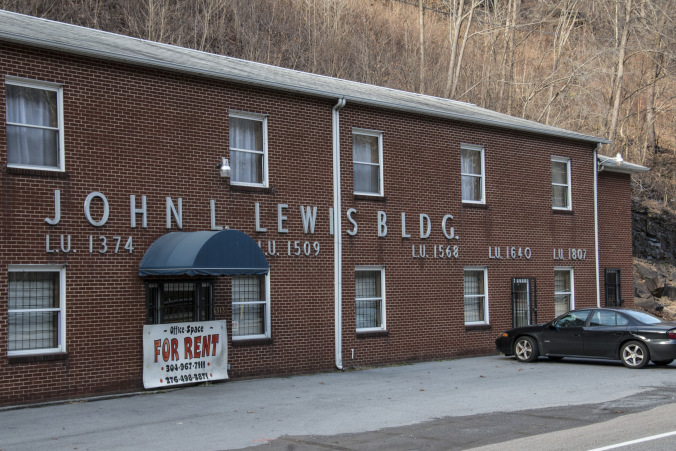
By the time I started my coal mining “career” in 2007, the union was all but gone in southwestern Virginia, eastern Kentucky, and southern West Virginia. I had been raised union and knew the benefits that came with it, but in its absence, I ended up joining thousands of other young men naive enough to believe we didn’t need a union. It  didn’t take long to realize how much control the coal companies had regained over all of our lives.

At one time, it seemed as though there were more union miners than non-union in central Appalachia. Throughout the mid-1970s and 80s, dozens of large union mining complexes (mines with attached coal preparation facilities and rail service) were operating in the region. These complexes employed thousands of men, and many women.

As I understood it, life was good for those who worked at the complexes. Miners made a union wage, had union benefits including guaranteed days off, voluntary overtime, excellent retirement and healthcare benefits, and worker’s rights that enhanced the safety culture at the mine. The sheer size of the complexes also gave the miner’s many amenities not found at smaller truck mines, including large “clean” and “dirty” locker rooms with heated floors, showering facilities, and even paved parking lots. But they weren’t to last. The seams that supported larger facilities were rapidly depleted as more mechanized forms of mining, such as long wall systems, were being implemented.

And then the coal markets busted.

Unions stand at Standing Rock

By staff - NW Labor Press, December 14, 2016

The standoff at North Dakota’s Standing Rock Sioux Reservation — with Indian tribes and supporters on one side, and police and private security for the Dakota Access Pipeline on the other – also finds labor union members on both sides.

North America’s Building Trades Unions and the AFL-CIO have come out in favor of the project moving forward, because it’s a big source of union jobs. But other labor organizations have declared support for pipeline protesters, and in Oregon and Washington, a number of union members have traveled to Standing Rock to take part in the massive protest encampment — a nonviolent uprising that has united Indian tribes nationwide.

Roben White — a retired union painter and former president of Painters Local 10 — is one of them. White is of mixed Lakota Sioux and Cheyenne ancestry on his father’s side, and he’s an enrolled member of the Oglala Lakota tribe at the Pine Ridge Indian Reservation in South Dakota. He’s also a staunch unionist who says he was pained to see unions take a stand he disagrees with.

The Standing Rock Sioux object to the pipeline chiefly because of the potential risk to their water supply. When complete, the Dakota Access Pipeline would pump 470,000 barrels a day of light crude oil through a 30-inch-wide, 1,172-mile-long pipeline from the Bakken Oil Fields of northwestern North Dakota through South Dakota and Iowa to refining facilities in Illinois. The pipeline’s route was originally supposed to cross the Missouri River just upstream from Bismarck, North Dakota, but because of concerns that an oil spill could wreck the city’s water supply, the route was changed to cross just upstream from the Standing Rock Sioux Reservation. The pipeline would cross half a mile north of the reservation, 92 feet underneath the Standing Rock Sioux water supply — Lake Oahe, a reservoir formed by a Missouri River dam.

To protest that course, in April, members of the tribe established a “spiritual camp” on Army Corps of Engineers land along the banks of the Missouri river. By August, it had become the largest gathering of Native American tribes in more than a century. With protesters attempting to stop construction, North Dakota Gov. Jack Dalrymple declared a state of emergency Aug. 19. Private security contractors, joined by police reinforcements from six states, deployed in armored personnel carriers, and used rubber bullets, tear gas grenades, pepper spray, and sound cannons against unarmed protesters. On Sept. 3, security guards attacked nonviolent protesters with pepper mace and dogs.

Then on Sept. 9, Department of Justice, Department of the Interior and Department of the Army asked that the pipeline company voluntarily halt construction within 20 miles of Lake Oahe, after a federal judge denied the Standing Rock Sioux Tribe’s request for a temporary injunction.

Shortly after that, national AFL-CIO President Richard Trumka weighed in with an official statement on the pipeline: “The AFL-CIO supports pipeline construction as part of a comprehensive energy policy,” he declared Sept. 15. “Pipeline construction and maintenance provides quality jobs to tens of thousands of skilled workers,” Trumka said. Community involvement is important, Trumka said, particularly in situations involving places of significance to Native Americans, but, he added, “once these processes have been completed, it is fundamentally unfair to hold union members’ livelihoods and their families’ financial security hostage to endless delay.… Furthermore, trying to make climate policy by attacking individual construction projects is neither effective nor fair to the workers involved.”

Reacting to Trumka’s statement, White, the former Painters Local 10 president, picketed with half a dozen other local unionists outside the Sept. 23 annual awards banquet of the AFL-CIO’s Southwest Washington Labor Roundtable.

“I’m all labor. I live and breathe it,” White said. “I’m not questioning the fact that they want those jobs. I made my living in the building trades too. But there is a point that we need to take responsibility. … How ‘bout fixing the pipelines that are busting all over the place? How ‘bout changing the infrastructure so we don’t have to use so much oil and gas?”

For the Standing Rock tribe, protest banners say, “water is life.” But for many union construction workers, pipelines are how they earn their living. After the federal agencies requested a halt to construction, five national union presidents wrote to President Obama. “The [Dakota Access pipeline] project is being built with an all-union workforce and workers are earning family-sustaining wages, with family health care and retirement contributions,” wrote the presidents of Operating Engineers, Electrical Workers, Teamsters, United Association and Laborers. “However, the project delays are already putting members out of work and causing hardships for thousands of families.”

The pipeline is providing work for an estimated 4,500 members of building trades unions.

But a number of labor organizations not directly involved with the project issued statements supportive of the protests, including Amalgamated Transit Union, American Postal Workers Union, Communications Workers of America, National Nurses United, and Service Employees International Union (SEIU).

‘An injury to one is an injury to all’

By Angela K. Evans - Boulder Weekly, December 1, 2016

Since July, thousands of people have joined the Standing Rock Sioux in North Dakota as they protest the Dakota Access Pipeline (DAPL), which is slated to carry up to 570,000 barrels of crude oil every day for 1,172 miles from North Dakota to Illinois. The protesters, who call themselves “water protecters,” have been joined by members of other Native American tribes, environmentalists, international sympathizers and members of several labor unions.

Liam Cain, a card-carrying member of Laborers International Union of North America (LIUNA) out of Cheyenne, Wyoming, first traveled to North Dakota after he heard that large trade unions such as LIUNA and AFL-CIO called on the governor of North Dakota to protect union members working on the pipeline by sending in the National Guard.

“If anyone knows anything about the labor movement or labor history, they know it’s a deeply hypocritical and soulless thing for them to do. It aligns them as the junior partners in capitalism and divorces them from whatever was good with the labor movement in terms of the working-class and fighting for the working-class population. …

“This is actually a union I’m a part of,” he continues. “I may have philosophical disagreements with people who are in this union but this isn’t a philosophical disagreement. This is a soulless, disgusting thing that the International [Union] signed off on and the rank and file is not all on board with.”

Originally from Humboldt County, California, Cain first joined LIUNA in 2008 to work on a major pipeline being built through Cheyenne, and he has worked on several mainline pipeline construction projects since. Lately, he’s spent more of his time fighting wildfires around the country but still picks up jobs on pipelines during the off season.

In North Dakota, Cain joined up with the Labor for Standing Rock delegation, a group of workers in a variety of unions who have traveled to Standing Rock to show their solidarity with the Native Americans and environmentalists protesting the pipeline.

Pages

The Fine Print I:

Disclaimer: The views expressed on this site are not the official position of the IWW (or even the IWW’s EUC) unless otherwise indicated and do not necessarily represent the views of anyone but the author’s, nor should it be assumed that any of these authors automatically support the IWW or endorse any of its positions.

Further: the inclusion of a link on our site (other than the link to the main IWW site) does not imply endorsement by or an alliance with the IWW. These sites have been chosen by our members due to their perceived relevance to the IWW EUC and are included here for informational purposes only. If you have any suggestions or comments on any of the links included (or not included) above, please contact us.

The Fine Print II:

Fair Use Notice: The material on this site is provided for educational and informational purposes. It may contain copyrighted material the use of which has not always been specifically authorized by the copyright owner. It is being made available in an effort to advance the understanding of scientific, environmental, economic, social justice and human rights issues etc.

It is believed that this constitutes a 'fair use' of any such copyrighted material as provided for in section 107 of the US Copyright Law. In accordance with Title 17 U.S.C. Section 107, the material on this site is distributed without profit to those who have an interest in using the included information for research and educational purposes. If you wish to use copyrighted material from this site for purposes of your own that go beyond 'fair use', you must obtain permission from the copyright owner. The information on this site does not constitute legal or technical advice.

