You are here

reports

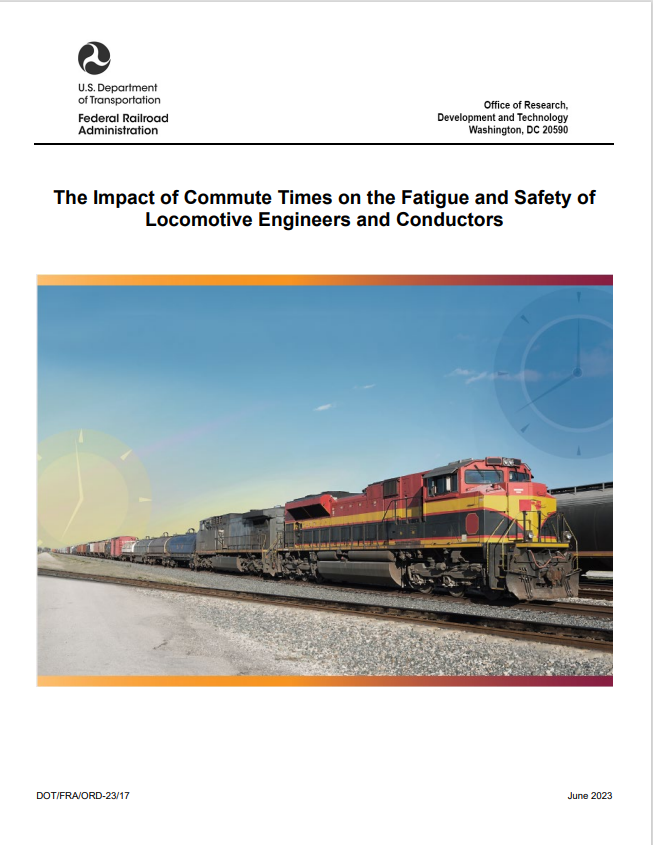
The Impact of Commute Times on the Fatigue and Safety of Locomotive Engineers and Conductors

By Naomi J. Dunn and Susan Soccolich - US Department of Transportation, Fereal Railroad Administration, June 2023

The survey showed that not only did locomotive engineers and conductors frequently experience fatigue, but it also indicated fatigue affected their operation of a locomotive train. Self-identified highly fatigued locomotive engineers and conductors were:

  • Twice as likely to experience any type of fatigue-related safety event while operating a locomotive compared to those who were not highly fatigued
  • Four times more likely to have missed a required stop compared to conductors not feeling highly fatigued
  • 3.4 times more likely to have had a near miss while operating a locomotive than locomotive engineers who reported not feeling highly fatigued

Just under 40 percent of participating locomotive engineers and conductors fit the classification of being highly fatigued; over 60 percent of locomotive engineers and conductors were classified as not being highly fatigued.

Fatigue also increased the odds of locomotive engineers and conductors being involved in fatigue-related driving events during their commute to and from work. The risk was higher for those who reported having long commute times (i.e., over one hour). The major contributors to fatigue were related to scheduling, or lack thereof in the case of irregular work. Variability in start times and frequent switching from day to night work were associated with increased risk of fatigue for locomotive engineers and conductors. Shiftwork, long-duration tasks, and disturbances in the sleep-wake cycle are well-documented contributors to fatigue and key risk factors identified in this survey for safety incidents both in the workplace and on the roads.

Download a copy of this publication here (PDF).

Aluminum Revitalized

By Ariel Pinchot, et. al. - Blue Green Alliance, June 2023

As one of the most important metals for modern life, aluminum is all around us. From our bridges and high-rise buildings to our smartphones and kitchen appliances, this highly durable, lightweight, and conductive material is essential. It’s also a key ingredient for achieving our climate, jobs, and national security goals. As a primary component of solar panels, power lines, electric vehicles (EVs), and other clean technologies, aluminum is a building block of our clean energy solutions. At the same time, producing aluminum requires a tremendous amount of energy, and globally, the sector is a significant contributor to greenhouse gas (GHG) emissions. As the world produces increasing amounts of this material for the clean energy economy, we must simultaneously decrease the emissions from its production in order to achieve global climate targets.
In the United States, our growing need for aluminum already far surpasses the dwindling output from our domestic primary production. As a result, much of the aluminum we use comes from abroad, including from countries where aluminum production is much more emissions-intensive. Increasing our aluminum procurements from highly-polluting overseas producers will only push our climate justice goals further out of reach. What we need to advance these goals is a secure, domestically produced supply of clean aluminum made with high-road labor standards.

Revitalizing clean aluminum manufacturing in the U.S. will not only cut a major source of climate pollution, reduce worker and fenceline community exposure to airborne pollutants, and secure a reliable supply of an essential material for clean energy—it will also create good jobs for hard-hit workers and communities, while supporting the current workforce and retaining existing jobs. This report lays out a set of targeted recommendations for getting there. After assessing the state of the domestic industry, we outline the employment, climate, and community benefits of revitalizing clean aluminum manufacturing and present a set of policy solutions that can help create and sustain a strong, clean aluminum industry.

Download a copy of this publication here (PDF).

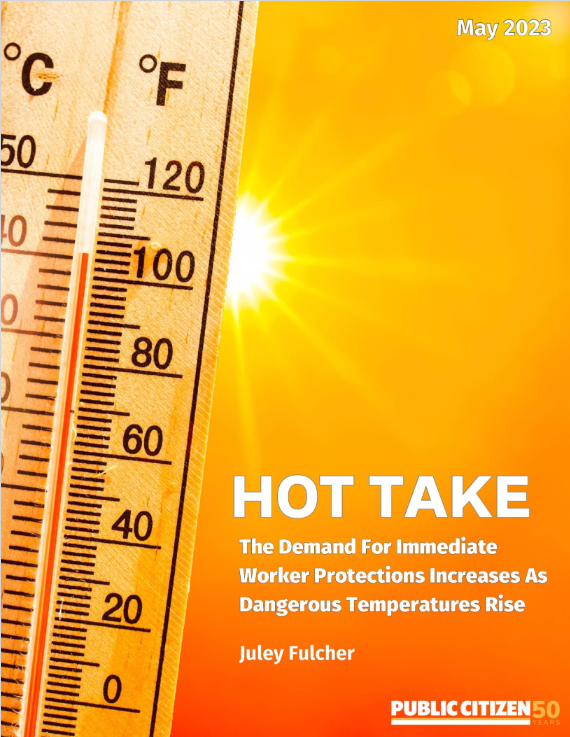
Hot Take: Urgent Heat Crisis For Workers

By Juley Fulcher - Public Citizen, May 25, 2023

Key Findings

  • Heat exposure is responsible for as many as 2,000 worker fatalities in the U.S. each year.
  • Up to 170,000 workers in the U.S. are injured in heat stress related accidents annually. There is a 1% increase in workplace injuries for every increase of 1° Celsius.
  • The failure of employers to implement simple heat safety measures costs the U.S. economy nearly $100 billion every year.
  • The dangers of heat stress are overwhelmingly borne by low-income workers. The lowest-paid 20% of workers suffer five times as many heat-related injuries as the highest-paid 20%.
  • Worker heat stress tragedies disproportionately strike workers who are low-income, Black or Brown.
  • At least 50,000 injuries and illnesses could be avoided in the U.S. each year with an effective OSHA heat standard.
  • Employers pay a substantial price for failing to mitigate workplace heat stress including the costs of absenteeism, turnover and overtime due to worker illness or injury, reduced worker productivity, damage to machinery and property from workplace accidents, increased workers’ comp premiums, law suits, and loss of public trust and customers.
  • The physical and mental capacity of workers to function drops significantly as heat and humidity increase. Productivity of workers declines approximately 2.6% per degree Celsius above a Wet Bulb Globe Temperature (WBGT) of 24°C (75.2°F). The WBGT is a measure that combines temperature, relative humidity, radiant heat sources (like direct sunlight or heat-generating machinery) and wind speed.
  • There are many simple ways employers can mitigate heat stress in the workplace, like access to cool drinking water and adequate “cool down” breaks in a shaded or air-conditioned space.
  • It is essential that OSHA issue an interim rule to immediately prevent heat-related illness, injury and death in indoor and outdoor workers, both to protect workers and to reduce the clear burden on the economy.

The right to a safe workplace is a basic human right. Exposure to excessive heat is one of the most dangerous problems facing workers today. Tens of thousands of workers suffer heat illnesses, injuries and fatalities every year in the U.S. This is a toll disproportionately borne by Black and Brown workers, and low-income workers with limited options for safer employment. This is most clearly demonstrated by the plight of farmworkers, who have the highest rate of heat-related worker deaths, and are overwhelmingly immigrant workers with little power to demand workplace reforms from their employers.

Download a copy of this publication here (PDF).

Changing the Trade Winds: Aligning OECD Export Finance for energy with climate goals

By Nina Pušić and Claire O’Manique - Oil Change International, May 23, 2023

This new Oil Change International report shows that Organisation for Economic Co-operation and Development (OECD) countries supported fossil fuel exports by an average of USD 41 billion from 2018 to 2020, almost five times more than clean energy exports. This directly contradicts internationally agreed climate goals, including the Paris Agreement objective to align financial flows with the low-carbon energy transition.

A majority of international public finance for fossil fuels is provided by OECD governed Export Credit Agencies (ECAs), with 71 percent of export financing for energy going to oil and gas.

OECD ECAs play a particularly influential role in getting large fossil infrastructure projects built. They invested in 56 percent of new hazardous liquified gas (LNG) export terminal capacity built in the last decade (providing at least USD 81 billion), helping drive the global fossil gas boom by getting these large keystone projects built. Overall, about 42 percent of all fossil fuel finance from ECAs under the OECD supported midstream infrastructure activities, such as pipelines, LNG ports, and shipping.

This new report recommends that OECD countries present an ambitious proposal to prohibit financing all oil and fossil gas projects in order to align with a 1.5ºC warming limit.

Authors of the report recommend that:

  • Australia, Norway, Turkey, Korea, and Japan, urgently sign onto the Clean Energy Transition Partnership (CETP);
  • OECD members that have already signed onto the CEPT, including the United Kingdom and Canada, fulfill their commitment to “driv[e] multilateral negotiations in international bodies, in particular in the OECD” to align with the Paris Agreement goals and present a proposal for an OECD oil and gas export finance prohibition;
  • OECD members close the existing coal loopholes, to extend the coal-fired power prohibition to cover coal mining, transport, and associated infrastructure;
  • OECD members ensure that under the Climate Change Sector Understanding (CCSU) no favorable investment conditions are offered to any project or technology derived from fossil gas, including but not limited to blue, gray, and black hydrogen and ammonia, or projects that extend the lifetime of fossil fuel assets.

Download a copy of this publication here (PDF).

Technical guidelines on biological hazards in the working environment

By staff - International Labour Organization, July 13, 2023

Since the General Conference of the International Labour Organization (ILO) in 1919 adopted the Anthrax prevention recommendation- R003 calling upon Member States to make arrangements for the disinfection of wool infected with anthrax spores there have been significant advances in the knowledge about biological hazards, their prevention, and the treatment of diseases they cause. However, despite many improvements including the eradication of smallpox and the regional elimination or control of other infectious diseases, the threat from biological hazards continues to be a global challenge. The COVID-19 pandemic has demonstrated that the world of work needs to anticipate and be prepared for known and emerging biological threats. SARS-Cov-2 has also highlighted the importance of the community-workplace interface and the need of strengthened collaboration between occupational health services and public health institutions.

The objective of the Technical Guidelines on Biological Hazards adopted by the 346th Session of ILO’s Governing Body in November 2022 (GB.346/INS/17/3) is to provide governments, employers, workers, and their organizations with key principles for the effective management of biological hazards in the working environment, in line with ILO standards and principles. The guidelines were drafted by a group of international specialists and were adopted by a tripartite meeting of experts from different countries that met in Geneva from 20 to 24 June 2022.

Through the dissemination and promotion of these guidelines, the ILO is committed to continuing to
respond to its constitutional objective of supporting its constituents in managing current, emerging, and re-emerging biological hazards in the working environment to ensure the protection of health and life of all workers.

Download a copy of this publication here (PDF).

Building a Democratic Energy Future: Lithium Extractivism and North-South Inequalities

Best Practices for Implementation: How the Lessons from the Bipartisan Infrastructure Law Can Ensure the Inflation Reduction Act Delivers Good Jobs and Community Benefits

By staff - Blue Green Alliance, May 1, 2023

On November 15, 2021, President Joe Biden signed the Bipartisan Infrastructure Law (BIL)—also known as the Infrastructure Investment and Jobs Act. The law includes $550 billion in new federal funding to repair and help rebuild the nation’s infrastructure. The following year, on August 16, 2022, President Biden signed the Inflation Reduction Act into law. These two laws hold the transformational potential to reduce pollution, prevent the worst impacts of climate change, make our workers and communities safer and healthier, and create the good-paying, union jobs we need to give all workers in the United States the opportunity for a middle-class life.

Federal agencies are playing a crucial role in uplifting workers and communities as they develop programmatic requirements and incentives to implement BIL and Inflation Reduction Act investments. In parallel, the Biden administration laid out clear commitments to maximize the job quality, equity, and community benefits of these laws and other federal spending through executive orders and initiatives. The president and his administration are seeking to deliver on their commitment to working people by advancing high-road labor standards and securing worker rights and protections through policies such as Executive Order 14063 on Project Labor Agreements (PLAs).

By working to more consistently apply the Good Jobs Principles and associated metrics across Inflation Reduction Act and BIL-funded programs, agencies can help advance equity and rebuild the middle class. Federal agencies that have not already entered into MOUs with the DOL to support this effort should do so.

Download a copy of this publication here (link).

Mitigating Methane in Texas: Reducing Emissions, Creating Jobs, and Raising Standards

By Greg Cumpton, PhD and Christopher Agbo - Ray Marshall Center and Texas Climate Jobs Project, May 2023

A new report from the Texas Climate Jobs Project and the Ray Marshall Center at the University of Texas, Austin, suggests that efforts for preventing and plugging methane leaks from oil and gas operations could result in the creation of thousands of jobs throughout Texas.

Under the U.S. Environmental Protection Agency’s (EPA's) recent methane reduction rule and a new methane fee under the Inflation Reduction Act, the oil and gas industry is expected to be hard hit, potentially resulting in the loss of untold jobs in oil and gas producing regions, notably in the Permian Basin, where nearly 40% of all oil production in the U.S. and nearly 15% of its natural gas production occurs.

However, the report suggests that an estimated 19,000 to 35,000 jobs could be created in Texas alone to mitigate such leaks. Specifically, the report suggests a significant workforce would need to be created to measure and detect methane leaks, decommission orphaned wells, replace components that leak gas, install flare systems in storage tanks, plug abandoned wells and more.

Download a copy of this publication here (PDF).

The Perfect Storm of Extraction, Poverty, and Climate Change: A Framework for Assessing Vulnerability, Resilience, Adaptation, and a Just Transition in Frontline Communities

Pursuing a Just and Renewable Energy System: A Positive and Progressive Permitting Vision to Unlock Resilient Renewable Energy and Empower Impacted Communities

By staff - The Climate and Community Project, et. al., May 2023

It is indisputable that the climate emergency requires the United States to rapidly transform its majority fossil energy system to 100% clean and renewable energy.

The United Nations Intergovernmental Panel on Climate Change’s recent sixth synthesis report makes absolutely clear that an unprecedented bold transition to renewable energy with an equally aggressive effort to halt new fossil fuel development and phase out existing fossil fuel usage is absolutely vital to avoiding the most catastrophic consequences of climate change.

This necessary transformation presents a tremendous opportunity to pursue a far more just path forward—one that ends the status quo entrenchment of the fossil fuel industry; empowers federal agencies to use their authorities to accelerate the transitions to a justly sourced, justly implemented, resilient, and equitable power system; actualizes the principles of environmental justice; and preserves our core environmental laws.

This system is composed of our most commonsense and affordable solutions that can be deployed in an efficient and just manner: energy conservation, distributed and resilient renewable energy and storage, and responsibly-sited utility-scale renewables, all paired with robust community engagement and opportunities for real energy democracy.

However, both Congress and the Biden administration are failing to exercise their imaginations to embed justice in a renewable energy future.

After the passage of the Inflation Reduction Act, both Democratic and Republican Congress members have proposed numerous “permitting reform” proposals, but the majority continue to argue that achieving a fast transition to renewable energy necessarily means undermining bedrock environmental laws like the National Environmental Policy Act (NEPA).

This false logic must be interrogated. While these proposals might marginally improve the deployment of utility-scale renewable energy particularly on pristine lands, our energy needs can and must also be met with renewable energy on built surfaces that is more resilient, affordable, and respectful toward communities and wildlands.

Furthermore, any such purported gains of “permitting reform” proposals would be massively dwarfed by the emissions of fossil fuel projects that would also be expedited and result in deepening substantial environmental injustices for countless communities around the nation.

Download a copy of this publication here (PDF).

Pages

The Fine Print I:

Disclaimer: The views expressed on this site are not the official position of the IWW (or even the IWW’s EUC) unless otherwise indicated and do not necessarily represent the views of anyone but the author’s, nor should it be assumed that any of these authors automatically support the IWW or endorse any of its positions.

Further: the inclusion of a link on our site (other than the link to the main IWW site) does not imply endorsement by or an alliance with the IWW. These sites have been chosen by our members due to their perceived relevance to the IWW EUC and are included here for informational purposes only. If you have any suggestions or comments on any of the links included (or not included) above, please contact us.

The Fine Print II:

Fair Use Notice: The material on this site is provided for educational and informational purposes. It may contain copyrighted material the use of which has not always been specifically authorized by the copyright owner. It is being made available in an effort to advance the understanding of scientific, environmental, economic, social justice and human rights issues etc.

It is believed that this constitutes a 'fair use' of any such copyrighted material as provided for in section 107 of the US Copyright Law. In accordance with Title 17 U.S.C. Section 107, the material on this site is distributed without profit to those who have an interest in using the included information for research and educational purposes. If you wish to use copyrighted material from this site for purposes of your own that go beyond 'fair use', you must obtain permission from the copyright owner. The information on this site does not constitute legal or technical advice.