You are here

publications

The Green Jobs and Employment Policies in Transition Process to Green Economy: Evidence from British Labour Force Survey

By Ayhan GÖRMÜŞ - Çalışma ve Sosyal Güvenlik Eğitim ve Araştırma Merkezi, 2016

Climate change and its effects on environment and economy have become one of the most debated issues academically and institutionally. In this respect, it is expected that transition to green economy will reverse or mitigate the negative effects of climate change on environment and general economy. However, specific analyses of effects of climate change on labour market are limited numbers in academic debates. In this context, this paper explores relationship between jobs in green industries and socio-economic circumstances to contribute to academic debates. For this purpose, British Labour Force Survey data set is analysed by using logistic regression modelling to examine the part of those who are employed by green industries. The research results suggest that a range of workplace characteristics, flexible work and work-status nominators have effect on jobs in green sectors. Also, the paper suggests that British green sectors offer good prospects for creation of better jobs.

Read the text (Link).

Toward Democratic Eco-socialism as the Next World System

By Hans Baer - The Next System Project, April 28, 2016

This essay is guided by two imperatives: (1) how do we live in harmony with each other on a fragile planet of limited resources, which have become unevenly distributed; and (2) how do we live in harmony with nature, particularly as humanity lurches forward into an era of potentially catastrophic, anthropogenic climate change that to a large degree is a by-product of the capitalist world system. Social systems, whether they exist at the local, regional, or global levels, do not last forever. Capitalism, as a globalizing political economic system committed to profit making and continual economic growth, has created a treadmill of production and consumption that is heavily dependent upon fossil fuels and has resulted in greenhouse gas emissions that drive climate change.

While capitalism has produced numerous impressive technological innovations, some beneficial and others destructive, which are very unevenly distributed, it is a system fraught with numerous contradictions, including: growing social disparities within most nation-states, authoritarian and militarist practices, depletion of natural resources, environmental degradation, including global warming and associated climatic changes, species extinction, and population growth as a by-product of poverty. Even more so than in earlier stages of capitalism, transnational corporations and their associated bodies, such as the World Bank, the International Monetary Fund, and the World Trade Organization, make or break governments and politicians around the world, although the extent to which this is true varies from country to country. Although capitalism has been around for about 500 years, it manifests so many contradictions that it has become increasingly clear that it must be replaced by a “next system” or an alternative world system—one oriented toward social parity and justice, democratic processes, and environmental sustainability, which includes a safe climate.

Read the report (PDF).

Permanent trust funds: Funding economic change with fracking revenues

By Devashree Saha and Mark Muro - Brookings, April 19, 2016

The recent boom and bust of unconventional oil and gas development, or “fracking,” has reopened serious questions about resource management in many U.S. states. While the oil and gas boom generated revenue, jobs, and economic development, the recent bust has adversely impacted state budgets due to declining industry investments in exploration and production and job cuts.

The boom-bust cycle of unconventional oil and gas development highlights the need for strategic management by state governments of fracking-related revenues, not only to minimize the less desirable aspects of the boom-bust cycle but also to enhance long-term prosperity. States can address these challenges by imposing a reasonable severance (extraction) tax on their oil and gas industry and channeling a portion of the revenue into permanent trust funds. In doing so, states can convert volatile near-term revenues from unconventional oil and gas development into a longer-term and continuous source of investment funds for building sustainable and dynamic economies.

To that end, this report advances five elements of good fund governance and management that states should consider in the design and implementation of permanent trust funds:

  • Establish an effective governance framework
  • Define the fund’s revenue source, deposit, and withdrawal rules
  • Design the investment strategy
  • Seize the opportunity to invest fund earnings to economic transformation
  • Formulate explicit disclosure and transparency standards

Read the text (Link).

Pitch Black: The Journey of Coal from Colombia to Italy; the Curse of Extractivism

By various - Re:Common, April 2016

By presenting the horrors suffered under the domination of multinational companies, this work by Re:Common will dispel any lingering doubt that the current economic system based on extractivism is a war against the poor (what subcommander Marcos called the “Fourth World War”).

If someone who trusts the mainstream media and academic analyses thinks that at some point colonialism disappeared from the face of the Earth, this work, based on documents and testimonies, demonstrates otherwise.

For those who believe that progress is the most striking characteristic of our times, starting with the post-World War II period, the voices of the missing that populate these pages will convince you that present-day capitalism is a just a revamped version of the Spanish conquest of five centuries ago.

Throughout this work, all the variables of extractivism can be seen: from occupation of the territory and displacement of people to the role of the offshore banking and financial system, as two complementary and inseparable parts of accumulation by theft/dispossession. In the occupied territories, the displacement occurs in the form of war, with the participation of military, paramilitary, guerrilla and the greatest variety of imaginable armed actors.

The victims are always the weak: poor women and their children, elderly men and women, peasants, Indians, blacks, mestizos, the “wretched of the Earth,” as Frantz Fanon calls them. I want to emphasize, though it may seem anachronistic, and without reference to academic sources, how the extractive model coincides with colonialism, despite the different eras. This is not only due to the violent occupation of territories and the displacement of populations, but also to the salient features of the model.

Economically, extractivism has generated enclave economies, as it did in the colonies, where the walled port and plantations with slaves were its masterworks. This colonial/extractive model held populations 6 hostage in both 1500 and 2000.

Extractivism produces powerful political interventions by multinational enterprises, often allied with States, which manage to modify legislation, co-opting municipalities and their governors. It is an asymmetrical relationship between powerful multinationals and weak states, or better, states weakened by their own local elite who benefit from the model.

Like colonialism, the extractive model promotes the militarization of the territories, because it is the only way to eradicate the population, which, recalling Subcommander Marcos, is the real enemy in this fourth world war. Militarization, violence, and systematic rape of women and girls are not excesses or errors; they are part of the model because the population is the military objective.

To understand extractivism, we must consider it not as an economic model, but as a system. Like capitalism. Certainly there is a capitalist economy, but capitalism is not just the economic aspect. Extractivism (as stated by Re:Common) is capitalism in its financial phase and cannot be understood only as an economic variable. It implies a culture that promotes not work but consumption, which has (systemic) corruption as one of its central features. Put in another way, corruption is the extraction mode of governing.

Therefore, extractivism is not an economic actor; it is a political, social, cultural, and of course also economic actor. At this point, it’s crucial that the central part of this work describes human beings and the Earth as the subjects for looting, which is much more than the theft of the commons. Understanding dispossession only as robbery places property ownership at the center of the matter, in the place of people and land; e.g., life.

Read the text (PDF).

(Working Paper #6) Carbon Markets After Paris: Trading in Trouble

By Sean Sweeney - Trade Unions for Energy Democracy, March 11, 2016

The 2015 Paris Climate Agreement enshrines emissions trading schemes (ETSs) as a key mechanism for reducing emissions. But are ETSs effective?

Since the early 1990s, “putting a price on carbon” has been, perhaps, the primary policy proposal for fighting climate change by reducing greenhouse gas emissions. Whether through carbon taxes or “cap-and-trade” ETSs, proponents of carbon pricing see it as a way to guide investment toward green solutions without the need for more decisive government interventions. ETSs, in particular, have been favored by businesses and neoliberal policy makers seeking to limit emissions without disrupting business-as-usual.

It has been a decade since the European Union established the world’s largest ETS. In the long aftermath of the 2008-9 financial crisis, the price on carbon has been too low to incentivize investors to move away from fossil fuels.

Union Approaches

The European Trade Union Confederation (ETUC)—a supporter of the EU ETS—has called for policies that would raise the price on carbon while also expressing concern about “carbon leakage” —where companies move polluting activities (and associated jobs) to jurisdictions without price constraints on pollution. Such a position threads the needle of trade union debates around the EU ETS without resolving the underlying tensions—nor, it should be noted, shifting EU policy in any appreciable way. With the Paris Agreement giving an even more prominent role to carbon pricing, unions around the world are likely to face similar debates.

In the TUED Working Paper Carbon Markets After Paris, TUED Coordinator  Sean Sweeney argues that it is time for unions to reevaluate their stance on emissions trading. Market-based solutions may be appealing to business interests and their political allies, but it’s going to take direct governmental action to guide a transition to a just, democratic, and sustainable energy system and a low-carbon economy.  The now battered neoliberal consensus finds public and democratic ownership and control of a key economic sector to be anathema, but it is precisely what is needed if we are serious about combating climate change.

TUED Disclaimer: This paper represents the views of its author.  The opinions expressed here may or may not be consistent with the policies and positions of unions participating in TUED. The paper is offered for discussion and debate.

Delivering Community Power: How Canada Post can be the hub of our Next Economy

By various - CUPW, Leap Manifesto, et. al., March 2016

Many think of Canada Post as a place to mail a care package, buy stamps or pick up the latest commemorative coin.

Some consider the post office past its prime: the last decade has seen efforts to cut, devalue and undermine this quintessentially public service. These moves have been fiercely resisted by people across the country.

What if our cherished national institution, with its vast physical infrastructure and millions of daily human interactions, could offer us something completely different? What if the post office could play a central role in building our next economy — an economy that is more stable, more equal, and less polluting?

Just Imagine...

  • Charging stations for electric vehicles at post offices
  • a renewable-powered postal fleet that connects farms to dinner tables
  • Door-to-door mail carriers checking in on seniors and people with mobility issues as well as delivering locally-produced food and other services
  • Post offices as community hubs for social innovation, connecting climate-friendly businesses to customers
  • Postal banking services that provide small towns and Indigenous communities with inclusive financial services – like loans to families underserved by commercial banks
  • Public-interest financial services that fuel the green energy transition in urban, rural and Indigenous communities We want a 100% renewable economy that addresses inequality, puts power in our hands and improves our lives.

Our post office can deliver it.

Read the report (PDF).

Retraining Investment for U.S. Transition from Coal to Solar Photovoltaic Employment

Edward P. Louie and Joshua M. Pearce - Energy Economics, 2016

Although coal remains the largest source of electricity in the U.S., a combination of factors is driving a decrease in profitability and employment in the coal-sector. Meanwhile, the solar photovoltaic (PV) industry is growing rapidly in the U.S. and generating many jobs that represent employment opportunities for laid off coal workers. In order to determine the viability of a smooth transition from coal to PV-related employment, this paper provides an analysis of the cost to retrain current coal workers for solar photovoltaic industry employment in the U.S. The current coal industry positions are determined, the skill set evaluated and the salaries tabulated. For each type of coal position, the closest equivalent PV position is determined and then the re-training time and investment are quantified. These values are applied on a state-by-state basis for coal producing states employing the bulk of coal workers as a function of time using a reverse seniority retirement program for the current American fleet of coal-powered plants. The results show that a relatively minor investment in retraining would allow the vast majority of coal workers to switch to PV-related positions even in the event of the elimination of the coal industry.

Read the report (PDF).

Beyond Coal: Scaling Up Clean Energy to Fight Global Poverty

By lmi Granoff, et. al. - Overseas Development Institute, 2016

Eradicating global poverty is within reach, but under threat from a changing climate. Left unchecked, climate change will put at risk our ability to lift people out of extreme poverty permanently by 2030, the first target of the Sustainable Development Goals. Coal is the world’s number one source of CO2 emissions. Most historic emissions came from the coal industry in the developed world in the last century, with China joining the biggest emitters at the beginning of this one. It is widely accepted that a rapid and just response to climate change will require the urgent replacement of coal with low-carbon energy sources in rich economies.

Now the coal industry claims that expanding coal use is critical to fighting extreme poverty and improving energy access for billions of people in developing countries. In fact, the opposite is true. The global commitment to eradicate extreme poverty and energy poverty by 2030 does not require such an expansion and it is incompatible with stabilising the earth’s climate. The evidence is clear: a lasting solution to poverty requires the world’s wealthiest economies to renounce coal, and we can and must end extreme poverty without the precipitous expansion of new coal power in developing ones.

This paper explores the role of energy in fighting poverty, arguing that:

  • More coal will not end energy poverty
  • Coal is given too much credit for the reduction of extreme poverty
  • Better energy options exist to lift people out of income poverty
  • More coal will entrench poverty.

Read the report (EN PDF) | (JA PDF) | (ZH PDF).

We Are Mother Earth’s Red Line: Frontline Communities Lead the Climate Justice Fight Beyond the Paris Agreement

By staff - It Takes Roots to Weather the Storm - January 2016

The Paris Climate Agreement of December 2015 is a dangerous distraction that threatens all of us. Marked by the heavy influence of the fossil fuel industry, the deal reached at the United Nations Framework Convention on Climate Change (UNFCCC) never mentions the need to curb extractive energy, and sets goals far below those needed to avert a global catastrophe. The agreement signed by 196 countries does acknowledge the global urgency of the climate crisis, and reflects the strength of the climate movement. But the accord ignores the roots of the crisis, and the very people who have the experience and determination to solve it.
Around the world, negotiators use the term “red line” to signify a figurative point of no return or a limit past which safety can no longer be guaranteed. Our communities, whose very survival is most directly impacted by climate change, have become a living red line. We have been facing the reality of the climate crisis for decades. Our air and water are being poisoned by fossil fuel extraction, our livelihoods are threatened by floods and drought, our communities are the hardest hit and the least protected in extreme weather events—and our demands for our survival and for the rights of future generations are pushing local, national, and global leaders towards real solutions to the climate crisis.

We brought these demands to the UNFCCC 21st Conference of Parties (COP21) as members of the delegation called “It Takes Roots to Weather the Storm.” Grassroots Global Justice Alliance (GGJ), the Indigenous Environmental Network (IEN), and the Climate Justice Alliance (CJA) organized the delegation, which included leaders and organizers from more than 100 US and Canadian grassroots and Indigenous groups. We helped to mobilize the thousands of people who took to the streets of Paris during the COP21, despite a ban on public protest—and amplified the pressure that Indigenous Peoples, civil society, and grassroots movements have built throughout the 21 years of UN climate talks.

The Paris Agreement coming out of the COP21 allows emissions from fossil fuels to continue at levels that endanger life on the planet, demonstrating just how strongly world leaders are tied to the fossil fuel industry and policies of economic globalization. The emphasis within the UNFCCC process on the strategies of carbon markets consisting of offsets and pollution trading created an atmosphere within the COP21 of business more than regulation. The result is a Paris Agreement that lets developed countries continue to emit dangerously high levels of greenhouse gasses; relies on imaginary technofixes and pollution cap-and-trade schemes that allow big polluters to continue polluting at the source, and results in land grabs and violations of human rights and the rights of Indigenous Peoples. Our analysis of the Paris Agreement echoes critiques from social movements around the world, led by those most impacted by both climate disruption and the false promises that governments and corporate interests promote in its wake.

“Frontline communities” are the peoples living directly alongside fossil-fuel pollution and extraction—overwhelmingly Indigenous Peoples, Black, Latino, Asian and Pacific Islander peoples in working class, poor, and peasant communities in the US and around the world. In climate disruption and extreme weather events, we are hit first and worst.

We are Mother Earth’s red line. We don’t have the luxury of settling for industry or politicians’ hype or half measures. We know it takes roots to weather the storm and that’s why we are building a people’s climate movement rooted in our communities. We are the frontlines of the solution: keeping fossil fuels in the ground and transforming the economy with innovative, community-led solutions.

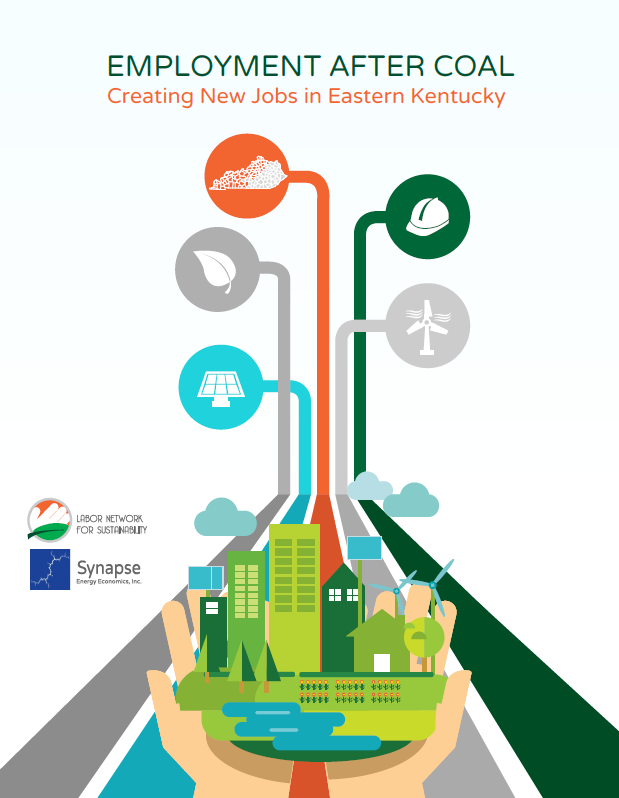
Employment After Coal: Creating new jobs in eastern Kentucky

By Frank Ackerman, PhD and Tyler Comings - MACED, December 30, 2015

The steep, ongoing decline of coal mining has caused the loss of 30,000 coal jobs in eastern Kentucky in the last 30 years. Trends in energy markets and public policy make it clear that a coal‐based economy is not coming back. A successful response to this crisis, replacing the lost kingdom of coal with a sustainable, community‐controlled economy, is crucial to the hopes for forward‐looking economic development in the region.

The issue reverberates far beyond the coalfields, as the national search for clean energy alternatives confronts impassioned claims about the need to protect coal mining jobs. In Kentucky and in the nation, a common but misleading frame on the debate suggests that there is no alternative, that “real” jobs can only be created by traditional industries, even if they are environmentally damaging.

In fact, the narrow, coal‐centered vision of “real” jobs is fading away, and discussion of newer, cleaner alternatives is already underway. Community organizations such as the Mountain Association for Community Economic Development (MACED) and Kentuckians for the Commonwealth (KFTC) have sponsored grassroots job creation initiatives, and have identified key sectors where employment growth should be possible. Both MACED and KFTC advocate for a Just Transition, a bigger picture that combines existing initiatives into a single vision of a working economy, mapping the sustainable occupations and industries that will fill the void left by coal.

Our analysis describes a new pattern of employment that Appalachian Kentucky could aspire to reach by 2030. It is a more challenging and longer‐term goal than is usually found in immediate grass‐roots campaigns. At the same time, it is more limited, detailed and practical than a grand statement of ultimate objectives. It occupies an intermediate level of abstraction, a mid‐range strategic vision of what the regional economy could look like in ten to twenty years.

Read the text (PDF).

Pages

The Fine Print I:

Disclaimer: The views expressed on this site are not the official position of the IWW (or even the IWW’s EUC) unless otherwise indicated and do not necessarily represent the views of anyone but the author’s, nor should it be assumed that any of these authors automatically support the IWW or endorse any of its positions.

Further: the inclusion of a link on our site (other than the link to the main IWW site) does not imply endorsement by or an alliance with the IWW. These sites have been chosen by our members due to their perceived relevance to the IWW EUC and are included here for informational purposes only. If you have any suggestions or comments on any of the links included (or not included) above, please contact us.

The Fine Print II:

Fair Use Notice: The material on this site is provided for educational and informational purposes. It may contain copyrighted material the use of which has not always been specifically authorized by the copyright owner. It is being made available in an effort to advance the understanding of scientific, environmental, economic, social justice and human rights issues etc.

It is believed that this constitutes a 'fair use' of any such copyrighted material as provided for in section 107 of the US Copyright Law. In accordance with Title 17 U.S.C. Section 107, the material on this site is distributed without profit to those who have an interest in using the included information for research and educational purposes. If you wish to use copyrighted material from this site for purposes of your own that go beyond 'fair use', you must obtain permission from the copyright owner. The information on this site does not constitute legal or technical advice.

