You are here

green unionism

As UAW Ramps Up Organizing, Tesla Boosts Wages for US Factory Workers

By Jake Johnson - Common Dreams, January 11, 2024

The electric vehicle maker Tesla has reportedly informed workers at its California plant that it is hiking wages for factory employees across the United States, becoming the latest nonunion car manufacturer to boost worker pay following the United Auto Workers' historic strike and contract victories late last year.

Bloomberg reported Thursday that all of Tesla's production associates, material handlers, and quality inspectors will receive a "market adjustment pay increase" to start 2024, according to a flyer that company management posted at its Fremont, California plant—which employs more than 20,000 workers.

The document did not make clear the size of the raise, Bloomberg noted.

Tesla is run by billionaire Elon Musk, who has been vocally hostile toward organized labor for years—a stance that has drawn scrutiny and rebukes from the National Labor Relations Board (NLRB). In a 2018 post on Twitter, a platform he now owns and rebranded as X, Musk wrote that there is "nothing stopping Tesla team at our car plant from voting union."

"But why pay union dues & give up stock options for nothing?" he added. The NLRB said the post constituted an unlawful threat against workers considering exercising their right to organize.

Peasants at the frontline of the climate struggle share testimonies

By Jang Su-ji - La Via Campesina, January 10, 2024

Peasants around the globe find themselves at the forefront of the intensifying climate crisis, grappling with scorching droughts, heatwaves, torrential downpours, typhoons, and hailstorms. The adverse impacts of climate change is escalating rapidly, posing a direct threat to agriculture and food production worldwide. The 8th International Conference of La Via Campesina, held in Bogotá, Colombia, in December, provided a space for its members – small-holder farmers from more than 80 countries – to highlight the ongoing crises in their territories.

Chilean beekeepers, who spoke during the meeting, explained how they were among those who bore the brunt of this crisis. Extreme droughts had ignited forest fires, wreaking havoc on their livelihoods. In Turkey, according to peasant accounts, agricultural production plummeted by 50-60% in 2023 due to climate change effects, and the government’s responses, such as investing in solar panels on farmland and promoting electric vehicles, faced criticism for their inadequacy and unintended consequences – as they often came up on greenfield and fertile lands. In Sri Lanka, floods and droughts regularly disrupt farming, exacerbated by the government’s sale of natural resources to multinational corporations, leading to deforestation and hindering tea cultivation. Cambodian peasants explained how they grapple with the fallout of repeated typhoons, floods, and severe droughts, causing a 30% decline in agricultural production and forcing rural youth to migrate, jeopardizing food security.

Senegalese peasants also shared about their challenges. Fisherfolk and farmers are losing jobs due to flooding, prompting calls for international prosecution of transnational corporations responsible for climate impacts. Guatemalan peasants recounted how they are combating water resource depletion and forest loss, promoting agroecological farming to respond to climate change. Paraguayan peasants, facing deforestation and fires, are also advocating for agroecology as a solution. Those who came from Niger shared their experiences of severe food crises due to temperature increases, drought, and flooding, emphasizing the need to reduce carbon emissions and produce locally accessible agricultural products.

In Palestine, the combination of war and occupation accelerated climate change, diminishing agricultural production and food sovereignty. Palestinian peasants confront the accelerated impact of climate change under Israeli occupation, with olive trees being cut down, water resources seized, and high water prices imposed.

The Korean peasants who spoke at the Conference urged global unity against capitalist forces and multinational corporations to address the social and environmental aspects of the climate crisis. They also reflected on the global impact of the climate crisis, highlighting unpredictable losses for farmers and advocating against agrochemicals. This found echo among the French peasants who also called for international solidarity, prioritizing agroecology, and exposing false solutions and colonialist land grabs. Brazilian peasants who spoke at the event decried transnational corporations exploiting land and people, emphasizing the importance of concrete proposals and alternative solutions.

Congolese peasants asserted that the fight against climate change was a collective struggle, emphasizing biodiversity conservation and ecological agriculture for healthy food and planet protection. Honduran peasants stressed the importance of supporting agroecology schools and international aid to combat climate change. Peasants in the Dominican Republic emphasized the need to mobilize against neoliberal policies, capitalism, and imperialism in both rural and urban areas, advocating for large-scale campaigns to shift to ecological agriculture and achieve food sovereignty.

These testimonies of peasants worldwide revealed a shared struggle against the escalating climate crisis. From South America to Asia and Africa, the call for sustainable alternatives, such as agroecology, and the denouncement of inadequate responses and corporate exploitation echoed a united plea for global action to safeguard the future of agriculture and food production.

Public Ownership of Rail Is on the Agenda. Here’s What It Could Look Like

By Alex Press and Maddock Thomas - Jacobin, January 7, 2024

Nearly one year ago, on the night of February 3, 2023, a Norfolk Southern freight train carrying hazardous materials derailed in East Palestine, Ohio. Videos of the smoke and fire released by the nearly two-mile-long train went viral, and residents in the community reported severe health effects.

The rail disaster triggered an outcry: Why did this happen, and what can any of us do about it? Soon, there were articles detailing the alarming state into which the country’s railroads have fallen: accidents are up, and oversight is hard to come by. Plus, there is a severe squeeze on rail workers, many of whom lack sick days of any kind and are effectively always on call.

Railroad Workers United (RWU), a caucus of rank-and-file workers spanning all thirteen national rail unions, recently released a video offering one answer to the rotten state of US rail. “Putting America Back on Track: The Case for Public Rail Ownership” opens in East Palestine, with a resident of the area showing the viewer photos he took the night of the Norfolk Southern derailment. The video goes on to make the case for public ownership of rail, which has been a focus for RWU over the past year.

As Ross Grooters, RWU cochair and a union locomotive engineer, told Jacobin, the workers came out with the demand amid their ugly contract fight in 2022, which ended with Joe Biden intervening to quash a potential rail strike.

“It became really clear between the contract negotiations and the fact that the railroad companies are making obscene amounts of money operating the railroads purely for the purpose of extracting wealth from what should be critical infrastructure, that the only way for rail to work would be outside the for-profit model that it exists in currently,” said Grooters.

So RWU passed a resolution endorsing the campaign. The case has been articulated by RWU members in several publications, from Jacobin to In These Times to FreightWaves, but with the release of RWU’s film, I wanted to hear more about the models under debate, so I called up Maddock Thomas, who is writing a policy paper on public rail ownership for RWU. We spoke about the current structure of rail ownership, alternative public models, and which country has the most functional rail system. Our conversation has been lightly edited for length and clarity.

UC's War On People's Park, The Defense & Destruction Of People's Park With Harvey Smith

What’s Next for the Teamsters?

How Green New Deal from Below Programs Integrate Climate, Jobs, and Justice

By Jeremy Brecher - Labor Network for Sustainability, January 3, 2024

The appeal of the Green New Deal lies in its drawing together the varied needs of diverse constituencies into a common program that realizes them all. Here’s how that works at the sub-national level.

Heat Waves and Wildcat Strikes

By Jeff Shantz - LibCom, January 4, 2024

Green syndicalism puts the connectedness of ecological crises and crises of working-class life at the center of analysis—as outcomes of capitalism. It emphasizes ways in which exploitation of labor and the exploitation of nature go hand in hand and develop together. It also centers the importance of working-class resistance in ending the capitalist social system that causes, and thrives on, both.

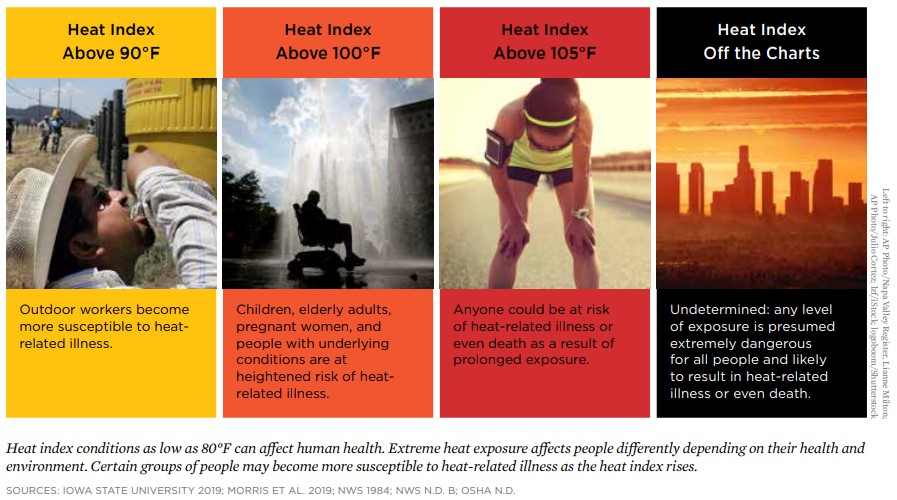
Climate crises, which have moved beyond crisis to pose an existential threat to numerous life forms on the planet, disproportionately impact the working class—especially the poorest, most precarious, racialized sectors of the working class globally. Appropriately, heat waves have become a focus of labor action in a range of industries.

According to data from the US Bureau of Labor Statistics, 53 workers died in the US due to temperature extremes in 2019, and the climate crisis is creating more, and new, hazardous conditions for workers, as heat waves, heat domes, and extreme heat become more regular and extensive. Between 1992 and 2017, heat stress killed 815 US workers while seriously injuring more than 70,000. Extreme heat kills more people each year than floods, hurricanes, and tornadoes, all of which are also becoming more frequent, in the US, according to the National Weather Service. On the whole, about 700 people die from heat-related illnesses each year. And the situation is only getting worse.

The number of “hot days” recorded in the United States has been increasing over decades. The 2018 National Climate Assessment, a major scientific report by 13 federal agencies, found that the frequency of heat waves increased from an average of two per year in the 1960s to six per year by the 2010s. It is not only the frequency of heat waves that is increasing, but the duration of each heat wave. The National Climate Assessment concluded that the season for heat waves is now a full 45 days longer than it was in the 1960s.

The impacts of capitalist climate crises, which disproportionately harm working class people, impel new strategies and tactics for working class organizing, as well as novel deployments of tried-and-true actions—such as wildcat strikes. Notably, we are seeing a revival of walkouts and wildcats against unsafe and unhealthy working conditions in the context of heat waves and heat domes, especially as these become more intense and more frequent.

Barry Eidlin & Paul Prescod on Labor’s Moment Today

Assembly Bill 525 Offshore Wind Strategic Plan - Volume II: Main Report

By Melissa Jones, Jim Bartridge, and Lorelei Walker - California Energy Commission, January 2024

Assembly Bill 525 (AB 525, Chiu, Chapter 231, Statutes of 2021) directs the California Energy Commission (CEC) to complete and submit a strategic plan for offshore wind development in federal waters off the California coast to the Natural Resources Agency and the relevant fiscal and policy committees of the Legislature.

This strategic plan is the last of four work products the CEC is directed to prepare by AB 525. The strategic plan consists of three volumes: Volume I is an overview report, Volume II is the main report, and Volume III contains the technical appendices.

In preparing the strategic plan, the CEC coordinated with federal, state, and local agencies and a wide variety of stakeholders. As required by AB 525, this strategic plan identifies suitable sea space to accommodate the offshore wind planning goals, includes a discussion of economic and workforce development and port space and infrastructure, and assesses transmission investments, upgrades, and associated costs. In addition, this strategic plan discusses the permitting processes for offshore wind facilities and identifies potential impacts on coastal resources, fisheries, Native American and Indigenous peoples, national defense, and underserved communities. The plan also includes a discussion of strategies that could address those potential impacts such as avoidance, minimization, monitoring, mitigation, and adaptive management.

For more details, see: AB 525 Reports: Offshore Renewable Energy

Download a copy of this publication here (PDF).

Assembly Bill 525 Offshore Wind Strategic Plan - Volume I: Overview Report

By Melissa Jones, Jim Bartridge, and Lorelei Walker - California Energy Commission, January 2024

Assembly Bill 525 (AB 525, Chiu, Chapter 231, Statutes of 2021) directs the California Energy Commission (CEC) to complete and submit a strategic plan for offshore wind development in federal waters off the California coast to the Natural Resources Agency and the relevant fiscal and policy committees of the Legislature.

This strategic plan is the last of four work products the CEC is directed to prepare by AB 525. The strategic plan consists of three volumes: Volume I is an overview report, Volume II is the main report, and Volume III contains the technical appendices.

In preparing the strategic plan, the CEC coordinated with federal, state, and local agencies and a wide variety of stakeholders. As required by AB 525, this strategic plan identifies suitable sea space to accommodate the offshore wind planning goals, includes a discussion of economic and workforce development and port space and infrastructure, and assesses transmission investments, upgrades, and associated costs. In addition, this strategic plan discusses the permitting processes for offshore wind facilities and identifies potential impacts on coastal resources, fisheries, Native American and Indigenous peoples, national defense, and underserved communities. The plan also includes a discussion of strategies that could address those potential impacts such as avoidance, minimization, monitoring, mitigation, and adaptive management.

For more details, see: AB 525 Reports: Offshore Renewable Energy

Download a copy of this publication here (PDF).

Pages

The Fine Print I:

Disclaimer: The views expressed on this site are not the official position of the IWW (or even the IWW’s EUC) unless otherwise indicated and do not necessarily represent the views of anyone but the author’s, nor should it be assumed that any of these authors automatically support the IWW or endorse any of its positions.

Further: the inclusion of a link on our site (other than the link to the main IWW site) does not imply endorsement by or an alliance with the IWW. These sites have been chosen by our members due to their perceived relevance to the IWW EUC and are included here for informational purposes only. If you have any suggestions or comments on any of the links included (or not included) above, please contact us.

The Fine Print II:

Fair Use Notice: The material on this site is provided for educational and informational purposes. It may contain copyrighted material the use of which has not always been specifically authorized by the copyright owner. It is being made available in an effort to advance the understanding of scientific, environmental, economic, social justice and human rights issues etc.

It is believed that this constitutes a 'fair use' of any such copyrighted material as provided for in section 107 of the US Copyright Law. In accordance with Title 17 U.S.C. Section 107, the material on this site is distributed without profit to those who have an interest in using the included information for research and educational purposes. If you wish to use copyrighted material from this site for purposes of your own that go beyond 'fair use', you must obtain permission from the copyright owner. The information on this site does not constitute legal or technical advice.