You are here

wind power

Energy commons: from energy transition to climate justice

By Cécile Blanchet - ROARMag, June 19, 2019

In 2019, only oil lobbyists and shabby orange politicians persist in denying the influence of human activities on the Earth’s climate. Scientific evidence is piling up and we know that we must change our ways. The concept of energy transition has become mainstream.

However, governments have remained remarkably motionless. They are so inactive that kids have started school strikes and demand climate justice in front of the United Nations’ Conference of Parties. They are so immobile that citizen groups actually sue their governments for their lack of climate action. And when governments attempt to do something, it is so unjust that people take to the streets even during the coldest months of the year, screaming, filled with rage and frustration.

Our leaders have forgotten that the poorer half of our societies should not have to clean up the mess produced by the richest half. That it should not be our kids cleaning up our mess.

Doing It Ourselves

Facing a lack of political will, an interesting and vivid grassroots movement has taken shape to reclaim our energy systems. From households to city politics, and even at the European level, there has been an unprecedented involvement from the public into energy and electricity matters. For example, in the shape of energy cooperatives.

According to the European Federation of renewable energy cooperatives, RESCOOP, there are at present some 1,250 energy communities in which a million people throughout Europe are involved. Through the RESCOOP federation, these groups actively lobby at a European level to bend the legislation towards promoting and supporting energy cooperatives.

This model of energy cooperativism originated in Germany in the late 1990s and was enabled by a set of disruptive laws supporting the production of renewable energy. This bill kick-started the German energy transition (dubbed “Energiewende”), which has become a landmark and is being widely copied.

The two main pillars were defined in the Feed-In Act of 2000: the priority of renewable sources to the grid and feed-in tariffs (fixed prices paid for renewable energy).

The particularity of this framework is that it has enabled small players to enter the game. Citizen cooperatives and households have especially benefited, because a fixed price for each kilowatt hour (KWH) could be sold back to the grid, which gave them more space to invest in new technologies.

From the late 1990s onwards, the number of cooperatives in Germany has grown exponentially, reaching 900 in 2019, representing the majority of energy cooperatives in Europe. It is a model that comes with many advantages. Let’s virtually visit one of these cooperatives together.

Internationalising the Green New Deal: Strategies for Pan-European Coordination

By Daniel Aldana Cohen, Kate Aronoff, Alyssa Battistoni, and Thea Riofrancos - Common Wealth, 2019

Climate politics are today bursting to life like never before. For four decades, market fundamentalists in the United States and United Kingdom have blocked ambitious efforts to deal with the climate crisis. But now, the neoliberal hegemony is crumbling, while popular climate mobilisations grow stronger every month. There has never been a better moment to transform politics and attack the climate emergency.

When the climate crisis first emerged into public consciousness in the 1980s, Margaret Thatcher and Ronald Reagan were consolidating a neoliberal doctrine that banished the most powerful tools to confront global heating— public investment and collective action.

Instead, neoliberals sought to free markets from democratically imposed constraints and the power of mass mobilisation. Thatcher insisted that there was no alternative to letting corporations run roughshod over people and planet alike in the name of profit. Soon, New Democrats and New Labour agreed. While the leaders of the third way spoke often of climate change, their actual policies let fossil capital keep drilling and burning. Afraid to intervene aggressively in markets, they did far too little to build a clean energy alternative.

Then the financial crisis of 2008 and the left revival that exploded in its wake laid bare the failures of the neoliberal project. An alternative political economic project is now emerging—and not a moment too soon. As the Intergovernmental Panel on Climate Change put it, keeping global warming below catastrophic levels will require “rapid, far-reaching and unprecedented changes in all aspects of society.” In other words: public investment and collective action.

Fortunately, movements on both sides of the Atlantic have been building strength to mount this kind of alternative to market fundamentalism. On the heels of Occupy Wall Street and Black Lives Matter, Bernie Sanders’s 2016 Democratic primary campaign breathed new life into the American left and its electoral prospects. Jeremy Corbyn’s election as leader of the Labour Party, spurred by a vibrant grassroots mobilisation, gives those of us in the U.S. hope: if New Labour could give way to Corbynism, surely Clintonism can give way to the left wing of the Democratic party. In the U.K., drawing on tactics from the Sanders campaign, Momentum has developed a new model of mass mobilisation to transform a fossilised political party. It’s restoring the dream that formal politics can be a means for genuinely democratic political organising. In turn, U.S. leftists are learning from Momentum’s innovations.

The vision of the Green New Deal that has taken shape in the United States in the past few months is in many ways a culmination of the U.S. left’s revival. The Green New Deal’s modest ambition is to do all that this moment requires: decarbonise the economy as quickly as humanly possible by investing massively to electrify everything, while bringing prodigious amounts of renewable power online; all this would be done in a way that dismantles inequalities of race, class and gender. The Green New Deal would transform the energy and food systems and the broader political economy of which they are a part.

Read the report (PDF).

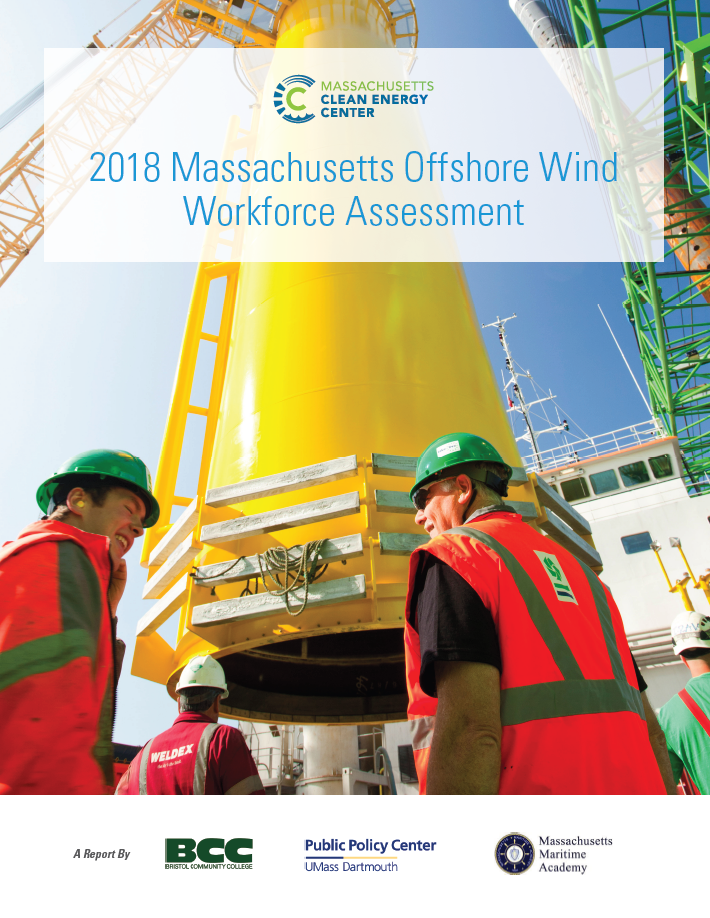
2018 Massachusetts Offshore Wind Workforce Assessment

By Paul Vigeant, et. al. - Massachusetts Clean Energy Center, January 2019

The 2018 Massachusetts Offshore Wind Workforce Assessment provides a comprehensive analysis of the workforce needs and economic development impacts associated with the deployment of 1600 megawatts of offshore wind in Massachusetts. The report describes the jobs associated with planning, constructing and servicing offshore wind projects and provides information on the education, skills and health and safety credentials required for each job. Importantly, the report highlights the opportunities for Massachusetts residents to work in this emerging industry, and identifies recommendations and key strategies to better position the Commonwealth, offshore wind industry, educational institutions, non-profits, and labor to develop and serve a burgeoning offshore wind workforce.

Read the Report (PDF).

Green Conflict Minerals: The fuels of conflict in the transition to a low-carbon economy

By Clare Church and Alec Crawford - International Institute for Sustainable Development, August 2018

The mining sector will play a key role in the transition toward a low-carbon future.

The technologies required to facilitate this shift, including wind turbines, solar panels and improved energy storage, all require significant mineral and metal inputs and, absent any dramatic technological advances or an increase in the use of recycled materials, these inputs will come from the mining sector. How they are sourced will determine whether this transition supports peaceful, sustainable development in the countries where strategic reserves are found or reinforces weak governance and exacerbates local tensions and grievances.

Through extensive desk-based research, a mapping analysis, stakeholder consultations, case studies and an examination of existing mineral supply chain governance mechanisms, this report seeks to understand how the transition to a low-carbon economy—and the minerals and metals required to make that shift—could affect fragility, conflict and violence dynamics in mineral-rich states.

For the minerals required to make the transition to a low-carbon economy, there are real risks of grievances, tensions and conflicts emerging or continuing around their extraction. In order to meet global goals around sustainable development and climate change mitigation, while contributing to lasting peace, the supply chains of these strategic minerals must be governed in a way that is responsible, accountable and transparent.

Read the report (Link).

Human Rights in Wind Turbine Supply Chains

By staff - ActionAid, January 19, 2018

This briefing paper sheds light on the risks that are brought about by the projected increase in demand for minerals, such as iron ore and chromium, which are needed for the production of new wind turbines. An overview is provided of how the mining of these minerals affects people and the environment in international supply chains.

The paper also describes what is expected of companies supplying the Netherlands with wind turbines in terms of their supply chain responsibility and respecting human rights. The paper then reviews efforts by these companies to undertake due diligence to identify, prevent and mitigate risks of adverse impacts in their metals and minerals supply chain.

Commissioned by ActionAid Netherlands and written by SOMO, the paper is primarily intended to inform the Dutch government and companies in the wind energy sector about the social and environmental risks in renewable energy supply chains. It’s aim is to influence and improve Dutch policy to ensure fair and sustainable mineral supply chains globally and to broaden the scope of the energy transition agenda.

Read the report (PDF).


November 2019 Update

This report is a follow-up to the 2018 research ‘Human Rights in Wind Turbine Supply Chains‘. This report assess the extent to which the seven wind turbine manufacturers that were examined in the initial report have acted on previous recommendations and improved their policies related to risk-based due diligence in their wind turbine supply chains. The report takes the different steps of due diligence expected by the UNGPs and the OECD Guidelines as its starting point and normative benchmark.

The research analyses the companies’ general due diligence processes as well as at how the companies approach the specific risks associated with the extraction and processing of minerals that play an important role in the production of wind turbines, such as iron, aluminium and copper. The report also provides recommendations for governments and companies.

Read the report (PDF).

East Bay Community Energy Local Development Business Plan (LDBP)

By staff - EastBay Community Energy, 2018

This plan was shaped by community organizers including several union workers and is an example of what a community and/or worker run CCA looks like.

The Local Development Business Plan (LDBP) is intended to develop a comprehensive frame-work for accelerating the development of clean energy assets within Alameda County. The LDBP explores how EBCE can contribute to fostering local economic benefits, such as job creation, customer cost- savings, and community resi-ience. The LDBP also identifies opportunities for development of local clean energy resources, explains how to achieve EBCE’s communit y benefits goals, and provides strategies for local workforce development for adoption by the EBCE Board of Directors.

Read the report (PDF).

In the Shadow of Honest Journalism: GateHouse Media Publishes Atrocious Anti-Wind Article Devoid of Scientific Evidence

By Brendan DeMelle - DeSmog Blog, December 13, 2017

This week, Gatehouse Media published a long-form investigative report called “In the Shadow of Wind Farms” claiming that wind energy has caused negative health effects for residents living near wind turbines — a claim that flies in the face of actual science.

GateHouse Media’s anti-wind article leans almost entirely on anecdotal evidence compiled during its six-month long project that included interviews with dozens of people who claim negative outcomes from living near wind farms.

Meanwhile, in the realm of scientific facts, the American Wind Energy Association, the main trade group representing the wind power industry, points to 25 scientific reviews that document the safety of wind farms for human health and the environment. One health researcher has told DeSmog the GateHouse article was “simply irresponsible journalism” and actually had “potential to exacerbate the experience of anxiety and related health effects.” 

Although GateHouse, a syndication outfit that publishes 130 daily newspapers in 36 states, briefly mentions the fact that scientific evidence for these claims is nearly non-existent, it plows ahead with a lengthy article full of anecdotes and unsubstantiated claims that aren’t supported by real science.

How this piece got published in its horribly one-sided (anti-wind) approach is a question worthy of many letters to the editor. Whether GateHouse — which is notoriously quiet when asked questions by other media outlets about its operations — will answer or attempt to defend this attack piece, time will tell.

But there is no hiding that the anti-wind movement is clearly coordinated, which even GateHouse admits its reporters were told repeatedly by sources contacted for their piece.

Many of the people who do complain, several representatives said, are well-known among industry insiders and comprise a small but vocal group of anti-wind activists,” the article said.

There are a good number of people who seem to pop up in different states and fight any wind project they can find,” Dave Anderson of the Energy and Policy Institute, a pro-renewable energy watchdog group, told GateHouse.

But the GateHouse reporters failed to disclose important information about several of their sources, including some with extensive ties to highly coordinated anti-wind activism.

Declaration From The Regional Encounter For The Defense Of Our Territories: Oaxaca, Mexico

By Anonymous Contributor - It's Going Down, December 8, 2017

On the 6th of December, this year, we met in the community of Morro Mazatán, Municipality of Santo Domingo Tehuantepec, as the Agrarian Authorities and representatives of the communities of: San Miguel Chongos, Guadalupe Victoria, Santa María Zapotitlán, San José Chiltepec, Santa Lucía Mecaltepec, Santa María Candelaria, San Pedro Sosoltepec and San Pedro Tepalcatepec, all members of the Asamblea del Pueblo Chontal para la Defensa del Territorio [Chontal People’s Assembly for the Defense of the Territory]; as well as representatives of Morro Mazatán, Santa Gertrudis Miramar, Tilzapote, San Pablo Mitla, Tlacolula de Matamoros, Rincón Bamba, Asamblea de Comuneros de Unión Hidalgo [Comuneros’ Assembly of Unión Hidalgo], Colectivo Matzá [Matzá Collective] from the community of San Miguel Chimalapa, and Tequio Jurídico AC [Collective Legal Work Civil Association], to advance the “Regional Encounter for the Defense of Our Territories,” with the goal of informing each other and articulating ourselves for our own defense in the face of megaprojects that dispossess us and extractive projects, among them, mining and Special Economic Zones.

In our analysis, our territories find themselves at risk under a capitalist system which in our country began to deepen in the 90s with the reconfiguration of the state’s legal framework. This included reforms to constitutional article 27, the mining law, the foreign investment law, and the entry into the North American Free Trade Agreement, or NAFTA, generating legal conditions favoring national and international businesses that seek to impose neo-extractivist projects such as mining, wind energy projects, hydroelectric dams, high-tension towers, Special Economic Zones, tourist projects and as a consequence the militarization and paramilitarization of the territory.

In this encounter we listened to the experiences of regional organization processes from San Pablo Mitla and Tlacolula de Matamoros, who are defending their territory in the face of the installation/relocation of a military zone by the federal government through the Ministry of National Defense (SEDENA), the state government, the Ministry of the Interior, and the Municipal Presidents of San Pablo Mitla and Tlacolula de Matamoros.

Thanks to citizen organization, they have suspended this project; however, they remain attentive before new threats to reactivate the project utilizing a real estate company on land in Tlacolula. The residents also denounced the mining concessions in the district of Tlacolula de Matamoros.

Likewise, we listened to the experiences of the Chontal People’s Assembly for the Defense of the Territory, who have organized to defend themselves faced with the imposition of the mining concession Zapotitlán 1 granted to the companies Zalamera SA de CV and Minaurum Gold by the Ministry of the Economy. It would strip 5,413 hectares [13,375 acres] from six Chontal communities in the high region.

In this encounter, the representatives of the communities of Tilzapote and San Francisco Cozoaltepec, Municipality of Santa María Tonameca, denounced the supposed small proprietors Pedro Martínez Araiza and Domitila Guzmán Olivera. The community doesn’t know these people, who are trying to take away their territory under the argument that they are executing a resolution of the Unitary Agrarian Tribunal that recognizes them as the owners of 300 hectares [741 acres] where the village sits, in so doing, displacing them from their community. The Agrarian Ombudsman’s office, the Ministry of Agrarian, Territorial, and Urban Development, the National Agrarian Register, and the aforementioned Unitary Agrarian Tribunal Number 21 are among those responsible for this situation, putting the pueblo—composed of 70 families—at risk. These government institutions and small proprietors threaten the inhabitants with the loss of 300 hectares, which spans the entirety of their territory, and the neglect of their personal defense. [Translator’s note: read more about this situation here, and there is a video in Spanish here.]

Those representing the Matzá Collective from the community of San Miguel Chimalapa denounced the fact that their 134,000 hectare [331,000 acre] communal territory has been pierced by a series of landgrabs characterized by agrarian conflicts with the state of Chiapas and mining concessions, which span 7,200 hectares [18,000 acres] of communal lands. The companies involved are Zalamera, Minaurum Gold, and Gol Cooper, and their projects would put at risk the Espíritu Santo, Zacatepec, and Ostuta rivers, on which the lives of the Zoques, Binniza, and Ikoots peoples depend.

The representative of the Comuneros’ Assembly of Unión Hidalgo denounced the illegality of the contracts on common lands signed by wind energy companies like France Electric and EDEMEX with supposed small proprietors. The Unitary Agrarian Tribunal of Tuxtepec does not acknowledge the experts’ reports offered by the agrarian community, and validates these contracts.

Shock Doctrine Implemented in Oaxaca After Earthquake

By Renata Bessi and Santiago Navarro F. - It's Going Down, November 28, 2017

Naomi Klein, in her book The Shock Doctrine, argues that the economic policies of Nobel laureate Milton Friedman and the Chicago School of Economics have gained importance in countries with free market models not because they are popular, but rather because through the impacts of disasters or contingencies on the psychology of society, in the face of commotion and confusion, unpopular reforms can be put into place.

It has been little more than a month since September 7, when the strongest earthquake of the last 100 years in Mexico hit, at 8.2 on the Richter scale. The landscape in the Isthmus of Tehuantepec, the region most affected, is still one of devastation. The city of Juchitán de Zaragoza resembles a ghost town. Wherever you look, there is debris or damaged buildings. The police and military still roam the streets, heavily armed.

The earth has not stopped shaking. Strange sounds emanate from the depths of the sea on the shores of Oaxaca. It is possible to feel tremors every hour. Mexico’s National Seismological Service has registered more than 6,000 aftershocks, in addition to a second earthquake with a Richter scale reading of 7.2 that happened on September 19 and devastated several sites in Mexico City, where 369 deaths have counted as of the October 4.

Official data from the government of Oaxaca state that the earthquake affected 120,000 people in 41 municipalities, as well as 60,600 homes, of which 20,664 were destroyed and 39,956 had partial damage. Its infrastructure, drinking water, and drainage networks are damaged. The local economy has been hit. Garbage is piling up in the streets. There is concern about a possible health crisis.

Clean Energy Investments for New York State: An Economic Framework for Promoting Climate Stabilization and Expanding Good Job Opportunities

By Robert Pollin, Heidi Garrett-Peltier, and Jeannette Wicks-Lim - Political Economy Research Institute (PERI) - November 2017

This study examines the prospects for transformative clean energy investment projects for New York State. Taken as a whole, these investments should be understood as a major initiative within the state to advance the fundamental goal of global climate stabilization. These investments should be undertaken by both the public and private sectors in New York State, supported by a combination of public investments and incentives for private investors.

This study builds from New York State’s existing Reforming the Energy Vision (REV) project and the New York State Energy Plan, which fleshed out a policy agenda based on the REV project. Governor Andrew Cuomo first presented the REV program in April 2014 and reaffirmed New York State’s commitments in June 2017. The primary goals of the REV program, which are targeted to be achieved by 2030 in New York State, include: 1) a 40 percent reduction in all greenhouse gas emissions; 2) generating 50 percent of all electricity from renewable energy sources; and 3) achieving a 23 percent improvement in energy efficiency in buildings relative to the 2012 level.

The REV goals and the State Energy Plan are unquestionably significant starting points for advancing clean energy policies in New York State. But they are not adequate to enable the state to achieve emissions reduction goals that meet the challenges we face with global climate change. As such, this study works from a more ambitious set of goals, both in terms of emissions reductions and in achieving broader positive impacts with respect to expanding job opportunities and raising living standards throughout New York State.

The first specific aim on which we focus in this study is to achieve, by 2030, a 50 percent reduction below the 1990 level in all human-caused CO2 emissions in New York State, along with comparable reductions in methane emissions resulting from natural gas extraction.

The second, equally important, goal is to achieve the 2030 CO2 emission reduction standard while also expanding job opportunities and raising average living standards throughout New York State. The expansion of clean energy investments will need to focus on 1) dramatically improving energy efficiency standards in New York’s stock of buildings, automobiles and public transportation systems, and industrial production processes; and 2) equally dramatically expanding the supply of clean renewable energy sources—primarily wind, solar, and geothermal power—available at competitive prices to all sectors of New York State’s economy.

In addition to these goals for 2030, this study also explores the prospects for achieving the longer-term aim of bringing CO2 emissions in New York State down to zero by 2050, while, again, concurrently expanding job opportunities and raising average living standards throughout the state.

Read the Report (PDF).

Pages

The Fine Print I:

Disclaimer: The views expressed on this site are not the official position of the IWW (or even the IWW’s EUC) unless otherwise indicated and do not necessarily represent the views of anyone but the author’s, nor should it be assumed that any of these authors automatically support the IWW or endorse any of its positions.

Further: the inclusion of a link on our site (other than the link to the main IWW site) does not imply endorsement by or an alliance with the IWW. These sites have been chosen by our members due to their perceived relevance to the IWW EUC and are included here for informational purposes only. If you have any suggestions or comments on any of the links included (or not included) above, please contact us.

The Fine Print II:

Fair Use Notice: The material on this site is provided for educational and informational purposes. It may contain copyrighted material the use of which has not always been specifically authorized by the copyright owner. It is being made available in an effort to advance the understanding of scientific, environmental, economic, social justice and human rights issues etc.

It is believed that this constitutes a 'fair use' of any such copyrighted material as provided for in section 107 of the US Copyright Law. In accordance with Title 17 U.S.C. Section 107, the material on this site is distributed without profit to those who have an interest in using the included information for research and educational purposes. If you wish to use copyrighted material from this site for purposes of your own that go beyond 'fair use', you must obtain permission from the copyright owner. The information on this site does not constitute legal or technical advice.