






You are here
transportation workers


 Ray Valentine describes how a scheme to cut labor costs in the DC-area transit system through privatization backfired when workers at the private subcontractor went on strike.
 Cutting greenhouse gas emissions will throw millions of people out of work! That claim has made many working people reluctant to support action to slow climate change. But is it true?
 This working paper examines some of the key questions at the heart of climate-related debates on transport, and around passenger road transport in particular. It also looks at some of the more important issues surrounding public transport specifically, and the failure of neoliberal transport policy to improve and expand public transport in ways that fulfill its full social and environmental potential.
 The annual conference of the 5.7 million member TUC will take place on September 10-13, 2017 in Brighton. The Bakers and Allied Food Workers Union (BAFWU) has submitted a resolution that calls on the TUC to “work with the Labour Party and others that advocate for an end to the UK’s rigged energy system to bring it back into public ownership and democratic control.” Amendments to the resolution have been submitted by the Communication Workers Union, Fire Brigades Union, the train drivers union ASLEF, and the Transport Salaried Staffs’ Association.
 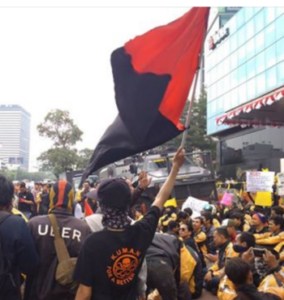 As the “uberization” of the US economy continues, along with it is an ever precarious workforce struggling to make ends meet in the dog-eat-dog world of the so-called “sharing economy.” This trend is the same around the world, with Uber claiming to have more than
 In addition to slashing funding for the arts, education programs, climate change research, and worker protections (among many other things), another lesser known casualty of President Donald Trump's "
The Fine Print I:
Disclaimer: The views expressed on this site are not the official position of the IWW (or even the IWW’s EUC) unless otherwise indicated and do not necessarily represent the views of anyone but the author’s, nor should it be assumed that any of these authors automatically support the IWW or endorse any of its positions.
Further: the inclusion of a link on our site (other than the link to the main IWW site) does not imply endorsement by or an alliance with the IWW. These sites have been chosen by our members due to their perceived relevance to the IWW EUC and are included here for informational purposes only. If you have any suggestions or comments on any of the links included (or not included) above, please contact us.
The Fine Print II:
Fair Use Notice: The material on this site is provided for educational and informational purposes. It may contain copyrighted material the use of which has not always been specifically authorized by the copyright owner. It is being made available in an effort to advance the understanding of scientific, environmental, economic, social justice and human rights issues etc.
It is believed that this constitutes a 'fair use' of any such copyrighted material as provided for in section 107 of the US Copyright Law. In accordance with Title 17 U.S.C. Section 107, the material on this site is distributed without profit to those who have an interest in using the included information for research and educational purposes. If you wish to use copyrighted material from this site for purposes of your own that go beyond 'fair use', you must obtain permission from the copyright owner. The information on this site does not constitute legal or technical advice.
 This site is not the official webpage of the Industrial Workers of the World.