You are here

decarbonization

ILWU Supports CalPERS Divestment from Fossil Fuels

Resolution Urging Support of SB 1173 (Gonzalez) Fossil Fuel Divestment Act
Adopted by the ILWU NCDC – March 26, 2022

WHEREAS, climate change, through rising sea levels, drought, heat waves, and increased wildfires is already negatively affecting human wellbeing, ecosystems and biodiversity; and 

WHEREAS, climate change is an issue of environmental justice, disproportionately impacting Indigenous communities, communities of color, and low income communities due to historical oppression, inequity of power, and lack of access to resources for prevention and relief; and

WHEREAS, the World Economic Forum recognizes the climate crisis as “a child-rights crisis” and says “the adverse weather events caused by a warming planet affect children first and worst”; and

WHEREAS, an analysis from the Harvard T.H. Chan School of Public Health indicates that the effects of heat, wildfires, storms, floods, and droughts can negatively affect both the physical and mental health of children. The negative effects on children’s physical health from the burning of fossil fuels and climate change include impacts on allergies, asthma, brain development, low birth weight, and preterm birth; and

WHEREAS, the American Academy of Pediatrics recognizes that the physical and mental impacts of climate change “not only directly threaten the lives and safety of children, they put them at risk of mental health problems—and can also cause lasting effects when they destroy their communities and their schools”; and

WHEREAS, a review of the psychological effects of climate change on children finds that “effects of climate change place children at risk of mental health consequences including PTSD, depression, anxiety, phobias, sleep disorders, attachment disorders, and substance abuse. These in turn can lead to problems with emotion regulation, cognition, learning, behavior, language development, and academic performance”; and 

WHEREAS, independent studies by financial consulting firms Blackrock and Meketa found divestment reduces risk, and improves, not weakens, investment returns; and

WHEREAS, a Corporate Knights study found if CalPERS and CalSTRS had divested in 2010 they would have gained $11.9 and $5.5 billion respectively by 2019; and 

WHEREAS, the International Panel on Climate Change concluded in 2018 that we have 12 years to make dramatic cuts in the use of fossil fuels (coal, oil, gas and tar sands) if we are to keep warming to 1.5o C and avoid more catastrophic change; and

WHEREAS, the fossil fuel industry is the single most powerful obstacle to addressing climate change, using their immense lobbying power in Washington D.C. and Sacramento to block climate legislation; and 

WHEREAS, fossil fuel companies' own scientists knew their products were causing climate change, but the companies kept it secret; and 

WHEREAS, to effectively address climate change, most fossil fuel reserves must remain in the ground, never to be used. This makes fossil fuel stocks a risky investment; and

WHEREAS, divestment in specific segments or business operations by CalPERS and CalSTRS is already standard practice and is specifically allowed by the California Constitution; and

WHEREAS, divestment means selling directly held or commingled assets including fossil fuel public equities and corporate bonds; and

WHEREAS, the California Climate Jobs Plan provides a comprehensive roadmap for decarbonization and just transition from a fossil fuel based economy; and

WHEREAS, The ILWU Northern California District Council has endorsed the California Climate Jobs Plan (in February 2022);

THEREFORE LET IT BE RESOLVED, that the ILWU NCDC strongly supports SB 1173 (Gonzalez) the fossil fuel divestment act. And upon passage, a copy of this resolution will be sent to Senator Lena Gonzalez’s office requesting that the ILWU NCDC be listed as an official supporter of the bill.

End the addiction to fossil fuel- support the Ukrainian resistance

By Alan Thornett - Red Green Labour, March 24, 2022

Putin’s merciless invasion of Ukraine – which is his next step in the restoration of the Russian empire – has been stalled by the remarkable popular resistance that has been mounted against it. The southern port city of Mariupol is been flattened by Russian artillery and is facing a humanitarian catastrophe but has refused to surrender. On the other hand, the invaders have been pushed back on several fronts.

The Ukrainian resistance has relied heavily on both Western economic sanctions and Western military aid including hand-launched anti-tank and surface to air missiles without which Putin’s blitzkrieg might have been unstoppable. The economic sanctions have not just put Putin under pressure at home, but they have given the population the confidence to resist such an overwhelming force.

As the Russians have met much stronger resistance than they expected they have resorted to ever more indiscriminate, long-range bombardment of the civilian population with missiles launched from ships in the Black Sea and from Russia itself. The result of which has been a rapid escalation of civilian casualties. Putin has thousands of planes and missiles, of course, and could wipe Ukraine off the map. But whether that would be politically sustainable (or survivable for him at home) is another matter.

Russia is now a brutal kleptocracy, with Putin as the new Stalin. Anti-war demonstrators facing up to 16 years in jail and opposition politicians, who oppose war, driven into exile. Ten million people, a quarter of the population, are internally displaced and with almost five million already refugees abroad. Many thousands, mostly civilians, are dead. EU countries, to their credit, have opened their borders, suspended visa requirements, and taken in millions of people. This is in sharp contrast to Boris Johnson’s miserable Little Englander government that has been running around in circles in a (very successful) attempt to give refuge to as few people as possible.

How can the climate and anti‑war movements come together?

By Christian Zeller - Red Green Labour, March 23, 2022

Translated from the German- originally published here.

Exit from the fossil economy and rearmament, solidarity with the Ukrainian resistance

We live in a time of abrupt turns. [1]

Global warming is accelerating. The climate is changing faster than previously thought. The Russian war of aggression against Ukraine is largely aimed at the territorialconquest of a neighbouring state, the destruction of its army and the overthrow of its government. [2] This is something that has not existed in Europe in this way since 1945.

Even before this assault, the NATO countries, Russia and China started an arms race. The antagonisms between the various imperialisms intensified enormously. [3]The wave of rearmament that was already being prepared and launched before the war in Ukraine is an expression of intensifying competion for access to scarce resources that are so urgently needed in connection with the energy transition.

Global warming, this war and the danger of wars to come are interconnected and should be understood in a common context.

Working-class environmentalism and just transition struggles in the Americas

Alaska's Renewable Energy Future: New Jobs, Affordable Energy

By Kay Brown, Carly Wier, et. al. - Alaska Climate Alliance, March 21, 2022

Alaska has a vast endowment of renewable energy resources that can be tapped in its transition to a renewable energy future. Benefits of accelerating the energy transition in Alaska include more jobs, lower energy prices, higher energy security and the potential for renewable resources to support zero carbon hydrogen-based fuels for the aviation and maritime industries.
The state has already begun to develop its renewable energy resources and continues to support renewable technology development for Alaska’s challenging environment. The scale of Alaska’s vast undeveloped renewable energy resource endowment remains more than 14 times the total U.S. energy consumption.

Renewable energy technologies, including wind, solar, geothermal, and ocean and river hydrokinetic, along with complementary energy storage technologies, are continuing to exhibit declining costs which make them increasingly attractive as a primary energy source to substitute for fossil fuels in the electric sector and to support the electrification of buildings and the transformation of the transportation sector to electrification and renewable hydrogen-based fuels.

As local fossil fuel costs escalate across Alaska, from 2.5X higher in the Railbelt to as much as 4X higher in Rural Alaska (as compared to the U.S. average), renewable energy technologies are increasingly attractive investments and are poised to affordably replace legacy fossil fuel energy systems in the 2030-to-2050 time horizon while providing greater energy security, increased energy resiliency especially in rural Alaska, and broad environmental, economic and health benefits.

Independent studies have confirmed that the development of Alaska’s renewable energy potential will generate thousands of jobs – at least comparable in magnitude to the fossil fuel jobs that may be displaced by the transition to a clean renewable energy sector.

Read the report (PDF).

An alternative energy strategy to stimulate rapid transition

By Andrew Simms and Freddie Daley - Rapid Transit Alliance, March 21, 2022

All around the world, governments’ energy policies are at a crossroads. In order to insulate themselves from dependence on Russian oil and gas, tackle rising living costs and enact sanctions against Vladimir Putin, governments are collectively clamouring to diversify their energy supplies.

This will be easy for some nations, but more challenging for others. In the UK, Russian gas made up less than 4% of the total British gas supply in 2021, while in Germany just over 30% of primary energy input, across coal, oil and gas, comes from Russia. The varying degrees of dependence present both challenges and opportunities for the low carbon transition. 

The UK government is expected imminently to publish its Energy Strategy that will set out how it intends to reduce the nation’s reliance on energy imports and speed up the transition to net zero. It will be a test case for an economy still heavily hooked on fossil fuel use but with huge untapped renewable energy potential and an economic ‘levelling-up’ agenda for its regions that could benefit greatly from investment in low carbon transition.

Shadow Chancellor meets GMB members at hydrogen house

By staff - GMB Union, March 18, 2022

Shadow Chancellor Rachel Reeves met GMB member as she visits the Northern Gas Network’s model hydrogen house in Gateshead to discuss energy security and the cost of living crisis.   

Rachel Reeves MP will travel by hydrogen bus to a Northern Gas Network model ‘hydrogen house’, where she will fry an egg on a hydrogen-powered stove. 

GMB has long called for more investment in hydrogen fuels, which could use the existing gas network, protecting well paid, unionised gas jobs and save the planet. 

The Ohio River Valley Hydrogen Hub: A Boondoggle in the Making

By Sean O'Leary - Ohio River Valley Institute, March 18, 2022

Senator Joe Manchin (D-WV) torpedoed the Build Back Better bill because, he said, it is too costly. But the fleet of hydrogen hub projects he is now promoting for locations around the nation, one of them in the Ohio River Valley, may cost nearly as much, they will drive up utility bills and create few new jobs, and they will miss a large share of the emissions they’re supposed to eliminate. They will also block less costly climate solutions that can create more jobs and actually eliminate climate-warming emissions the hydrogen hubs would only partially abate. 

According to the White House Council on Environmental Quality, the hydrogen hubs, which have as their centerpiece massive pipeline networks that would funnel carbon captured from power plants and factories to injection points for underground sequestration, would cost between $170 billion and $230 billion just to construct. That figure is dwarfed by the additional investment in carbon capture technology that would have to be made by plant owners whose costs to operate and maintain their retrofitted plants would also rise significantly.

A recent Ohio River Valley Institute brief pointed out that retrofitting just the nation’s coal and gas-fired power plants for carbon capture and sequestration (CCS) would add approximately $100 billion per year to Americans’ electric bills, an increase of 25%. The cost of adding CCS to steel mills, cement plants, factories, and other carbon producing facilities could be that much or more.

Richmond Progressive Alliance Listening Project, Episode 9: We Deserve Nothing Less

California Climate Jobs Plan Continues to Gain Union Endorsements

By That Green Union Guy - IWW Environmental Union Caucus - March 11, 2022

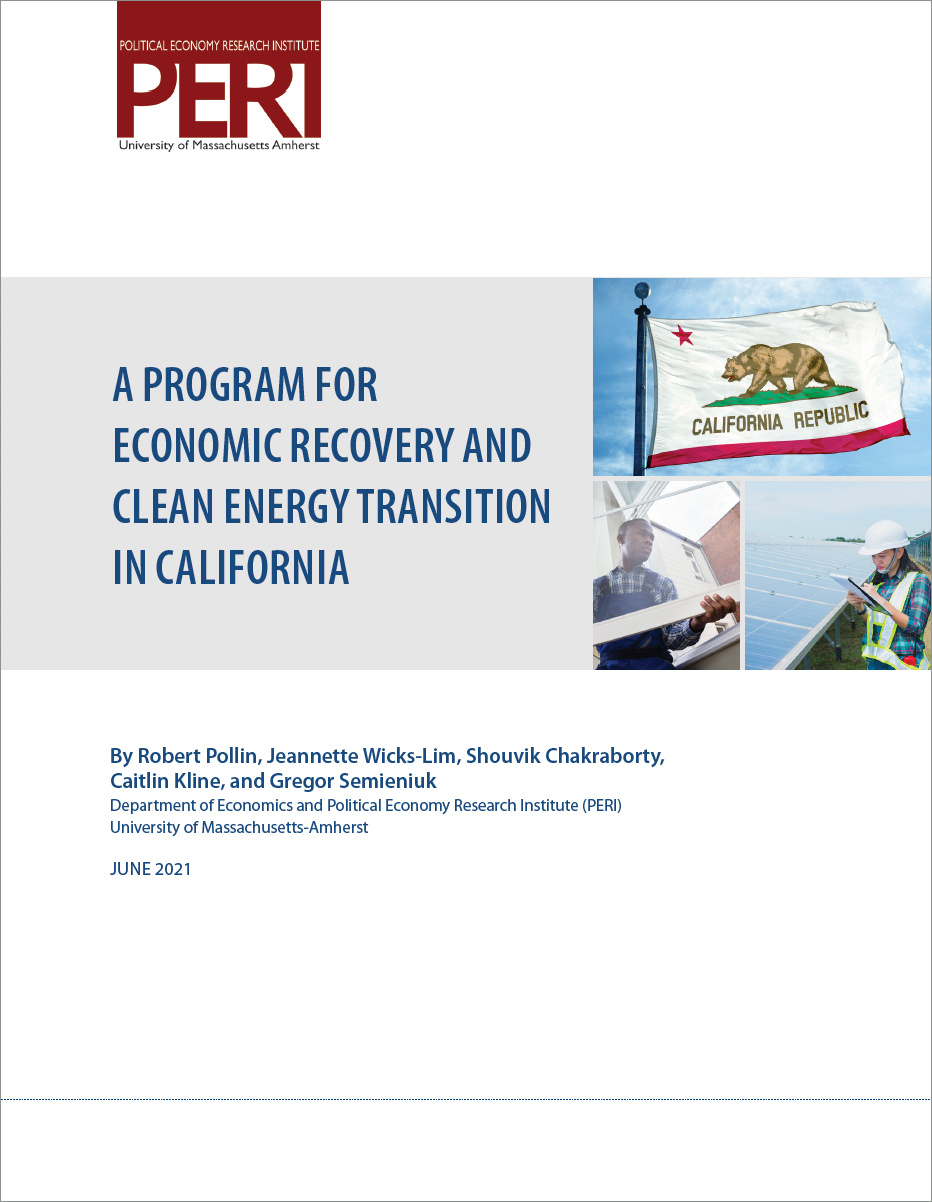
The California Climate Jobs Plan, popularly known as "the Pollin Report"--which has been described as a "sholvel ready just transition/Green New Deal" plan--and was immediately endorsed by nineteen California based labor unions, including three United Staeelworkers Union locals which primarily represent refinery workers upon its unveiling has since gained the support of many additional unions. The following unions (so far) have since endorsed the plan (knowing that while the plan isn't perfect, it's at least a step in a positive direction):

November 2021:

  • Inland Boatmen's Union (IBU), SF Bay Region (an affiliate of the ILWU)
  • Railroad Workers United
  • IWW San Francisco Bay Area General Membership Branch

February 2022:

  • International Lonshore and Warehouse Union (ILWU) Northern California District Council (NCDC)

The council is composed of delegates from the following ILWU Locals:

  • ILWU Local 6 (Bay Area Warehouse)
  • ILWU Local 10 (Bay Area Longshore)
  • ILWU Local 34 (Bay Area Shipping Clerks)
  • ILWU Local 75 (Bay Area Dock Security Guards)
  • ILWU Local 91 (Bay Area “Walking Bosses”)
  • ILWU Local 14 (Eureka; combined)
  • ILWU Local 18 (Sacramento; ditto)
  • ILWU Local 54 (Stockton)
  • Bay Area IBU (already endorsed individually)
  • and the pensioners from all of the above.

However, the NCDC's endorsement does not automatically mean that each of its constituent locals have individually endorsed the plan.

The more unions that endorse and take an active role in motivating the proposal either by lobbying at the California state level, engaging in public actions to promote the goals of the plan, or even engaging in workplace actions (whereaver relevant and practiceble), the greater chances the plan has of being realized.

(That said, it should be noted that this is not an IWW organizing project, although IWW members have been active in securing additional union endorsements).

A sample resolution (a copy of the text adopted by the SF Bay Area IBU) is available here.

Download the plan - here.

Pages

The Fine Print I:

Disclaimer: The views expressed on this site are not the official position of the IWW (or even the IWW’s EUC) unless otherwise indicated and do not necessarily represent the views of anyone but the author’s, nor should it be assumed that any of these authors automatically support the IWW or endorse any of its positions.

Further: the inclusion of a link on our site (other than the link to the main IWW site) does not imply endorsement by or an alliance with the IWW. These sites have been chosen by our members due to their perceived relevance to the IWW EUC and are included here for informational purposes only. If you have any suggestions or comments on any of the links included (or not included) above, please contact us.

The Fine Print II:

Fair Use Notice: The material on this site is provided for educational and informational purposes. It may contain copyrighted material the use of which has not always been specifically authorized by the copyright owner. It is being made available in an effort to advance the understanding of scientific, environmental, economic, social justice and human rights issues etc.

It is believed that this constitutes a 'fair use' of any such copyrighted material as provided for in section 107 of the US Copyright Law. In accordance with Title 17 U.S.C. Section 107, the material on this site is distributed without profit to those who have an interest in using the included information for research and educational purposes. If you wish to use copyrighted material from this site for purposes of your own that go beyond 'fair use', you must obtain permission from the copyright owner. The information on this site does not constitute legal or technical advice.


