






You are here
fossil fuel capitalism
 Of the 50 United States, Alaska best exemplifies the types of problems the rest of the country may well face in a matter of decades, if not years, if we don’t wean ourselves from fossil fuels. The U.S. is in the middle of an oil and gas production boom, one that has caused oil and gas prices to plummet, with devastating consequences for Alaska, a state that has grown dependent on revenue from the oil and gas industry for its public funds.
 Tacoma has been one of the main dumping grounds for polluting industry in western Washington. We are home to nine EPA Superfund clean up sites.
 From the introduction: Six years ago, the US coal industry was thriving, with demand recovering from the Great Recession, and global coal prices at record highs along with the stock prices of US coal companies. By the end of 2015, however, the industry had collapsed, with three of the four largest US miners filing for bankruptcy along with many other smaller companies. While coal mining employment has been on the decline for decades – from a peak of more than 800,000 in the 1920s to 130,000 in 2011 – the pace of job loss over the past six years has been particularly dramatic. After campaigning on a promise to end what he called his predecessor’s “War on Coal,” President Donald Trump signed an Executive Order in March 2017 ordering agencies to review or rescind a raft of Obama-era environmental regulations, telling coal miners they would be “going back to work.”
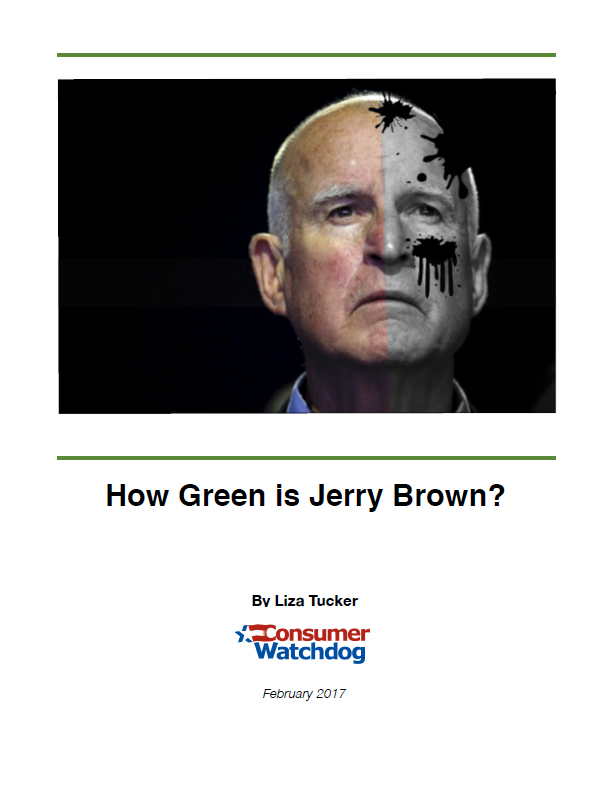 This review fact-checks the perception of Jerry Brown as an environmentalist against his actions since taking office as Governor in 2011 to answer the question: “How Green Is Brown?” On a continuum of “Green” to “Murky” to “Dirty,” the review concludes that Brown’s environmental record is not green. The following advocates and public interest groups concur with the report’s analysis, conclusions, and recommendations: Food & Water Watch, Physicians for Social Responsibility-Los Angeles, Rootskeeper, Powers Engineering, Basin & Range Watch, Aguirre & Severson LLP, Public Watchdogs, the Southern California Watershed Alliance, The Desal Response Group, Restore The Delta, and Committee to Bridge the Gap.
The Fine Print I:
Disclaimer: The views expressed on this site are not the official position of the IWW (or even the IWW’s EUC) unless otherwise indicated and do not necessarily represent the views of anyone but the author’s, nor should it be assumed that any of these authors automatically support the IWW or endorse any of its positions.
Further: the inclusion of a link on our site (other than the link to the main IWW site) does not imply endorsement by or an alliance with the IWW. These sites have been chosen by our members due to their perceived relevance to the IWW EUC and are included here for informational purposes only. If you have any suggestions or comments on any of the links included (or not included) above, please contact us.
The Fine Print II:
Fair Use Notice: The material on this site is provided for educational and informational purposes. It may contain copyrighted material the use of which has not always been specifically authorized by the copyright owner. It is being made available in an effort to advance the understanding of scientific, environmental, economic, social justice and human rights issues etc.
It is believed that this constitutes a 'fair use' of any such copyrighted material as provided for in section 107 of the US Copyright Law. In accordance with Title 17 U.S.C. Section 107, the material on this site is distributed without profit to those who have an interest in using the included information for research and educational purposes. If you wish to use copyrighted material from this site for purposes of your own that go beyond 'fair use', you must obtain permission from the copyright owner. The information on this site does not constitute legal or technical advice.
 This site is not the official webpage of the Industrial Workers of the World.