

You are here

Intergovernmental Panel on Climate Change (IPCC)

IPCC Report: First Thoughts on Next Steps

By Sydney Azari - Medium, October 14, 2018

The Intergovernmental Panel on Climate Change (IPCC) released an ominous report this week driving home an urgent and serious reality:without immediate action to transform society, climate catastrophe will not only be our children’s future, but our own.

The key takeaway from the IPCC report is this: if we do not radically transform every aspect of society starting NOW, we are facing ecological collapse and mass death in the short term. The report does not deeply analyse the geopolitical implications of such widespread environmental upheaval. Since human societies are inseparable from the environment, we know that the precarity resulting from collapsed ecological systems could lead to catastrophic and violent political outcomes as well.

The report has generated a shock through the consciousness of many people- mostly for what is unsaid. The foundation upon which we have built our lives is quickly crumbling. The American Dream, the white picket fence, and retirement will never be ours. It will never be our children’s. It will never be our children’s children’s. We are entering a time of uncertainty and pain that the hustle-and-bustle of everyday life hasn’t left much room to consider. This is a critical turning point, a challenge we must meet head on if we are to survive.

We cannot pretend that climate change does not mean that EVERYTHING we are accustomed to must change in response. Change is inevitable. Pain is inevitable. Uncertainty is inevitable. The outcome is unknown. The only variable that can be manipulated to change outright planetary collapse is our own agency in the situation.

Whether the shock of the report leads us to retreat inward or rise to the challenge will be determined by our capacity to locate meaning in the future and perceive a way toward it. Determining a direction forward is the difference between shock exhausting us or serving as fuel for the long journey ahead.

I hope these tactics can offer a light to draw us from the darkness.

Radical Realism for Climate Justice

By Lili Fuhr and Linda Schneider - P2P Foundation, October 4, 2018

Limiting global warming to 1.5°C above pre-industrial is feasible, and it is our best hope of achieving environmental and social justice, of containing the impacts of a global crisis that was born out of historical injustice and highly unequal responsibility.

To do so will require a radical shift away from resource-intensive and wasteful production and consumption patterns and a deep transformation towards ecological sustainability and social justice. Demanding this transformation is not ‘naïve’ or ‘politically unfeasible’, it is radically realistic.

This publication is a civil society response to the challenge of limiting global warming to 1.5°C while also paving the way for climate justice. It brings together the knowledge and experience of a range of international groups, networks and organisations the Heinrich Böll Foundation has worked with over the past years, who in their political work, research and practice have developed the radical, social and environmental justice-based agendas political change we need across various sectors.

Download a complete PDF of this collection of documents.

A Just and Fair Transition: For Canadian Coal Power Workers and Communities

By staff - Task Force on Just Transition for Canadian Coal Power Workers and Communities, October 2018

The devastating impacts of climate change are becoming clearer each year. More frequent and intense floods, storms, fires, heat waves, and droughts are destroying communities and homes, and putting the lives and futures of Canadians at risk. The Intergovernmental Panel on Climate Change’s 2018 report on global warming of 1.5°C shows that our window to prevent the worst-case scenario is quickly closing.

We do know what is causing climate change and we can do something about it. We need to reduce the amount of greenhouse gas (GHG) emissions released into our environment. There are several ways in which we can accomplish this, including wasting less energy and investing in cleaner energy sources. Businesses, scientists, governments, communities, and individuals in Canada and around the world are beginning to prove that you can reduce GHG emissions, invest in reliable and affordable clean energy, create decent jobs, and have stable economies.

Although coal-fired electricity has contributed significantly to Canada’s economic past and present—and provided Canadians with affordable and reliable electricity and heat for many generations—it produces significant amounts of air pollutants and GHG emissions. It has well documented costs to human health and is a major contributor to climate change: approximately 20% of all GHG emissions in the world came from coal-fired electricity in 2013.

Recognizing these facts, and supported by commitments in the 2015 Paris Agreement, Canada and other countries are intent on replacing coal-fired electricity with cleaner sources of fuel over the coming years and decades. In 2016, Canada committed to the phase-out of traditional coal-fired electricity across the country by 2030.

Phasing out coal-fired electricity, however, will have direct and indirect impacts on thousands of workers, dozens of communities, and four provinces, including:

  • Alberta, Saskatchewan, New Brunswick, and Nova Scotia;
  • Nearly 50 communities with nearby coal mines or generating stations;
  • 3,000 to 3,900 workers at coal-fired generating stations and domestic thermal coal mines;
  • Over a dozen generating stations, owned by six employers;
  • Nine mines, owned by three employers.

In reality, the phase-out of coal fired electricity generation is already underway, especially in Alberta.

The extensive personal and societal impacts of the phase-out of coal-fired electricity are reasons why the labour movement has been advocating for a just transition alongside Canada’s efforts to reduce GHG emissions. We cannot leave affected workers and communities behind during the transition to a low-carbon economy. They too must have hope for the future.

Read the report (Link).

Green Conflict Minerals: The fuels of conflict in the transition to a low-carbon economy

By Clare Church and Alec Crawford - International Institute for Sustainable Development, August 2018

The mining sector will play a key role in the transition toward a low-carbon future.

The technologies required to facilitate this shift, including wind turbines, solar panels and improved energy storage, all require significant mineral and metal inputs and, absent any dramatic technological advances or an increase in the use of recycled materials, these inputs will come from the mining sector. How they are sourced will determine whether this transition supports peaceful, sustainable development in the countries where strategic reserves are found or reinforces weak governance and exacerbates local tensions and grievances.

Through extensive desk-based research, a mapping analysis, stakeholder consultations, case studies and an examination of existing mineral supply chain governance mechanisms, this report seeks to understand how the transition to a low-carbon economy—and the minerals and metals required to make that shift—could affect fragility, conflict and violence dynamics in mineral-rich states.

For the minerals required to make the transition to a low-carbon economy, there are real risks of grievances, tensions and conflicts emerging or continuing around their extraction. In order to meet global goals around sustainable development and climate change mitigation, while contributing to lasting peace, the supply chains of these strategic minerals must be governed in a way that is responsible, accountable and transparent.

Read the report (Link).

The Sky’s Limit California: why the Paris Climate Goals demand that California lead in a managed decline of oil extraction

By Kelly Trout, et. al. - Oil Change International, May 22, 2018

This study examines the implications of the Paris Agreement goals for oil production and climate leadership in California.
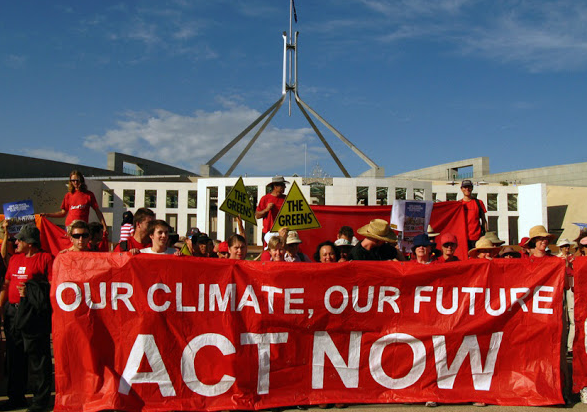
California’s leaders, including Governor Jerry Brown, have been vocal supporters of the Paris Agreement. Yet, California presently has no plan to phase out its oil and gas production in line with Paris-compliant carbon budgets. Under the Brown administration, the state has permitted the drilling of more than 20,000 new wells, including extraction and injection wells.

We provide new data findings related to:

  • The climate implications of ongoing permitting of new oil wells in California;
  • The ways that a managed decline of existing wells can prioritize health and equity; and
  • Elements of a just transition for affected workers and communities.

We recommend that the state take the following actions:

  • Cease issuing permits for new oil and gas extraction wells;
  • Implement a 2,500-foot health buffer zone around homes, schools, and hospitals where production must phase out;
  • Develop a plan for the managed decline of California’s entire fossil fuel sector to maximize the effectiveness of the state’s climate policies; and
  • Develop a transition plan that protects people whose livelihoods are affected by the economic shift, including raising dedicated funds via a Just Transition Fee on oil production.

As a wealthy oil producer, California is well positioned to take more ambitious action to proactively phase out its fossil fuel production and has a responsibility to do so in order to fulfill its commitment
to climate leadership. By taking these steps, California would become the first significant oil and gas producer globally to chart a path off fossil fuel production in line with climate limits.

Download (PDF).

Women and Climate Change Impacts and Action in Canada: Feminist, Indigenous, and Intersectional Perspectives

Written and researched by Lewis Williams with Amber Fletcher, Cindy Hanson, Jackie Neapole and Marion Pollack - Work and Climate Change Report - February 2018

Climate change is unequivocally occurring across the globe, impacting the conditions, experiences, and livelihoods of communities in multiple ways.2 Between 1948 and 2007 temperatures in Canada increased at a rate approximately twice the global average.3 Accelerated rates of global warming and dramatically increased temperatures are expected to occur in parts of Canada well into the future.4 Yet, Canada remains one of the world’s biggest per capita carbon polluters5 and is falling far short of meeting climate mitigation goals under the Paris Agreement, an international agreement for meeting climate change mitigation and adaptation targets.

Emerging research on the gendered impacts of climate change in Canada demonstrates how climate change is exacerbating inequalities between women and men. Women’s lower incomes relative to men, their gendered roles and social statuses, and the ways in which these interact with changing environments and related policies and programs affect women’s experiences of climate change. Despite these inequities, gender considerations are remarkably absent in climate plans and policies across the country.

Climate change is largely the result of the tightly interwoven forces of colonialism, patriarchy, and neoliberal forms of development.9 These conditions are constraining women’s knowledge, expertise, and unique agencies in addressing what is probably the most defining issue of our age. Yet women, including Indigenous women, have significant roles to play in the articulation of feminist and Indigenous worldviews, and aligned climate action strategies.

Read the Report (PDF).

Climate Change and Just Transition: What Will Workers Need

By staff - Adapting Canadian Work and Workplaces to Respond to Climate Change and United Steelworkers, April 2017

The United Steelworkers Union (USW) in Canada has produced a new workshop guide to educate workers about the impact of climate change on jobs, and to better prepare them to ensure that government policies promoting a just transition are put in place. The workshop and guide were piloted at the United Steelworkers National Health, Safety, Environment and Human Rights Conference that was held in Vancouver in 2017.

The workshop guide leads union members through discussion topics and activities, such as asking participants to answer the question, “What can your workplace do to combat climate change?”

Topics covered include:

  • How Climate Change Connects Us
  • How Climate Change Contributes to the World of Work
    • Employment
    • Forestry
    • Mining
    • Transportation
  • Just Transition
  • What Does a Green Job Mean in Relation to the Environment?
    • Collective Agreements
    • Political Lobbying
    • Green Procurement
    • Training
    • Employment Insurance
  • National Concern for the Economic Growth of Canada

Read the text (PDF).

The Fossil Fuel Industry and the Case for Divestment

By staff - Toronto350, April 10, 2015

The governments of the world — including the governments of Canada, the United States (U.S.), the United Kingdom (U.K.), China, Brazil, and the 27 European Union (EU) members — have agreed we should avoid raising global temperatures to more than 2 ̊C above pre-industrial levels.1 This is the threshold at which the major governments of the world have agreed that climate change becomes “dangerous”. In 2009, an article in Nature warned that failing to constrain warming to below 2 ̊C “would threaten the ecological life- support systems that have developed in the late Quaternary environment, and would severely challenge the viability of contemporary human societies”. In the Summary for Policymakers from their Fifth Assessment Report, the Intergovernmental Panel on Climate Change (IPCC) explains:

Without additional mitigation eforts beyond those in place today, and even with adapta- tion, warming by the end of the 21st century will lead to high to very high risk of severe, widespread, and irreversible impacts globally.

Based on hundreds of thousands of years of evidence on how the climate responds to greenhouse gases (GHGs), we can calculate the total quantity of all fossil fuels we can burn, adding the carbon they contain to the atmosphere, while still giving ourselves a good chance of avoiding a 2 ̊C increase.7 To do so we must keep future GHG pollution to no more than 565 billion tonnes (gigatonnes) of carbon dioxide (CO2).8 At the same time, we know that burning the world’s proven reserves of coal, oil, and natural gas would produce 2,795 gigatonnes of CO2 — nearly ive times as much as it would be safe to burn.91011 The University of Toronto (U of T) can play a role in helping humanity stay within these planetary limits by choosing to sell its investments in fossil fuel companies.

Download a copy of this resolution here (PDF).

IPCC Warning Spurs Union Calls For Energy Democracy

By Sean Sweeney - Trade Unions for Energy Democracy, November 7, 2014

Disclaimer: The views expressed here are not the official position of the IWW (or even the IWW’s EUC) and do not necessarily represent the views of anyone but the author’s.

On November 2, 2014, the Intergovernmental Panel on Climate Change (IPCC) released its Synthesis Report, the final in the “Fifth Assessment Report” process. It builds on three reports released by the IPCC since early 2013.

The IPCC is a senior UN panel made up of thousands of climate scientists and this report marks its fifth ‘assessment’ since 1990 of the state of the climate and the present and future impacts of global warming.

The Synthesis Report reiterates what the IPCC has been telling us for a decade or more: “Climate change is being registered around the world and warming of the climate system is unequivocal. Since the 1950s many of the observed changes are unprecedented over decades to millennia.” The period from 1983 to 2012 was likely the warmest 30-year period of the last 1,400 years in the Northern Hemisphere. Atmospheric concentrations of carbon dioxide, methane and nitrous oxide are “unprecedented in at least the last 800,000 years”.

The report may be the same as previous IPCC reports in terms of the main messages and conclusions, but one thing is different. The 20 years of political inaction around climate, with its sad mixture of back-slapping and back stabbing by negotiators at scores of summits and meetings, has now created a situation where only bold and transformative interventions offer any hope of controlling runaway global warming. Even relatively conservative commentators and analysts now accept this to be true. Among the most important of these interventions involves expanding and deepening social ownership and democratic control of the world’s energy systems—energy democracy. This is needed in order to facilitate an energy transition from fossil-based power to renewable energy, a transition of sufficient speed and scale to be able to seriously address the climate crisis.

Among those embracing energy democracy are a growing number of unions working in partnership with allies in different social movements. Not all unions are convinced that energy democracy is either desirable or possible—especially given the political and economic power of the oil, coal and gas companies. And those unions either supporting the idea or at least open to it are engaging in serious discussions regarding what energy democracy would look like and how it could, alongside addressing pollution and emissions, also seriously address energy poverty, create jobs and advance equality. But everyone involved in the trade union debates on climate change accepts that ‘business as usual’ is simply not an option and the energy system has to be transformed within two or three decades. The IPCC’s report has again sounded the alarm about climate change, but we cannot evacuate the building because we have nowhere else to go.

The IPCC Report: Between Nightmare and Revolution

By Daniel Tanuro - Climate and Capitalism, November 6, 2014

Disclaimer: The views expressed here are not the official position of the IWW (or even the IWW’s EUC) and do not necessarily represent the views of anyone but the author’s.

The International Panel on Climate Change has now published its fifth Synthesis Report along with a Summary for Policy Makers. The diagnosis is no surprise:

  • Global warming is advancing. It is mainly caused by burning fossil fuels, and the negative consequences are more important than the positive effects.
  • It is probably still possible to avoid an average temperature increase  of more than 2°C compared to the pre-industrial period, but the policies followed for the last twenty years will lead to a warming of between 3.7 and 4.8 °C (between 2.5 and 7.8 °C, taking uncertainty into account) and “high risk of severe, widespread, and irreversible impacts globally.”

A palpable concern

The evaluation made in this fifth report is not fundamentally different from previous ones, but the confidence level of the warning is greater. Some areas of uncertainty are becoming clearer and the authors’ concern is more obvious than ever.

The phrase “virtually certain” (more than 99% probability) is used more and more in describing the likelihood this or that phenomenon. For instance, several centuries of melting  permafrost and rising sea levels are now considered “virtually certain,” even if emissions are drastically reduced,

Behind the “objective” scientific tone of the report, the IPCC is clearly sounding an alarm. The experts’ concern is palpable. This is particularly apparent in the fact that the summary for policy makers contains a section on the increased risk of “irreversibility and abrupt changes” beyond 2100. For example, we read that “The threshold for the loss of the Greenland ice sheet over a millennium or more, and an associated sea-level rise of up to 7 m, is greater than about 1°C but less than about 4°C of global warming.” So limiting the temperature rise to 2°C does not completely eliminate the risks of very profound changes to Earth’s ecosystems. [2]

Pages

The Fine Print I:

Disclaimer: The views expressed on this site are not the official position of the IWW (or even the IWW’s EUC) unless otherwise indicated and do not necessarily represent the views of anyone but the author’s, nor should it be assumed that any of these authors automatically support the IWW or endorse any of its positions.

Further: the inclusion of a link on our site (other than the link to the main IWW site) does not imply endorsement by or an alliance with the IWW. These sites have been chosen by our members due to their perceived relevance to the IWW EUC and are included here for informational purposes only. If you have any suggestions or comments on any of the links included (or not included) above, please contact us.

The Fine Print II:

Fair Use Notice: The material on this site is provided for educational and informational purposes. It may contain copyrighted material the use of which has not always been specifically authorized by the copyright owner. It is being made available in an effort to advance the understanding of scientific, environmental, economic, social justice and human rights issues etc.

It is believed that this constitutes a 'fair use' of any such copyrighted material as provided for in section 107 of the US Copyright Law. In accordance with Title 17 U.S.C. Section 107, the material on this site is distributed without profit to those who have an interest in using the included information for research and educational purposes. If you wish to use copyrighted material from this site for purposes of your own that go beyond 'fair use', you must obtain permission from the copyright owner. The information on this site does not constitute legal or technical advice.
