






You are here
climate change
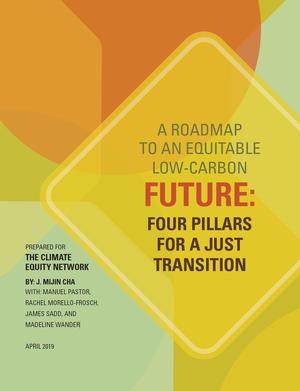 The signs that the climate crisis is already happening are clear. The most recent Intergovernmental Panel on Climate Change report detailed the evidence from more than 6,000 studies that found that over the past decade, a series of record-breaking storms, forest fires, droughts, coral bleaching, heat waves, and floods have taken place around the world in response to the 1.0 °C of global warming that has taken place since the pre-industrial era. These events, and the losses associated with them, are expected to become substantially worse with 1.5 °C of warming currently targeted by global climate agreements, and far worse if these agreements are not effective. Without major cuts in greenhouse gas (GHG) emissions, this warming threshold could be reached in as little as 11 years, and almost certainly within 20 years. Even if such cuts were to begin immediately, reaching this threshold would not be prevented, only delayed.
 This study examines the prospects for a transformative green growth program for Colorado. The centerpiece of the program is clean energy investments—i.e. investments to raise energy efficiency levels and expand the supply of clean renewable energy sources. These investments should be undertaken in combination by the public and private sectors throughout the state. This program can advance two fundamental goals: 1) promoting global climate stabilization by reducing carbon dioxide (CO2) emissions in Colorado without increasing emissions outside of the state; and 2) expanding good job opportunities throughout the state while the state’s economy continues to grow. The program is specifically designed to reduce Colorado’s CO2 emissions by 50 percent as of 2030 and by 90 percent as of 2050 relative to the state’s 2005 emissions level while the economy grows at an average annual rate of 2.4 percent. The consumption of oil, natural gas and coal to generate energy will need to fall sharply in Colorado, since CO2 emissions result through the combustion of fossil fuels.

 Courtesy Will Steffen et al.
 The Fine Print I:
Disclaimer: The views expressed on this site are not the official position of the IWW (or even the IWW’s EUC) unless otherwise indicated and do not necessarily represent the views of anyone but the author’s, nor should it be assumed that any of these authors automatically support the IWW or endorse any of its positions.
Further: the inclusion of a link on our site (other than the link to the main IWW site) does not imply endorsement by or an alliance with the IWW. These sites have been chosen by our members due to their perceived relevance to the IWW EUC and are included here for informational purposes only. If you have any suggestions or comments on any of the links included (or not included) above, please contact us.
The Fine Print II:
Fair Use Notice: The material on this site is provided for educational and informational purposes. It may contain copyrighted material the use of which has not always been specifically authorized by the copyright owner. It is being made available in an effort to advance the understanding of scientific, environmental, economic, social justice and human rights issues etc.
It is believed that this constitutes a 'fair use' of any such copyrighted material as provided for in section 107 of the US Copyright Law. In accordance with Title 17 U.S.C. Section 107, the material on this site is distributed without profit to those who have an interest in using the included information for research and educational purposes. If you wish to use copyrighted material from this site for purposes of your own that go beyond 'fair use', you must obtain permission from the copyright owner. The information on this site does not constitute legal or technical advice.
 This site is not the official webpage of the Industrial Workers of the World.