

You are here

movements, unions, and organizations
Stop Cop City Week of Action Showed Movement’s Strength Amid Rampant Repression

By Cody Bloomfield - Truthout, July 1, 2023

Much of the South River Forest, or as activists call it, Weelaunee People’s Park, has been clear cut. In a token gesture to the community, the city talked about opening a handful of trails in slivers of remaining public land. But driving past the original site of the occupation, there isn’t a tree in sight to hang a hammock on. At nearly 5:30 pm on a Saturday, three bulldozers rumble across the land, rearranging splintery piles of red dirt. Shadowbox Studios, also licensed to use the site, has completed construction. Ringing the perimeter of both, cop cars lurk, waiting for signs of trouble. I started counting in my head, then had to switch over to tally marks. Even taking photos is de facto forbidden; I was followed and then pulled over while trying to take photos from the street. By my count, 26 police vehicles were surrounding the site. The only sign of the previous occupation was a downed yellow tower, charred at the base, with “Defend the Atlanta Forest” written in green paint. In a tragic echo of the activists’ thriving mutual aid camps, the cops set up a couple tents of their own, where they could eat snacks out of a few metal trays and retreat to shade no longer provided by the Atlanta forest.

Coming into the week of action that took place June 24-July 1 — a week of protests, targeted boycotts and joyful celebration in nature designed to call national attention to Cop City — the threat of police repression weighed heavily on activists’ minds.

At Saturday’s opening carnival, one Atlantan, who wished to remain anonymous, was hard at work spray painting more t-shirts. Wearing handmade pinecone earrings and blue paint flecked combat boots, he painstakingly laid out foam letters as stencils. His own shirt said, “I can’t protest Cop City.” But upon request, he’d also make “I can protest Cop City” shirts.

“It’s about [addressing] the fear,” he explained. “Having solidarity with the people who are too afraid to protest. There’s the uncertainty and financial risk. It’s hard to evaluate risk — police stormed a protest downtown advertised as a vigil. I’m really rolling the dice about whether people will be holding hands or burning cars, or whether people holding hands will be attacked by police.”

Loading the DICE against pension funds Flawed economic thinking on climate has put your pension at risk

By Steve Keen - Carbon Tracker, July 2023

Pension funds are risking the retirement savings of millions of people by relying on economic research that ignores critical scientific evidence about the financial risks embedded within a warming climate.

This report reveals that many pension funds use investment models that predict global warming of 2 to 4.3°C will have only a minimal impact on member portfolios, relying on economists flawed estimates of damages from climate change, which predicts that even with 5 to 7°C of global warming, economic growth will continue. The report underscores that such economic studies cannot be reconciled with warnings from climate scientists that global warming on this scale would be “an existential threat to human civilisation.”

Loading the DICE against pension funds is a call to action for investment professionals to look at the compelling evidence we see in the climate science literature, and to implement investment strategies, particularly a rapid wind down of the fossil fuel system, based on a ‘no regrets’ precautionary approach. Behaving cautiously now and acting to avoid a 1.5°C increase (let alone the 4°C outcome featured in this report) will enable future generations to secure the prosperity and quality of life that comes from a healthy planet.

Gulf South and Appalachia Join to Fight Climate Injustice

By staff - Labor Network for Sustainability, June 30, 2023

The Gulf South and Appalachia have increasingly been the targets of environmental destruction by fossil fuel and other toxic industrial infrastructure – and the location of significant campaigns against that destruction. Over the past year-and-a-half the climate justice center Taproot Earth convened People’s Movement Assemblies to align grassroots organizers and regional efforts across the Gulf South and Appalachia. Along with the Climate and Community Project they have issued the “We Choose Now Climate Action Strategy” which highlights the deep connections between the Gulf South and Appalachia and calls for action to reject extractive economies and cultivate regional solutions that advance collective healing and climate justice.

The report notes that,

For many communities in the Gulf and Appalachia, the most lucrative financial paths are fossil fuels, military, or drugs. Future generations deserve more opportunities. We need solutions that move us away from labor that is extracted and exploited, to labor that is fulfilling and life-giving.

Proposed solutions include:

1. Repurpose fossil fuel infrastructure for renewable energy economy
2. Build a mine/well reclamation or fossil fuel transition workforce
3. Develop state Civilian Climate Corps and expand existing environmental job training programs

For Executive Summary: https://taproot.earth/wp-content/uploads/CAS_Executive_Summary_2023.pdf

For Full Reports: https://taproot.earth/category/reports/?eType=EmailBlastContent&eId=433c6f6a-c4d1-4906-bb49-a4cb89ac33eb

Why Maine’s climate-conscious governor vetoed an offshore wind bill

By Naveena Sadasivam - Grist, June 29, 2023

Ever since Democrat Janet Mills was elected governor of Maine in 2018, she has been a strong advocate for renewable energy in general and wind energy in particular. The state has tremendous potential for wind production, given the high wind velocities off its coast, and it has committed to procuring 100 percent of its energy from clean sources by 2050. Earlier this year, in an attempt to supercharge wind energy production in the state, Mills proposed legislation to speed up permitting for wind ports, sites where wind turbines could be built before being deployed offshore.

That bill got the votes needed to pass in the state legislature — only to be vetoed by Mills herself earlier this week. At issue are amendments to the bill made in the state senate, which require the undertaking to incorporate Project Labor Agreements, or PLAs, a type of collective bargaining agreement in the construction industry that streamlines work on projects and establishes standards for wages and working conditions — standards that are typically more robust than those that would prevail in their absence. 

In a letter vetoing the bill, the governor said the provision would have a “chilling effect” on companies that are non-unionized, raise construction costs for the wind port which would eventually be borne by Maine taxpayers, and lead to out-of-state workers being bussed to Maine. The idea is that the PLAs will lead to fewer firms pursuing contracts for work on the wind project — or firms will increase costs to meet the PLA requirements — leading to a higher overall price tag and less employment for local residents. (Only 10 percent of construction workers in Maine are in a union.)

Amazon Strikes as a Climate Justice issue; Trade Union briefing

Unions Furious After Democratic Maine Gov. Vetoes Offshore Wind Bill Over Fair Labor Rules

By Kenny Stancil - Common Dreams, June 28, 2023

Democratic Maine Gov. Janet Mills on Monday vetoed an offshore wind development bill because she opposed an amendment requiring collective bargaining agreements for future projects, drawing condemnation from the state's largest federation of unions.

"Maine's climate motto has been 'Maine Won't Wait.' With this veto, Gov. Mills is saying, 'Maine Will Wait'—for thousands of good jobs, for clean energy, and for the build-out of a new industry," Maine AFL-CIO executive director Matt Schlobohm said in a statement. "We will wait because the governor is opposed to fair labor standards which are the industry norm."

"The governor's ideological opposition to strong labor standards," said Schlobohm, "jeopardizes the build-out of this industry and all the climate, economic, and community benefits that come with it."

Mills supported an earlier version of Legislative Document (L.D.) 1847 that originated from her office. Last week, however, the governor made clear that she opposed the addition of an amendment requiring project labor agreements (PLAs)—pre-hire deals negotiated between unions and employers that establish wage floors and other conditions—for the construction of offshore wind ports as well as the manufacturing of turbines and other components needed for wind energy projects.

In a letter to state lawmakers, "Mills argued that mandating a PLA would create a 'chilling effect' for non-union companies, discouraging them from bidding on construction," The American Prospect's Lee Harris reported. "Supporters of the PLA provision say that is a far-fetched objection, since the agreements do not ban non-union contractors from vying for jobs. (In fact, that's one reason some more radical unionists say PLAs do too little to advance labor's cause.)"

The governor vowed to veto the bill unless the Legislature recalled it from her desk and revised it to the initial version or adopted "language that would ensure that union workers, employee-owned businesses, and small businesses could all benefit."

VICTORY!! at Ethos Light Turbine shop in Houston

Our Green Transition May Leave Black People Behind

By Rhiana Gunn-Wright - Hammer & Hope, Summer 2023

I’m an architect of the Green New Deal, and I’m worried the racism in the biggest climate law endangers our ability to get off fossil fuels.

This summer, the earth raged. Fires in Maui and Canada, floods in Delhi and Beijing, heat everywhere — this is the beginning of the climate impacts scientists have long predicted, and the U.S. is unprepared in terms of everything from infrastructure to public health. And if I’m honest, I raged, too. Never in my life have I wished more to be a cyclone, blowing away everything in my path, or an earthquake, shaking everyone to their core until they take seriously the concerns of Black and Indigenous frontline communities.

August marked a year since the Inflation Reduction Act passed, arguably the most significant climate legislation in U.S. history. But the racist compromises and the marginalization of Black people and their demands that facilitated the bill’s passage have seeped into the climate movement, sowing division and narrowing discourse in ways that not only threaten to keep Black people at the bottom of a new green economy but also undermine efforts to address thornier issues, such as who owns energy resources or how to navigate conflicts about resource distribution and land use, questions that money alone cannot answer.

Wind turbine ports run by union labor could help Maine be leader in climate, industry

By Dan Neumann - Maine Beacon, June 19, 2023

A bill introduced by Gov. Janet Mills that would create visual impact standards for future offshore wind projects has passed the Maine Legislature and is on its way to her desk. 

Advocates are describing the amended version of the bill as “groundbreaking,” as it now includes requirements that any port facilities that are built to support offshore wind energy in Maine include strong labor, community benefit and environmental standards.

Proponents say the changes would put Maine in a strong position to attract federal funding for future ports as President Joe Biden signed an executive order last year prioritizing federal funding for large-scale builds that include project labor agreements (PLAs). PLAs ensure construction is done by union workers making a prevailing wage determined to be livable. 

However, it remains to be seen if Mills will support the final legislation. A conservative Democrat who has sided with business interests over workers on several proposals since taking office in 2019, Mills has so far been non-committal about her position on the proposed labor standards.

“A broad coalition of working people and environmental advocates have come together to support the creation of a new industry in Maine that can help us combat climate change, create good jobs and support coastal communities,” Francis Eanes, director of the Maine Labor Climate Council, said in a statement last week. “We are grateful for the strong support we’ve seen in the Legislature, and we are hopeful that Gov. Mills will support this groundbreaking step forward on one of her most high-profile priorities.”

It’s Danger Season and Workers Need Heat Safety Protections Now; UPS Knows It

By Alicia Race - Union of Concerned Scientists, June 15, 2023

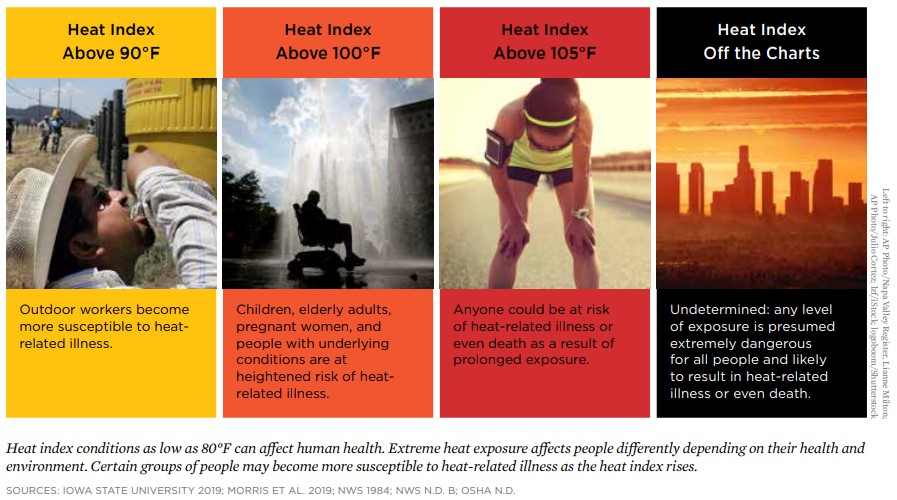
What would be the largest single-employer strike in US history may soon be avoided if UPS and the Teamsters union reach an agreement on adding life-saving cooling equipment in more than 90,000 fleet vehicles. UPS is the largest employer here in Louisville, Kentucky, so a strike would have serious implications for the metro region as well as on the entire US economy. UPS workers are asking for protection just as Danger Season has started and the summer is predicted to be hotter than usual. While the cooling equipment is one piece of the worker negotiations, it’s a crucial piece–worker heat protections save lives and are worth fighting like hell for.

My dad often works outdoors in extreme temperatures, so I feel for every single worker and family whose lives have been or could be devastated by preventable heat illness or fatalities.

Pages

The Fine Print I:

Disclaimer: The views expressed on this site are not the official position of the IWW (or even the IWW’s EUC) unless otherwise indicated and do not necessarily represent the views of anyone but the author’s, nor should it be assumed that any of these authors automatically support the IWW or endorse any of its positions.

Further: the inclusion of a link on our site (other than the link to the main IWW site) does not imply endorsement by or an alliance with the IWW. These sites have been chosen by our members due to their perceived relevance to the IWW EUC and are included here for informational purposes only. If you have any suggestions or comments on any of the links included (or not included) above, please contact us.

The Fine Print II:

Fair Use Notice: The material on this site is provided for educational and informational purposes. It may contain copyrighted material the use of which has not always been specifically authorized by the copyright owner. It is being made available in an effort to advance the understanding of scientific, environmental, economic, social justice and human rights issues etc.

It is believed that this constitutes a 'fair use' of any such copyrighted material as provided for in section 107 of the US Copyright Law. In accordance with Title 17 U.S.C. Section 107, the material on this site is distributed without profit to those who have an interest in using the included information for research and educational purposes. If you wish to use copyrighted material from this site for purposes of your own that go beyond 'fair use', you must obtain permission from the copyright owner. The information on this site does not constitute legal or technical advice.
