

You are here

climate change

AB 525 Workforce Development Readiness Plan

By Brooklyn Fox and Sarah Lehman - California State Lands Commission, June 16, 2023

The purpose of this Assembly Bill (AB) 525 Workforce Development Readiness Plan is to provide recommendations for workforce development efforts ahead of the necessary seaport investments and activities identified in the AB 525 Port Readiness Plan.
The workforce development readiness plan was developed considering the workforce required in California to deliver 25 GW of offshore wind power generation capacity by year 2045.This assessment includes the potential direct workforce required for the delivery of offshore wind projects, the workforce required for related port infrastructure upgrades as outlined in the AB 525 Port Readiness Plan, and the workforce requirement related to transmission network upgrades.

The workforce development assessment consists of three discrete pieces: (1) a needs assessment that analyzed the scale, timing and necessary skills of the required workforce; (2) an assessment of the currently available workforce and training infrastructure in California to support the growth of the offshore wind industry; and (3) a gap and opportunity analysis between the needs and availability assessments.

For more details, see: AB 525 Reports: Offshore Renewable Energy

Download a copy of this publication here (PDF).

Will the US have the workforce it needs for a clean-energy transition?

By Betony Jones and David Roberts - Volts, June 16, 2023

Will the US clean-energy transition be hampered by a shortage of electricians, plumbers, and skilled construction workers? In this episode, Betony Jones, director of the DOE’s Office of Energy Jobs, talks about the challenge of bringing a clean energy workforce to full capacity and the need for job opportunities in communities impacted by diminished reliance on fossil fuels.

UPS Teamsters’ Beat the Heat

By staff - Labor Network for Sustainability, June 15, 2023

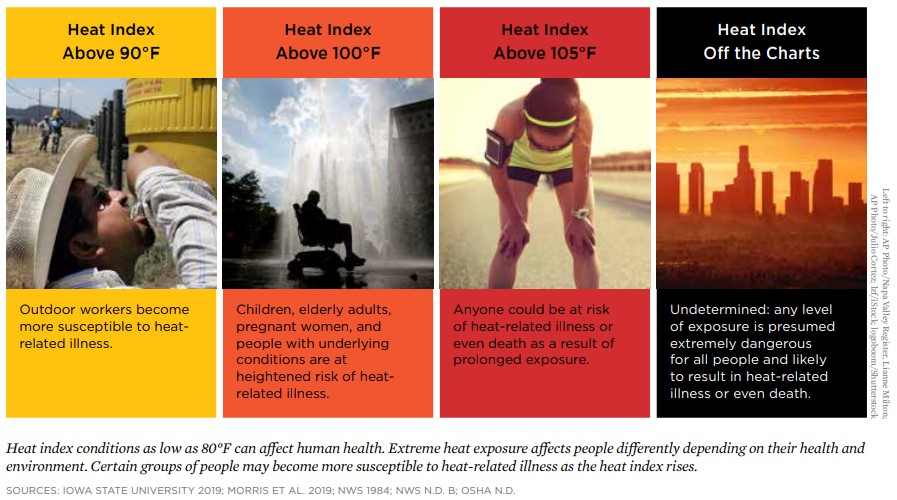
On June 14, the Teamsters and UPS agreed to tentative language to equip UPS vehicles with air conditioning systems, new heat shields, and additional fans, according to a union statement. The agreement will cover the 340,000 UPS workers who are members of the Teamsters union.

NBC News reports that temperature readings taken by workers in UPS trucks in Arizona and Florida have shown temperatures above 150 degrees. At least 145 UPS employees have been hospitalized for heat illnesses since 2015.

“Folks are super excited” about the heat agreement, said Zakk Luttrell, a UPS driver and union shop steward in Norman, Okla. “It’s not just about what’s cost effective and efficient anymore, it’s about keeping people alive.”

Meanwhile, 97% of UPS employees voting authorized a strike to start August 1. Such a strike would be the largest against a single employer in US history.

It’s Danger Season and Workers Need Heat Safety Protections Now; UPS Knows It

By Alicia Race - Union of Concerned Scientists, June 15, 2023

What would be the largest single-employer strike in US history may soon be avoided if UPS and the Teamsters union reach an agreement on adding life-saving cooling equipment in more than 90,000 fleet vehicles. UPS is the largest employer here in Louisville, Kentucky, so a strike would have serious implications for the metro region as well as on the entire US economy. UPS workers are asking for protection just as Danger Season has started and the summer is predicted to be hotter than usual. While the cooling equipment is one piece of the worker negotiations, it’s a crucial piece–worker heat protections save lives and are worth fighting like hell for.

My dad often works outdoors in extreme temperatures, so I feel for every single worker and family whose lives have been or could be devastated by preventable heat illness or fatalities.

Washington employers push back on new worker heat-protection rules

By Farah Eltohamy - Crosscut, June 15, 2023

Lorena, a former farmworker from Sunnyside, toiled day and night tending to blueberries in Washington’s Yakima Valley for close to a decade.

By year six, Lorena’s employer had elevated her to a supervisory role – which she said she personally took as an opportunity to better advocate for her fellow farmworkers out in the sweltering summer conditions.

Lorena, who asked to be identified by her first name only to avoid any potential reprisal from her former employer, regularly reported any problems she saw with lack of access to adequate water and shade – and over the years was met with repeated retaliation that she said ultimately drove her out of the career in 2021.

The heat is becoming more extreme each passing year, Lorena told Crosscut, but most changes to working conditions seem for “the benefit of the fruit, not for the benefit of farmworkers.” 

Agricultural workers are among those most vulnerable to heat-related illnesses, and according to the Centers for Disease Control and Prevention they’re dying of heatstroke at a rate nearly 20 times greater than all U.S. civilian workers. 

Episode 4: Exploring the Intersection of Labor and Climate Policy

Bypassing the Culture Wars to Energize Rural-led Climate Solutions

Climate Justice in the North Sea

Aluminum Revitalized

By Ariel Pinchot, et. al. - Blue Green Alliance, June 2023

As one of the most important metals for modern life, aluminum is all around us. From our bridges and high-rise buildings to our smartphones and kitchen appliances, this highly durable, lightweight, and conductive material is essential. It’s also a key ingredient for achieving our climate, jobs, and national security goals. As a primary component of solar panels, power lines, electric vehicles (EVs), and other clean technologies, aluminum is a building block of our clean energy solutions. At the same time, producing aluminum requires a tremendous amount of energy, and globally, the sector is a significant contributor to greenhouse gas (GHG) emissions. As the world produces increasing amounts of this material for the clean energy economy, we must simultaneously decrease the emissions from its production in order to achieve global climate targets.

In the United States, our growing need for aluminum already far surpasses the dwindling output from our domestic primary production. As a result, much of the aluminum we use comes from abroad, including from countries where aluminum production is much more emissions-intensive. Increasing our aluminum procurements from highly-polluting overseas producers will only push our climate justice goals further out of reach. What we need to advance these goals is a secure, domestically produced supply of clean aluminum made with high-road labor standards.

Revitalizing clean aluminum manufacturing in the U.S. will not only cut a major source of climate pollution, reduce worker and fenceline community exposure to airborne pollutants, and secure a reliable supply of an essential material for clean energy—it will also create good jobs for hard-hit workers and communities, while supporting the current workforce and retaining existing jobs. This report lays out a set of targeted recommendations for getting there. After assessing the state of the domestic industry, we outline the employment, climate, and community benefits of revitalizing clean aluminum manufacturing and present a set of policy solutions that can help create and sustain a strong, clean aluminum industry.

Download a copy of this publication here (PDF).

Amazon workers walk out to protest return-to-work policy, climate change

By Jon Gold - Computer World, May 31, 2023

Several hundred tech and administrative workers at Amazon’s main headquarters in Seattle staged a walkout today, urging the technology and retail giant to adopt more climate-friendly policies and do away with rules mandating in-office work.

Several speakers at an event — which was broadcast on Twitter — spoke outside the company’s headquarters Wednesday morning, saying that climate change wasn’t being taken sufficiently seriously by Amazon, and arguing for a range of policies that would reduce the company’s impact on the environment. The event was organized in part by a group called Amazon Employees for Climate Justice.

Representatives from other groups — including Minneapolis labor advocacy group the Awood Center, which helped Amazon warehouse workers in that city organize for better working conditions — sent statements of support, and speakers included the director of local climate justice action group 350 Seattle, Shemona Moreno.

Pages

The Fine Print I:

Disclaimer: The views expressed on this site are not the official position of the IWW (or even the IWW’s EUC) unless otherwise indicated and do not necessarily represent the views of anyone but the author’s, nor should it be assumed that any of these authors automatically support the IWW or endorse any of its positions.

Further: the inclusion of a link on our site (other than the link to the main IWW site) does not imply endorsement by or an alliance with the IWW. These sites have been chosen by our members due to their perceived relevance to the IWW EUC and are included here for informational purposes only. If you have any suggestions or comments on any of the links included (or not included) above, please contact us.

The Fine Print II:

Fair Use Notice: The material on this site is provided for educational and informational purposes. It may contain copyrighted material the use of which has not always been specifically authorized by the copyright owner. It is being made available in an effort to advance the understanding of scientific, environmental, economic, social justice and human rights issues etc.

It is believed that this constitutes a 'fair use' of any such copyrighted material as provided for in section 107 of the US Copyright Law. In accordance with Title 17 U.S.C. Section 107, the material on this site is distributed without profit to those who have an interest in using the included information for research and educational purposes. If you wish to use copyrighted material from this site for purposes of your own that go beyond 'fair use', you must obtain permission from the copyright owner. The information on this site does not constitute legal or technical advice.
