You are here

Railroad Workers United (RWU)

U.S. Railroad Workers Inch Closer to a Possible National Strike

By Jeff Schuhrke - In These Times, July 25, 2022

After Biden appointed an emergency board to help resolve the labor dispute, rail workers warn: “We have the ability to stop the trains from moving.”

After waiting over two years to secure a new union contract, and still reeling from the impacts of Wall Street-ordered cost-cutting measures, 115,000 beleaguered workers who operate the nation’s freight railroads are inching closer towards a possible strike, which could come as soon as September. 

In an effort to drive down operating expenses and reward their wealthy shareholders, in recent years railroad companies have implemented ​“precision scheduled railroading,” or PSR — a version of just-in-time, lean production that centers on reducing the workforce and closing facilities. 

“For years, they cut and cut and cut. It didn’t matter which department or terminal, it was indiscriminate,” said Michael Paul Lindsey, an Idaho-based locomotive engineer with Union Pacific.

Over the past six years, the major Class I railroads like BNSF, Union Pacific, CSX and Norfolk Southern have slashed their collective workforce by 29 percent (around 45,000 workers), leaving the industry woefully understaffed and putting extra strain on workers already accustomed to long, irregular hours. 

Lindsey said the severe staffing shortages have resulted in ​“constant chaos and crisis,” with workers being called at all hours, day and night, expected to take on assignments they were not initially scheduled for. 

Cost-cutting has also meant freight trains are running with more cars and more cargo than existing infrastructure is equipped to handle, or else misrouting rail cars just to get them moving. This cost-cutting, along with a labor shortage, have been major contributors to the supply-chain crisis. 

Meanwhile, the railroad companies remain highly profitable, with owners raking in $183 billion in stock buybacks and dividends since 2010.

DRACONIAN New Rail Industry Policy WORSENS Supply Chain Crisis, CRUSHES Workers

A Major Strike May be Coming and I Promise You No One is Ready for it if it Does!

By Xaxnar - Daily Kos, July 14, 2022

Breaking July 15, 2022 — The Strike has been put on hold by presidential order — see the UPDATE story here.

The news about people who work for a living has featured some recent breakthrough stories, where previously immune companies have seen their workers organize and form unions. But what about an industry that remains one where unions have a long history and are still active? 

Very few people pay attention the way we should to railroads in America. That may be about to change, and not in a good way.

Sure, news about expanding Amtrak seems like a good thing, and there are plenty of High-Speed Rail (HSR) proposals — usually accompanied by reports on how expensive they are and how long they will take to build — if they can get past the NIMBY folks, the highway and airline lobbies, and the fossil fuel interests.

People freak out about bomb trains (understandable), and derailments — but how many people pay attention otherwise to the condition of our rail corridors, how much the industry is investing in itself, how much of the national economy depends on rail service, and the conditions for the people who work for the railroads?

Or the public good for that matter?

Rally Against New Attendance Policy

California Climate Jobs Plan Continues to Gain Union Endorsements

By That Green Union Guy - IWW Environmental Union Caucus - March 11, 2022

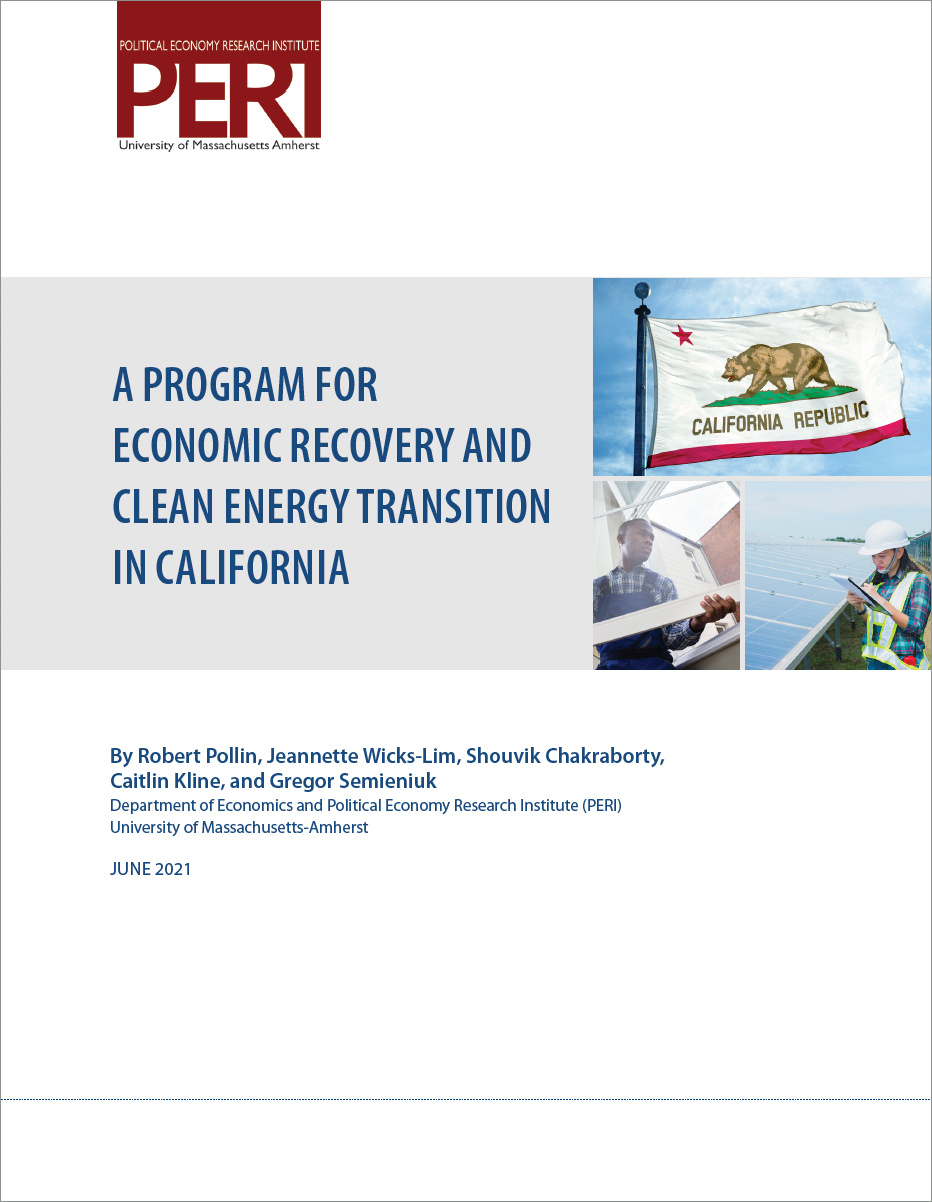
The California Climate Jobs Plan, popularly known as "the Pollin Report"--which has been described as a "sholvel ready just transition/Green New Deal" plan--and was immediately endorsed by nineteen California based labor unions, including three United Staeelworkers Union locals which primarily represent refinery workers upon its unveiling has since gained the support of many additional unions. The following unions (so far) have since endorsed the plan (knowing that while the plan isn't perfect, it's at least a step in a positive direction):

November 2021:

  • Inland Boatmen's Union (IBU), SF Bay Region (an affiliate of the ILWU)
  • Railroad Workers United
  • IWW San Francisco Bay Area General Membership Branch

February 2022:

  • International Lonshore and Warehouse Union (ILWU) Northern California District Council (NCDC)

The council is composed of delegates from the following ILWU Locals:

  • ILWU Local 6 (Bay Area Warehouse)
  • ILWU Local 10 (Bay Area Longshore)
  • ILWU Local 34 (Bay Area Shipping Clerks)
  • ILWU Local 75 (Bay Area Dock Security Guards)
  • ILWU Local 91 (Bay Area “Walking Bosses”)
  • ILWU Local 14 (Eureka; combined)
  • ILWU Local 18 (Sacramento; ditto)
  • ILWU Local 54 (Stockton)
  • Bay Area IBU (already endorsed individually)
  • and the pensioners from all of the above.

However, the NCDC's endorsement does not automatically mean that each of its constituent locals have individually endorsed the plan.

The more unions that endorse and take an active role in motivating the proposal either by lobbying at the California state level, engaging in public actions to promote the goals of the plan, or even engaging in workplace actions (whereaver relevant and practiceble), the greater chances the plan has of being realized.

(That said, it should be noted that this is not an IWW organizing project, although IWW members have been active in securing additional union endorsements).

A sample resolution (a copy of the text adopted by the SF Bay Area IBU) is available here.

Download the plan - here.

ILWU Northern California District Council (NCDC) Resolution in Support of Public Ownership of the Railroads

Adopted by Unanimous Vote: February 16, 2023
Whereas, rail infrastructure the world over is held publicly, as are the roads, bridges, canals, harbors, airports, and other transportation infrastructure; and

Whereas, numerous examples of rail infrastructure held publicly have operated successfully across North America for decades, usually in the form of local/ regional commuter operations and state-owned freight trackage; and

Whereas, due to their inability to effectively move the nation’s freight and passengers during WWI, the U.S. government effectively nationalized the private rail infrastructure in the U.S. for 26 months; and

Whereas, at that time it was agreed by shippers, passengers, and rail workers that the railroads were operated far more effectively and efficiently during that time span; and

Whereas, every rail union at that time supported continued public ownership (the “Plumb Plan”) once the war had ended; and

Whereas, specifically, when the rank & file rail workers were polled by their unions in Decem­ber 1918, the combined totals were 306,720 in favor of continued nationalization with just 1,466 in favor of a return to private ownership; and

Whereas, the entire labor movement at that time was in favor of basic industry being removed from private hands, with the delegates to the 1920 AFL Convention voting 29,159 to 8,349 in fa­vor, overruling the officialdom of the AFL and its conservative position; and

Whereas, in the face of today’s crumbling infrastructure, crowded and clogged highways and city streets, poor air quality, lack of transportation alternatives and deepening climate crisis, ex­panded rail transportation – for both freight and passenger - presents a solution to these social ills and problems; and

Whereas, the rail industry today however is contracting – rather than expanding – at a time when we need more trains, trackage, rail workers, and carloads, not fewer; and

Whereas, the private rail industry is moving 5 to 10% less freight than it did 16 years ago, and in recent years has shuttered diesel shops and classification yards, and has drastically reduced the number of employees; and

Whereas, the private rail freight industry is generally hostile to proposals to run any additional passenger trains on their tracks – despite having legal common carrier obligations to do so - making it difficult if not impossible to expand the nations’ passenger rail network; and

Whereas, the rail industry has come to focus solely on the “Operating Ratio” as a measure of their success, and in doing so have engaged in massive stock buybacks and other measures that deliver short-term gains for stockholders but at the expense of the long-term health and vitality of the industry; and

Whereas, the Class One carriers’ failures to move freight effectively have contributed greatly to the ongoing supply chain crisis, resulting in some of the highest inflation rates in many years; and

Whereas, these “Fortune 500” corporations have raked in record profits, in both “good” years and “bad”, right through the “Great Recession,” the pandemic, and otherwise, right up to the most recent Quarterly financial announcements; and

Whereas, during these years of record profits, these same Class One carries have:

  • Failed to solicit nor accept new but “less profitable” freight traffic.
  • Forwarded less freight than 16 years ago.
  • Stonewalled practically every attempt by Amtrak and other agencies to add passenger ser­vice.
  • Failed to run Amtrak passenger trains on time, despite regulation and law to do so.
  • Downsized the infrastructure, physical plant, and capacity.
  • Eliminated nearly a third of the workforce.
  • Outraged shippers and their associations by jacking up prices, providing poor service, and
  • assessing new demurrage charges.
  • Thumbed their nose at state and federal governments.
  • Blocked road crossing and increased derailments by the implementation of extremely long trains.
  • Threatened and attempted at every turn to run trains with a single crew member.
  • Opposed proposed safety measures, from Positive Train Control (PTC) to switch point indi­cators;
  • the End-of-Train Device (EOT) to Electronically Controlled Pneumatic Brakes (ECP).
  • Taken a hostile stance towards the myriad unions, refused the bargain in good faith, consist­ently demanding concessions, all the while expecting these “essential workers” to labor through the pandemic without a wage increase.

Therefore, be it Resolved that the ILWU NCDC supports the public ownership of the rail infrastructure of the U.S., Canada, and Mexico, to be operated henceforth in the public interest, placed at the service of the people of all three nations; and

Be it Further resolved that the ILWU NCDC urge all of its members to voice their support for this proposal; and

Be it Further Resolved that the ILWU NCDC urges all ILWU locals and IBU regions to take a similar stand; and

Be it finally Resolved that the ILWU NCDC urges all labor unions, environmental and com­munity groups, social justice organizations, rail advocacy groups and others to push for a mod­ern publicly owned rail system, one that serves the nation’s passengers, shippers, communities, and citizens.

How America’s Supply Chains Got Railroaded

By Jeremy Brecher - The American Prospect, February 4, 2022

When the Union Pacific Railroad closed its Global 3 Intermodal Ramp outside of Chicago in 2019, Union Pacific marketing executive Kenny Rocker promised that closing the facility would bring “more consistent, reliable and predictable service” to shippers who depend on rail. Union Pacific was cutting costs by consolidating its unloading facilities in Chicago, a national center of transshipment for goods that come by rail from ports.

Two years later, as the supply chain crisis gripped the country, the railroad had to abruptly reopen Global 3. In the meantime, Union Pacific stopped service between the all-important shipping hubs of Los Angeles and Chicago for one week last July while the company reconfigured its operations. Union Pacific’s remaining facilities in Chicago couldn’t keep up with the volume, nor could Union Pacific find enough workers or equipment to handle the goods. Industry analyst Larry Gross told Trains.com that Union Pacific “sacrificed surge capacity” when it closed Global 3. “If you don’t have any additional capacity in your hip pocket, even moderate disruptions put you in a world of hurt.” Gross estimated that Union Pacific’s weeklong suspension of service would keep roughly 40,000 containers stranded on the West Coast.

Every other major railroad suffered from supply chain snags in 2021. Another overwhelmed rail company, BNSF, ordered a slowdown of shipments into its Chicago facility. Two other remaining large rail companies, Norfolk Southern and CSX, received sharply worded letters from the head of their primary regulator, Surface Transportation Board Chairman Martin Oberman. In his letters, Chairman Oberman asked each railroad to respond to complaints from shippers—across different types of goods—of worsened service delays and higher costs.

But the freight railroads’ poor operational performance has not impaired their spectacular financial performance. If anything, the bottlenecks create more pricing power. Less than a week after his company reversed its 2019 decision and reopened Global 3, Union Pacific executive Rocker optimistically predicted on an earnings call that Union Pacific would be able to “take some pretty robust pricing on the market”—in other words, keep its prices high. The stock market shared Rocker’s optimism for all Class I railroads, whose stock prices rose in 2021, many by 20 percent or more. The last year was one more of a decade of financial prosperity for the industry as the stock price and total return of every publicly traded Class I railroad from the end of 2011 to the end of 2021, except for Canadian National, grew faster than the S&P 500. Union Pacific earned the second-highest total return in that period, getting investors an almost sixfold return on their money and beating the S&P 500 by over 100 points.

Why Railroad Workers May Go On Strike

Railroad worker strike blocked by US court

Unions and Climate Activists Find Common Cause in Opposing Airport Expansion

By Dayton Martindale - Truthout, September 27, 2021

Airport employees and community allies protest a proposed expansion of Los Angeles International Airport on September 14, 2021; image by author.

“Are you scared you’re going to lose all your jobs ’cause there will be no planes?”

The audience chuckled at MSNBC host Chris Hayes’s first question for Sara Nelson, international president of the Association of Flight Attendants, at a March 2019 special on the Green New Deal. Nelson, an ardent climate advocate, dismissed the notion out of hand: “We still have to get around.” The real threat to flights, she insisted, is an increase in extreme weather events. It is climate inaction, then, that could keep planes from flying, rather than climate action.

Across the Atlantic, the messaging is notably different. Environmentalists across the U.K. and France have campaigned against airport expansions, and the Swedish language now has a word (flygskam) for the climate shame felt by those who fly. In August 2019, Swedish climate change activist Greta Thunberg chose to ride a boat to New York to reduce emissions and draw attention to the crisis.

So, will we have to keep any airplanes on the ground? The answer is complicated, depending on how quickly certain technologies become widespread, how willing we are to tolerate financial and environmental costs of jet fuel alternatives, and whether we aim to eliminate greenhouse gas emissions entirely or merely reach “net-zero” emissions (in which scenario we would continue to emit, but attempt to offset the climate impact through carbon capture and storage).

But there is a growing consensus that even in technologically optimistic scenarios, some constraints on demand will be necessary to curtail the expected growth in flights over the decades to come. Many climate activists argue that because these technologies are uncertain, we should start reducing flights as soon as possible. And some early indications — such as an ongoing union-led fight against an airport expansion in Los Angeles — suggests that the climate movement’s most powerful ally against rampant growth in air travel may be labor.

Few demonstrators at the Los Angeles International Airport (LAX) during a September 14 rally held greenhouse gas emission foremost in their minds as they decried the proposed expansion. The 50 or so protesters — most wearing the shirt of either SEIU United Service Workers West (SEIU-USWW) or Unite Here Local 11 — were more vocal about issues such as health care, wages, and the impact of air pollution and traffic congestion at their jobs and in their neighborhoods. The two unions, representing thousands of food, custodial and passenger service employees at the airport, were joined by Sunrise LA and other community and environmental groups outside a meeting of the Los Angeles Board of Airport Commissioners (BOAC).

An SEIU-USSW press release argues that the current plans to expand LAX “ignore the needs of workers at the airport as well as those who are most impacted by it: nearby neighborhood residents,” but they do not oppose the expansion outright. Instead, the labor groups want to see a community benefits agreement — an enforceable contract between the airport and community groups that allows workers and residents to provide substantive input, ensuring any airport development respects economic and environmental justice. If this demand is not met, SEIU-USWW President David Huerta tells Truthout, the union “could transition into direct opposition.”

Any solution must ensure worker voices are heard, says Sunrise LA spokesperson Josiah Edwards. Airport employees kept LAX running through the pandemic for inadequate pay, and already bear a heavy environmental burden. That they are not invited to the BOAC’s closed-door meetings is “a clear instance of environmental injustice,” Edwards says.

Pages

The Fine Print I:

Disclaimer: The views expressed on this site are not the official position of the IWW (or even the IWW’s EUC) unless otherwise indicated and do not necessarily represent the views of anyone but the author’s, nor should it be assumed that any of these authors automatically support the IWW or endorse any of its positions.

Further: the inclusion of a link on our site (other than the link to the main IWW site) does not imply endorsement by or an alliance with the IWW. These sites have been chosen by our members due to their perceived relevance to the IWW EUC and are included here for informational purposes only. If you have any suggestions or comments on any of the links included (or not included) above, please contact us.

The Fine Print II:

Fair Use Notice: The material on this site is provided for educational and informational purposes. It may contain copyrighted material the use of which has not always been specifically authorized by the copyright owner. It is being made available in an effort to advance the understanding of scientific, environmental, economic, social justice and human rights issues etc.

It is believed that this constitutes a 'fair use' of any such copyrighted material as provided for in section 107 of the US Copyright Law. In accordance with Title 17 U.S.C. Section 107, the material on this site is distributed without profit to those who have an interest in using the included information for research and educational purposes. If you wish to use copyrighted material from this site for purposes of your own that go beyond 'fair use', you must obtain permission from the copyright owner. The information on this site does not constitute legal or technical advice.