






You are here
climate justice
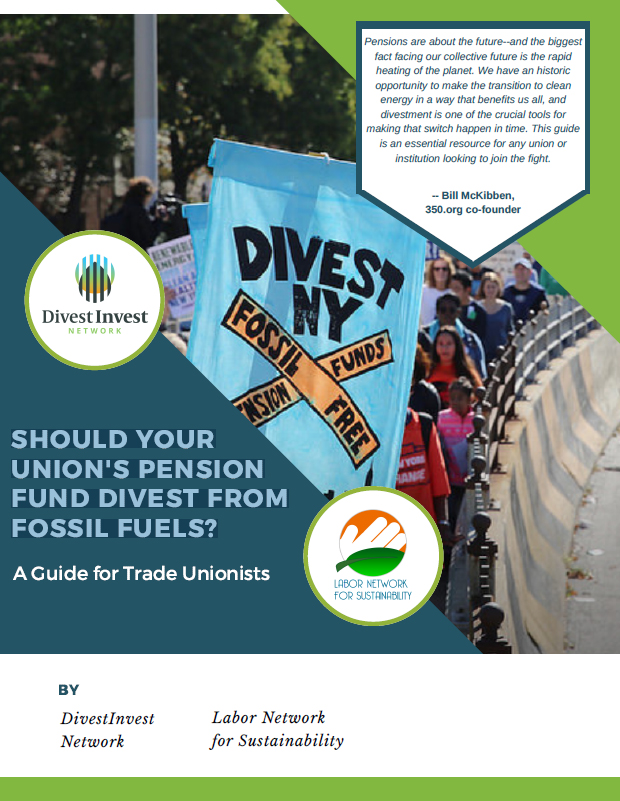 This guide is designed to help you and your union consider whether you should divest from fossil fuels.
 This short pamphlet has been produced to launch the New Economics Foundation’s new programme of work on the 'just transition'. Our interest is in the practicality of change: the policies, processes, narrative and investment needed to accelerate the UK’s progress on 'just transition', here and now. Over the coming months and years we will be working at local and national levels to explore what is needed to build common cause and provide the right mixture of incentives and critical challenge to all parties to help unlock a new momentum for a 'just transition' for the UK.
 Current climate strategies are leading us to brink of disaster. While some level of removal of atmospheric carbon is inevitably required for the 1.5°C goal, due to historical and committed emissions, it is critical to limit this removal to the lowest amount possible, by restricting future greenhouse gas (GHG) emissions. Ecosystem-based solutions can offer immediate, accessible, cost-effective and equitable strategies for meeting the 1.5°C temperature goal. In the context of international efforts to address climate change and increasing evidence of its rapid environmental impacts this report presents a global call to action for governments, development institutions and the broader climate community that challenges the fundamental assumptions that have so far guided national and international climate policies. Here we demonstrate the potential for targeted policies in the land sector to reduce the sustainability risks associated with mitigating climate change, while protecting human rights—particularly the customary rights of indigenous and local communities—and ensuring ecosystem integrity and food security.
 Much of the argument advanced in support of expanding Canada’s fossil fuel production centres on job creation and economic benefits. Politicians, pundits and corporate spokespeople who support fossil fuel infrastructure projects—such as new oil and gas pipelines—often evoke this rhetoric when they appear in the media.
 Global warming poses a problem for fossil fuel systems and those who profit from them; leaving fossil fuels in the ground likely means leaving trillions of dollars of profit in the ground. Vast networks of privilege that are sustained by fossil economies are likewise threatened. As Jairus Grove reflects, ‘environmental justice will require unequal roles: significantly constraining, even repressing, the powers of the Eurocene’. Similarly, the ‘Planet Politics Manifesto’ reminds us that ‘the planet is telling us that there are limits to human freedom; there are freedoms and political choices we can no longer have’.
The Fine Print I:
Disclaimer: The views expressed on this site are not the official position of the IWW (or even the IWW’s EUC) unless otherwise indicated and do not necessarily represent the views of anyone but the author’s, nor should it be assumed that any of these authors automatically support the IWW or endorse any of its positions.
Further: the inclusion of a link on our site (other than the link to the main IWW site) does not imply endorsement by or an alliance with the IWW. These sites have been chosen by our members due to their perceived relevance to the IWW EUC and are included here for informational purposes only. If you have any suggestions or comments on any of the links included (or not included) above, please contact us.
The Fine Print II:
Fair Use Notice: The material on this site is provided for educational and informational purposes. It may contain copyrighted material the use of which has not always been specifically authorized by the copyright owner. It is being made available in an effort to advance the understanding of scientific, environmental, economic, social justice and human rights issues etc.
It is believed that this constitutes a 'fair use' of any such copyrighted material as provided for in section 107 of the US Copyright Law. In accordance with Title 17 U.S.C. Section 107, the material on this site is distributed without profit to those who have an interest in using the included information for research and educational purposes. If you wish to use copyrighted material from this site for purposes of your own that go beyond 'fair use', you must obtain permission from the copyright owner. The information on this site does not constitute legal or technical advice.
 This site is not the official webpage of the Industrial Workers of the World.