






You are here
jobs
 In December 2015, world governments agreed to limit global average temperature rise to well below 2°C, and to strive to limit it to 1.5°C. This report examines, for the first time, the implications of these climate boundaries for energy production and use. Our key findings are:
 With the phase-out of coal power announced by the provincein November 2015, Albertans stand to avoid significant health impacts caused by coal pollution. By extension, afurtheraccelerated phase out of coal power facilities would both hastenand amplify those avoided health impacts.The health benefits and costs savings in avoided health outcomes would be significant, and should be consideredin the government’s planning of the coal phase-out from now to 2030.
 (in 2015), the Norwegian Parliament took a historic decision to move the Government Pension Fund Global (GPFG) out of thermal coal. The Parliament determined that companies should be excluded if they “base 30% or more of their activities on coal, and/or derive 30% of their revenues from coal.”1Thiswas an important break-through as the 30% threshold established a new benchmark for divestment actions of large investors. Only months after the Norwegian decision, the world’s largest insurance company, Allianz, undertook a coal divestment action of its own based on the GPFG’s 30% threshold.2And other investors such as KLP and Storebrand, which had already undertaken divestment actions, have now tightened their thresholds to keep up with the trail blazed by the Norwegian Parliament.
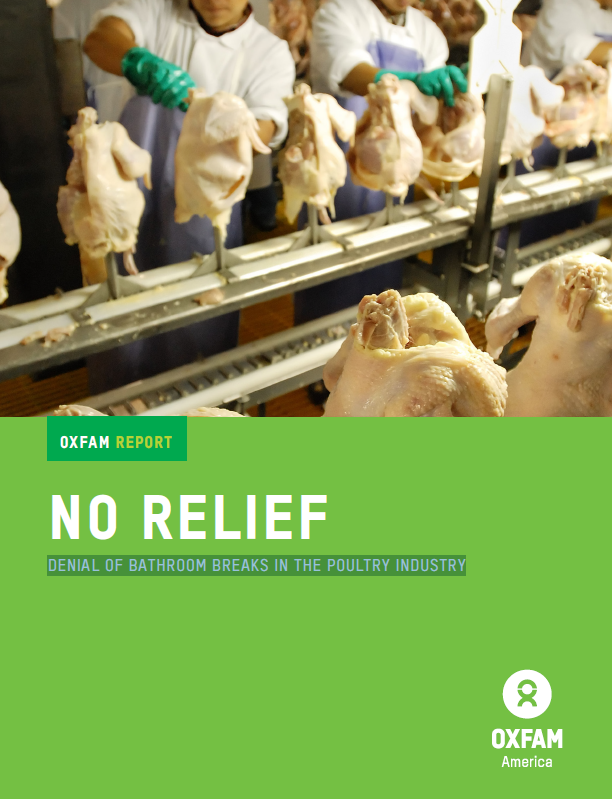 As poultry workers are routinely denied adequate bathroom breaks, they face dangers to their health and blows to their dignity.
The Fine Print I:
Disclaimer: The views expressed on this site are not the official position of the IWW (or even the IWW’s EUC) unless otherwise indicated and do not necessarily represent the views of anyone but the author’s, nor should it be assumed that any of these authors automatically support the IWW or endorse any of its positions.
Further: the inclusion of a link on our site (other than the link to the main IWW site) does not imply endorsement by or an alliance with the IWW. These sites have been chosen by our members due to their perceived relevance to the IWW EUC and are included here for informational purposes only. If you have any suggestions or comments on any of the links included (or not included) above, please contact us.
The Fine Print II:
Fair Use Notice: The material on this site is provided for educational and informational purposes. It may contain copyrighted material the use of which has not always been specifically authorized by the copyright owner. It is being made available in an effort to advance the understanding of scientific, environmental, economic, social justice and human rights issues etc.
It is believed that this constitutes a 'fair use' of any such copyrighted material as provided for in section 107 of the US Copyright Law. In accordance with Title 17 U.S.C. Section 107, the material on this site is distributed without profit to those who have an interest in using the included information for research and educational purposes. If you wish to use copyrighted material from this site for purposes of your own that go beyond 'fair use', you must obtain permission from the copyright owner. The information on this site does not constitute legal or technical advice.
 This site is not the official webpage of the Industrial Workers of the World.