

You are here

green jobs

Opinion: Labor taking lead on green economy

By staff - Connecticut Post, April 28, 2022

The American economy is driven by American workers. In Connecticut, many areas of employment have organized labor and fill our unions with bright, hardworking individuals dedicated to moving the state forward and securing a better future for all residents.

However, we still aren’t moving fast enough when it comes to our economic transition toward a green-collar workforce. It is important for labor to lead on climate now. This process begins with individual workers, mainly union members, taking action and organizing around environmental issues.

Labor unions are a powerful political force that can advance environmental protection for the benefit of workers and society as a whole. An initiative of the ILR Worker Institute at Cornell, in partnership with Climate Jobs National Resource Center, “Labor Leading on Climate,” proves that when organized labor leads on an issue like climate change, the outcome is a thriving economy. According to the International Labour Organization the creation of 24 million new jobs is also something that cannot be ignored. The challenge for individual workers, however, is that it isn’t always clear what they can do to advance a clean energy transition in ways that are meaningful and sustainable.

Labor unions and their members can be a driving force of a transition to a clean-energy economy. Sometimes, unions and their members already do this when they advocate for improved workplace conditions. For example, bus drivers can advocate for electric buses to reduce both their exposure to harmful diesel exhaust and air pollution in the communities they serve. Health care professionals can advocate for air pollution reduction measures that can limit asthma prevalence. Educators can present concepts of sustainability to their students and can introduce older students to “green-collar” careers to prepare them for work in the low-carbon economy of the future.

The building trades can rally around clean infrastructure investments. For example, electricians benefit from increased electric vehicle charging installations that are beneficial for the electrification of buildings and industry whereas pipefitters can benefit from geothermal energy projects. State and municipal employees can advocate internally for Lead by Example programs and publicize what their agencies or departments have learned to help businesses and residents transition away from fossil fuels. Manufacturers can seek new opportunities in renewable energy such as manufacturing parts for the Northeast’s emerging offshore wind industry.

The opportunities for unions and their members to engage in environmental advocacy in ways that benefit both workers and the environment are abundant. Workers should not fear a transition to a clean energy economy. While fighting climate change seems like an insurmountable feat, it is also one that shouldn’t be delayed any further. The time to act is now and organized labor can and should take the lead on this issue.

Webinar: Investing in Workers for a World Beyond Fossil Fuels

Electric Bus Makers Pave the Way to Union Jobs for Disadvantaged Workers

By Lary Buhl - Capital and Main, April 27, 2022

Last year Armando (who requested that his last name not be used) was working as an addiction counselor when a parole officer came to his office with a flyer announcing a new nine-week training course in electric bus manufacturing technology. The company promised not to discriminate against the formerly incarcerated, among whom are some of his clients. “I wanted to see the class so I could explain it to my clients and maybe recommend it, and make sure they understood the opportunity,” Armando told Capital & Main. “And then I thought, ‘Man, this is a good company with good pay and benefits, and it’s in a growing field.’”

Armando signed up for the class himself, and after completing it last October, he was offered a position as a battery technician at Proterra at over $20 an hour, an entry level salary higher than he was earning as a counselor, with a potential to increase quickly. True to its word, the company didn’t discriminate against him because of his past drug addiction. Armando, 52, who has been clean for five years, did have to compete with job candidates who didn’t have dings on their record and had experience in manufacturing. Now, after only six months, Armando’s eyeing a supervisory position. He’s also been helping the company screen candidates and mentoring those taking the pilot course.

“I want [students] to understand that you can’t be late or get high or do anything stupid on the job,” Armando said. “There’s expensive equipment, and you could kill yourself if you’re careless. Some of these students never had real jobs, and I like people to get a second chance. But you have to take the nine-week course seriously.” The gratitude Armando feels toward the company that gave him a chance has made him work even harder, he said.

The program at Proterra is the fruit of a community benefit agreement (CBA) between the company, United Steelworkers Local 675, L.A.-based nonprofit Jobs to Move America, and a coalition of community organizations that established standards for training, supporting and hiring job candidates from nontraditional backgrounds. They give them a chance at skilled union jobs in the growing field of green manufacturing.

On the way to net-zero mobility: what does this mean for European automobile jobs?

Illinois prioritizes equitable access to green jobs on its path to 100% clean energy

By Laura Aka - Working Nation, April 8, 2022

WorkingNation’s Green Jobs Now series is looking at green jobs opportunities and the skills needed to get those jobs across the country with a series of state-by-state reports. Next: Illinois.

“We can’t outrun or hide from climate change. There is no time to lose. Illinois is taking action in the fight to stop and even reverse the damage that’s been done to our climate.” With those words, Gov. JB Pritzker signed the state’s ambitious Climate and Equitable Jobs Act (CEJA) last fall.

CEJA aims to get the state to 100% clean energy by 2050. Not only does it address climate change, it also includes significant workforce development components, including an emphasis on building a more diverse workforce with equitable access to the skills needed to get green jobs.

“Illinois is a force for good, for an environmental future we can be proud of. With economic growth and jobs woven into its fabric, this new law is the most significant step Illinois has taken in a generation toward a reliable, renewable, affordable, and clean energy future in a generation,” the governor added.

“It used to be called the Rust Belt. [Illinois] is moving on an industrial scale from the past to the future by way of a green transition,” says Paula DiPerna, a consultant to WorkingNation on the green economy and a special advisor to CDP, a nonprofit that works with its members to manage their environmental impacts.

“The science of climate change has now become almost universally disseminated,” notes DiPerna who says green jobs are more noticeable. “Once you start thinking about it, you suddenly see it everywhere.”

Aiming for the Sky: A Just Transition for the Aviation Industry

Alaska's Renewable Energy Future: New Jobs, Affordable Energy

By Kay Brown, Carly Wier, et. al. - Alaska Climate Alliance, March 21, 2022

Alaska has a vast endowment of renewable energy resources that can be tapped in its transition to a renewable energy future. Benefits of accelerating the energy transition in Alaska include more jobs, lower energy prices, higher energy security and the potential for renewable resources to support zero carbon hydrogen-based fuels for the aviation and maritime industries.
The state has already begun to develop its renewable energy resources and continues to support renewable technology development for Alaska’s challenging environment. The scale of Alaska’s vast undeveloped renewable energy resource endowment remains more than 14 times the total U.S. energy consumption.

Renewable energy technologies, including wind, solar, geothermal, and ocean and river hydrokinetic, along with complementary energy storage technologies, are continuing to exhibit declining costs which make them increasingly attractive as a primary energy source to substitute for fossil fuels in the electric sector and to support the electrification of buildings and the transformation of the transportation sector to electrification and renewable hydrogen-based fuels.

As local fossil fuel costs escalate across Alaska, from 2.5X higher in the Railbelt to as much as 4X higher in Rural Alaska (as compared to the U.S. average), renewable energy technologies are increasingly attractive investments and are poised to affordably replace legacy fossil fuel energy systems in the 2030-to-2050 time horizon while providing greater energy security, increased energy resiliency especially in rural Alaska, and broad environmental, economic and health benefits.

Independent studies have confirmed that the development of Alaska’s renewable energy potential will generate thousands of jobs – at least comparable in magnitude to the fossil fuel jobs that may be displaced by the transition to a clean renewable energy sector.

Read the report (PDF).

Shifting Narratives and Practices to Achieve Gender Just Climate Transitions

Richmond Progressive Alliance Listening Project, Episode 9: We Deserve Nothing Less

California Climate Jobs Plan Continues to Gain Union Endorsements

By That Green Union Guy - IWW Environmental Union Caucus - March 11, 2022

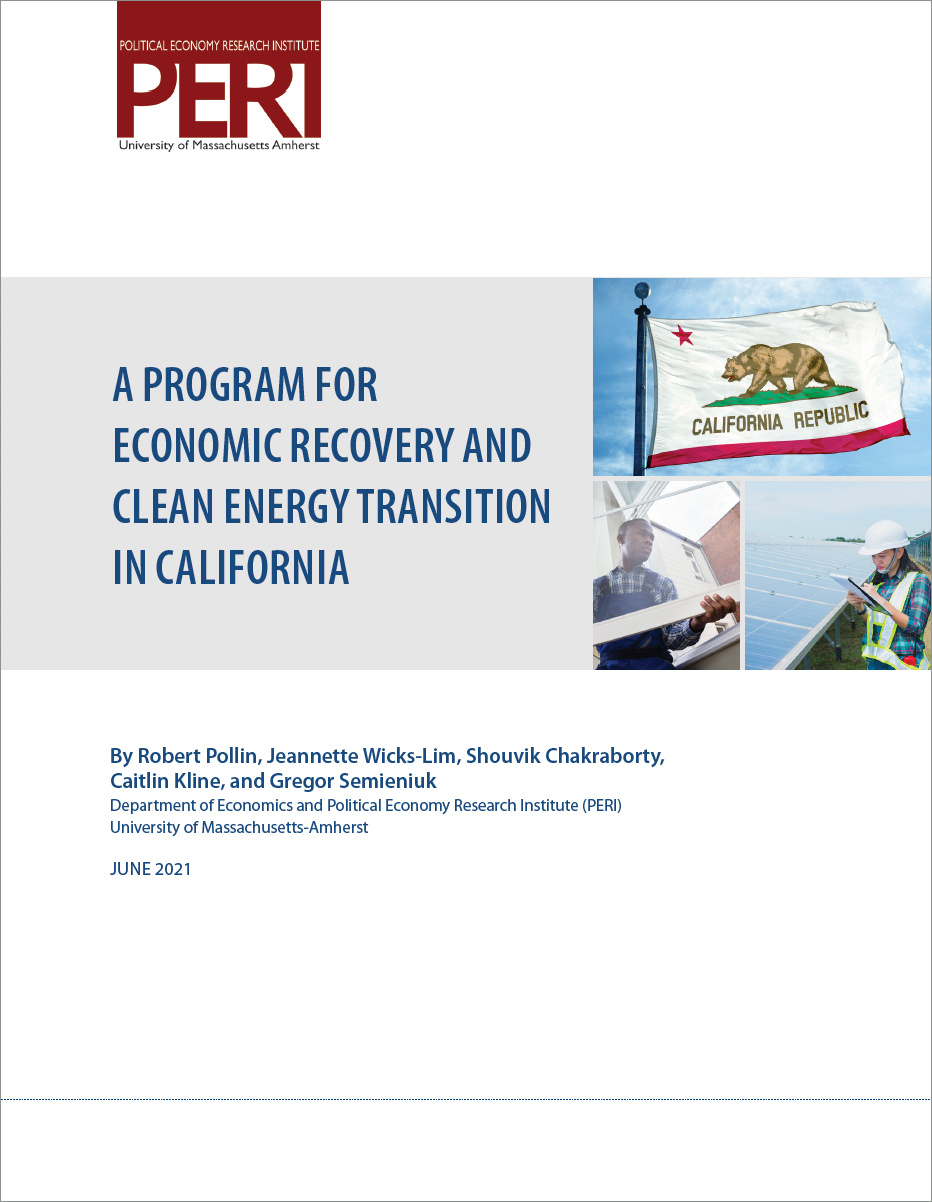
The California Climate Jobs Plan, popularly known as "the Pollin Report"--which has been described as a "sholvel ready just transition/Green New Deal" plan--and was immediately endorsed by nineteen California based labor unions, including three United Staeelworkers Union locals which primarily represent refinery workers upon its unveiling has since gained the support of many additional unions. The following unions (so far) have since endorsed the plan (knowing that while the plan isn't perfect, it's at least a step in a positive direction):

November 2021:

  • Inland Boatmen's Union (IBU), SF Bay Region (an affiliate of the ILWU)
  • Railroad Workers United
  • IWW San Francisco Bay Area General Membership Branch

February 2022:

  • International Lonshore and Warehouse Union (ILWU) Northern California District Council (NCDC)

The council is composed of delegates from the following ILWU Locals:

  • ILWU Local 6 (Bay Area Warehouse)
  • ILWU Local 10 (Bay Area Longshore)
  • ILWU Local 34 (Bay Area Shipping Clerks)
  • ILWU Local 75 (Bay Area Dock Security Guards)
  • ILWU Local 91 (Bay Area “Walking Bosses”)
  • ILWU Local 14 (Eureka; combined)
  • ILWU Local 18 (Sacramento; ditto)
  • ILWU Local 54 (Stockton)
  • Bay Area IBU (already endorsed individually)
  • and the pensioners from all of the above.

However, the NCDC's endorsement does not automatically mean that each of its constituent locals have individually endorsed the plan.

The more unions that endorse and take an active role in motivating the proposal either by lobbying at the California state level, engaging in public actions to promote the goals of the plan, or even engaging in workplace actions (whereaver relevant and practiceble), the greater chances the plan has of being realized.

(That said, it should be noted that this is not an IWW organizing project, although IWW members have been active in securing additional union endorsements).

A sample resolution (a copy of the text adopted by the SF Bay Area IBU) is available here.

Download the plan - here.

Pages

The Fine Print I:

Disclaimer: The views expressed on this site are not the official position of the IWW (or even the IWW’s EUC) unless otherwise indicated and do not necessarily represent the views of anyone but the author’s, nor should it be assumed that any of these authors automatically support the IWW or endorse any of its positions.

Further: the inclusion of a link on our site (other than the link to the main IWW site) does not imply endorsement by or an alliance with the IWW. These sites have been chosen by our members due to their perceived relevance to the IWW EUC and are included here for informational purposes only. If you have any suggestions or comments on any of the links included (or not included) above, please contact us.

The Fine Print II:

Fair Use Notice: The material on this site is provided for educational and informational purposes. It may contain copyrighted material the use of which has not always been specifically authorized by the copyright owner. It is being made available in an effort to advance the understanding of scientific, environmental, economic, social justice and human rights issues etc.

It is believed that this constitutes a 'fair use' of any such copyrighted material as provided for in section 107 of the US Copyright Law. In accordance with Title 17 U.S.C. Section 107, the material on this site is distributed without profit to those who have an interest in using the included information for research and educational purposes. If you wish to use copyrighted material from this site for purposes of your own that go beyond 'fair use', you must obtain permission from the copyright owner. The information on this site does not constitute legal or technical advice.
