By Will Parrish - North Bay Bohemian, June 8, 2016
 In recent years, oil corporations have intensified their push to make the San Francisco Bay Area and other areas of the West Coast into international hubs for refining and shipping of one of the world's most carbon-intensive and polluting fuel sources: the Canadian tar sands.
In April, that long-standing effort spilled into Santa Rosa mailboxes. Constituents of 3rd District supervisor Shirlee Zane received a letter, addressed to Zane herself, from a group called Bay Area Refinery Workers.
"As a member of the Bay Area Air Quality Management District," the letter read, "you'll soon vote on a proposal that will impact our jobs, our refineries and the important work we do refining the cleanest gasoline in the world."
It asked that Zane "please remember that the Bay Area refineries provide more good-paying union jobs than any private sector employer in the region."
Twelve refinery employees provided signatures, but the letter was produced and mailed by an organization called the Committee for Industrial Safety, which is bankrolled by the oil giants Chevron, Shell, Tesoro and Phillips 66. According to state and federal records, each corporation annually provides the group between $100,000 and $200,000 to advocate on their behalf.
The letter's apparent aim was to influence Zane's upcoming vote on a little-known but potentially far-reaching Bay Area Air Quality Management District (BAAQMD) regulation called Refinery Rule 12-16 that's aimed at reducing greenhouse gas (GHG) emmissions. If enacted, the measure would make the BAAQMD the nation's first regional air district to go beyond state and federal mandates in regulating refinery GHG emissions, the pollutants that fuel global climate change.
Zane is one of the BAAQMD's 24 directors, along with elected officials from nine Bay Area counties extending from Santa Clara in the South Bay to Sonoma and Napa. They will determine the measure's fate at a yet-to-be-scheduled meeting later this year.
Staff members at BAAQMD have proposed four alternative forms of Refinery Rule 12-16. But only one has the support of a coalition of environmental groups and the unions that represent refinery employees: a quantitative limit, or cap, on GHGs.
Processing the tar sands would dramatically increase greenhouse gas pollution at the refineries under the BAAQMD's jurisdiction, and advocates from groups like Oakland's Communities for a Better Environment (CBE), an environmental justice organization, say an emissions cap would turn back what they call the "tar sands invasion" from the San Francisco Bay Area.
Critics warn that without the cap, the oil industry will continue pursuing new tar sands infrastructure on the West Coast at a frenetic pace. "We've seen them come at us at a 10 times faster rate in the last few years," says CBE senior scientist and refinery expert Greg Karras. "Up and down the refinery belt, refineries are retooling for the tar sands and creating infrastructure for export of refined tar sands products overseas."
Experts have warned of the effects of a significantly expanded production of the tar sands—a sticky mixture of sand, clay and bitumen trapped deep beneath Canada's boreal forest. It would lock in dramatic increases in global temperatures and result in devastating impacts to ecosystems and human societies throughout the globe. A 2015 report in the journal Nature found that trillions of dollars' worth of known and extractable coal, oil and gas reserves (including nearly all remaining tar sands and all Arctic oil and gas) should remain in the ground if global temperatures are to be kept under the safety threshold of 2 degrees centigrade that's been agreed to by the world's nations at the Paris climate summit last year.
In an ecologically minded region like the Bay Area, an emissions cap to stop a dramatic increase in regional tar sands production (and tar sands exports from local ports) might seem like a political no-brainer. But staff and some members of BAAQMD say they are concerned that GHG emissions averted in the Bay Area would simply occur somewhere else, since the oil industry would increase production elsewhere. Doing so would render Refinery Rule 12-16 ineffectual in curbing climate pollution because other regions might not be so attentive.
Karras and other advocates believe the opposite is true. The cap offers local elected officials a rare opportunity, they say, to make a significant contribution to heading off the catastrophic impacts of global warming.






 New technologies, accelerating climate change, shifting migration patterns, changes in economic and political norms, and a host of other trends are likely to impact—and indeed already are impacting—key features of work and employment, including management relationships, the types of jobs available, compensation patterns, and other issues that shape the day-to-day lives of working people.
 When disasters occur, the majority of news coverage teeters on the edge of “disaster porn” at best, emphasizing the sheer mass of destruction in the affected area while celebrating a few token “heroes.” At its worst, the media perpetuates harmful stereotypes, casting survivors as looters and justifying the extrajudicial murder of people of color by the police and mostly white vigilantes, like what occurred during Hurricane Katrina.
 This plan was shaped by community organizers including several union workers and is an example of what a community and/or worker run CCA looks like.
 The deep relationship between the MLPA Initiative and Delta Tunnels is undeniable. In many ways, the neoliberal MLPA Initiative process, completed in December 2012, has served a template for the Governor’s campaign to build the tunnels.
 At a recent forum at Oakland City Hall, experts from the public banking and community energy sectors explored how the creation of a public bank could help communities transition to clean energy while creating economic opportunities.
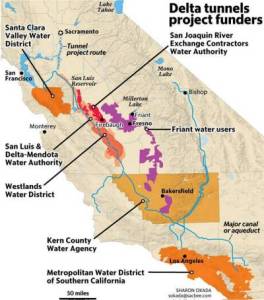 Growers in the massive district, located on the west side of the San Joaquin Valley, cited the high cost of the state-federal proposal as their reason for rejecting the project. Politically powerful Westlands is the largest irrigation district in the country.
 This site is not the official webpage of the Industrial Workers of the World.