






You are here
reports
 A new
A new 
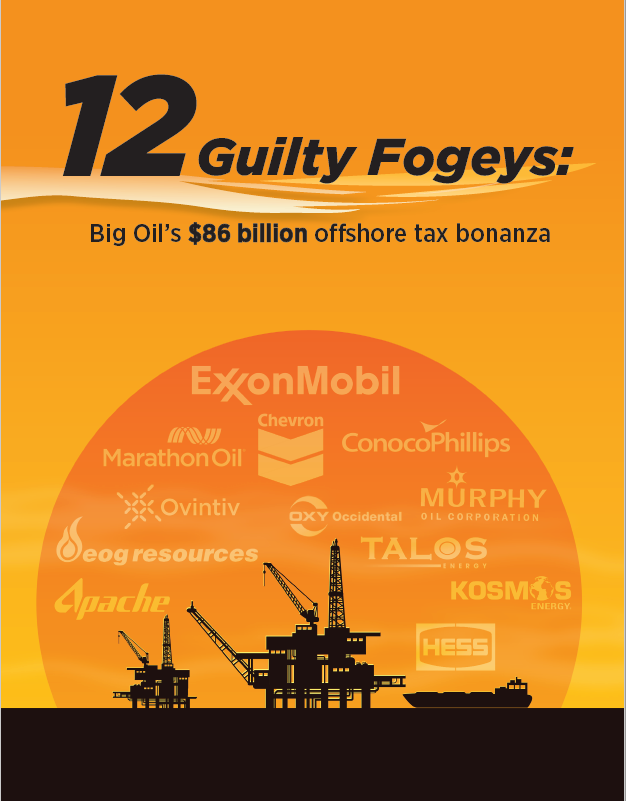 Few letter-soup acronyms in Washington bureaucratese are so aptly pronounced as GILTI and FOGEI, two esoteric provisions in the tax code worth tens of billions of dollars to Big Oil’s multinational majors.
 Transport is currently responsible for a quarter of CO2 emissions. To combat this, a global shift to public transport, walking and cycling is needed, reducing car use alongside a transition to zero-emission vehicles. The proportion of public transport journeys in the world’s cities must double in this decade to bring global emissions down, in line with keeping the temperature rise to 1.5°C. Without this action, it will simply not be possible for countries to deliver on the global goal to at least halve emissions within this decade.
 In TUED Working Paper 14, Beyond Disruption: How Reclaimed Utilities Can Help Cities Meet Their Climate Goals, Sean Sweeney and John Treat showcase how the energy transition that was promised has yet to come to fruition. They argue specifically the arguments around cities leading the transition have not been fully accurate and provide a sober analysis of where we stand.
 Promises of a ‘Green New Deal’ have captured the imagination of climate activists, scholars and policymakers across Europe and North America. Unless grounded in principles of global justice, the promise of green jobs and infrastructure in the Global North could simply mean a continuation of colonial patterns of inequality and exploitation around the world. What would it mean for the Green New Deal to be globally fair? Published by the London Office of the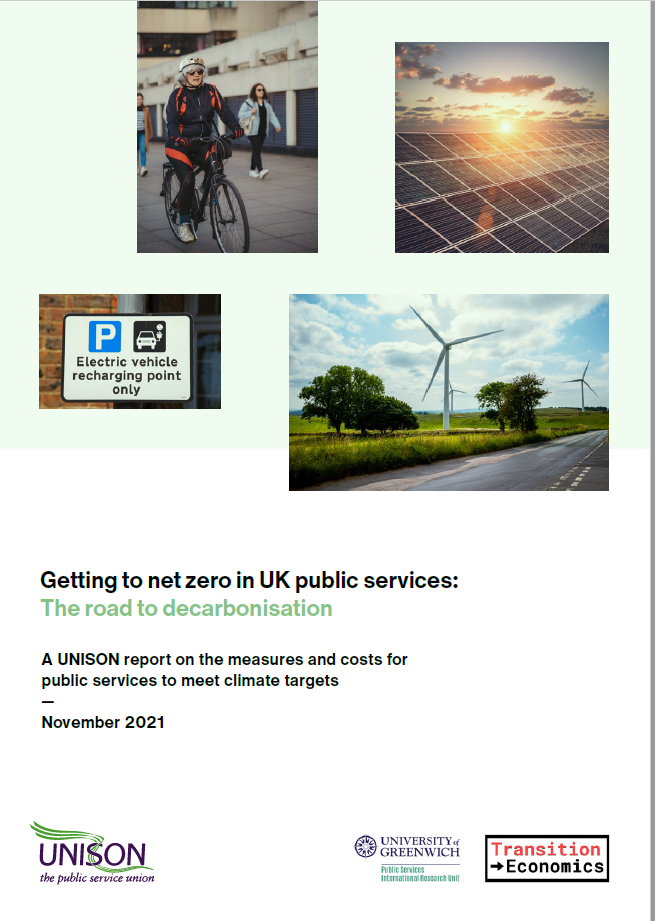

 This report was written by the Campaign Against Climate Change Trade Union Group (CACCTU). It builds on and develops the earlier work produced by CACCTU, One Million Climate Jobs (2014). The editorial group and contributors to this report are trade unionists, environmental activists and campaigners and academics who have collaborated to update and expand the previous work. Most importantly, this updated report is a response to the urgency of the climate crisis and the type and scale of the transition needed to match it.
The Fine Print I:
Disclaimer: The views expressed on this site are not the official position of the IWW (or even the IWW’s EUC) unless otherwise indicated and do not necessarily represent the views of anyone but the author’s, nor should it be assumed that any of these authors automatically support the IWW or endorse any of its positions.
Further: the inclusion of a link on our site (other than the link to the main IWW site) does not imply endorsement by or an alliance with the IWW. These sites have been chosen by our members due to their perceived relevance to the IWW EUC and are included here for informational purposes only. If you have any suggestions or comments on any of the links included (or not included) above, please contact us.
The Fine Print II:
Fair Use Notice: The material on this site is provided for educational and informational purposes. It may contain copyrighted material the use of which has not always been specifically authorized by the copyright owner. It is being made available in an effort to advance the understanding of scientific, environmental, economic, social justice and human rights issues etc.
It is believed that this constitutes a 'fair use' of any such copyrighted material as provided for in section 107 of the US Copyright Law. In accordance with Title 17 U.S.C. Section 107, the material on this site is distributed without profit to those who have an interest in using the included information for research and educational purposes. If you wish to use copyrighted material from this site for purposes of your own that go beyond 'fair use', you must obtain permission from the copyright owner. The information on this site does not constitute legal or technical advice.
 This site is not the official webpage of the Industrial Workers of the World.