






You are here
reports
 This report from Yes to Life, No to Mining Network (YLNM) explores how and why many nations – and the mining industry – are re-framing mining as a solution to climate change in order to facilitate domestic extraction of so-called ‘strategic’, ‘critical’ and ‘transition’ minerals required for renewable energy, military and digital technologies.
  This report from Yes to Life, No to Mining Network (YLNM) explores how and why many nations – and the mining industry – are re-framing mining as a solution to climate change in order to facilitate domestic extraction of so-called ‘strategic’, ‘critical’ and ‘transition’ minerals required for renewable energy, military and digital technologies.
 Europe’s industrial base needs to undergo a swift and persistent transformation towards carbon neutrality and circularity, but this transition must happen in a fair and socially just manner. In this working paper, we evaluate the support mechanisms for heavy industry which have been put in place over the past 20 years, comparing the state of play in the Netherlands, Germany and Belgium.
 California’s oil and gas jobs currently offer significant compensation and benefits, providing workers in these jobs with security for themselves and their families. As California moves to meet its existing climate commitments—to cut greenhouse gas emissions by 50% by 2030 and to reach net zero emissions by 2045—the oil and gas industries will contract, and it is critical to invest in a strong, ongoing relief program to take care of displaced workers, their families and their communities.
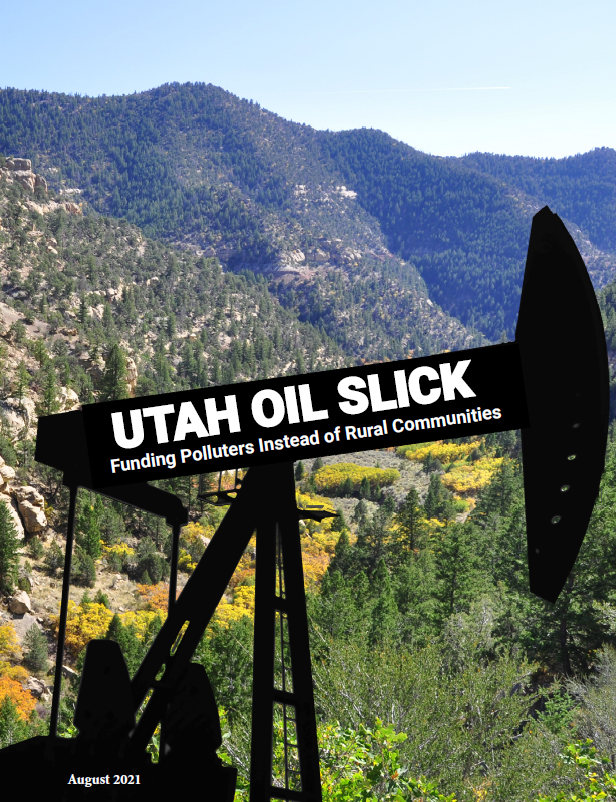 Every year Utah receives tens of millions of dollars in federal lease revenues and royalties from oil, gas and mineral extraction as a way to help mitigate the impacts of drilling and mining. Even before scientists linked fossil fuels to the climate crisis, Congress intended this money to be used to help rural communities experiencing rapid growth and infrastructure challenges. The influx of new workers and increased drilling and mining take a toll on communities.
 To chart a course toward a safer climate and more habitable planet, we must rapidly reduce emissions of greenhouse gases across our society. The biggest contributor to greenhouse gas emissions is the burning of fossil fuels. Consequently, the clearest path to reducing emissions is to switch from fossil fuels to renewable, zero-emission energy in our transportation, buildings, and power generation (sectors that are collectively responsible for about 75% of United States’ greenhouse gas emissions). This transition would make significant strides in eliminating the devastating public health impacts of pollution throughout the life cycle of fossil fuels—pollution that is most severely concentrated in Black, Brown, Indigenous, and poor communities. A just transition will also require careful policy design and meaningful engagement from frontline communities. Renewable energy, energy efficiency, and electrification are zero-emission solutions that eliminate both greenhouse gases and health-harming air pollution. To meet the scale and urgency of the climate crisis will require deployment of renewable resources on an unprecedented scale— ultimately achieving 100% clean power generation—and a complete transition to efficient, electric models for things like household appliances and cars.
 Texas is currently confronted by three major, intersecting crises: the COVID-19 public health pandemic and ensuing economic crisis; a growing crisis of inequality of income, wealth, race and power; and the worsening climate crisis, which continues to take its toll on Texans through hurricanes, major flood events, wildfires, debilitating heat waves and the significant economic cost of these extreme weather events. These crises both expose and deepen existing inequalities, disproportionately impacting working families, women, Black, Indigenous and people of color (BIPOC) communities, immigrants, and the most vulnerable in our society.
 Government stimulus is sorely needed: more than a year into the pandemic recession, nearly 10 percent of Black workers are unemployed, and over 6 percent of all workers are unemployed. There are still more than 7 million fewer jobs than there were last June, and nearly 40% of all unemployed workers are long-term unemployed. A majority of those out of work have no college degree. In addition, there are 5 million fewer people in the labor force than pre-pandemic, including 3 million women who left the labor force since last February, and 2 million men.
The Fine Print I:
Disclaimer: The views expressed on this site are not the official position of the IWW (or even the IWW’s EUC) unless otherwise indicated and do not necessarily represent the views of anyone but the author’s, nor should it be assumed that any of these authors automatically support the IWW or endorse any of its positions.
Further: the inclusion of a link on our site (other than the link to the main IWW site) does not imply endorsement by or an alliance with the IWW. These sites have been chosen by our members due to their perceived relevance to the IWW EUC and are included here for informational purposes only. If you have any suggestions or comments on any of the links included (or not included) above, please contact us.
The Fine Print II:
Fair Use Notice: The material on this site is provided for educational and informational purposes. It may contain copyrighted material the use of which has not always been specifically authorized by the copyright owner. It is being made available in an effort to advance the understanding of scientific, environmental, economic, social justice and human rights issues etc.
It is believed that this constitutes a 'fair use' of any such copyrighted material as provided for in section 107 of the US Copyright Law. In accordance with Title 17 U.S.C. Section 107, the material on this site is distributed without profit to those who have an interest in using the included information for research and educational purposes. If you wish to use copyrighted material from this site for purposes of your own that go beyond 'fair use', you must obtain permission from the copyright owner. The information on this site does not constitute legal or technical advice.
 This site is not the official webpage of the Industrial Workers of the World.