

You are here

green unionism

Remembering Civil Rights Attorney Dennis Cunningham and Judi Bari bombing with Karen Pickett

By Karen Pickett and Steve Taylor - Breaking Green, March 25, 2022

On March 6th, Famed Civil Rights Lawyer, Dennis Cunningham died of cancer. He was 86.

In his long and varied career Cunningham successfully represented Attica Prison Inmates, members of the Black Panthers. He also represented Earth First! organizers Judi Bari and Darryl Cherney in a case they won against the FBI and Oakland police for violation of their civil rights when they were arrested after a car they were traveling in had a bomb detonate under the passenger seat nearly killing Bari.

Despite having numerous death threats against them Bari and Cherney were named as suspects in their own bombing. They were never charged, and a jury awarded them 4.4 million dollars in a 2002 for the violation of their civil rights.

On this episode of Breaking Green we will talk with Karen Pickett.

Pickett has been a grassroots activist for over 40 years. She has focused on forest and habitat preservation as well as environmental justice, protecting the civil rights of activists, and alliance building with Indigenous campaigns and the labor movement.

She is a founder and Director of the Bay Area Coalition for Headwaters, Biocentric Media Inc, as well as earlier organizations, including the Alliance for Sustainable Jobs and the Environment. She is a Board member of the Global Justice Ecology Project and has a decades-long affiliation with Earth First!.

Pickett worked closely with Mr. Cunningham on the trial against the FBI and Oakland police and was a close personal friend of Judi Bari.

The Interview may be heard on Breaking Green, a podcast by Global Justice Ecology Project

End the addiction to fossil fuel- support the Ukrainian resistance

By Alan Thornett - Red Green Labour, March 24, 2022

Putin’s merciless invasion of Ukraine – which is his next step in the restoration of the Russian empire – has been stalled by the remarkable popular resistance that has been mounted against it. The southern port city of Mariupol is been flattened by Russian artillery and is facing a humanitarian catastrophe but has refused to surrender. On the other hand, the invaders have been pushed back on several fronts.

The Ukrainian resistance has relied heavily on both Western economic sanctions and Western military aid including hand-launched anti-tank and surface to air missiles without which Putin’s blitzkrieg might have been unstoppable. The economic sanctions have not just put Putin under pressure at home, but they have given the population the confidence to resist such an overwhelming force.

As the Russians have met much stronger resistance than they expected they have resorted to ever more indiscriminate, long-range bombardment of the civilian population with missiles launched from ships in the Black Sea and from Russia itself. The result of which has been a rapid escalation of civilian casualties. Putin has thousands of planes and missiles, of course, and could wipe Ukraine off the map. But whether that would be politically sustainable (or survivable for him at home) is another matter.

Russia is now a brutal kleptocracy, with Putin as the new Stalin. Anti-war demonstrators facing up to 16 years in jail and opposition politicians, who oppose war, driven into exile. Ten million people, a quarter of the population, are internally displaced and with almost five million already refugees abroad. Many thousands, mostly civilians, are dead. EU countries, to their credit, have opened their borders, suspended visa requirements, and taken in millions of people. This is in sharp contrast to Boris Johnson’s miserable Little Englander government that has been running around in circles in a (very successful) attempt to give refuge to as few people as possible.

How can the climate and anti‑war movements come together?

By Christian Zeller - Red Green Labour, March 23, 2022

Translated from the German- originally published here.

Exit from the fossil economy and rearmament, solidarity with the Ukrainian resistance

We live in a time of abrupt turns. [1]

Global warming is accelerating. The climate is changing faster than previously thought. The Russian war of aggression against Ukraine is largely aimed at the territorialconquest of a neighbouring state, the destruction of its army and the overthrow of its government. [2] This is something that has not existed in Europe in this way since 1945.

Even before this assault, the NATO countries, Russia and China started an arms race. The antagonisms between the various imperialisms intensified enormously. [3]The wave of rearmament that was already being prepared and launched before the war in Ukraine is an expression of intensifying competion for access to scarce resources that are so urgently needed in connection with the energy transition.

Global warming, this war and the danger of wars to come are interconnected and should be understood in a common context.

Working-class environmentalism and just transition struggles in the Americas

Alaska's Renewable Energy Future: New Jobs, Affordable Energy

By Kay Brown, Carly Wier, et. al. - Alaska Climate Alliance, March 21, 2022

Alaska has a vast endowment of renewable energy resources that can be tapped in its transition to a renewable energy future. Benefits of accelerating the energy transition in Alaska include more jobs, lower energy prices, higher energy security and the potential for renewable resources to support zero carbon hydrogen-based fuels for the aviation and maritime industries.
The state has already begun to develop its renewable energy resources and continues to support renewable technology development for Alaska’s challenging environment. The scale of Alaska’s vast undeveloped renewable energy resource endowment remains more than 14 times the total U.S. energy consumption.

Renewable energy technologies, including wind, solar, geothermal, and ocean and river hydrokinetic, along with complementary energy storage technologies, are continuing to exhibit declining costs which make them increasingly attractive as a primary energy source to substitute for fossil fuels in the electric sector and to support the electrification of buildings and the transformation of the transportation sector to electrification and renewable hydrogen-based fuels.

As local fossil fuel costs escalate across Alaska, from 2.5X higher in the Railbelt to as much as 4X higher in Rural Alaska (as compared to the U.S. average), renewable energy technologies are increasingly attractive investments and are poised to affordably replace legacy fossil fuel energy systems in the 2030-to-2050 time horizon while providing greater energy security, increased energy resiliency especially in rural Alaska, and broad environmental, economic and health benefits.

Independent studies have confirmed that the development of Alaska’s renewable energy potential will generate thousands of jobs – at least comparable in magnitude to the fossil fuel jobs that may be displaced by the transition to a clean renewable energy sector.

Read the report (PDF).

#8M2022: Women peasants in India: one year of intense struggles

By Bianca Pessoa and Chukki Nanjundaswamy - La Via Campesina, March 20, 2022

Since November 2020, Indians peasants struggle for their rights that are in constant danger of being withdraw by the far-right, authoritarian government ruled by the prime-minister Narendra Modi. The country is struggling against Modi’s agenda in partnership with transnational companies that put in risk the lives of many farmers in the country especially women. In India, 80% of the food that are produced, is produced by women. They are the majority working on the fields and plantations, even when they’re not officially considered farmers, and the ones that suffer the most with the lack of policies.

Chukki Nanjundaswamy have been part of the farmers movement from her youth. She’s one of the coordinators of an agroecology school, based in the southern part of India, in Karnataka, and worked as a member of the International Coordinating Committee of La Via Campesina. During this interview, Chukki talked about this last year of intense struggles in the country, their mobilization for the minimum support price and against the privatization of the markets, the violence suffered by women farmers and the events of this last year of protests. To understand more about the women struggles in India, read the other contents from Capire here.

Healthcare Workers Call on Hospitals and Medical Institutions to Divest From Fossil Fuels

By Nick Cunningham - DeSmog, March 14, 2022

A coalition of healthcare professionals and climate finance organizations are calling on hospitals to divest their pension and retirement funds from fossil fuels, citing the severe public health hazards from climate change. 

“The research on the severe, ubiquitous and accelerating consequences to public health from climate change is unequivocal,” Dr. Ashley McClure, a primary care physician and co-Executive Director of the California-based nonprofit Climate Health Now, said in a statement. “Just as many leading health organizations have divested from tobacco companies given the unacceptable health harms of their products, our institutions must now invest in alignment with public health and collective safety by urgently divesting our resources from the coal, oil, and gas corporations fueling the climate crisis.”

Around the world, more than 1,500 institutions have announced divestments from fossil fuels with commitments that total more than $40 trillion, according to a database maintained by climate advocacy groups 350.org and Stand.earth. The pledges come from governments, philanthropies, universities, faith-based organizations, and pension funds. 

But activists are pressing on a new front, demanding that hospitals and healthcare institutions sever their financial ties with fossil fuels. Named “First, Do No Harm,” the coalition of healthcare professionals and climate finance organizers is calling on medical institutions to exclude oil, gas, and coal from their pensions and retirement funds. They are also asking healthcare workers across the country to join in the effort and pressure their employers to take that step. 

“Our sector has to act on this. This is a healthcare issue. Climate policy is health policy. We can no longer ignore the voluminous research that can directly connect serious healthcare threats to fossil fuel air pollution, for example,” Don Lieber, a certified surgical technician at Memorial Sloan Kettering Cancer Center in New York, told DeSmog. 

Many hospitals do have plans to reduce their greenhouse gas emissions in their operations, but that only addresses part of the problem. “Hospital systems, including ours at Sloan Kettering have a fantastic sustainability program that focuses on these important operational reductions. We need that. But we cannot ignore the other half,” Lieber said, referring to the institutions’ investments in fossil fuels. 

Richmond Progressive Alliance Listening Project, Episode 9: We Deserve Nothing Less

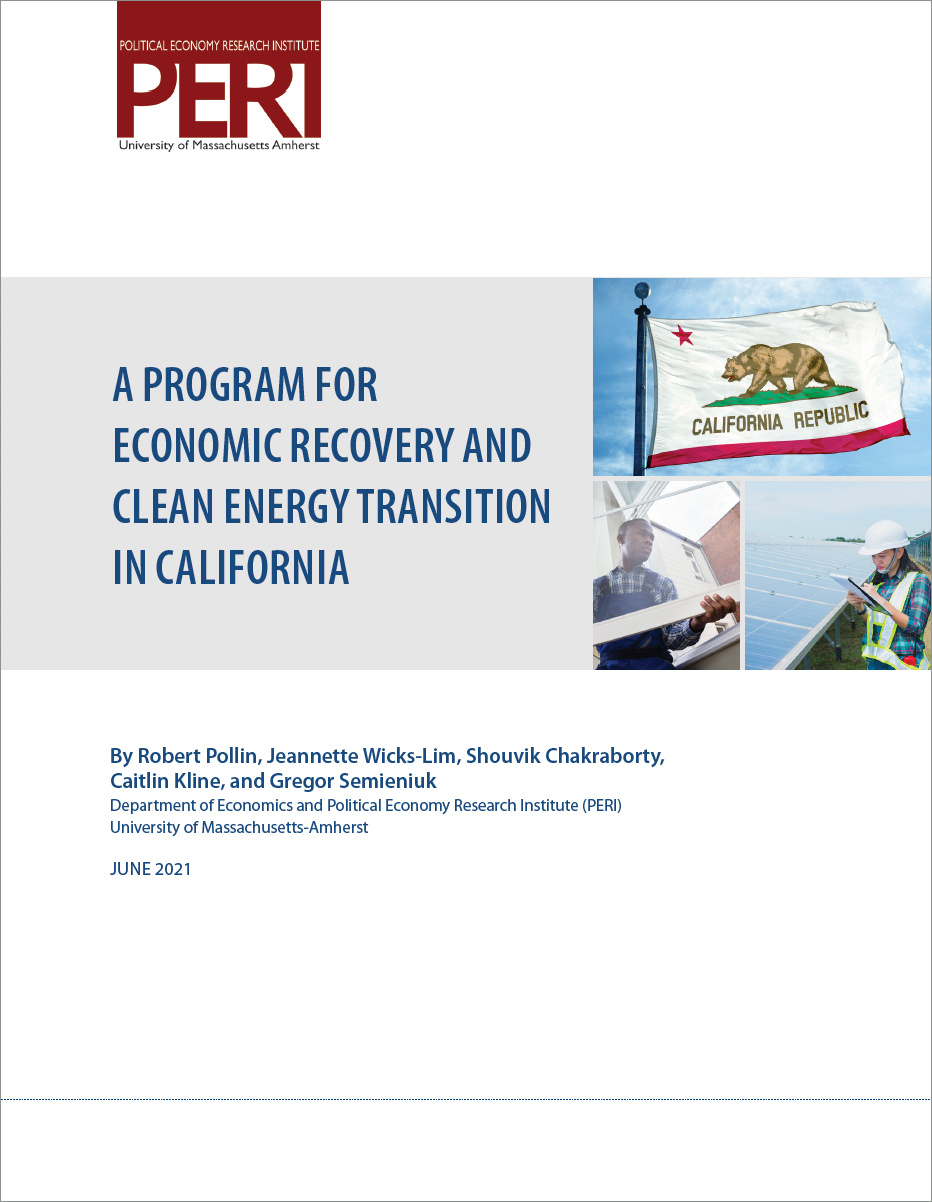
California Climate Jobs Plan Continues to Gain Union Endorsements

By That Green Union Guy - IWW Environmental Union Caucus - March 11, 2022

The California Climate Jobs Plan, popularly known as "the Pollin Report"--which has been described as a "sholvel ready just transition/Green New Deal" plan--and was immediately endorsed by nineteen California based labor unions, including three United Staeelworkers Union locals which primarily represent refinery workers upon its unveiling has since gained the support of many additional unions. The following unions (so far) have since endorsed the plan (knowing that while the plan isn't perfect, it's at least a step in a positive direction):

November 2021:

  • Inland Boatmen's Union (IBU), SF Bay Region (an affiliate of the ILWU)
  • Railroad Workers United
  • IWW San Francisco Bay Area General Membership Branch

February 2022:

  • International Lonshore and Warehouse Union (ILWU) Northern California District Council (NCDC)

The council is composed of delegates from the following ILWU Locals:

  • ILWU Local 6 (Bay Area Warehouse)
  • ILWU Local 10 (Bay Area Longshore)
  • ILWU Local 34 (Bay Area Shipping Clerks)
  • ILWU Local 75 (Bay Area Dock Security Guards)
  • ILWU Local 91 (Bay Area “Walking Bosses”)
  • ILWU Local 14 (Eureka; combined)
  • ILWU Local 18 (Sacramento; ditto)
  • ILWU Local 54 (Stockton)
  • Bay Area IBU (already endorsed individually)
  • and the pensioners from all of the above.

However, the NCDC's endorsement does not automatically mean that each of its constituent locals have individually endorsed the plan.

The more unions that endorse and take an active role in motivating the proposal either by lobbying at the California state level, engaging in public actions to promote the goals of the plan, or even engaging in workplace actions (whereaver relevant and practiceble), the greater chances the plan has of being realized.

(That said, it should be noted that this is not an IWW organizing project, although IWW members have been active in securing additional union endorsements).

A sample resolution (a copy of the text adopted by the SF Bay Area IBU) is available here.

Download the plan - here.

Leeds Bradford abandons its expansion plans: where does that leave us?

By staff - Greener Jobs Alliance, March 11, 2022

Tahir Latif is Secretary of the Greener Jobs Alliance. The opinions expressed here are his own, and not necessarily those of all GJA members. In the spirit of this newly created blog space, we invite alternative views and responses, which can be sent to gjacoms@gmail.com .

The news that Leeds Bradford airport has opted to abandon its expansion plans is hugely welcomed by climate activists everywhere and a testament to the extraordinary efforts of the grassroots organisation, GALBA. Backed by the local trades council, GALBA has been meticulous in rooting its opposition to the expansion in the needs of the community and workforce.

Instead of expansion, LBA is choosing to ‘develop’ its existing terminal. Regardless of what this will actually mean, the decision raises important questions about both the short- and long-term future of the aviation industry and its workers.

Pages

The Fine Print I:

Disclaimer: The views expressed on this site are not the official position of the IWW (or even the IWW’s EUC) unless otherwise indicated and do not necessarily represent the views of anyone but the author’s, nor should it be assumed that any of these authors automatically support the IWW or endorse any of its positions.

Further: the inclusion of a link on our site (other than the link to the main IWW site) does not imply endorsement by or an alliance with the IWW. These sites have been chosen by our members due to their perceived relevance to the IWW EUC and are included here for informational purposes only. If you have any suggestions or comments on any of the links included (or not included) above, please contact us.

The Fine Print II:

Fair Use Notice: The material on this site is provided for educational and informational purposes. It may contain copyrighted material the use of which has not always been specifically authorized by the copyright owner. It is being made available in an effort to advance the understanding of scientific, environmental, economic, social justice and human rights issues etc.

It is believed that this constitutes a 'fair use' of any such copyrighted material as provided for in section 107 of the US Copyright Law. In accordance with Title 17 U.S.C. Section 107, the material on this site is distributed without profit to those who have an interest in using the included information for research and educational purposes. If you wish to use copyrighted material from this site for purposes of your own that go beyond 'fair use', you must obtain permission from the copyright owner. The information on this site does not constitute legal or technical advice.
