

You are here

Green New Deal (GND)

An alternative energy strategy to stimulate rapid transition

By Andrew Simms and Freddie Daley - Rapid Transit Alliance, March 21, 2022

All around the world, governments’ energy policies are at a crossroads. In order to insulate themselves from dependence on Russian oil and gas, tackle rising living costs and enact sanctions against Vladimir Putin, governments are collectively clamouring to diversify their energy supplies.

This will be easy for some nations, but more challenging for others. In the UK, Russian gas made up less than 4% of the total British gas supply in 2021, while in Germany just over 30% of primary energy input, across coal, oil and gas, comes from Russia. The varying degrees of dependence present both challenges and opportunities for the low carbon transition. 

The UK government is expected imminently to publish its Energy Strategy that will set out how it intends to reduce the nation’s reliance on energy imports and speed up the transition to net zero. It will be a test case for an economy still heavily hooked on fossil fuel use but with huge untapped renewable energy potential and an economic ‘levelling-up’ agenda for its regions that could benefit greatly from investment in low carbon transition.

Three years after the first global school strike, signs of the youth climate movement’s success are everywhere

By Nick Engelfried - Waging Nonviolence, March 17, 2022

Instead of succumbing to the challenges of the past few years, young climate activists are learning to adapt and build on their past actions.

Three years ago this week — on March 15, 2019 — an estimated 1.4 million young people and supporters in 128 countries skipped school or work for what was then the largest youth-led day of climate protests in history. That record was soon eclipsed by even larger demonstrations later that year, with 1.8 million joining a May 24 day of action, and 7.6 million protesting for the climate over the course of Sept. 20 and the week that followed. The school strikes for climate movement, launched by 15-year-old Greta Thunberg of Sweden in late 2018, had reinvigorated the global climate movement and brought public participation to levels never seen before.

By early 2019, thousands of young people were already skipping school to protest for the climate each week in Europe, but the school strikes had only just begun to catch on in the United States. March 15 of that year was arguably when Thunberg’s campaign truly became a global phenomenon, with large demonstrations in cities all over the world. The youth-led strikes went on to revolutionize and grow the climate movement, helping to popularize concepts like the Green New Deal and grab the attention of policymakers and the media. Three years on, it’s a good time to assess what this flood of activism accomplished and how the youth climate movement has adapted to the challenges of the early 2020s.

Shifting Narratives and Practices to Achieve Gender Just Climate Transitions

Another Silent Spring: Strategies for the Climate Struggle

By Paul Fleckenstein - Tempest, March 15, 2022

After the worst year yet of climate disruption, 2021 closed with another failure of international negotiations at COP26 and the slow death of President Biden’s meager legislative climate agenda.

North America faced heightened levels of drought, heat, fire, flooding, wind, climate-enhanced migration, and crop failures. Yet the climate movement’s support and campaigning for Biden and Democratic Party achieved little. Expectations are even lower for the next three years.

To respond to this impasse the climate movement, particularly the predominant organizations in the U.S., needs to reorient away from the over-emphasis on electoral politics, and toward protest and struggle as the priority strategy.

Fortunately, there are some glimpses at how to expand this potential, but the central question remains, what socialists and the Left, in general, can do now to best catalyze more disruptive, sustained, and mass-based climate action.

Understanding Sunrise, Part 1: Strategy

By William Lawrence - Convergence, March 14, 2022

Sunrise Movement made climate change a key political issue, but new conditions require new theory and strategy.

The state of Sunrise Movement, one of the more successful and visible U.S. Left organizations to emerge in the last five years, reflects trends in the broader Left. We hit a high-water mark with Sen. Bernie Sanders’ February 2020 victory in the Nevada caucus. Shortly after, the revenge of the Democratic establishment and the COVID pandemic halted all momentum and put Sunrise into a rear-guard attempt to salvage what could be won in a Biden administration. The underwhelming first year of that administration has left us floundering.
Today, a private and public reckoning is well underway. A new generation of leaders is taking account of Sunrise’s successes and failures, and working to design the next life of the movement. Early Sunrise leaders—of which I am one—are in the process of moving on, and handing over leadership of this youth organization to a more youthful cohort.

As a leader in Sunrise’s development from its founding in 2017 through early 2021, I feel obliged to offer an evaluation of our strategy and methods. My aim is to offer a detailed account of Sunrise’s aims and influences, in order that the next generation of strategist-organizers both inside and outside Sunrise may learn from what we did well, while overcoming our limitations.

You can consider just about every word of this essay as a self-critique and a practice of learning in public. As ever, I write with deep appreciation for all the climate justice fighters who find a place to place their hope amidst the looming dread of this crisis.

Part 1 of this essay, which you are reading now, focuses on Sunrise’s strategy, including our demands, rhetoric, and relation to the US party system. Part 2 will look at Sunrise’s methods of organizing.

I hope these essays not only illuminate our specific choices and why we made them, but demonstrate how the theoretical concepts on which we build our organizations actually shape their development. Sunrise’s successes owe much to the theories underpinning our strategy and methods, and our failures reveal much about where these theories fall short. I hope my reflections on these recent experiences may aid in developing better theory to face the challenges of the 21st century.

Richmond Progressive Alliance Listening Project, Episode 9: We Deserve Nothing Less

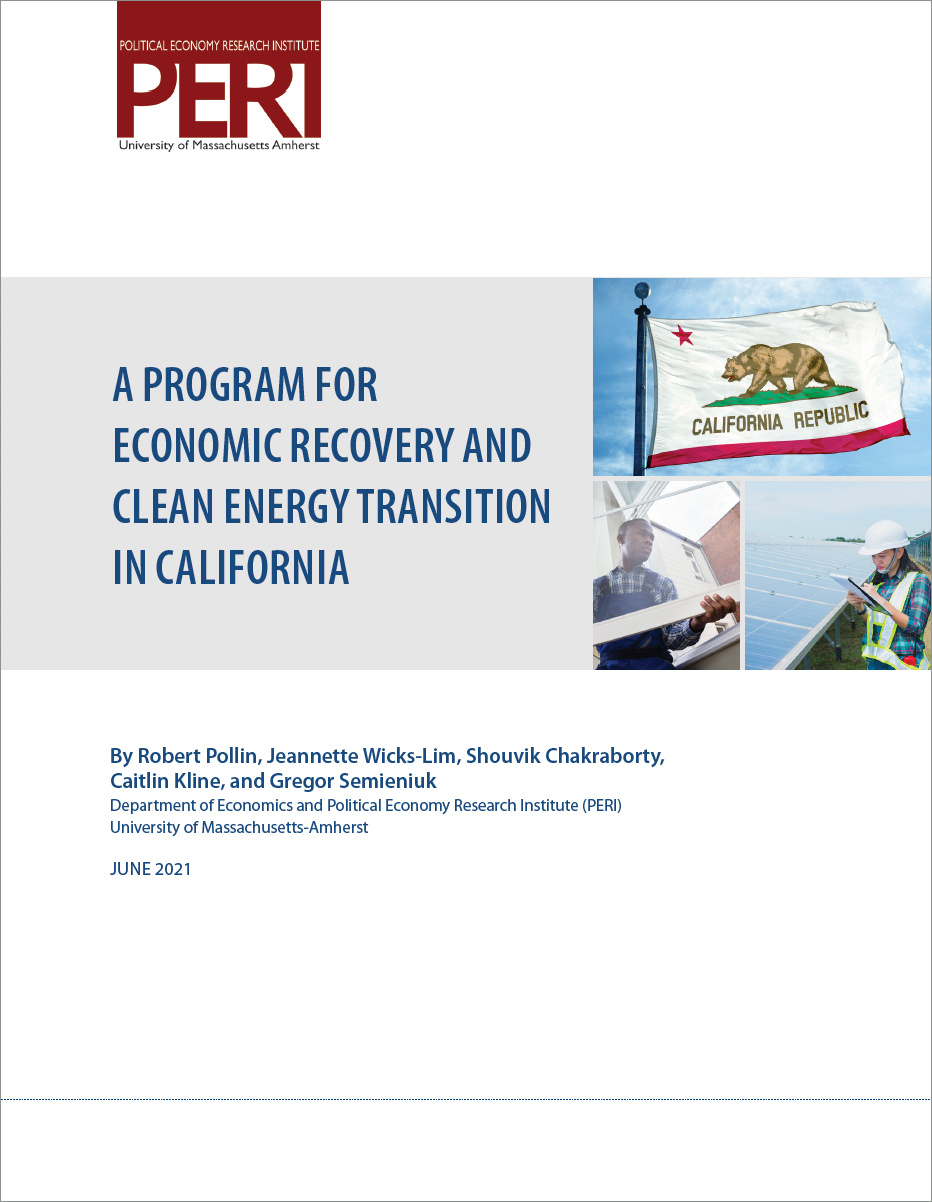
California Climate Jobs Plan Continues to Gain Union Endorsements

By That Green Union Guy - IWW Environmental Union Caucus - March 11, 2022

The California Climate Jobs Plan, popularly known as "the Pollin Report"--which has been described as a "sholvel ready just transition/Green New Deal" plan--and was immediately endorsed by nineteen California based labor unions, including three United Staeelworkers Union locals which primarily represent refinery workers upon its unveiling has since gained the support of many additional unions. The following unions (so far) have since endorsed the plan (knowing that while the plan isn't perfect, it's at least a step in a positive direction):

November 2021:

  • Inland Boatmen's Union (IBU), SF Bay Region (an affiliate of the ILWU)
  • Railroad Workers United
  • IWW San Francisco Bay Area General Membership Branch

February 2022:

  • International Lonshore and Warehouse Union (ILWU) Northern California District Council (NCDC)

The council is composed of delegates from the following ILWU Locals:

  • ILWU Local 6 (Bay Area Warehouse)
  • ILWU Local 10 (Bay Area Longshore)
  • ILWU Local 34 (Bay Area Shipping Clerks)
  • ILWU Local 75 (Bay Area Dock Security Guards)
  • ILWU Local 91 (Bay Area “Walking Bosses”)
  • ILWU Local 14 (Eureka; combined)
  • ILWU Local 18 (Sacramento; ditto)
  • ILWU Local 54 (Stockton)
  • Bay Area IBU (already endorsed individually)
  • and the pensioners from all of the above.

However, the NCDC's endorsement does not automatically mean that each of its constituent locals have individually endorsed the plan.

The more unions that endorse and take an active role in motivating the proposal either by lobbying at the California state level, engaging in public actions to promote the goals of the plan, or even engaging in workplace actions (whereaver relevant and practiceble), the greater chances the plan has of being realized.

(That said, it should be noted that this is not an IWW organizing project, although IWW members have been active in securing additional union endorsements).

A sample resolution (a copy of the text adopted by the SF Bay Area IBU) is available here.

Download the plan - here.

Leeds Bradford abandons its expansion plans: where does that leave us?

By staff - Greener Jobs Alliance, March 11, 2022

Tahir Latif is Secretary of the Greener Jobs Alliance. The opinions expressed here are his own, and not necessarily those of all GJA members. In the spirit of this newly created blog space, we invite alternative views and responses, which can be sent to gjacoms@gmail.com .

The news that Leeds Bradford airport has opted to abandon its expansion plans is hugely welcomed by climate activists everywhere and a testament to the extraordinary efforts of the grassroots organisation, GALBA. Backed by the local trades council, GALBA has been meticulous in rooting its opposition to the expansion in the needs of the community and workforce.

Instead of expansion, LBA is choosing to ‘develop’ its existing terminal. Regardless of what this will actually mean, the decision raises important questions about both the short- and long-term future of the aviation industry and its workers.

Putin’s Carbon Bomb

By Ted Franklin - System Change not Climate Change, March 8, 2022

At a time when the entire world needs to focus on radical climate policy changes, he has thrust us into a war that might be as existentially dire as the climate crisis.

On day three of the Russian invasion of Ukraine a worldwide group of scientists from the Intergovernmental Panel on Climate Change (“IPCC”) gathered on Zoom to put the final stamp of approval on the UN body’s latest devastating report on the world’s feeble progress on climate.

A dark gloom hung over the proceedings as war threatened to derail global action on climate for years to come. Then Svitlana Krakovska, a Kyiv-based Ukrainian climatologist leading her country’s delegation to the virtual meeting, breached the IPCC’s longstanding commitment to apolitical discourse with a trenchant observation.

“Human-induced climate change and the war on Ukraine have the same roots — fossil fuels and our dependence on them,” she reportedly told her colleagues during a break from the air-raid sirens blaring intermittently in the Ukrainian capital. “The money that is funding this aggression comes from the same [place] as climate change does: fossil fuels. If we didn’t depend on fossil fuels, [Russia] would not have money to make this aggression.”

After Krakovska spoke, scientists and climate diplomats from the 195 IPCC nations listened in amazement as Oleg Anisimov, the head of the Russian delegation, apologized “on behalf of all Russians who were not able to prevent this conflict.”

Richmond Progressive Alliance Listening Project, Episode 8: Union Proud

Pages

The Fine Print I:

Disclaimer: The views expressed on this site are not the official position of the IWW (or even the IWW’s EUC) unless otherwise indicated and do not necessarily represent the views of anyone but the author’s, nor should it be assumed that any of these authors automatically support the IWW or endorse any of its positions.

Further: the inclusion of a link on our site (other than the link to the main IWW site) does not imply endorsement by or an alliance with the IWW. These sites have been chosen by our members due to their perceived relevance to the IWW EUC and are included here for informational purposes only. If you have any suggestions or comments on any of the links included (or not included) above, please contact us.

The Fine Print II:

Fair Use Notice: The material on this site is provided for educational and informational purposes. It may contain copyrighted material the use of which has not always been specifically authorized by the copyright owner. It is being made available in an effort to advance the understanding of scientific, environmental, economic, social justice and human rights issues etc.

It is believed that this constitutes a 'fair use' of any such copyrighted material as provided for in section 107 of the US Copyright Law. In accordance with Title 17 U.S.C. Section 107, the material on this site is distributed without profit to those who have an interest in using the included information for research and educational purposes. If you wish to use copyrighted material from this site for purposes of your own that go beyond 'fair use', you must obtain permission from the copyright owner. The information on this site does not constitute legal or technical advice.
